
Hear from Our Customers
Your walk-in freezer isn’t just cold storage—it’s your business insurance policy. When it’s working right, you’re buying in bulk, saving money on volume discounts, and never worrying about spoilage eating into your profits.
You’re meeting health department standards without breaking a sweat. Your staff can grab what they need quickly without playing freezer Tetris with boxes and containers.
Most importantly, you’re sleeping better knowing your expensive inventory is protected at the right temperature, 24/7. No more middle-of-the-night calls about equipment failures or scrambling to save thousands of dollars worth of food.
We’ve been solving commercial refrigeration problems across Long Island for over 40 years. We serve everyone from small Glenwood Landing delis to major Manhattan restaurants, plus marine vessels that need specialized HVAC solutions.
What sets us apart is our dual expertise in both land-based commercial refrigeration and marine systems—a rare combination that means we understand equipment that needs to work in challenging environments. We’ve seen every possible failure mode and know how to prevent them.
Our team handles everything from new installations to emergency repairs, with 24/7 consulting available when you need it most. Licensed, insured, and backed by dozens of five-star reviews from businesses that depend on reliable refrigeration.
First, we come out for a free consultation to assess your space, electrical setup, and business needs. No sales pressure—just honest evaluation of what will actually work for your operation.
Next comes the planning phase. We handle permits, coordinate with your electrician if upgrades are needed, and schedule installation around your business hours. The goal is zero disruption to your daily operations.
Installation day involves our experienced crew handling the heavy lifting—literally. Walk-in freezers can weigh 500-800 pounds, and proper installation requires specialized equipment and knowledge of structural requirements. We also provide staff training so your team knows how to operate the system efficiently and spot potential issues early.
Ready to get started?
Every walk-in freezer installation includes proper electrical connections, structural support verification, and NSF-compliant construction that meets health department standards. You’re not just getting equipment—you’re getting a system designed to pass inspections.
The installation covers temperature monitoring systems, automatic door closures, and proper insulation that prevents energy waste. In Glenwood Landing’s varied commercial landscape—from waterfront businesses dealing with humidity to inland operations with different challenges—proper installation accounts for local environmental factors.
You also get comprehensive training for your staff, maintenance schedules that prevent costly breakdowns, and access to emergency service when needed. The system is designed to handle the demands of Long Island’s busy food service industry, where equipment failure isn’t just inconvenient—it’s potentially business-ending.
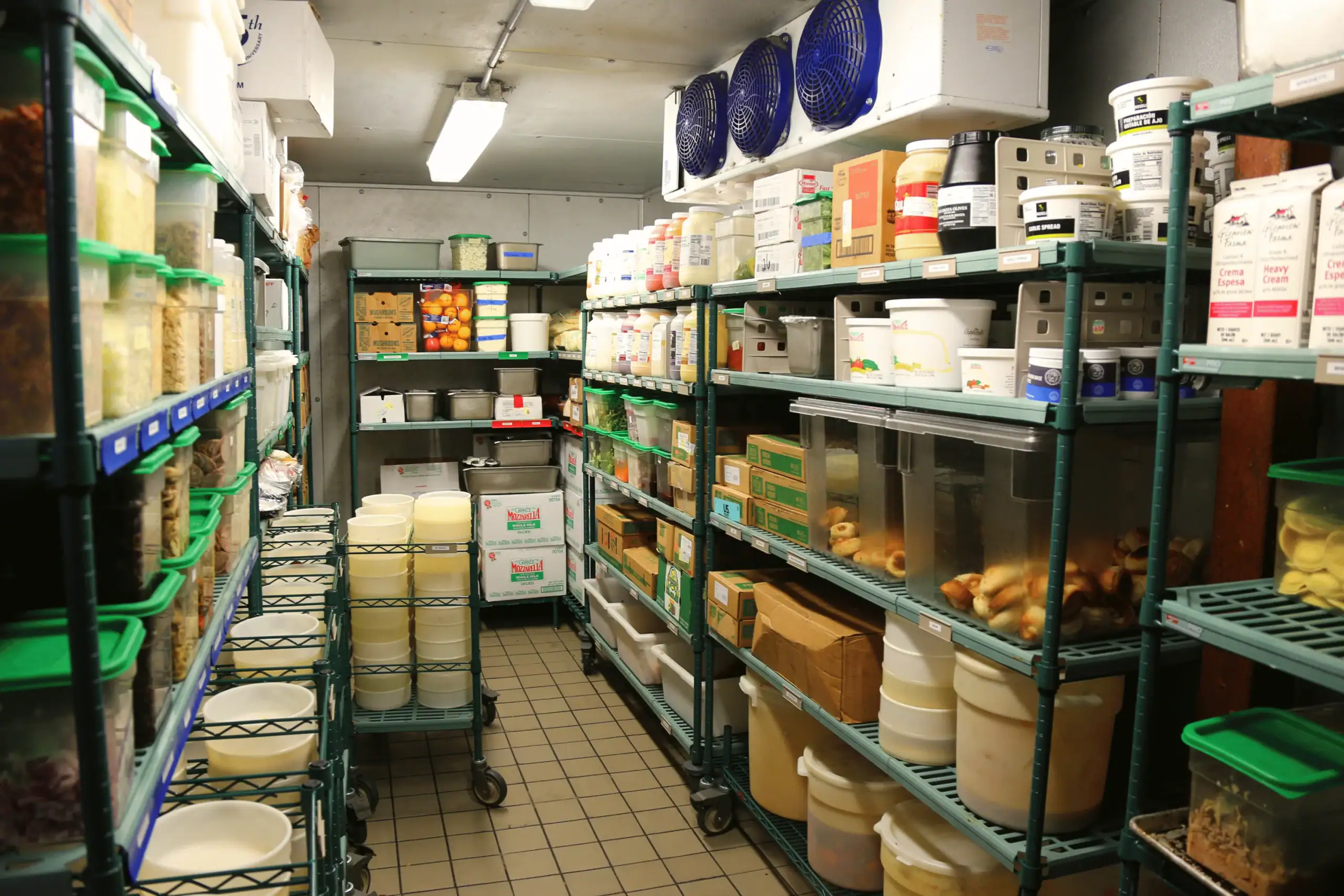
Installation costs vary significantly based on size and complexity, but you’re typically looking at $5,000 to $40,000 for the complete system. A small 6×6 foot unit suitable for cafes or small restaurants runs $5,000-$8,000, while larger 10×10 foot units for busier operations cost $8,000-$15,000.
The price includes the freezer panels, refrigeration system, electrical connections, and professional installation. Don’t forget ongoing costs—a 6×6 unit typically adds about $244 monthly to your electric bill, while larger units can cost $400+ per month to operate.
Custom installations or units requiring significant electrical upgrades will cost more, but the investment pays off through reduced food waste, bulk purchasing savings, and reliable operation that prevents costly emergency repairs.
Walk-in freezers must maintain temperatures between -10°F and 0°F (-23°C to -18°C) to ensure food safety and prevent bacterial growth. This temperature range is crucial for storing frozen foods while maintaining their quality, texture, and nutritional value.
The USDA requires business-owned refrigeration systems to maintain 0°F for frozen food storage. Operating above these temperatures can result in fines, health department violations, and serious food safety risks that could shut down your operation.
Consistent temperature control is key—fluctuations can cause freezer burn, texture changes, and shortened shelf life. Professional installation ensures your system maintains these critical temperatures reliably, with monitoring systems that alert you if temperatures drift into unsafe ranges.
Most walk-in freezer installations take 1-3 days depending on size and complexity. Simple installations in prepared spaces with adequate electrical service can often be completed in a single day, while larger units or those requiring electrical upgrades may take longer.
The timeline includes delivery, assembly of insulated panels, installation of refrigeration equipment, electrical connections, and system testing. Custom units typically take 10-12 weeks to manufacture, while quick-ship standard units arrive in 1-6 weeks.
Planning is crucial—permits, electrical upgrades, and structural preparations should be completed before installation begins. We coordinate these steps to minimize disruption to your business operations, often scheduling work during off-hours or slower periods.
Yes, most commercial walk-in freezers require 208-230V electrical service, which is different from standard 115V household power. Many facilities need electrical upgrades to accommodate these requirements, especially older buildings not designed for commercial refrigeration.
The electrical requirements depend on the size and type of refrigeration system. Smaller units might operate on single-phase power, while larger installations often need three-phase service. Your electrician will need to install appropriate breakers, wiring, and possibly upgrade your main electrical panel.
This is why professional assessment is important before installation. We identify electrical requirements early in the process, coordinate with qualified electricians, and ensure all work meets local building codes and safety standards.
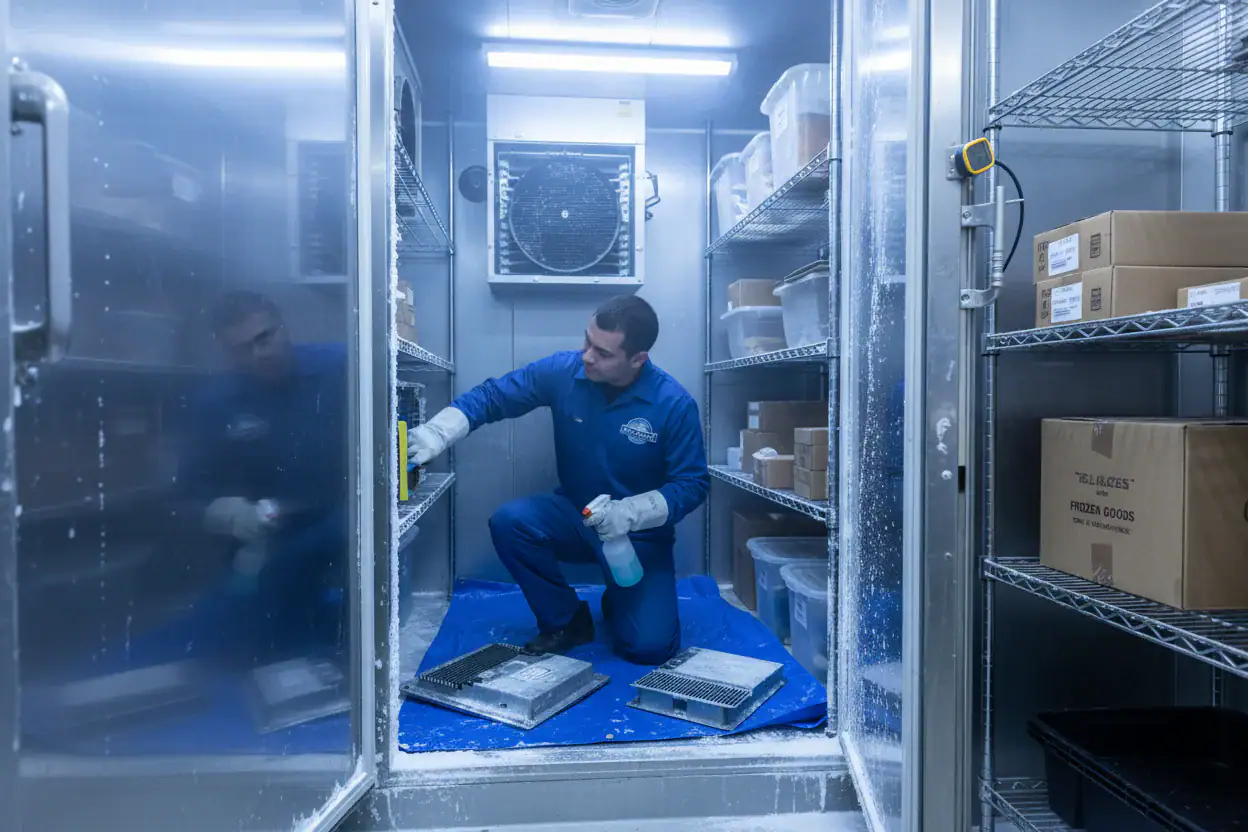
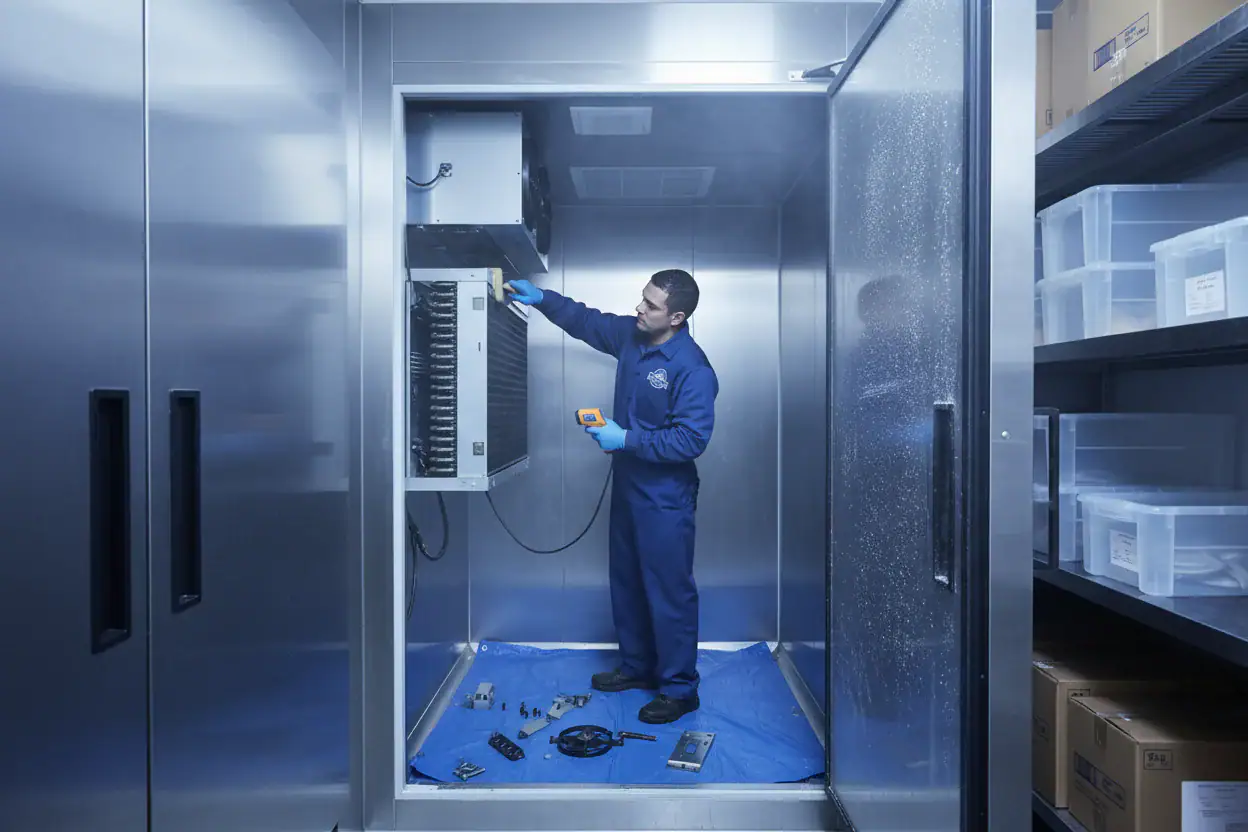
Regular maintenance includes monthly inspections of temperature controls, cleaning condenser coils, checking door seals, and replacing air filters. The refrigeration system needs professional service every 6-12 months, including refrigerant level checks and compressor maintenance.
Daily tasks for your staff include monitoring temperatures, keeping the interior clean, and ensuring proper airflow by avoiding overpacking. Door seals should be inspected weekly—damaged seals waste energy and can cause temperature fluctuations that compromise food safety.
Professional maintenance agreements prevent most major breakdowns and extend equipment life. Preventive service catches small problems before they become expensive repairs, ensures warranty compliance, and keeps your system operating at peak efficiency to minimize energy costs.
Yes, but outdoor installations require weatherproof construction and additional insulation to handle New York’s temperature extremes. Outdoor units need reinforced panels, weather-resistant roofing, and enhanced insulation to maintain proper temperatures during hot summers and cold winters.
The refrigeration system requires protection from snow, ice, and temperature fluctuations that can stress components. Proper drainage prevents water damage, and the electrical connections need weatherproof enclosures that meet local codes.
Outdoor installations cost more than indoor units due to additional weatherproofing requirements, but they’re often the best solution for businesses with limited indoor space. Professional installation ensures the unit can handle Long Island’s coastal weather conditions and seasonal temperature variations.