

Hear from Our Customers
Your refrigerator’s running constantly but barely keeping things cold. Or your boat AC quit right before the weekend. You’ve already lost time, maybe some food, and you’re wondering if this is going to cost you the whole season.
Here’s what happens when your marine refrigeration actually works the way it should: You show up at the dock and everything’s cool. Your batteries aren’t drained. Your food stays fresh during extended trips. The system runs efficiently without burning through power. And you’re not calling for emergency repairs every few weeks because someone actually fixed the root problem.
That’s what 40 years of marine HVAC experience gets you. Not guesswork. Not a general HVAC tech trying to figure out why your boat system is different. Just someone who knows exactly what’s wrong, how to fix it, and how to keep it from happening again.
We’ve been handling marine refrigeration and boat air conditioning throughout Elwood and the Greater New York area for over 40 years. That’s not a side service or something we started doing recently—it’s what we’ve built our reputation on.
We know Long Island’s boating community. We understand what saltwater does to cooling systems, why marine growth clogs your condenser lines, and how to diagnose power consumption issues that general HVAC companies miss entirely. We’ve seen every type of boat refrigeration problem that exists, which means we can usually tell you what’s wrong and what it’ll take to fix it within minutes of looking at your system.
We also handle commercial refrigeration for airports, catering halls, restaurants, and delis across the region. That dual expertise means we understand both the marine-specific challenges and the broader refrigeration principles that make systems work reliably under demanding conditions.
You call or reach out with your cooling issue. We ask a few specific questions about what’s happening—not to waste your time, but because experienced marine HVAC technicians can often narrow down the problem before we even arrive. You get a free estimate so you know what you’re looking at cost-wise before any work starts.
When we show up, we diagnose the actual problem. Not just the symptom. If your boat refrigerator isn’t cooling, we’re checking insulation, door seals, refrigerant levels, compressor function, and electrical issues. If your marine AC is throwing a high pressure fault, we’re looking at water flow, marine growth in your lines, and seawater pump function. We explain what we find in plain language—what’s broken, why it matters, and what happens if you don’t fix it.
Then we handle the repair with the right parts and the right approach for marine environments. We test everything to make sure it’s actually working properly, not just running. And we give you straight answers about maintenance and what to watch for so you’re not dealing with the same problem next month.
We offer 24/7 consulting because cooling emergencies don’t wait for business hours. If your system fails at the dock on a Friday night before a planned trip, you can actually reach someone who can help.
Ready to get started?
Marine refrigeration service covers the full spectrum of boat cooling needs. That includes diagnosing why your system isn’t maintaining temperature, fixing refrigerant leaks that drain your battery, replacing failed compressors or condensers, and addressing electrical issues that cause systems to short-cycle or fail to start.
For boat air conditioning, the service handles everything from seawater pump repairs to clearing marine growth from condenser lines to replacing control boards that fail in humid marine environments. We work on self-contained units, split systems, and chiller systems—whatever your vessel has installed.
In the Long Island and Elwood area specifically, marine growth is a constant issue. Barnacles, algae, and biofilm grow inside the hoses and pipes that lead to your air conditioners and refrigeration systems. This reduces water flow, causes high pressure faults, and makes your system overheat. Regular maintenance catches this before it becomes an emergency repair during peak boating season.
We also handle custom installations and complex systems that other companies won’t touch. Beer systems for boats. Custom refrigeration solutions for extended cruising. Upgrades to more energy-efficient systems that don’t drain your batteries as quickly. We’ve built a reputation for solving the problems that make other marine service companies say “we can’t do that.”
Power consumption is another critical factor in marine refrigeration that sets it apart from residential systems. Every amp matters on a boat. The service includes optimizing your system’s efficiency so you’re not constantly running your generator or arriving back at the dock with dead batteries.
This is one of the most common marine refrigeration problems, and it usually comes down to a few specific issues. First, check your door seals—if they’re not closing properly, warm air infiltrates constantly and your system runs nonstop trying to compensate. You can test this by closing the door on a dollar bill and trying to pull it out. If it slides easily, your seals need adjustment or replacement.
Poor insulation is another major culprit. Marine refrigerators use polyurethane foam insulation that breaks down over time, especially with moisture intrusion. If the exterior of your refrigerator feels warm or you see condensation forming on outside surfaces, cold air is escaping and your compressor is working overtime.
Low refrigerant levels will also cause this. If there’s a leak in your system, the refrigerant charge drops and your cooling capacity decreases. The system runs constantly trying to reach the set temperature but never quite gets there. This also drains your batteries significantly faster than normal operation.
Finally, if you’ve recently added warm items to your fridge, understand that marine refrigeration works differently than your home fridge. A single gallon of 80-degree liquid can take three hours to cool down to 35 degrees while the system also maintains box temperature. That’s not a malfunction—that’s just the reality of limited power availability on boats.
High pressure faults (HPF) happen when your marine AC system overheats, and the most common reason is reduced water flow to the unit. Your boat’s air conditioning relies on seawater to cool the condenser. When water flow drops, the system can’t reject heat properly and pressure builds up until the safety cutout triggers.
The seawater environment grows barnacles, algae, grass, and other fouling organisms inside the hoses and pipes that lead to your air conditioner. This growth restricts water flow over time. Even if your seawater strainer looks clean, you can have significant growth further down in the lines or in the condenser itself.
A failed seawater pump will also cause high pressure faults. If the pump isn’t moving enough water through the system—or isn’t running at all—your AC will overheat quickly. This is why regular maintenance that includes checking pump function and cleaning raw water systems is critical for marine AC reliability.
Less commonly, high pressure faults can indicate refrigerant overcharge (if someone recently serviced your system and added too much) or problems with the condenser itself. But in the saltwater environment around Elwood and Long Island, marine growth in cooling lines is by far the most frequent cause. Regular system flushing prevents this from becoming a recurring problem that ruins your boating weekends.
Marine refrigeration repair costs vary significantly based on what’s actually wrong with your system. Simple fixes like replacing door seals or cleaning condenser coils might run a few hundred dollars. Refrigerant leak detection and recharge typically falls in the $300-600 range depending on the size of your system and how much refrigerant is needed.
Compressor replacement is one of the more expensive repairs, often running $800-1500 or more depending on the unit size and type. Control board replacements, thermostat issues, and electrical repairs usually fall somewhere in the middle range. Seawater pump replacement for marine AC systems typically costs $300-600 including parts and labor.
The real cost often comes from misdiagnosis. If you hire a general HVAC company that doesn’t understand marine systems, you might pay for multiple service calls, unnecessary parts, and repairs that don’t actually solve your problem. That’s why working with marine refrigeration specialists matters—we diagnose correctly the first time, which saves you money even if our hourly rate seems higher.
We offer free estimates, which means you know what you’re looking at before any work begins. That transparency helps you make informed decisions about repairs versus replacement, especially on older systems where you might be throwing good money after bad. Our 40 years of experience also means we can often tell you whether a repair will actually last or if you’re just delaying the inevitable.
Marine refrigeration operates under completely different constraints than your home fridge, and understanding this explains why you need specialized service. The biggest difference is power availability. Your home has unlimited 120V electricity, so household refrigerators use larger, less efficient compressors that can handle big cooling loads without concern for power consumption. On a boat, every amp hour counts because you’re running on limited battery capacity.
Marine refrigeration systems are designed for high efficiency with minimum power draw. They use smaller compressors, larger evaporators (often with fans), and better insulation to maximize cooling while conserving battery power. The compressors run at variable speeds to optimize efficiency rather than just cycling on and off like household units.
The marine environment also creates unique challenges. Systems must handle constant movement, high humidity, saltwater exposure, and voltage fluctuations that would damage household appliances. Marine refrigerators use DC power (12V or 24V) rather than AC power, which requires different components and expertise to service properly.
Installation is also completely different. Marine refrigeration often uses cold plate systems or custom-built iceboxes rather than self-contained units. The condenser might be water-cooled using seawater rather than air-cooled. All of this requires specialized knowledge to install, maintain, and repair correctly.
This is why general HVAC technicians often struggle with boat refrigeration. The principles are similar, but the application is entirely different. Marine HVAC specialists understand these unique requirements and have the parts, tools, and experience to work on systems that operate under maritime conditions.
Most marine HVAC systems benefit from professional service at least once per year, ideally before the boating season starts. This preventative maintenance catches small problems before they become expensive emergency repairs during peak summer months when you actually want to use your boat.
Annual service should include cleaning condenser coils, checking refrigerant levels, inspecting door seals and gaskets, testing compressor function, verifying proper temperature control, and checking electrical connections. For marine AC systems, this also means inspecting seawater pumps, flushing raw water lines to remove marine growth, checking for leaks, and testing safety cutouts.
If you boat frequently or live aboard your vessel, twice-yearly service makes more sense. Spring service prepares your systems for heavy summer use, and fall service addresses any wear from the season while preparing systems for winter storage if applicable.
Beyond scheduled maintenance, you should call for service anytime you notice warning signs: systems running constantly, inadequate cooling, unusual noises, error codes, excessive power consumption, or ice buildup where it shouldn’t be. These symptoms indicate problems that will only get worse if ignored.
The Long Island marine environment is particularly hard on cooling systems because of saltwater exposure and marine growth. Regular maintenance extends system life significantly and prevents the frustration of breakdowns during the limited boating season. The cost of annual service is typically far less than one emergency repair call, and it gives you peace of mind that your systems will work when you need them.
While DIY refrigerant recharge kits exist, using them on marine refrigeration systems is rarely a good idea and often makes problems worse. First, if your system is low on refrigerant, that means there’s a leak somewhere. Adding more refrigerant without finding and fixing the leak is just a temporary band-aid that wastes money and refrigerant.
Second, marine refrigeration systems require precise refrigerant charges. Too little and your system won’t cool properly. Too much and you can cause high pressure issues, reduce efficiency, and potentially damage your compressor. DIY kits rarely allow for the precision needed to charge systems correctly to manufacturer specifications.
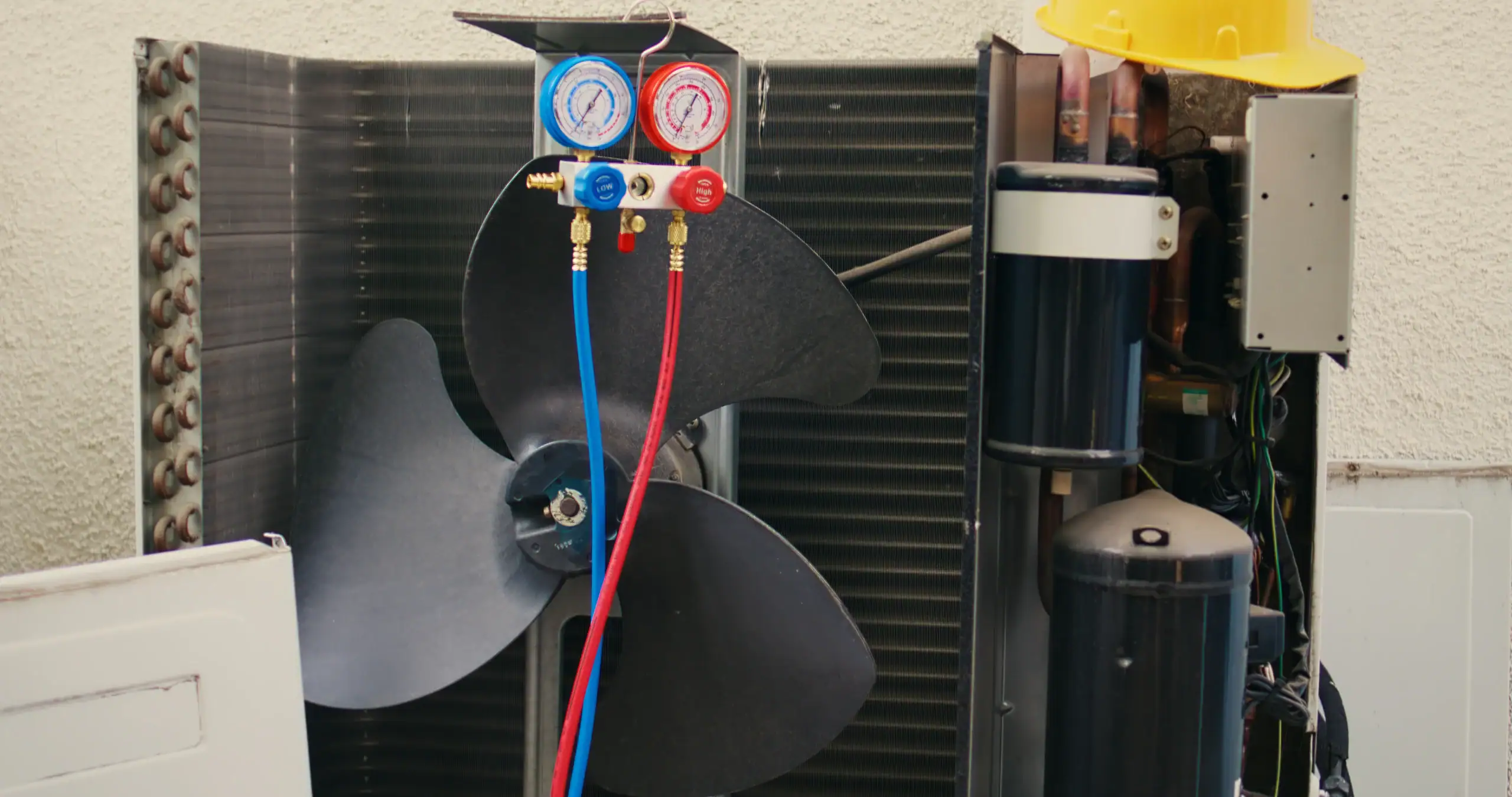
Third, if you connect gauges to your system without proper technique, you can introduce air and moisture into the refrigerant circuit. This contamination causes all sorts of problems including poor cooling performance, compressor damage, and corrosion inside your system. Professional technicians use vacuum pumps and proper procedures to prevent contamination.
EPA regulations also require proper handling and recovery of refrigerants. Simply venting refrigerant to the atmosphere is illegal, and proper recovery equipment is necessary for any service work. Professional marine HVAC technicians have the certification, equipment, and expertise to handle refrigerants safely and legally.
If your boat refrigeration isn’t cooling properly, the smart move is getting professional diagnosis. The problem might not even be refrigerant-related—it could be electrical issues, failed components, poor insulation, or a dozen other things that adding refrigerant won’t fix. We offer free estimates, so you can find out what’s actually wrong before spending money on parts or DIY attempts that might not solve the problem.