
Hear from Our Customers
You stop losing sleep over temperature swings. Your food stays fresh longer, your health inspections go smoother, and your profit margins stop disappearing into spoiled inventory.
When commercial refrigeration works right, you’re not scrambling to find emergency service during your busiest weekend. You’re not explaining to customers why half your menu isn’t available. You’re running your business instead of babysitting a failing cooler.
That’s what reliable refrigeration systems look like in practice. No surprises. No panic calls. Just consistent temperature control that lets you focus on what actually makes you money. And when something does go wrong—because equipment eventually needs attention—you get someone who picks up the phone and fixes the root cause, not just resets the thermostat and hopes for the best.
We’ve been handling commercial refrigeration in Shoreham and across Long Island for over four decades. We’ve worked with restaurants, delis, catering halls, and marine businesses from Montauk to Manhattan—which means we understand what Long Island’s climate does to refrigeration equipment.
Summer heat makes your compressors work overtime. Winter cold messes with door seals. Salt air from the coast accelerates wear on condenser coils. We design and maintain systems that handle all of it, because we’ve been doing this since before most of your competitors opened their doors.
You’ll work with our certified technicians directly—no subcontractors, no surprises. Just people who know commercial refrigeration inside and out, available 24/7 when you need us.
First, we come out and actually look at your space. We measure your needs based on your volume, your menu, your traffic patterns—not some generic calculation from a manual. You get a free estimate that tells you what will work for your business and your budget, with options that make sense.
If you’re getting new equipment installed, we handle everything from layout design to final testing. We make sure your system meets health department requirements and runs efficiently from day one. If you’re calling for repairs, we show up fast—typically within 1-2 hours for emergencies—and our trucks carry parts for every major brand.
About 70% of our emergency calls get fixed on the spot. For the rest, we’re honest about what’s needed and how long it’ll take. Once the work’s done, we test everything to make sure it’s actually fixed, not just temporarily patched. Then we’re available around the clock if something comes up later.
Ready to get started?
We install, repair, and maintain walk-in coolers and freezers, reach-in refrigerators, display cases, ice machines, and beer systems. If it keeps things cold in a commercial kitchen or food service operation, we handle it.
Shoreham’s business district sees heavy restaurant and food service traffic, especially during summer months when the North Shore gets busy. Your refrigeration systems work harder here than they would inland—more door openings, higher ambient temperatures, coastal humidity. We account for that when we’re sizing equipment or diagnosing problems.
Maintenance customers get priority scheduling and typically see their equipment last 15+ years instead of failing early. We’re checking refrigerant levels, cleaning condenser coils, testing door seals, and catching small issues before they become expensive emergencies. Energy-efficient installations can cut your operating costs without sacrificing performance, which matters when you’re running coolers around the clock.
Emergency service is available 24/7 throughout Shoreham and the surrounding area. We prioritize calls where you’re losing inventory or facing health code violations, and we staff extra technicians during peak summer months when systems fail most often.
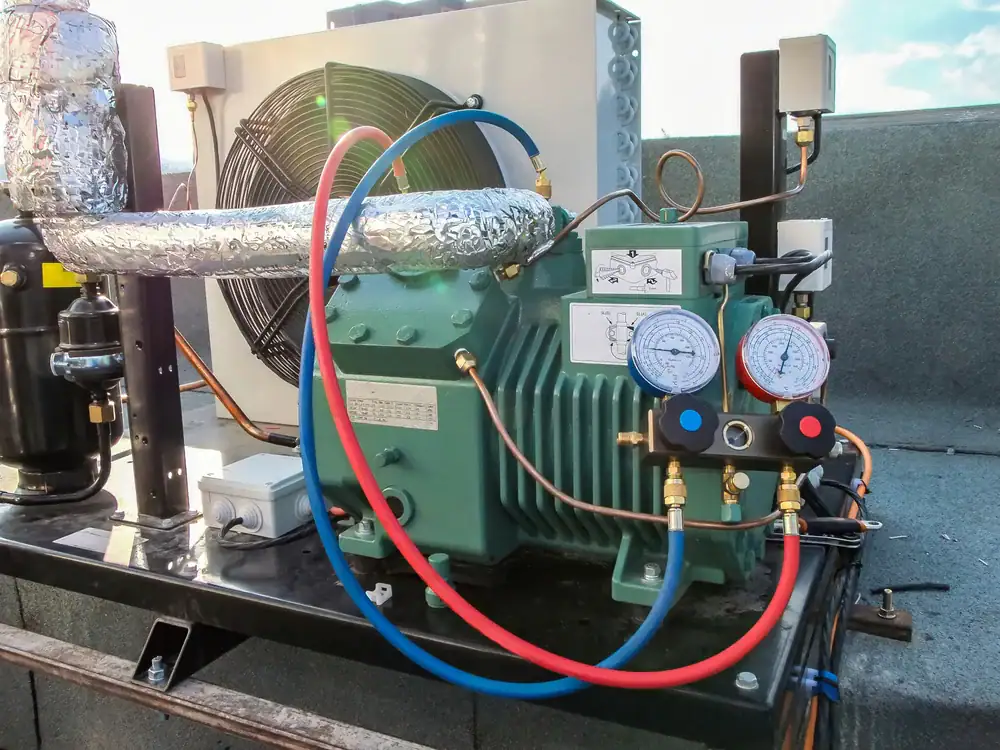
We typically respond within 1-2 hours for emergency calls in Shoreham and the surrounding area. Response time depends on severity—if you’re losing inventory or facing immediate health code violations, you move to the front of the line.
Our trucks carry parts for all major brands, which is why about 70% of emergency calls get fixed during the first visit. The other 30% usually need specialized parts we have to order, but we’ll tell you that upfront and give you a realistic timeline.
We staff extra technicians during summer months when call volume spikes. Long Island heat is brutal on refrigeration equipment, and we know July and August mean more compressor failures and more late-night emergencies. We plan for that instead of making you wait.
With proper maintenance, quality commercial refrigeration equipment lasts 10-15 years minimum. Our maintenance customers routinely get 15+ years from their walk-ins because we’re catching problems early and keeping systems clean.
Without maintenance, you’re looking at major repairs around year five and possible replacement by year eight. Long Island’s climate accelerates wear—summer heat overworks compressors, winter cold affects seals, and salt air corrodes condenser coils faster than it would inland.
Most businesses skip maintenance until something breaks, then wonder why their equipment failed early. The difference between a 7-year lifespan and a 15-year lifespan usually comes down to whether someone was checking refrigerant levels, cleaning coils, and replacing worn parts before they caused bigger damage. That’s not a sales pitch—it’s just how refrigeration equipment works.
If losing a walk-in cooler for 12 hours would cost you thousands in spoiled inventory, then yes. Refrigeration failures don’t wait for business hours, and neither does food spoilage.
A failed cooler at 2 AM on a Saturday means you’re either scrambling to transfer everything to backup storage you probably don’t have, or you’re watching your weekend prep work spoil before Sunday brunch. Health department violations happen fast when temperature control fails, and explaining to customers why half your menu isn’t available doesn’t help your reputation.
We answer emergency calls around the clock because that’s when refrigeration problems actually happen. You’re not paying extra for 24/7 availability—it’s included because we know your business doesn’t stop at 5 PM, and neither do equipment failures.
Dirty condenser coils are the number one killer of commercial refrigeration systems in coastal areas. Salt air and regular dust buildup make your compressor work harder, run hotter, and fail earlier than it should.
Door seals are the second most common issue. When seals wear out, your cooler loses cold air constantly, which makes the compressor run nonstop trying to maintain temperature. That drives up your energy bills and shortens equipment life. Most people don’t notice failing seals until their electric bill spikes or the compressor burns out.
Refrigerant leaks come in third, usually from vibration or corrosion over time. Low refrigerant means poor cooling performance and potential compressor damage if it runs too long without enough charge. These problems aren’t complicated—the difference is fixing the root cause instead of just addressing symptoms and hoping it holds.
Walk-in cooler installation typically runs $5,000-$15,000+ depending on size, features, and your specific requirements. Reach-in units start around $2,000-$8,000 installed. Custom marine HVAC systems vary widely based on vessel size and complexity.
Those ranges are broad because your actual cost depends on what you need. A small reach-in for a deli costs less than a large walk-in freezer for a catering hall. Energy-efficient models cost more upfront but save money on operating costs over their lifespan. We’re factory-authorized to service all major brands, which gives you options at different price points.
We provide free estimates that break down exactly what you’re paying for and why. No pressure, no generic solutions—just honest evaluation of what will work for your business and your budget. If there’s a less expensive option that still meets your needs, we’ll tell you. If you need to spend more to get equipment that won’t fail in two years, we’ll tell you that too.
If your system is under 7 years old and the repair costs less than half the replacement cost, repair usually makes sense. If it’s over 10 years old and needs major component replacement, you’re often better off replacing it.
Here’s the math that matters: older systems use more energy, even when they’re working correctly. A new energy-efficient unit might cost $8,000 installed, but if it saves you $150/month in electricity compared to your 12-year-old cooler, it pays for itself in about four years. After that, you’re just saving money every month while running more reliable equipment.
We’ll give you an honest assessment either way. Sometimes a $800 repair buys you three more solid years from good equipment. Sometimes that same $800 is just delaying a failure that’s coming in six months anyway. We’ve been doing this for over 40 years—we know the difference, and we’re not going to sell you a new system when a repair makes more sense.