Hear from Our Customers
When your marine AC throws a high-pressure fault or your boat refrigeration stops cooling mid-July, you don’t have weeks to wait. You need someone who answers the phone, understands marine systems, and fixes the problem right.
That’s the difference between a marine HVAC specialist and a residential tech trying to figure out your seawater-cooled system. Marine refrigeration operates in one of the harshest environments—constant humidity, saltwater exposure, vibration. Your system needs someone who’s seen it all and knows exactly what’s failing before they even step aboard.
You get your boat back to comfortable temps without the runaround. No more calling five companies only to hear “we’re booked until November.” No more watching your weekend slip away while someone learns on your dime.
We’ve spent over 40 years solving marine HVAC and refrigeration problems across the Greater New York area. We serve Oak Beach boat owners who need reliable service from people who actually understand the unique demands of marine cooling systems.
We handle everything from emergency boat AC repair to complex custom refrigeration installations. We’re available 24/7 for consulting and offer free estimates because we know you need straight answers, not sales pressure.
Oak Beach sits right on the Great South Bay, where Long Island’s boating community thrives from May through September. When your marine refrigeration fails during peak season, you can’t afford to wait. We respond fast, communicate clearly, and have the expertise to diagnose issues that leave other techs scratching their heads.
First, you reach someone who answers your questions without the technical jargon runaround. You describe what’s happening—whether it’s insufficient cooling, strange noises, water discharge issues, or an error code you don’t understand—and get a straight assessment.
If it’s an emergency, we prioritize getting someone to your location fast. For scheduled service, you get a free estimate upfront so there are no surprise invoices when the work’s done. Our technician shows up with the knowledge to diagnose marine-specific issues: clogged raw water strainers, condenser coil buildup, compressor problems, refrigerant leaks, or faulty reversing valves.
The repair happens efficiently because we know these systems inside and out. We use proper marine-grade materials, not hardware store parts that’ll corrode in six months. You get a clear explanation of what failed, why it failed, and what you can do to prevent it next time. Then you’re back to enjoying your time on the water instead of dealing with a sweltering cabin or warm drinks.
Ready to get started?
Marine refrigeration and boat air conditioning aren’t the same as your home systems. They’re seawater-cooled, which means they rely on proper water flow through condensers, strainers, and through-hull fittings. When any part of that system clogs or corrodes, your cooling capacity drops fast.
Oak Beach boat owners deal with the same challenges every marine system faces: saltwater accelerates corrosion, humidity breeds mold and buildup, and constant vibration loosens connections. Your condenser coils accumulate marine growth that can cut cooling capacity by 30%. Your raw water strainer clogs with debris. Your compressor works overtime in 90-degree heat and eventually wears out.
Regular maintenance prevents most of these problems. That means cleaning air filters monthly, checking condensate pans, flushing condenser coils every few years, and exercising seacocks so they don’t seize. It also means running your reverse-cycle heat mode occasionally, even in summer, to keep valves from sticking. Most marine AC systems can last 15-20 years with proper care, but only if someone who understands these systems is doing the work.
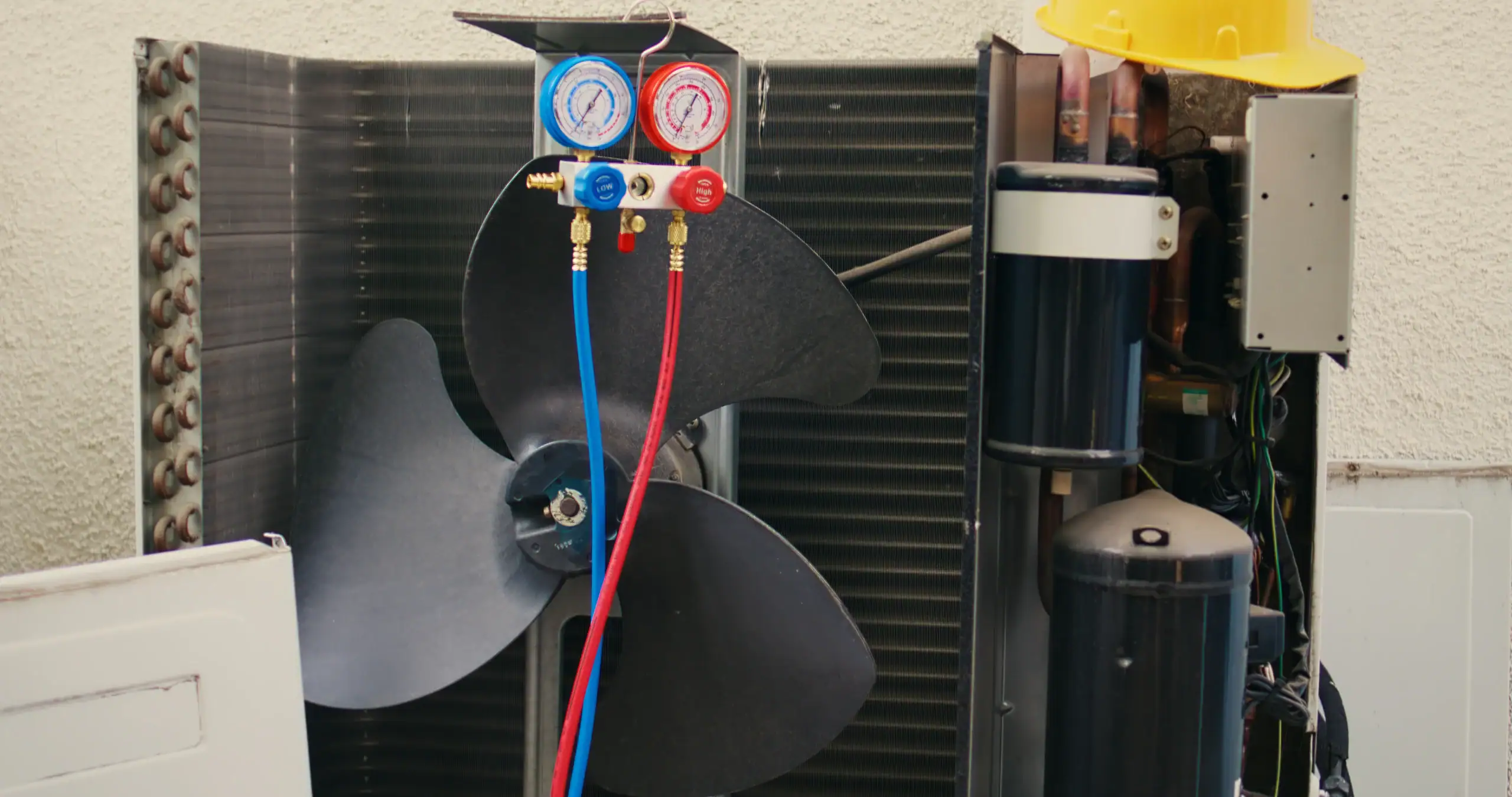
High-pressure faults are the most common marine AC problem, and they usually point to restricted water flow or heat exchange issues. Your system’s high-pressure switch trips when the condenser can’t dissipate heat properly, forcing an automatic shutdown to prevent compressor damage.
Start with the basics: check if your raw water strainer is clogged with debris, seaweed, or sediment. If water flow looks weak or nonexistent, that’s your culprit. Next, inspect your seawater pump—if the impeller is worn or damaged, it can’t move enough water through the system. Finally, your condenser coils might be caked with marine growth and scale buildup, which blocks heat transfer even when water is flowing.
In Oak Beach’s brackish Great South Bay waters, you’re dealing with a mix of saltwater and organic matter that loves to clog systems. If you’ve cleared the strainer and checked the pump but still get high-pressure faults, your condenser coils likely need professional flushing with a weak acid solution. That’s not a DIY job—you need someone with the right chemicals and experience to do it without damaging your system.
At minimum, your boat refrigeration and AC systems need attention at the start and end of every boating season. That means a spring commissioning to make sure everything’s running properly after winter storage, and a fall winterization to prevent freeze damage and catch problems before they get worse.
During active boating months in Oak Beach—typically May through September—you should clean air filters monthly and check raw water strainers every few weeks, especially after running in areas with heavy vegetation or sediment. Your condensate pan needs regular inspection to make sure the drain isn’t clogged, which can lead to water damage and mold growth.
Every 2-5 years, depending on how much you use your boat and where you keep it, your condenser coils need professional cleaning to remove marine buildup. If you notice your system running longer cycles, not cooling as efficiently, or struggling in hot weather, don’t wait for your scheduled service—get it checked. Small problems like a worn pump impeller or low refrigerant charge are cheap fixes now but expensive failures later.
Technically they might try, but marine HVAC systems are fundamentally different from residential or commercial land-based units, and that difference matters. Your boat’s AC is seawater-cooled, not air-cooled, which means proper diagnosis requires understanding water flow dynamics, through-hull fittings, seacocks, marine pumps, and the unique corrosion challenges of saltwater environments.
A residential HVAC tech won’t know to check your raw water strainer first when you have cooling problems. They won’t recognize that your “compressor issue” is actually a clogged condenser coil from marine growth. They probably don’t carry marine-grade tinned copper wiring or proper stainless hose clamps, so they’ll use hardware store parts that corrode quickly in the marine environment.
Marine systems also have specific installation requirements—pumps must be mounted below the waterline with properly sloped hoses to prevent airlocks, control boards need protection from water and heat, and electrical connections require marine-grade terminals and heat shrink. A tech who doesn’t specialize in marine work can create problems that are expensive to fix later. When you’re dealing with through-hull fittings and seawater systems, improper installation or repair can literally sink your boat.
Both systems use the same basic refrigeration cycle—compressor, condenser, expansion valve, evaporator—but they’re designed for different purposes and operate at different temperatures. Your boat refrigeration keeps food and drinks cold, typically running 24/7 to maintain temps between 35-40°F for fridges and 0-10°F for freezers. Marine AC cools cabin air and runs intermittently based on thermostat settings.
Boat refrigeration systems are usually more compact and power-efficient because they need to run constantly on your boat’s battery bank. They often use holding plates (like ice blocks) that stay cold for hours even when the compressor isn’t running, which reduces power draw. Marine AC systems move much more air and use significantly more power, but only cycle on when cooling is needed.
The maintenance needs differ too. Refrigeration systems need proper insulation in the cold box and efficient compressor operation to minimize battery drain. Marine AC systems deal with higher humidity loads and need regular condensate drain maintenance. Both face the same marine environment challenges—corrosion, vibration, saltwater exposure—but refrigeration failures usually mean spoiled food, while AC failures just mean discomfort. That said, in Oak Beach’s summer heat, a failed marine AC can make your boat cabin unbearable pretty quickly.
Gradual cooling loss usually means your system is working but something’s reducing its efficiency. The most common culprit is dirty condenser coils—as marine growth, scale, and mineral deposits accumulate, they insulate the coils and prevent proper heat exchange. You might lose 30% of your cooling capacity before you really notice the problem.
Check your air filters first—they’re easy to access and should be clean. Dirty filters restrict airflow across the evaporator, which reduces cooling and can even cause the coils to ice up. Next, make sure your raw water flow is strong. Weak flow means the condenser can’t dissipate heat efficiently, so your system works harder for less cooling.
Low refrigerant charge is another possibility, usually from slow leaks in the system. If you notice no condensation on the refrigerant lines between your air handler and compressor, that’s a sign your charge is low. Refrigerant work requires a licensed technician with proper equipment. Finally, your compressor might be wearing out—if it’s 10-15 years old and struggling to maintain pressure, it’s probably time for replacement. Marine compressors typically last 5-7 years under heavy use, longer if you’re only a weekend boater.
First, check the obvious stuff before calling for service. Make sure your circuit breaker hasn’t tripped and that you’re getting power to the unit. Check your battery voltage if you’re running on DC power—low voltage can prevent the compressor from starting. Look at your control panel for error codes, which can tell you exactly what’s wrong.
If you have power and no error codes but the system still won’t run, check your raw water strainer and seacock. A completely clogged strainer or closed seacock will prevent water flow, triggering safety switches that shut down the compressor to prevent damage. Make sure water is actually flowing through your system—you should see discharge water coming out of your through-hull fitting when the system runs.
If everything looks normal but your refrigeration still isn’t working, you’re likely dealing with a failed compressor, bad control board, faulty relay, or refrigerant leak. These aren’t DIY fixes. Marine refrigeration systems operate in harsh conditions and components fail. The good news is that a qualified marine technician can usually diagnose the problem quickly and get you back up and running. The key is calling someone who specializes in marine systems and can respond fast—especially during Oak Beach’s peak boating season when you need your systems working.