
Hear from Our Customers
Your walk-in hits 50 degrees during dinner rush. Your reach-in cycles on and off every twenty minutes. Your compressor sounds like it’s about to give up entirely.
You’re not just dealing with broken equipment. You’re dealing with spoiled inventory, angry health inspectors, and the constant worry that tonight’s the night everything goes south.
Here’s what changes when your refrigeration actually works: your food stays cold, your energy bills drop, and you stop wondering if you’ll pass your next inspection. Your equipment runs quietly in the background doing exactly what it’s supposed to do. You get back to running your business instead of babysitting temperamental coolers.
That’s what proper commercial refrigeration service looks like. Not just fixing what’s broken—preventing it from breaking in the first place.
We’ve been handling commercial refrigeration systems across Long Island since before most of your competitors opened their doors. That includes everything from standard restaurant setups to complex marine HVAC systems on yachts docked from Montauk to Manhattan.
North New Hyde Park businesses deal with specific challenges—humid summers that make compressors work overtime, health departments that don’t mess around, and the reality that you can’t just shut down for three days while someone figures out your walk-in. We understand those challenges because we’ve been solving them in this area for four decades.
Our technicians carry EPA 608 certifications and enough parts inventory to fix about 70% of emergency calls on the spot. No waiting for orders. No second trips for basic components.
You call—day or night—and talk to someone who actually understands refrigeration, not a call center reading scripts. We ask the right questions to determine if this is a true emergency or something that can wait until morning without risking your inventory.
For emergency refrigeration repairs, we’re typically on-site within hours. Our technician shows up with diagnostic equipment and a truck stocked with common parts. They identify the root cause—not just the symptom—and explain what failed and why. You get an exact repair cost before any work starts.
Once you approve, we fix it. If it’s a compressor issue, we don’t just replace the compressor and leave. We check what caused it to fail in the first place. Dirty coils? Refrigerant leak? Electrical problem? We address the underlying issue so you’re not calling us back in two weeks.
For new refrigeration installation or system design, we measure your actual needs. Peak usage times, door opening frequency, ambient temperature, product load. Then we design a system with proper capacity—not oversized, not undersized. Equipment that’ll run efficiently for 15-20 years with proper maintenance.
Ready to get started?
You get technicians who’ve handled everything from airport food service refrigeration to yacht galley systems. That breadth of experience matters when your setup isn’t standard or when you’re dealing with space constraints and power limitations.
Our service covers walk-in coolers and freezers, reach-in units, display cases, ice machines, beer systems, and specialized marine refrigeration. We handle installation, routine maintenance, emergency repairs, and system upgrades. If it needs to stay cold, we work on it.
Long Island restaurants and food service operations face specific pressures. Summer heat that pushes equipment to its limits. Salt air near the coast that accelerates corrosion. Health inspectors who know exactly what to look for. Energy costs that make inefficient systems expensive to run.
We account for all of that. Our maintenance programs focus on the components that fail most often in this climate—condenser coils that get clogged with coastal humidity, compressors that overheat during July and August, door gaskets that wear out from constant use. Regular cleaning, refrigerant level checks, electrical connection inspections. The unglamorous work that keeps your refrigeration systems running another decade.
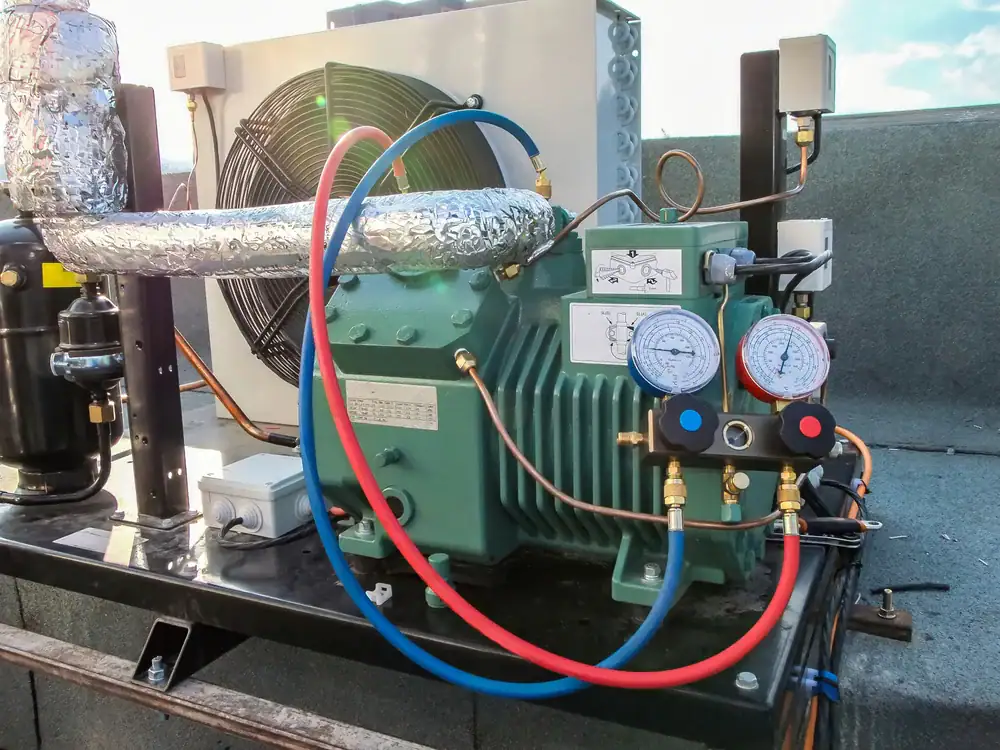
For true emergencies—equipment down, product at risk—we’re typically on-site within a few hours, even on weekends and holidays. We prioritize calls based on urgency and product risk.
When you call, we’ll ask specific questions to assess the situation. Is the unit completely down or just struggling? What’s the current temperature? What type of product is inside? Those answers help us determine response priority.
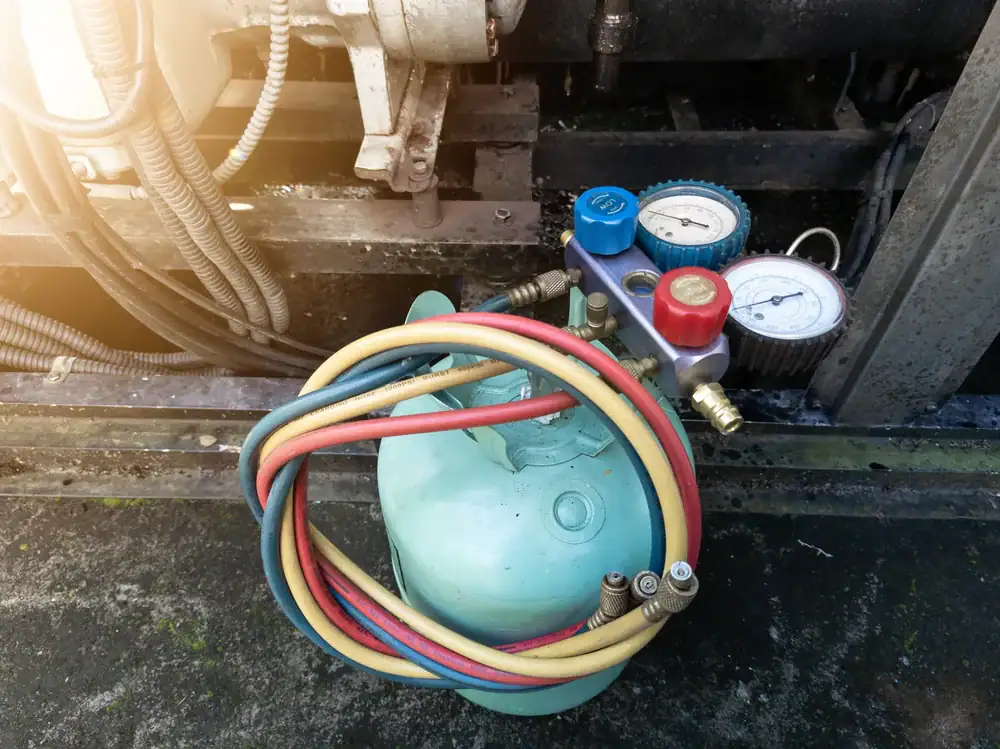
About 70% of our emergency refrigeration repairs get fixed during that first visit because our trucks carry extensive parts inventory. Compressors, fan motors, contactors, thermostats, refrigerant—the components that commonly fail. We’re not showing up just to diagnose and then disappear for three days waiting on parts.
A cheap repair addresses the symptom. A proper fix solves the root cause and prevents the next breakdown.
Your compressor failed. The cheap approach: replace the compressor, collect payment, leave. Three months later, the new compressor fails too because nobody addressed why the first one died. Maybe the condenser coils were clogged, making the system work too hard. Maybe there’s a refrigerant leak that’s been slowly starving the compressor. Maybe the electrical supply is inconsistent.
We diagnose the whole system, not just the failed component. If your compressor overheated, we’re checking coil cleanliness, refrigerant levels, airflow, and electrical supply. We fix what caused the failure so you’re not stuck in a cycle of repeated repairs. That approach costs slightly more upfront but saves you thousands over the equipment’s lifespan.
Age and repair cost are the two main factors. If your refrigeration system is over 15 years old and needs a major repair—compressor replacement, refrigerant line work, complete control board replacement—you’re often better off replacing the whole unit.
Here’s the math: a compressor replacement might cost $2,500 to $3,500. If your unit is 12 years old, you’re putting serious money into equipment that’s already past its typical lifespan. That compressor might run another three years, or it might fail again in eighteen months. Meanwhile, the rest of the system—coils, fans, controls—is also aging.
A new energy-efficient system costs more upfront but runs cheaper, breaks down less, and comes with warranty coverage. We’ll give you honest numbers for both options—repair cost versus replacement cost—and let you make the call. Sometimes repair makes sense. Sometimes it’s throwing good money after bad.
Condenser coil cleaning is the single most effective preventive task. Dirty coils reduce cooling efficiency by up to 30% and make your compressor work significantly harder, leading to overheating and premature failure. In Long Island’s humid climate, coils get dirty fast.
Refrigerant level checks catch small leaks before they become big problems. Low refrigerant makes your system run constantly without reaching target temperature. That overworks the compressor and drives up your electric bill.
Door gasket inspections prevent cold air loss. A worn gasket on a walk-in cooler can waste hundreds of dollars monthly in energy and force your refrigeration system to cycle more frequently. Electrical connection checks prevent failures from loose or corroded contacts.
Those four tasks—coil cleaning, refrigerant checks, gasket inspection, electrical review—prevent most breakdowns. Everything else is either less critical or only needed when specific symptoms appear. A good maintenance program focuses on high-impact tasks, not busywork.
We handle both, which actually makes us better at both. Marine refrigeration systems deal with space constraints, power limitations, vibration, and saltwater corrosion. Those challenges require different thinking than standard commercial setups.
That experience transfers. When a restaurant has an oddly shaped space or limited electrical capacity or needs a custom solution, we’re not starting from scratch. We’ve already solved similar problems on boats where space is even tighter and power is even more limited.
We service yacht clubs, marinas, and private vessels throughout the Long Island coast alongside our commercial refrigeration clients—airports, catering halls, restaurants, delis. The diagnostic process is the same: identify what’s failing, determine why it failed, fix the root cause. Whether that’s a yacht galley or a restaurant walk-in doesn’t change the fundamentals.
Emergency service calls typically start around $200-300 just to diagnose, then parts and labor on top of that. Average annual repair costs for commercial refrigeration run about $2,200, though that varies wildly based on equipment age and how well it’s been maintained.
Major repairs—compressor replacement, refrigerant line work, control system overhauls—range from $1,500 to $5,000 depending on unit size and complexity. New walk-in cooler installation starts around $6,000 for basic setups and goes up from there based on size and features.
Maintenance contracts usually run $400-800 annually depending on how much equipment you have and how often it needs service. That typically covers quarterly inspections, coil cleaning, refrigerant checks, and priority emergency response.
We provide exact costs before starting work. No surprises, no hidden fees. You approve the price, then we proceed. If you decline, you pay the diagnostic fee and we leave. Transparent pricing means you make informed decisions, not pressured ones.