

Hear from Our Customers
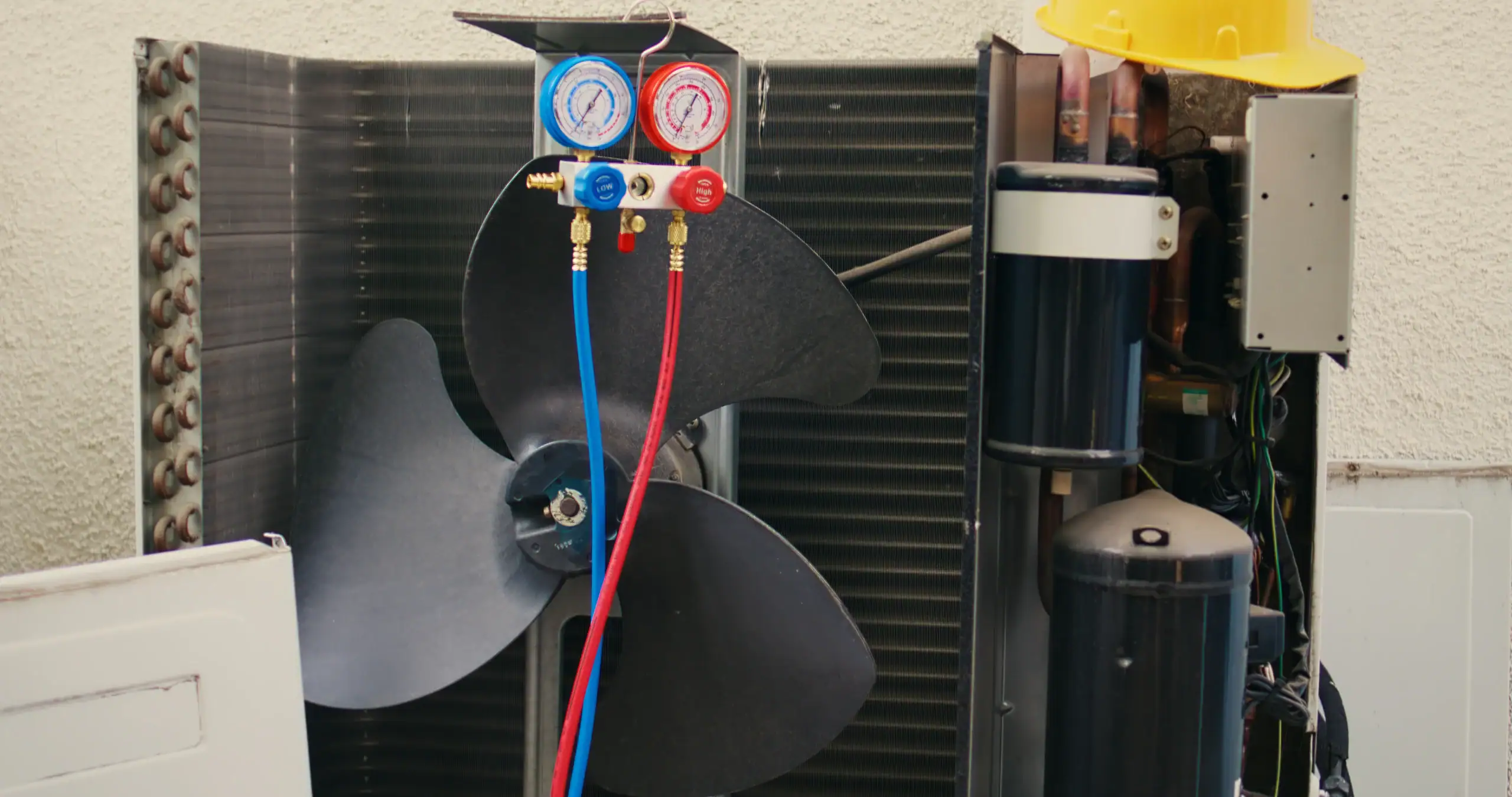
If you’ve been waiting weeks for someone to even look at your boat’s AC or refrigeration, you already know the problem. Most HVAC contractors don’t touch marine work. The few who do are booked solid through the entire season.
That’s where we’re different. We specialize in marine refrigeration and boat air conditioning—it’s not a side job for us. When your system goes down in July and you’ve got guests coming or a fishing trip planned, you need someone who picks up the phone and shows up with the right parts and actual marine experience.
Your boat’s cooling system faces challenges that land-based equipment never sees. Saltwater corrosion. Constant vibration. Limited electrical capacity. 12V or 24V power instead of standard residential current. These aren’t minor details—they’re the difference between a system that lasts and one that fails in two seasons because someone installed residential components that can’t handle the marine environment.
We’ve been handling commercial refrigeration and marine HVAC in the Greater New York area for over 40 years. That’s not 40 years of general HVAC work where we occasionally see a boat—it’s 40 years of actually specializing in the systems that most contractors avoid.
Lindenhurst boat owners know the local marine scene. East Shore Marine, Anchorage Yacht Club, Seaside 3, Surfside 3—we work with the facilities and private owners throughout the Great South Bay area. We understand what Long Island’s humid summers do to marine cooling systems and how saltwater accelerates every potential failure point.
Our team handles complex installations, emergency repairs, and the kind of custom work that requires real problem-solving. We also offer 24/7 consulting, free estimates, and straightforward communication—because you shouldn’t need a degree in marine engineering to understand what’s wrong with your boat.
First, we actually answer the phone. You’ll talk to someone who knows marine systems, not a call center. We’ll ask about your symptoms, your boat, and your timeline. If it’s an emergency, we move fast. If it’s routine maintenance or an install, we schedule around your availability.
When we show up, we bring diagnostic equipment and an extensive parts inventory. Most marine refrigeration and AC problems fall into predictable categories once you’ve seen a few thousand systems. High pressure faults. Refrigerant leaks. Raw water pump failures. Electrical issues. Clogged strainers. We check the obvious culprits first, then move to the complex stuff if needed.
Here’s the part that matters: we’ll tell you honestly whether repair makes sense or if you’re better off replacing the unit. Marine AC systems typically last 5 to 10 years. After about five years, repair costs often exceed replacement costs—especially with refrigerant leaks, which usually signal broader corrosion issues. We’re not interested in selling you a repair that’ll fail again in three months when a new unit makes more financial sense.
If it’s a repair, we handle it on the spot when possible. If it’s an installation, we plan it properly—accounting for your boat’s electrical system, space constraints, ventilation requirements, and the marine-grade components that’ll actually survive in saltwater conditions. Then we install it right so you’re not calling us back next season with a premature failure.
Ready to get started?
Marine refrigeration isn’t just residential equipment bolted into a boat. The components need to be marine-grade—designed to handle salt air, vibration, and the unique electrical systems boats use. Standard compressors, condensers, and evaporators corrode quickly in the marine environment. That’s why proper installations use components specifically engineered for boats.
Your boat’s refrigeration system includes several key parts: the compressor that pressurizes refrigerant, the raw water pump (also called a circulation or salt pump) that moves seawater through the system to remove heat, the evaporator that creates the cooling effect, and the air handlers that distribute cooled air through your cabin. Each component needs to match your boat’s power supply—whether that’s 12V, 24V, or inverter-based AC power.
Lindenhurst’s marine environment adds specific challenges. The Great South Bay’s saltwater is hard on equipment. Suffolk County’s humid summers make cooling systems work harder. And the local boating season creates concentrated demand—which is exactly when most systems fail and most contractors are backed up for weeks.
We handle everything from small cabin refrigerators to full yacht galley systems, walk-in coolers for commercial vessels, and marine chiller installations for larger boats. We also service boat air conditioning systems of all sizes—from single-unit setups to multi-zone climate control with reverse cycle heating capability.
Preventive maintenance matters more in marine applications than almost anywhere else. We recommend checking strainers every few weeks during the season and inspecting air filters monthly. Regular professional maintenance catches small problems before they become expensive failures—and it extends your system’s life significantly. Most of our maintenance customers get 15+ years from properly maintained equipment instead of the typical 5 to 10.
Repair costs vary based on what’s actually wrong, but you’re typically looking at $200 to $500 for common marine AC repairs in the Lindenhurst area. That usually covers things like replacing a raw water pump, fixing electrical connections, clearing clogged strainers, or addressing minor refrigerant issues.
Here’s what affects the price: parts availability, system complexity, and whether we’re dealing with a simple fix or a symptom of a bigger problem. For example, if your compressor is running but blowing warm air, that often indicates a refrigerant leak. Leaks can be patched temporarily, but in marine systems they usually signal broader corrosion—which means you’re often better off replacing the unit than chasing multiple leak points.
Installation of a new marine refrigeration or AC unit runs higher because you’re looking at the equipment cost (basic units start around $1,200, larger systems run $2,000+) plus installation labor, marine-grade components, proper electrical work, and ventilation setup. Complex installations can involve significant labor because we’re working within your boat’s space constraints and ensuring everything meets marine standards.
We provide free estimates before any work starts, so you’ll know the cost upfront. If we find that repair costs are approaching replacement costs, we’ll tell you straight—because spending $800 to repair a 7-year-old unit that’ll need another $600 repair next season doesn’t make financial sense when a new system costs $2,500 installed.
They can try, but it usually doesn’t end well. Marine refrigeration requires specialized knowledge that standard HVAC training doesn’t cover. Boats present unique challenges that residential and commercial systems never face.
First, there’s the power issue. Most boats run on 12V or 24V DC electrical systems, or they use inverters to create AC power. Standard HVAC equipment is designed for 120V or 240V AC residential power. Installing residential components on a boat’s electrical system either won’t work at all or will drain your batteries in hours.
Second, marine environments destroy standard equipment. Saltwater air corrodes standard compressors, condensers, and electrical components within a season or two. Marine-grade components use different materials and coatings specifically engineered to resist saltwater corrosion. A regular HVAC contractor typically doesn’t stock marine-grade parts or even know they exist.
Third, space and installation requirements are completely different. Boats have tight spaces, specific ventilation needs, and structural considerations that don’t apply to houses. Proper marine installations account for vibration, through-hull fittings for raw water cooling, drainage in a constantly moving environment, and securing components so they don’t shake loose.
We’ve seen plenty of boats where someone tried to save money using a regular HVAC contractor. The systems either fail immediately or limp along for a season before corroding out. Then the boat owner ends up paying twice—once for the failed installation and again for the proper marine system they should’ve had from the start.
Most marine AC systems last 5 to 10 years with proper maintenance. That’s significantly shorter than residential systems, but the marine environment is exponentially harder on equipment. Saltwater, constant humidity, vibration, and the fact that many systems run nearly continuously during the season all accelerate wear.
The key word is “proper maintenance.” Systems that get regular professional service—twice a year minimum, quarterly for boats that run constantly—routinely make it to 15 years or more. Systems that only get attention when something breaks rarely make it past 5 years.
Here’s what kills marine AC systems prematurely: clogged strainers that restrict water flow and cause high pressure faults. Dirty air filters and evaporator coils that make the system work harder. Neglected electrical connections that corrode in the salt air. Refrigerant leaks that go unnoticed until the compressor burns out from running without proper refrigerant levels.
After about 5 years, you need to start making smart decisions about repair versus replacement. A $300 repair on a 3-year-old system makes perfect sense. An $800 repair on an 8-year-old system that’s already showing corrosion and will likely need another major repair within a year? That’s throwing good money after bad.
We’ll give you honest guidance about whether your system has realistic life left or if you’re at the point where replacement makes more financial sense. The last thing we want is to sell you a repair that buys you three months when a new system would give you another decade.
A proper marine refrigeration installation starts with understanding your boat’s specific requirements. We need to know your power system—12V, 24V, or AC power from an inverter or generator. We need to assess your available space, ventilation options, and where we can route refrigerant lines, electrical connections, and raw water cooling lines.
The physical installation includes mounting the compressor unit in a location with adequate ventilation and access for future service. We install through-hull fittings for the raw water intake and discharge if they’re not already present. We run refrigerant lines to the evaporator, ensuring proper insulation and securing everything so vibration doesn’t cause failures. We connect the electrical system with marine-grade wiring and proper circuit protection.
For the cooling distribution, we install or connect air handlers, run ductwork if needed, and position vents for optimal air circulation in your cabin. We set up the control panel where you can easily access it. We install strainers in the raw water line so you can clean them regularly—this is critical for preventing high pressure faults.
Once everything’s physically installed, we pressure test the system, evacuate the lines, charge it with the correct refrigerant, and run it through multiple cycles to ensure it’s cooling properly and all components are functioning correctly. We check for any leaks, verify electrical draws are within spec, and make sure the raw water flow is adequate.
The whole process typically takes a full day for a straightforward single-unit installation, longer for complex multi-zone systems or if we’re working around significant space constraints. We clean up completely when we’re done—your boat shouldn’t look like a construction site when we leave.
Yes, and off-season is actually an ideal time for service, maintenance, or installations. Most boat owners wait until they’re getting ready to launch in spring or until something breaks during peak summer—which is when everyone else is calling too.
Off-season service means you’re not competing with emergency calls from boats that are actively on the water. We can schedule at your convenience instead of trying to squeeze you in between urgent repairs. If we need to order specialty parts, we have time to get them without you missing weekends on the water.
For installations, winter is perfect. You’re not using the boat anyway, so we can take the time needed to do complex work properly. When spring commissioning comes around, your new system is already installed, tested, and ready to go—instead of scrambling to get it done when you want to be launching.
Maintenance during winter storage is smart preventive care. We can thoroughly inspect your system, clean components that are hard to access when the boat’s in the water, replace parts that are showing wear before they fail next season, and ensure everything’s ready for the demands of summer.
We offer 24/7 consulting year-round, so whether it’s January or July, you can reach us. Our emergency service availability doesn’t take a vacation just because it’s cold outside. If you’re working on your boat during winter and run into refrigeration or HVAC questions, we’re here to help.
Marine HVAC is actually more complex than most commercial refrigeration because you’re dealing with all the challenges of commercial work plus the unique demands of the marine environment. Both require expertise in refrigeration cycles, electrical systems, and proper installation—but marine work adds layers of complexity that commercial work doesn’t face.
The marine environment is brutal on equipment. Saltwater corrosion attacks every metal component. Constant vibration from engines and wave action loosens connections and causes stress fractures. Limited electrical capacity means you can’t just upsize components like you would in a commercial building. Space constraints force creative installations that still need to meet performance requirements.
Marine systems also use different cooling methods. Instead of air-cooled condensers like most commercial refrigeration, marine systems typically use raw water cooling—pumping seawater through the system to remove heat. This requires through-hull fittings, strainers to keep debris out, and pumps that can handle saltwater without corroding. The raw water system adds maintenance requirements and potential failure points that don’t exist in commercial work.
Power systems are completely different too. Commercial refrigeration runs on standard AC power from the grid. Marine systems run on DC power from batteries, AC power from inverters or generators, or a combination. The electrical knowledge required is closer to automotive or aviation work than building HVAC.
We handle both commercial refrigeration and marine HVAC, which gives us a perspective most contractors don’t have. The commercial refrigeration experience means we understand complex systems, proper refrigeration cycles, and commercial-grade reliability. The marine specialization means we know how to make those systems work in an environment that destroys standard equipment.