Hear from Our Customers
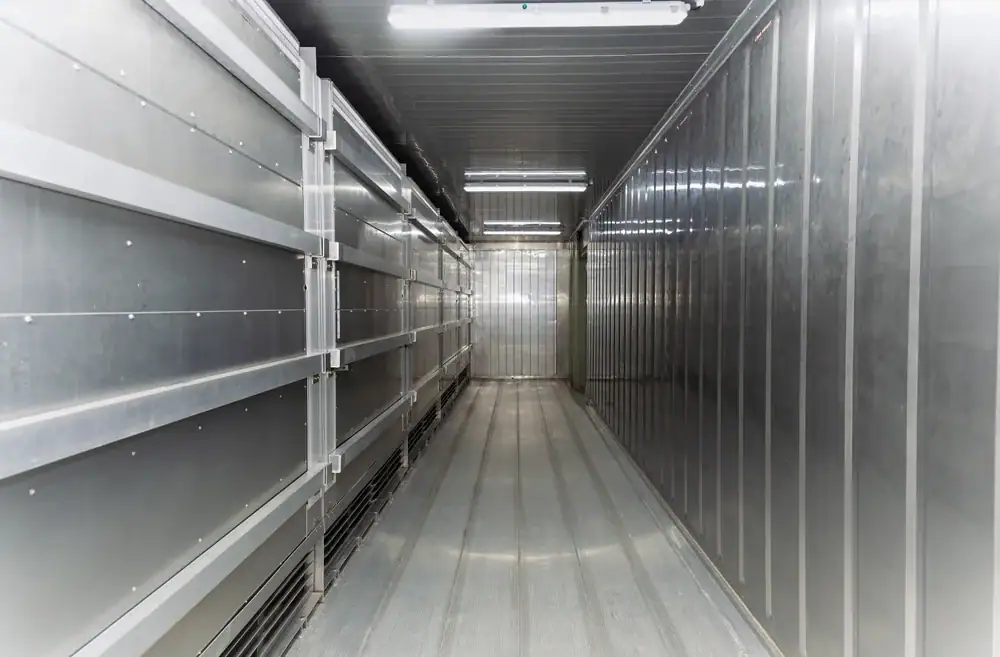
Your food stays cold. Your health inspector stays happy. Your energy bill stops climbing every month because the compressor isn’t fighting itself.
You’re not calling for emergency repairs every other week. You’re not wondering if that walk-in will make it through the weekend. You’re running your business instead of babysitting equipment that should just work.
Most commercial refrigeration problems don’t start as emergencies. They start as small things—temperature swings, frost buildup, a compressor that runs too long. If you catch them early, they’re cheap. If you don’t, they’re expensive and they happen at the worst possible time.
That’s the difference between reactive service and actual refrigeration maintenance. One costs you a weekend and a few thousand in spoiled inventory. The other costs you a service call and maybe a part.
We’ve been doing commercial refrigeration and marine HVAC in the Greater New York area since 1984. That’s over four decades of compressors, condensers, walk-ins, reach-ins, ice machines, and custom cooling systems that don’t fit in a manual.
We work with restaurants across Amityville—from Athena Greek Restaurant to Carney’s Irish Pub. We handle catering halls, delis, airports, and yacht clubs from Montauk to Manhattan. If it needs to stay cold and it’s more complicated than a household fridge, we’ve probably fixed it.
Long Island’s climate is tough on refrigeration. Summer heat, winter cold, constant humidity swings, saltwater corrosion if you’re near the water. Your equipment works harder here than it would almost anywhere else. We know that because we’ve been watching it for forty years.
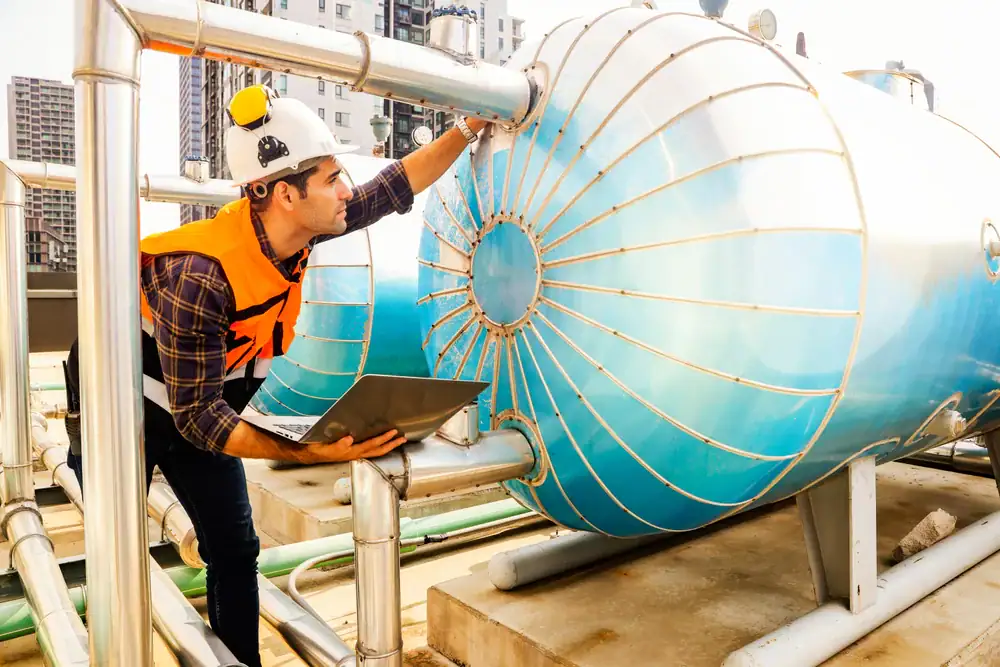
You call. If it’s an emergency, you talk to a technician who can walk you through immediate steps while we’re driving to you. Not a dispatcher. Not a voicemail. A technician who knows what questions to ask.
We show up with parts. Our trucks carry inventory for every major brand because waiting three days for a compressor part isn’t realistic when you’re losing money every hour. Most repairs get completed the same day.
We don’t just fix the symptom. When your ice machine stops making ice, we don’t just replace the obvious broken part. We figure out why it broke—bad water quality, voltage issues, airflow problems—and we prevent it from happening again.
If it’s a maintenance call, we’re checking everything. Refrigerant levels, electrical connections, condenser coils, door seals, thermostats, defrost cycles. We catch the small problems before they become expensive failures. Our maintenance customers routinely get fifteen-plus years from their equipment because we’re not letting it destroy itself.
Ready to get started?
Emergency repairs run twenty-four-seven, three-sixty-five. Refrigeration problems don’t wait for business hours, and neither do we. When you call our emergency line at two in the morning, you get a technician, not a recording.
Planned maintenance keeps your equipment running longer and prevents most emergency calls. We’re checking refrigerant levels, cleaning condenser coils, testing electrical components, calibrating thermostats, and inspecting door seals. Small fixes now instead of big failures later.
New installations and system design for restaurants, food service operations, and marine applications. We handle everything from standard walk-ins to custom beer systems to marine refrigeration that has to work in tight spaces with saltwater and limited power.
Here’s what matters in Amityville and across Long Island: your equipment works harder because of the climate. Humidity stresses seals and electrical components. Heat makes compressors run longer. Cold affects door gaskets. We account for all of that because we’ve been doing this here for forty years.
New York’s refrigerant regulations are changing. The state finalized HFC reduction rules under the Climate Leadership and Community Protection Act. That means older systems will eventually need retrofits or replacements. We help you navigate that timeline so you’re not scrambling when the deadline hits.
If you call our emergency line, you talk to a technician immediately. Not a voicemail, not a dispatcher—someone who can start troubleshooting with you over the phone while we’re already driving to your location.
Response time depends on where you are and what else is happening, but most emergency calls in Amityville and Suffolk County get a truck on-site within an hour. Sometimes faster. We had a restaurant owner call us at midnight because his walk-in cooler died and he had a full weekend of prep inside. Within forty-five minutes, our truck was pulling into his parking lot. By two in the morning, his cooler was running again and his weekend was saved.
We carry parts for every major brand because waiting days for a compressor or a relay isn’t an option when your inventory is spoiling. Most emergency repairs get completed the same visit. If we need a specialty part, we’ll do whatever we can to stabilize your system until we can finish the job.
A repair happens when something breaks. A maintenance visit happens before something breaks. That’s the short version.
During a repair, we’re diagnosing the failure, finding the root cause, replacing the broken component, and making sure the system runs correctly. We’re also looking for why it failed in the first place—because if a compressor burns out, there’s usually a reason. Bad voltage, dirty coils, refrigerant issues, something. We fix the cause, not just the symptom.
Maintenance is preventive. We’re checking refrigerant levels, cleaning condenser coils, testing electrical connections, inspecting door seals, calibrating thermostats, and running through defrost cycles. We catch the small problems—a loose wire, a dirty coil, a seal that’s starting to fail—before they turn into expensive emergencies. Our maintenance customers get fifteen-plus years from their equipment because we’re not letting small issues snowball into catastrophic failures.
Yes. Marine refrigeration is actually more complex than land-based commercial systems because of space constraints, power limitations, and saltwater corrosion. We’ve been doing marine HVAC and refrigeration for yacht clubs from Montauk to Manhattan for decades.
Boats don’t have unlimited electrical capacity like a building does. Marine refrigeration systems have to be efficient because they’re running off generators or shore power with limits. They also have to fit in tight spaces, handle constant motion, and resist corrosion from saltwater air.
We design, install, and service marine refrigeration systems that account for all of that. Whether it’s a small galley fridge on a sportfisher or a full cold storage system on a larger yacht, we handle it. Marine work is a specialty—most commercial refrigeration companies don’t touch it because the requirements are different. We’ve been doing it long enough that it’s just part of what we do.
Maintenance costs depend on the size and complexity of your system. A single reach-in refrigerator costs less to maintain than a walk-in cooler with multiple evaporators. But the upfront cost of maintenance is nothing compared to replacing a walk-in cooler five years early or losing a weekend’s worth of inventory.
Here’s the math: a typical emergency repair runs anywhere from a few hundred to a few thousand dollars, depending on what failed. A compressor replacement can cost several thousand. A new walk-in cooler can run twenty thousand or more. Maintenance visits cost a fraction of that, and they prevent most of those expensive failures.
Our maintenance customers routinely get fifteen-plus years from their equipment. Customers who skip maintenance and just call when things break? They’re replacing equipment at ten years, sometimes sooner. The ROI on maintenance is straightforward—you’re extending the lifespan of expensive equipment and avoiding emergency repairs that always happen at the worst time. Plus, well-maintained systems run more efficiently, so your energy costs stay lower.
New York finalized regulations under the Climate Leadership and Community Protection Act to phase out hydrofluorocarbons—HFCs—because they’re terrible for the environment. The regulations promote replacing HFCs with alternatives that work just as well but don’t contribute to climate change.
For your business, that means older refrigeration systems using HFC refrigerants will eventually need to be retrofitted or replaced. The timeline depends on the specific refrigerant and the type of equipment, but it’s coming. If you’re running equipment that’s ten or fifteen years old, you’re probably using an HFC refrigerant that’s on the phase-out list.
We help you navigate that timeline so you’re not scrambling when the deadline hits. Sometimes a retrofit makes sense—swapping to a new refrigerant and updating a few components. Sometimes replacement makes more sense, especially if the equipment is old and inefficient anyway. We’ll walk you through the options, the costs, and the timeline so you can plan for it instead of reacting to it. The state is also offering rebates and incentives through programs like PSEG Long Island for businesses that upgrade to energy-efficient equipment, so there’s money available to offset the cost.
Because your equipment is working harder. Refrigeration systems remove heat—that’s all they do. When it’s ninety-five degrees outside and humid, there’s a lot more heat to remove. Your compressor runs longer, your condenser works harder, and your system is under more stress.
Long Island summers are brutal on refrigeration equipment. High heat, high humidity, and if you’re near the water, saltwater corrosion on top of it. Condenser coils get dirty faster because they’re pulling in more air. Compressors overheat if they’re already marginal. Door seals that were fine in the spring start failing when the temperature swings get extreme.
That’s why most emergency calls happen in the summer. Equipment that was limping along during the cooler months finally gives up when the heat hits. The best way to avoid that is preventive maintenance before summer starts—cleaning coils, checking refrigerant levels, testing electrical components, replacing worn parts before they fail. If your system is going to break, it’s going to break when it’s working the hardest. We’d rather catch it before that happens.