When your ice machine fails during dinner rush, you're not just losing ice—you're losing revenue, customers, and reputation with every passing hour.
Share:
Summary:
Most restaurant owners think about ice machine repair as a one-time expense. The technician shows up, fixes the problem, you pay the bill. But that’s only a fraction of what a breakdown actually costs your business.
A single day of ice machine downtime costs quick-service restaurants an average of $1,000 in lost sales and wasted labor. For full-service restaurants during peak season on Long Island, that number climbs significantly higher. You’re not just losing beverage sales—you’re turning away customers, compromising food safety, and potentially facing health department issues.
The average commercial ice machine repair runs $708, with more complex failures reaching $2,000. Emergency repairs cost even more, especially when you need service on weekends or after hours. And here’s the part that catches most owners off guard: 80% of service calls made during the warranty period aren’t covered. You’re paying out of pocket regardless.
The financial impact hits hardest when you can least afford it. Your ice machine doesn’t break down during slow Tuesday afternoons—it fails Friday night at 7 PM when you’ve got a full dining room and a packed bar.
Nearly half of restaurant operators report experiencing downtime from equipment failure. When surveyed about the impact, 24% estimate losing between $1,001 and $5,000 per hour during these disruptions. For Long Island restaurants during summer tourist season or holiday weekends, those numbers represent real money walking out the door.
Think about your average Saturday night. How many drinks do you serve? How many dishes use ice for presentation or food safety? When your ice machine goes down, you’re not just missing beverage sales. You’re slowing down service, frustrating customers, and creating a ripple effect through your entire operation.
Your staff scrambles to find alternatives. Someone drives to three different stores buying overpriced bagged ice. Your bartenders ration what’s left in the bin. Tables wait longer for drinks. Some customers leave. Others stay but remember the experience—and not in a good way.
This is the hidden cost nobody talks about: the customers who don’t complain, don’t make a scene, just decide not to come back. You can’t track that loss on a spreadsheet, but it’s there. One breakdown during peak season can cost you repeat business worth thousands over the following months.
Emergency service calls cost more than scheduled maintenance. A lot more. When you call a technician at 8 PM on a Saturday, you’re paying premium rates for after-hours service. When you need someone immediately because you’re in the middle of service, you don’t have time to shop around or negotiate.
The average commercial ice machine repair costs around $708 for standard service. But emergency calls can easily hit $1,500 to $2,000, especially for complex issues like compressor failures or refrigerant leaks. Parts for commercial machines run significantly higher than residential equipment because they’re industrial-grade components built to handle constant use.
Here’s what makes emergency repairs even more expensive: you’re often paying for multiple visits. The first-time fix rate for ice machines sits around 85%. That means 15% of the time, the technician has to come back because the initial repair didn’t solve the problem or because additional issues were discovered. Each visit adds to your total cost.
And if you’re dealing with an older machine, repair costs start competing with replacement costs. When a repair estimate reaches 50% or more of a new machine’s price, you’re throwing money at equipment that’s likely to fail again soon. But in the moment, during a breakdown, you don’t have time to make that strategic decision. You just need ice.
The smarter approach? Preventive maintenance that catches problems before they become emergencies. Regular service costs a fraction of emergency repairs and keeps your equipment running during the hours when downtime costs the most.
Want live answers?
Connect with a Chill Xpert Solutions expert for fast, friendly support.
Ice machines don’t fail randomly. They fail because of predictable, preventable problems that build up over time. Understanding what causes breakdowns gives you the power to stop them before they shut down your operation.
Sixty percent of commercial ice machine issues trace back to water quality and scaling problems. Dirty water filters, mineral buildup, and clogged lines account for the majority of service calls. These aren’t complicated mechanical failures—they’re maintenance issues that regular cleaning prevents.
The second major cause? Environmental factors. Long Island’s climate puts extra stress on refrigeration equipment. Summer heat makes compressors work harder. Humidity affects performance. Salt air near the coast attacks outdoor components. An ice machine crammed next to your fryer or tucked in a poorly ventilated space can lose 30-40% of its ice production capacity just from fighting ambient heat.
The most common reason ice machines stop producing? Lack of water. It sounds too simple, but clogged water filters restrict flow, mineral deposits block lines, and suddenly your machine can’t make ice. The fix is straightforward—replace the filter, clean the lines—but it requires actually doing the maintenance.
Dirty condenser coils rank as the second most frequent culprit. When coils get caked with dust, grease, and debris, your machine works overtime trying to cool down. This constant strain leads to reduced ice production, higher energy bills, and eventually, component failure. The condenser coil cleaning that takes 15 minutes during routine maintenance becomes a $1,500 compressor replacement when you skip it.
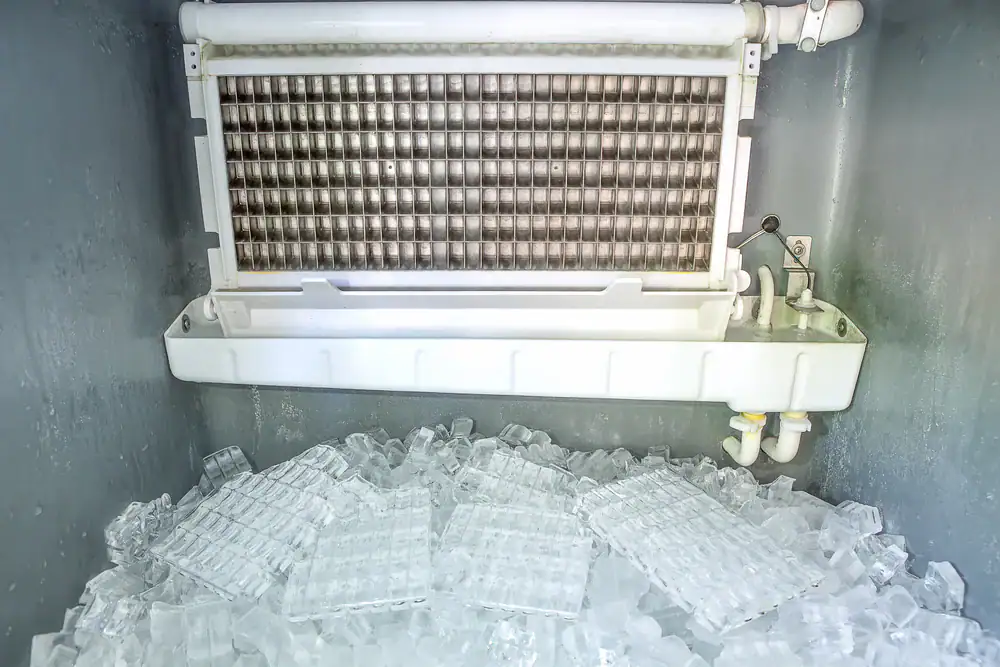
Scale buildup from hard water creates another cascade of problems. Minerals coat the evaporator plate, making it harder for the machine to freeze water effectively. You’ll notice cloudy ice, strange tastes, or hollow cubes before the machine stops working entirely. By the time production drops noticeably, the buildup has already damaged internal components.
Worn door seals, faulty thermostats, and refrigerant leaks round out the common failure points. Each of these issues gives warning signs before complete breakdown—if you’re looking for them. Strange noises, reduced ice production, longer freeze cycles, and water pooling around the machine all signal problems that need attention now, not later.
The pattern is clear: most ice machine failures result from deferred maintenance. Seventy percent of service calls could have been prevented with regular cleaning and basic upkeep. That’s not a guess—it’s what the data shows. The breakdown that costs you thousands during dinner rush could have been prevented with a $200 maintenance visit.
Every manufacturer recommends professional ice machine cleaning for your commercial equipment at least twice a year. For high-volume restaurants, bars, or operations in high-moisture environments like bakeries, that frequency jumps to every 90 days. These aren’t suggestions—they’re the minimum schedule for keeping your equipment operational.
Daily maintenance takes five minutes. Wipe down exterior surfaces, check ice quality for clarity and taste, inspect the bin for any contamination, and verify your ice scoop is stored properly. These quick checks catch problems early, before they escalate into failures.
Weekly tasks focus on the areas where bacteria and mold hide. Clean the bin thoroughly, sanitize contact surfaces, and check for any unusual buildup or odors. Monthly, you’re checking and cleaning air filters, inspecting water filters, and looking for any signs of scale or mineral deposits.
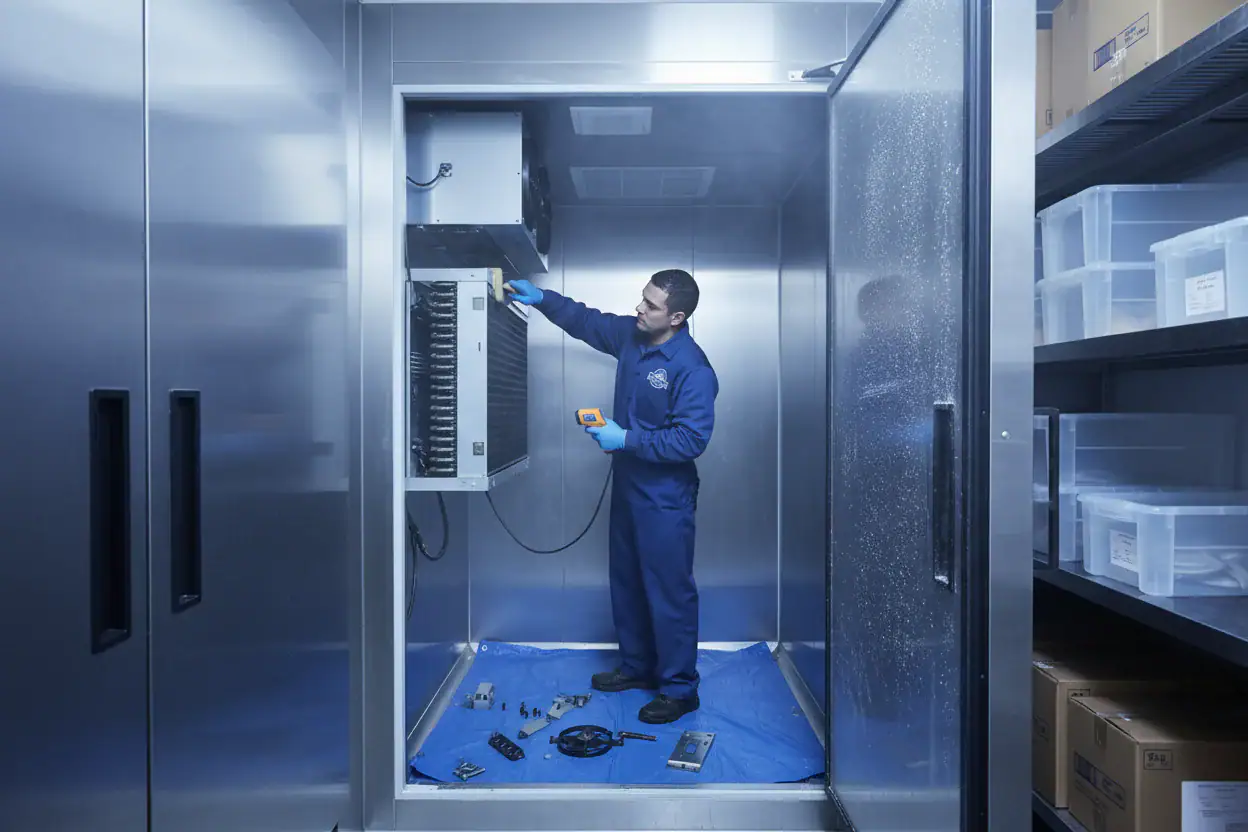
The deep cleaning—the one most restaurants skip—happens twice a year minimum. This is when you shut down the machine, remove components, descale the evaporator, sanitize all surfaces, and inspect for worn parts. It’s also when a qualified technician checks refrigerant levels, tests electrical connections, and catches the small problems before they become expensive failures.
For restaurants across Nassau County and Suffolk County, this ice machine maintenance schedule isn’t optional. The FDA defines ice as food and judges it by the same safety standards. Health inspectors look specifically at ice machine cleanliness. Failing an inspection because of a dirty ice machine doesn’t just cost you points—it damages your reputation and can result in closure until you correct the violations.
The math is straightforward: preventive maintenance costs a fraction of emergency repairs. A maintenance contract runs a few hundred dollars annually. One emergency breakdown costs more than a year of scheduled service. And that’s before you factor in lost revenue, spoiled inventory, and customer dissatisfaction.
Ice machine breakdowns cost more than the repair bill. They cost you revenue during your busiest hours, customers who don’t come back, and the stress of scrambling for solutions in the middle of service. The hidden costs add up fast—lost sales, emergency service premiums, spoiled inventory, potential health code violations.
The good news? Most of these failures are preventable. Regular maintenance catches problems before they shut down your operation. Clean filters, descaled components, and properly functioning parts keep your ice machine running through the dinner rushes and summer heat when you need it most.
For over 40 years, we’ve been keeping restaurants, bars, and commercial operations running with reliable commercial ice machine service across Long Island. From Nassau County to Suffolk County, when your ice machine needs maintenance, repair, or emergency service, you’re working with technicians who understand what’s at stake and respond accordingly.
Article details:
Share:
Continue learning: