If you are waiting for equipment to break before calling for service, this post explains exactly why that approach costs more than you think.
Share:
Summary:
If your walk-in cooler is holding temperature and your reach-ins are not making noise, it is easy to assume everything is fine. Most Long Island business owners do. They have a restaurant to run, a deli to staff, and a catering event to prep for, meaning the refrigeration is the last thing on the list until it becomes the only thing on the list. Commercial refrigeration does not fail dramatically and all at once. It degrades quietly, costs you more in energy every month, and eventually gives out at the worst possible moment. Here is a straight answer to a question more Nassau County and Suffolk County operators should be asking before a crisis forces it.
The honest answer is that it depends, but not in the vague, non-committal way that phrase usually gets used. For most commercial refrigeration systems, twice per year is the industry baseline. That means a thorough inspection and service visit before summer and another before winter. That schedule exists because it works, catching the wear that accumulates over a season before it turns into a failure. A professional maintenance contract can make it easier to stay consistent with these routine service visits.
Twice a year is a floor, not a ceiling. A busy Nassau County restaurant where reach-in units are opened and closed hundreds of times a day has very different needs than a catering hall’s walk-in cooler that runs hard on weekends and sits quieter during the week. High-traffic food service environments, such as restaurants, delis, and grocery operations, benefit from quarterly service. The more the equipment works, the more frequently it needs attention.
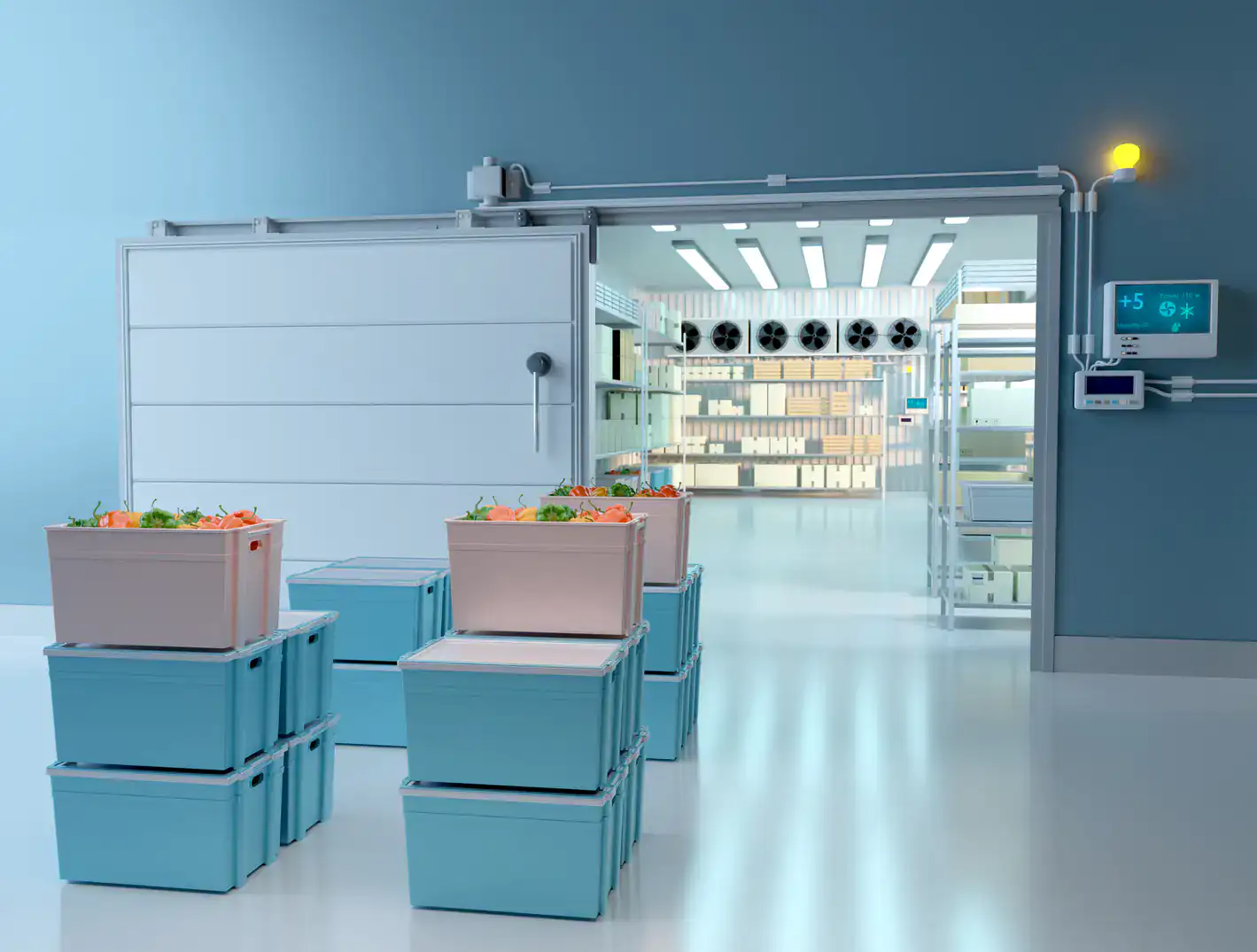
Equipment type is one factor. A reach-in refrigerator in a commercial kitchen takes a beating that a display case in a quieter retail setting does not. Every time a door opens, warm humid air rushes in, the compressor kicks on to compensate, and the cycle repeats. Do that a few hundred times a day, and the wear adds up fast. Walk-in coolers and freezers in high-volume environments face similar stress, causing the compressor to run longer, the door seals to degrade faster, and the condenser coils to collect grease and dust at a rate that a light-use system simply does not match.
Operating environment matters just as much. On Long Island, that is far from a minor variable. Our summers regularly push past 90 degrees Fahrenheit, and the humidity coming off the Atlantic and the bays makes it worse. When ambient air is hot and saturated with moisture, your refrigeration system has to work significantly harder to maintain temperature. Condensers reject heat into the surrounding air, and when that air is already hot, the system strains.
Add in the salt air that comes with being on the South Shore or anywhere near the water, and you have an environment that accelerates corrosion on condenser coils and electrical connections faster than inland markets. If you are running a restaurant in Great Neck, Port Washington, or anywhere along the Nassau County waterfront, or operating out of Montauk, the North Fork, or other Suffolk County coastal areas, this salt air corrosion is a major factor in how aggressively you need to maintain your equipment.
Age and history of the equipment play a role too. A system that has been well-maintained for years can hold to a semi-annual schedule. One that has been neglected, repaired reactively, or is approaching the 8-to-10-year mark should be seen more frequently. Older equipment has less margin for error, meaning a small refrigerant leak or a slightly worn door gasket that a newer system shrugs off can push an aging compressor over the edge.
Then there is what is inside the unit. If you are storing seafood, dairy, or anything with a tight temperature tolerance, the stakes of a drift or a failure are higher. That reality should factor into how aggressively you schedule maintenance, not just how you respond when something goes wrong.
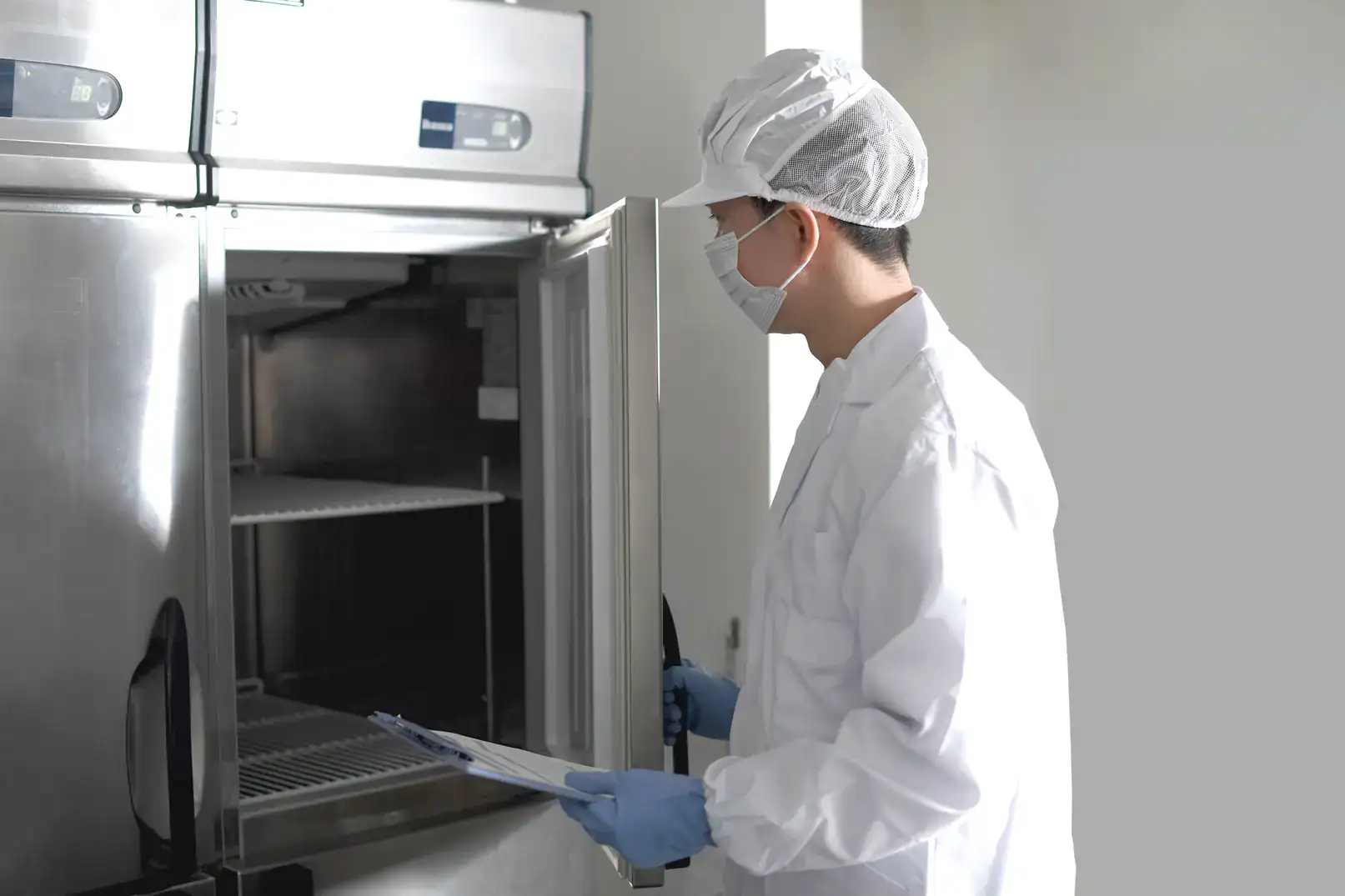
This is where the word “maintenance” gets fuzzy for a lot of operators. A real maintenance visit is not a quick temperature check and a wipe-down. It is a systematic inspection of the components that determine if your system runs efficiently, runs legally, and runs at all.
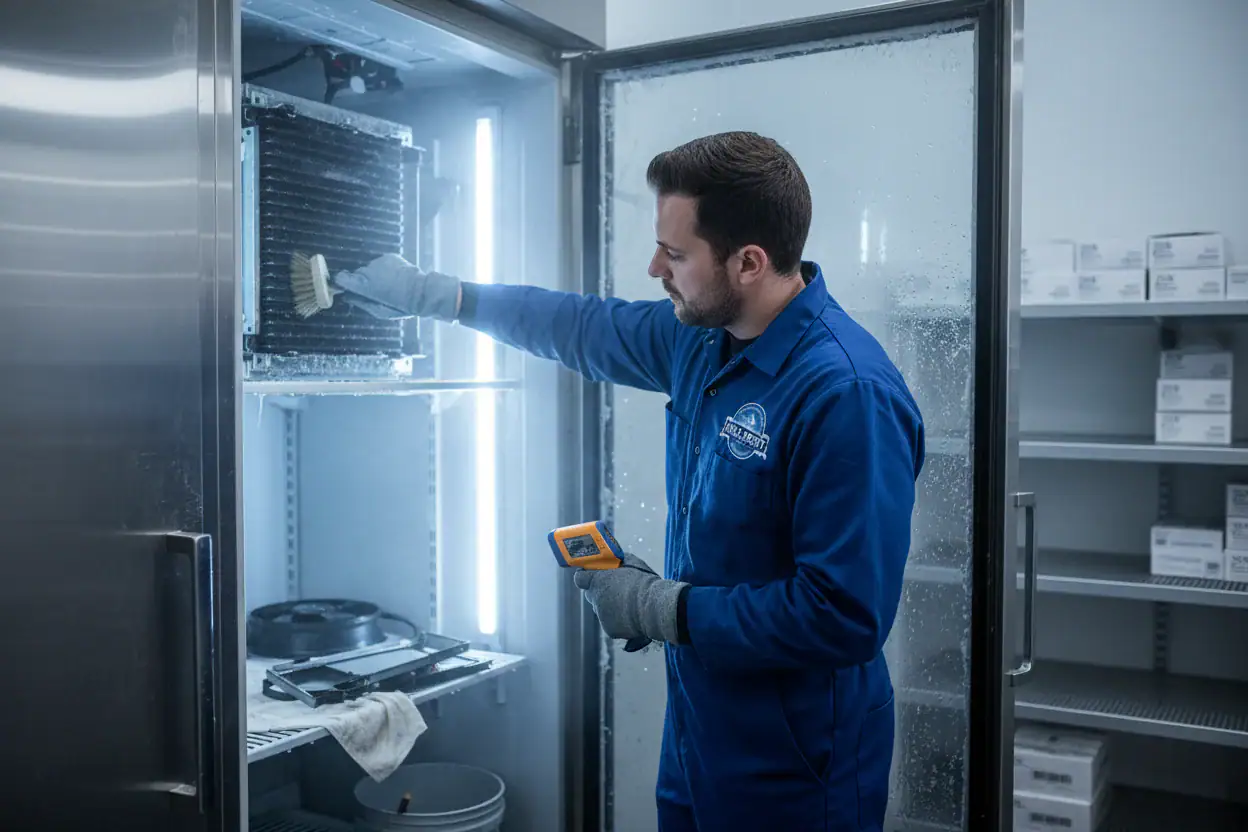
Condenser coil cleaning is one of the most important tasks, and one of the most commonly skipped. Dirty coils force the compressor to work harder to shed heat, which drives up your energy bill and shortens the compressor’s life. In a commercial kitchen environment, those coils can pick up grease and dust fast enough that quarterly cleaning is the right call, not a suggestion. Evaporator coils get inspected too, along with the fan motors that move air across them.
Door gaskets and seals are checked and tested. A seal that looks intact can still be letting warm air in, and every bit of warm air that sneaks in is energy wasted and compressor wear accumulated. Refrigerant levels are verified and documented, which matters both for performance and for EPA compliance. Federal law requires that technicians handling refrigerants hold EPA Section 608 certification, and the service records from those visits need to be retained for at least three years. That is not a technicality, but rather a real compliance requirement that health inspectors and regulators can ask about.
Drain lines get cleared, electrical connections get checked and tightened, and thermostat calibration gets verified. The goal is not just to confirm the system is running, but to find small issues before they become expensive problems. A worn fan motor bearing, a slightly low refrigerant charge, or a door that does not seal quite right are inexpensive fixes when caught early. Caught after they cause a compressor failure at 11 PM on a Friday night, they lead to a very different conversation.
Want live answers?
Connect with a Chill Xpert Solutions expert for fast, friendly support.
The most common reason operators skip scheduled maintenance is the same one that costs them the most money in the long run: it feels like an expense that is not urgent right now. The system is running. There is no visible problem. Why spend money on it?
Here is the math that changes that thinking. Emergency repair calls carry premium rates. Spoiled inventory is not covered by the repair bill. Lost revenue during downtime, especially during a Long Island summer when restaurants are packed and catering halls are booked solid, does not come back. A compressor that fails because dirty coils made it run hot for two years is a far more expensive replacement than the maintenance visits that would have prevented it.
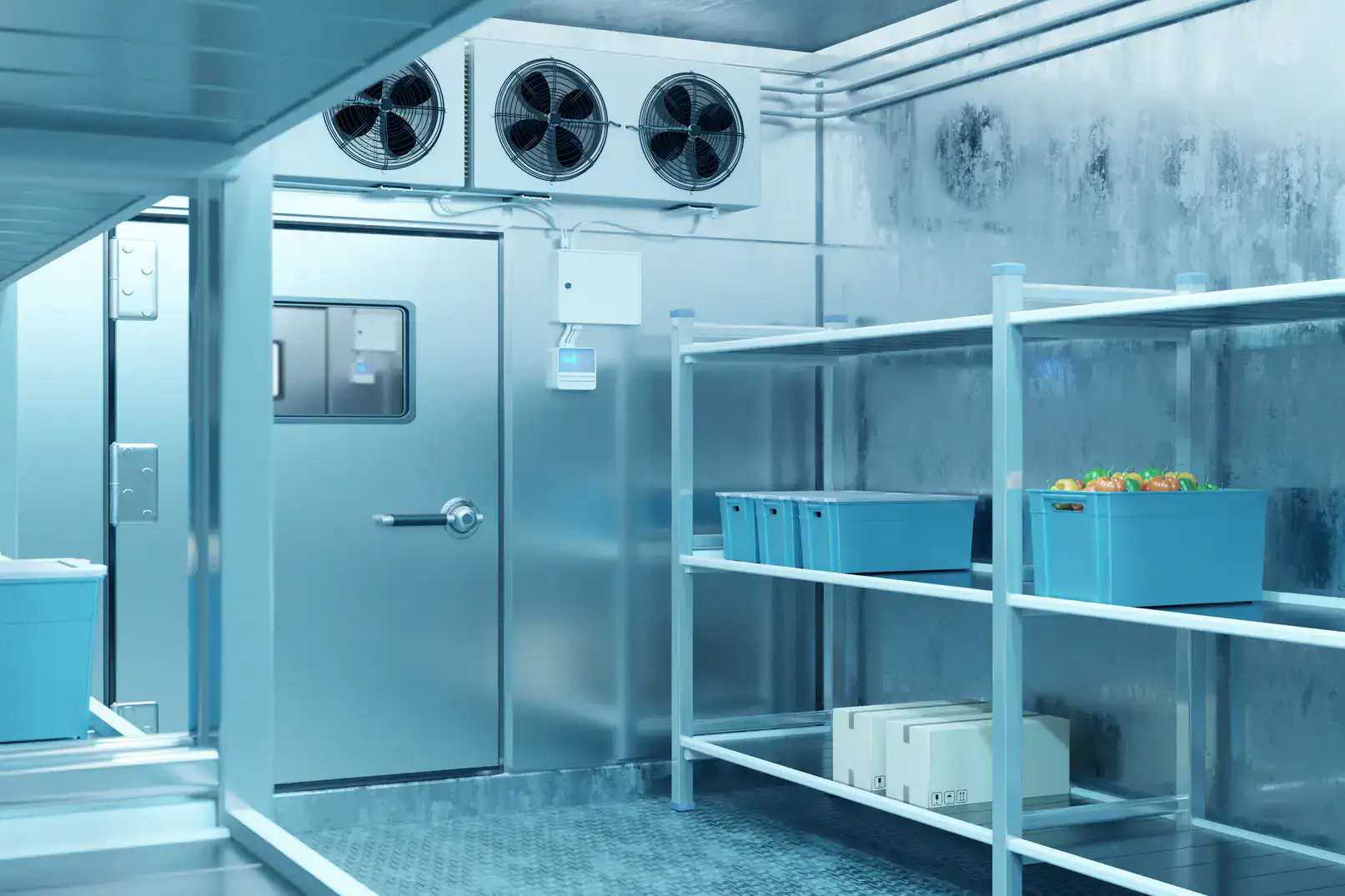
The failure that sends you scrambling for an emergency repair is usually the final event in a long, quiet story. It started months earlier when the condenser coils got dirty and the compressor started running longer to compensate. Your energy bill went up, and you may or may not have noticed. The system was still cooling, so nothing seemed wrong.
Then the compressor, now working harder than it was designed to sustain, started wearing faster. A bearing went. A seal weakened. Eventually, the unit stopped holding temperature.
ENERGY STAR-certified commercial refrigeration equipment is rated at 20 to 40 percent better energy efficiency than non-certified models. That rating assumes the equipment is maintained, however. A certified unit running with dirty coils and low refrigerant does not perform anywhere near its rated efficiency, performing instead like a neglected system because that is what it is. The efficiency gap between a well-maintained unit and a neglected one shows up on your electric bill every single month, long before anything visibly breaks.
For Long Island restaurants and delis running multiple units, including reach-ins, walk-ins, display cases, and ice machines, that monthly energy drag adds up to real money over a year. It happens silently, without any warning light or error code to flag it.
Our maintenance customers routinely get 15 or more years out of their commercial refrigeration equipment. That is not an accident, but rather the result of catching small problems before they compound into large ones, keeping systems running at the efficiency they were designed for, and never letting deferred maintenance turn into an unexpected capital replacement decision.
If you only do one maintenance visit per year, do it in spring. That is not a preference, but a practical reality for anyone running a food service operation on Long Island. The summer months are when your refrigeration works hardest. Ninety-degree days with the kind of humidity that comes off Great South Bay or the Sound push condensers to their limit. A system entering July with dirty coils, a marginal door seal, or a slightly low refrigerant charge is a system that is going to struggle, and potentially fail, right when you can least afford it.
For restaurants and delis along the major commercial corridors of Nassau County and throughout Suffolk County, a breakdown in July or August is not just an inconvenience. It is a health code event, a potential closure, and a food loss situation all at once. The Nassau County and Suffolk County Departments of Health enforce the FDA Food Code requirement that cold holding stays at 41 degrees Fahrenheit or below. Bacteria can double in as little as 20 minutes once food enters the temperature danger zone. A refrigeration failure during dinner service is not just a repair call, but a food safety incident.
The second service visit belongs in fall, after the heavy summer season and before the winter. This is when you address whatever the summer put your equipment through and make sure it is set for the cooler months. For operators on the East End, such as Hamptons restaurants, North Fork wineries, and Montauk fish houses, the pre-Memorial Day window is especially critical. Those businesses go from quiet to absolutely slammed in a matter of weeks, leaving no graceful time for a walk-in to fail once the season starts.
Most commercial refrigeration systems need service at least twice a year. High-use restaurant and deli environments across Nassau County and Suffolk County benefit from quarterly attention. Long Island’s summer heat, coastal humidity, and salt air mean your equipment is working harder than national averages assume, and that reality should inform your maintenance schedule rather than some generic recommendation written for a different climate.
The difference between a system that lasts 15 years and one that needs replacing at 8 is almost always maintenance. It comes down to maintenance, not luck and not brand. Catching a worn seal before it strains the compressor, cleaning coils before they drive up your energy bill, and verifying refrigerant levels before a slow leak becomes a compliance issue make all the difference.
If you are not sure where your equipment stands or when it was last properly serviced, that is a great place to start. Chill Xpert Solutions has been doing this work across Nassau County, Suffolk County, and the rest of Long Island for over 40 years. We offer free estimates and can give you a straight answer about your system’s maintenance needs, so reach out today.
Article details:
Share:
Continue learning: