Your boat's AC operates in conditions no home system faces. Saltwater corrosion, constant vibration, and seawater cooling demand specialized knowledge most HVAC technicians simply don't have.
Share:
Summary:
Walk into any marina on Long Island during summer and you’ll hear the same frustration. Someone hired a regular HVAC tech to fix their boat’s air conditioning, and now they’re dealing with the same problem three weeks later—or worse, new issues that didn’t exist before.
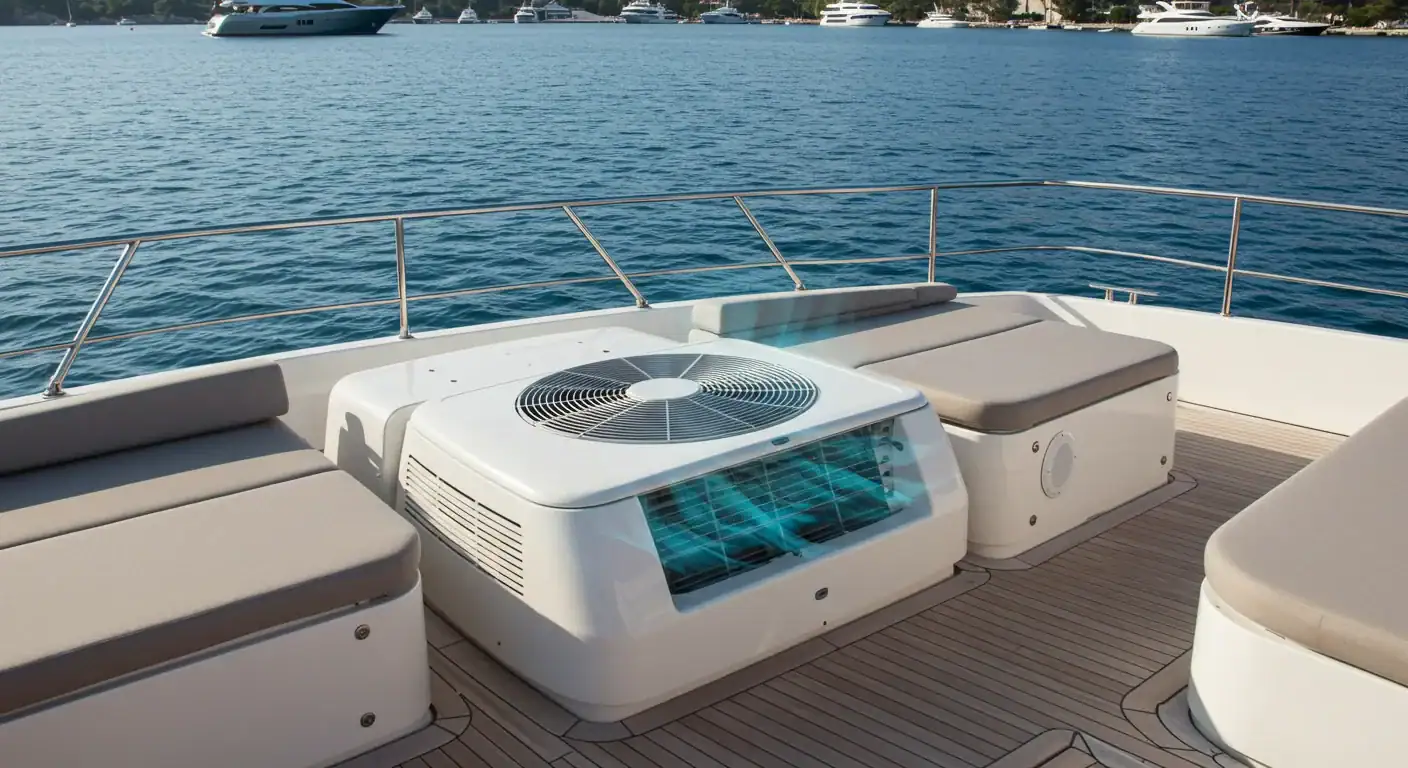
Marine air conditioning operates on fundamentally different principles than the system cooling your home. While residential units use outdoor air to dissipate heat, marine systems pull seawater through the condenser to cool refrigerant. This means your boat’s AC depends on proper water flow, clean strainers, and through-hull fittings that must never fail.
The electrical demands differ too. Your home AC connects to virtually unlimited shore power. Your boat runs on limited battery capacity or generator output, requiring systems designed for efficiency under power constraints that would shut down a residential unit immediately.
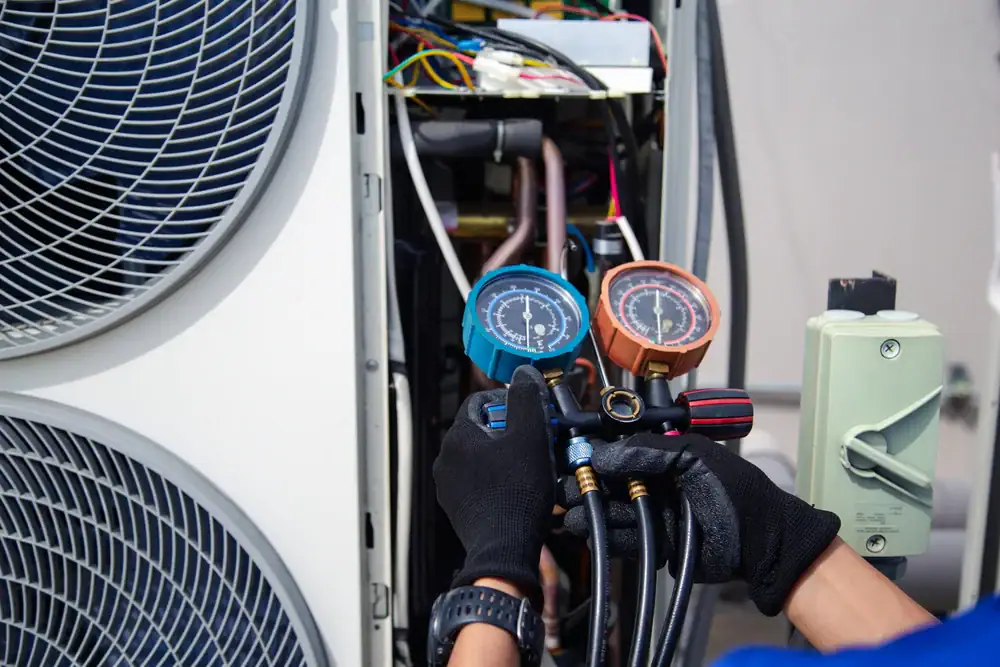
Saltwater doesn’t just sit on surfaces—it attacks metal components, electrical connections, and refrigerant lines with relentless efficiency. Every part of your marine AC system operates in an environment specifically designed to corrode anything not built to withstand it.
Standard residential HVAC components fail rapidly in marine environments. Regular copper fittings corrode. Standard electrical terminals break down. Even stainless steel fasteners can pit and fail when exposed to constant salt spray and humidity.
Marine-grade materials make the difference between systems that last fifteen years and equipment that needs replacement within five. Titanium condenser coils resist corrosion that would destroy copper alternatives. Tinned copper wiring maintains electrical integrity where standard wire would corrode from the inside out. Stainless steel structural components with proper marine ratings withstand conditions that turn regular steel into rust within a single season.
Residential HVAC technicians typically have zero experience selecting or installing these specialized materials. They reach for the same copper fittings and standard wire they use in homes, not realizing they’ve just guaranteed failure within months. The parts might look identical, but marine-grade components are engineered specifically for saltwater environments.
This knowledge gap creates expensive problems. A residential tech might repair your refrigerant leak using standard copper fittings that corrode through by next season. They might replace electrical connections with terminals that break down before summer ends. Each repair looks fine initially, then fails when you’re 20 miles offshore with family aboard.
Proper marine AC service means understanding which materials survive in saltwater, how to protect vulnerable components, and when to specify marine-grade alternatives that cost more upfront but prevent repeated failures.
Your boat’s engine creates vibration levels that would be considered catastrophic in residential applications. Every time you’re underway, your entire vessel—including your AC system—experiences constant shaking that loosens connections, stresses components, and accelerates wear on every moving part.
Residential HVAC systems sit on stable concrete pads or roof mounts that barely move. Marine systems must survive vibration that would shake a home unit apart within hours of operation. This requires different installation techniques, vibration isolation mounts, and wiring methods that maintain integrity under constant movement.
Standard electrical connections fail under marine vibration. Solid core wire—perfectly acceptable in homes—breaks from metal fatigue. Standard crimp connections work loose. Terminal blocks not designed for vibration shed their connections over time.
Marine electrical systems require finely stranded wire that flexes without breaking, heat-shrink connections that seal out moisture while maintaining mechanical integrity, and terminal fittings specifically rated for high-vibration environments. These aren’t optional upgrades—they’re fundamental requirements that prevent electrical failures.
The power supply differences create additional complexity. Residential systems connect to consistent 120V or 240V service with effectively unlimited amperage. Marine systems run on battery banks, generators with limited output, or shore power that might deliver inconsistent voltage. Your AC must operate efficiently within these constraints or drain batteries, overload generators, and create electrical problems throughout your vessel.
Proper circuit sizing becomes critical. A residential tech might wire your marine AC using calculations that work fine in homes but create voltage drop issues on boats where wire runs are longer and power sources more limited. They might overlook the need for dedicated circuits, proper breaker sizing, or the marine-grade circuit protection that prevents fires in enclosed spaces.
We understand these electrical realities. We know how to calculate voltage drop across longer wire runs, size circuits for limited power availability, and install overcurrent protection that works reliably in marine environments. We understand that your boat’s entire electrical system must work together, and AC installation affects everything from battery charging to generator loading.
Temperature extremes and thermal cycling add another layer of complexity. Your boat’s engine room might reach 140 degrees Fahrenheit while AC components cycle between extreme heat during operation and ambient temperatures when shut down. This constant expansion and contraction stresses connections, accelerates wear on seals, and creates failure points that don’t exist in climate-controlled residential installations.
Want live answers?
Connect with a Chill Xpert Solutions expert for fast, friendly support.
The moment you understand that marine AC uses seawater for cooling, everything about why you need specialized technicians becomes clear. Your system literally pumps ocean water through heat exchangers, creating maintenance requirements and failure modes that don’t exist in residential HVAC.
Seawater strainers clog with debris, algae, and marine growth. Through-hull fittings must remain sealed or your boat sinks. Raw water pumps fail when barnacles block intake screens. These aren’t hypothetical problems—they’re routine maintenance issues that we handle regularly but residential techs have never encountered.
Every marine AC system depends on consistent seawater flow. When that flow gets restricted, high-pressure warnings shut down your compressor. You’re suddenly dealing with a hot cabin, frustrated family members, and a problem that requires understanding how seawater cooling actually works.

The service call starts the same way every time. Your AC stops cooling properly, you call a local HVAC company, and their technician arrives with residential diagnostic equipment and zero marine experience. They check refrigerant pressure, inspect the compressor, and announce you need expensive repairs—completely missing the actual problem.
High-pressure faults typically indicate insufficient seawater flow, not refrigerant issues. But residential techs don’t think about seawater flow because their systems don’t use it. They see high pressure and immediately suspect refrigerant problems, compressor failure, or expansion valve issues. Meanwhile, your actual problem is a clogged strainer that takes five minutes to clean.
Insufficient cooling often stems from dirty seawater-cooled condensers, not low refrigerant. Salt deposits and marine growth build up on heat exchanger surfaces, reducing cooling efficiency exactly like low refrigerant would. A residential tech adds refrigerant to a system that’s already properly charged, creating new problems while ignoring the root cause.
Water discharge issues confuse technicians unfamiliar with marine systems. They see water not flowing from your overboard discharge and don’t know whether to check the raw water pump, inspect through-hull fittings, examine seacock operation, or clean the strainer. These components don’t exist in residential HVAC, so they’re working completely outside their knowledge base.
Electrical problems get misdiagnosed because residential techs don’t understand marine power systems. They see voltage drop and blame your shore power connection, not realizing the issue is improper wire sizing for the longer runs and limited amperage available on boats. They might “fix” the problem by installing a larger breaker—creating a fire hazard because the wiring can’t safely handle the increased current.
Condensate drainage failures happen because marine installations require different approaches than residential systems. Your boat moves, creating drainage challenges that don’t exist in stationary homes. Condensate lines must route properly to prevent water from backing up into living spaces or, worse, accumulating where it can cause structural damage. Residential drainage solutions don’t account for a vessel that’s constantly changing angle.
The knowledge gap extends to routine maintenance. Marine AC systems need regular freshwater flushing to remove salt buildup from seawater cooling components. Filters require more frequent cleaning due to the humid, salt-laden environment. Electrical connections need inspection and treatment to prevent corrosion. None of these maintenance requirements exist in residential HVAC, so standard service contracts miss them entirely.
We bring knowledge that can’t be learned from residential training. We understand that your AC system is part of a complex vessel where everything affects everything else—electrical load impacts battery charging, through-hull fittings create potential sinking hazards, and improper installations can violate ABYC safety standards.
We know which brands and models actually survive in marine environments versus equipment that looks identical but fails within seasons. We understand that a self-contained unit rated for 16,000 BTU might perform completely differently than a residential unit with the same capacity because marine systems are designed for different operating conditions.
Proper installation techniques make the difference between reliable operation and constant problems. We know how to route seawater lines to prevent airlocks, install through-hull fittings that won’t leak, and position components where vibration won’t cause premature failure. We understand that condensate drainage must work regardless of your vessel’s angle and that electrical connections require marine-grade materials that resist corrosion.
Troubleshooting marine AC requires understanding the entire system, not just individual components. When your AC won’t cool properly, we check seawater flow first, then inspect strainers, examine through-hull fittings, test the raw water pump, and verify proper refrigerant charge—in that specific order because we know what typically fails and why.
We recognize the difference between symptoms and root causes. High pressure might indicate a clogged strainer, failed raw water pump, closed seacock, or barnacle growth in the cooling system. Each possibility requires different diagnostic steps and repairs. Residential techs see high pressure and immediately suspect refrigerant problems because that’s what causes high pressure in home systems.
Emergency repairs at sea require creative problem-solving that residential experience doesn’t provide. When your AC fails 30 miles offshore, we can often implement temporary solutions using available materials to keep you comfortable until proper repairs can be completed dockside. We understand which components are critical and which can be temporarily bypassed.
Our preventive maintenance programs for marine AC focus on the specific failure modes boats experience. Regular seawater system flushing, filter cleaning schedules that account for marine environments, electrical connection inspections that catch corrosion early, and component replacement before failures occur during peak season. These maintenance approaches come from understanding how boats actually get used and where problems typically develop.
Seasonal preparation and winterization require marine-specific knowledge. Your AC system must be properly drained and protected before winter storage or freeze damage will destroy expensive components. Seawater lines need flushing, condensate pans must be completely drained, and certain components require protection that residential systems never need.
Your boat represents a significant investment, and your marine AC system is critical to enjoying it during Long Island’s boating season. Choosing technicians who actually understand marine HVAC means the difference between reliable cooling and repeated failures that ruin weekends on the water.
Look for specialists with proven marine experience, not residential techs who claim they can “figure it out.” Ask about their familiarity with seawater cooling systems, marine-grade materials, and ABYC standards. Request references from other boat owners, particularly those with vessels similar to yours.
When you need marine AC service that’s done right the first time, we bring over 40 years of specialized marine HVAC expertise to Nassau County, NY, Suffolk County, NY, and throughout Long Island, NY. Our team understands the unique challenges your boat’s AC system faces and has the knowledge to keep it running reliably season after season.
Article details:
Share:
Continue learning: