Hear from Our Customers
You shouldn’t have to wonder if your air conditioning will survive July or if your furnace will quit during a January cold snap. That uncertainty costs you sleep, and eventually, it costs you money when something breaks at the worst possible time.
Here’s what changes when your system is actually maintained by people who know what they’re doing. You stop getting surprised by breakdowns. Your energy bills drop because the equipment runs efficiently instead of fighting itself. The air in your home feels cleaner, and you’re not constantly adjusting the thermostat trying to find comfort that never comes.
Most HVAC companies in Manhasset can handle standard residential work. That’s fine until you have a problem that requires someone who’s spent decades troubleshooting complex refrigeration systems for airports and marine vessels. When your heat pump starts acting strange or your ductless system isn’t performing right, you need someone who’s seen worse and fixed it.
We’ve been working in the Greater New York area for over 40 years. We started in commercial refrigeration and marine HVAC—the kind of work where there’s no room for guesswork and no one to call if you can’t figure it out yourself.
That background matters when you’re dealing with residential heating and cooling in Manhasset. Your home faces humidity from Long Island Sound, temperature swings that stress equipment, and the reality that a system failure in your neighborhood isn’t just uncomfortable—it’s unacceptable. We understand what’s at stake in these homes, and we know how to design, install, and maintain systems that hold up.
You’ll work with our team directly. No subcontractors, no answering services. When you call, you get someone who can actually help you, whether it’s 2 p.m. or 2 a.m.
First, you talk to someone who knows HVAC systems, not a call center. We ask questions about what’s happening, and if it’s an emergency, we dispatch immediately. For planned work like furnace installation or HVAC replacement, we schedule a time that works for you.
When we show up, we assess the situation honestly. If it’s a repair, we diagnose the actual problem—not just the symptom. You’ll know what’s wrong, what it costs to fix, and how long the repair will last. If you need a new system, we’ll talk through your options based on your home’s layout, your budget, and how you actually use your space.
The work gets done right. Our technicians have seen everything from straightforward air conditioning repair to custom installations that required creative problem-solving. We stock our vehicles with common parts, which is why about 70% of our emergency calls get resolved the same day.
After the job, you’re not on your own. We follow up, and we’re available if something doesn’t feel right. Heating system maintenance isn’t a one-time transaction—it’s how you avoid the next emergency.
Ready to get started?
Your HVAC system isn’t just a box that makes air cold or hot. It’s a network of components that need to work together, and when one part underperforms, the whole system suffers.
We handle the full scope: air conditioning repair and replacement, furnace installation and service, heat pump systems, ductless mini-splits, and indoor air quality improvements. That last one matters more than most people realize, especially in Manhasset where spring pollen and summer humidity can make your home feel worse than outside. HEPA filtration, UV-C purification, and proper humidity control aren’t luxuries—they’re what make your house livable.
Energy efficiency is part of every conversation we have. New systems can cut your cooling costs significantly, and there are federal tax credits available right now—up to $3,200 for qualifying equipment through 2032. We’ll tell you what qualifies and what doesn’t, because we’d rather you make an informed decision than sell you something you don’t need.
Manhasset homes aren’t cookie-cutter, and your HVAC system shouldn’t be either. We design solutions based on your home’s age, insulation, window placement, and how you actually live in the space. That’s how you end up with a system that works instead of one that technically runs but never quite does the job.
Twice a year—once before summer and once before winter. That’s not a sales pitch; it’s how you catch problems before they become emergencies.
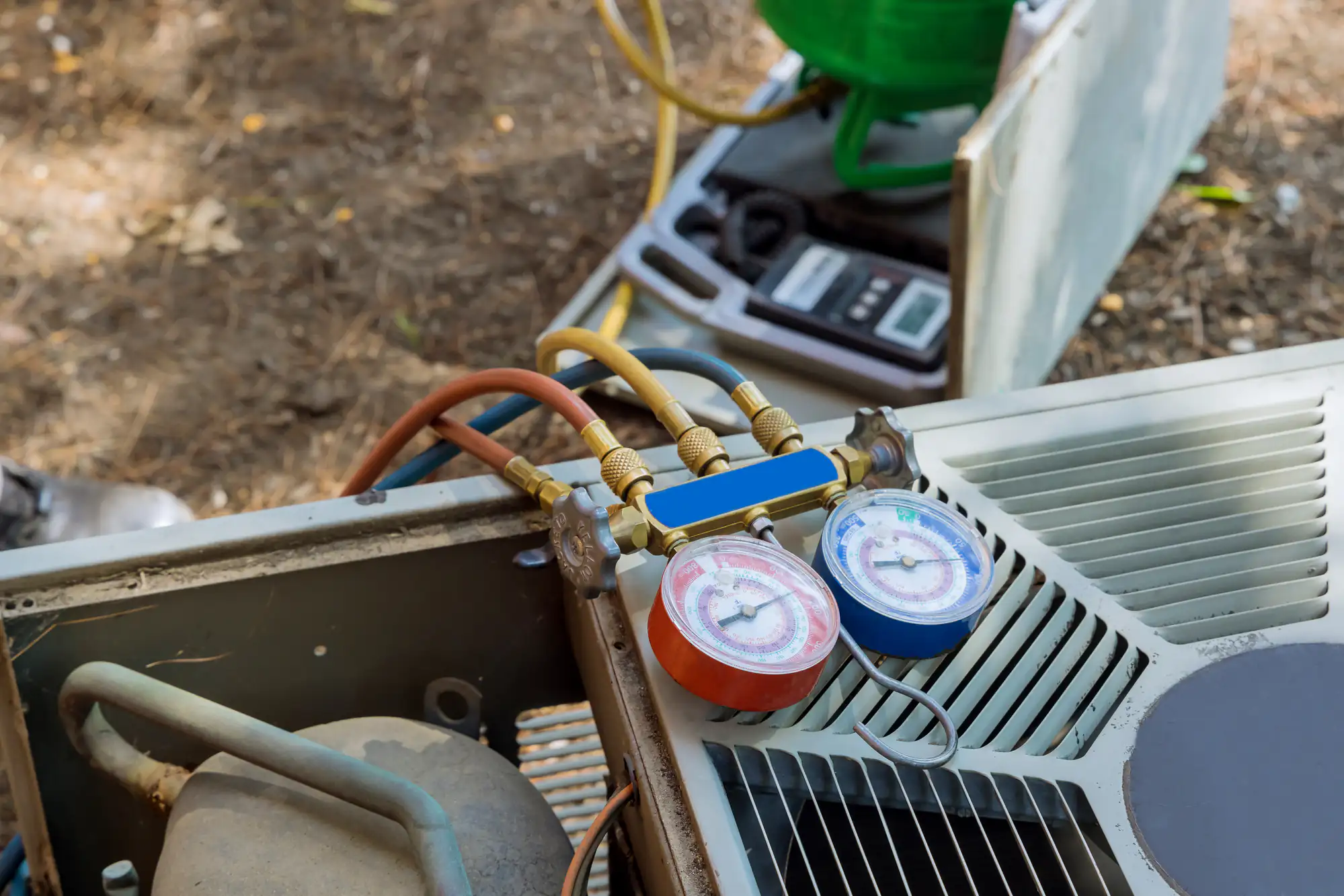
Your air conditioning system should be checked in spring, before you’re running it daily. Your heating system gets inspected in fall, before the first real cold snap. During these visits, we’re looking for refrigerant levels, electrical connections, airflow issues, and wear on parts that fail predictably if ignored.
Most residential HVAC systems last 15 to 20 years with proper maintenance. Without it, you’re looking at half that, plus higher energy bills the entire time. A well-maintained system also breaks down less often, which matters a lot when it’s 95 degrees or 20 degrees outside and you’re trying to get someone out to your house.
For a complete residential system, you’re typically looking at $8,000 to $15,000, depending on your home’s size, the equipment you choose, and whether we’re working with existing ductwork or starting fresh.
That range isn’t vague—it reflects real variables. A 1,500-square-foot home with good insulation and existing ducts costs less than a 3,000-square-foot home that needs ductwork modifications. High-efficiency systems with smart controls cost more upfront but qualify for federal tax credits and lower your energy bills enough that the payback period is usually under seven years.
We give you a free estimate that breaks down exactly what you’re paying for. No hidden fees, no surprise charges after we start the work. And right now, with the refrigerant transition happening in 2025, there’s a real advantage to upgrading before older systems become harder and more expensive to service.
About 70% of the time, yes. That’s because our service vehicles carry the parts that fail most often, and our technicians have the experience to diagnose problems quickly.
When your air conditioning quits in July or your furnace stops working in January, you don’t have time to wait three days for a part to arrive. We stock compressors, motors, thermostats, contactors, and capacitors—the components that cause most emergency calls. If we need something unusual, we’re honest about the timeline.
The other reason we can move fast is availability. We offer 24/7 emergency service with real people answering the phone, not an answering service that takes a message. You call, you talk to someone who understands HVAC systems, and we dispatch a technician who can actually fix the problem.
HEPA filtration, UV-C light purification, and whole-home dehumidification. Those three technologies address the specific problems you’re dealing with here—pollen, mold spores, humidity, and airborne particles that standard filters miss.
HEPA filters remove 99.97% of particles down to 0.3 microns. That includes most allergens, dust, and pet dander. UV-C light kills mold, bacteria, and viruses as air passes through your system. Dehumidification matters because Long Island summers are humid, and excess moisture creates comfort problems and encourages mold growth.
These aren’t add-ons we push on everyone. They’re solutions for specific problems. If someone in your house has allergies or asthma, if you’re noticing musty smells, or if your home feels clammy even when the AC is running, these systems make a measurable difference. We’ll assess your situation and recommend what actually helps.
If your system is over 12 years old and the repair costs more than half of a new system, replacement makes more sense. If it’s newer and the fix is straightforward, repair it.
Here’s the math that matters. A major repair—like a compressor or heat exchanger—can run $2,000 to $4,000. If your system is already 15 years old, you’re putting serious money into equipment that’s near the end of its lifespan anyway. You’ll likely face another expensive repair within a year or two, and the system is running inefficiently the whole time.
New systems are significantly more efficient than equipment from even 10 years ago. You’ll see lower energy bills immediately, and you’ll have warranty coverage on parts and labor. We’re not trying to sell you a new system if a repair makes sense, but we’re also not going to let you waste money fixing something that’s going to fail again soon.
Because your system is working harder than it should to maintain temperature, usually due to refrigerant loss, dirty coils, duct leaks, or a failing compressor that hasn’t completely died yet.
HVAC systems don’t always break dramatically. Sometimes they just decline. Refrigerant leaks slowly, efficiency drops, and your system runs longer cycles to reach the same temperature. Dirty evaporator coils reduce heat transfer, forcing the system to work overtime. Duct leaks mean you’re heating or cooling your attic instead of your living space.
The fix starts with a real diagnostic, not guesswork. We measure refrigerant levels, check airflow, inspect ductwork, and test electrical components. Most of the time, there’s a specific issue driving the cost up, and it’s fixable. Sometimes it’s a sign that your system is on its way out. Either way, you’ll know exactly what’s happening and what it costs to address it.