When your AC fails during a Nassau County heat wave, you need emergency air conditioning service that's fast, transparent, and reliable—not price gouging or endless wait times.
Share:
Summary:
Your AC just quit. It’s 90 degrees outside, climbing inside, and every HVAC company you call is either booked solid or quoting prices that feel like robbery. You’re stuck choosing between suffering through the heat or paying whatever someone demands because you’re out of options.
That’s not how emergency air conditioning service should work. When your system fails, you need help that’s fast, honest, and actually solves the problem—not a three-day wait or a bill that makes you wish you’d just bought a new unit. This is what you should know when the cooling stops and the clock starts ticking.
Not every AC hiccup needs a midnight service call. A system that’s cooling but not quite keeping up can usually wait until morning. But some situations cross the line from inconvenience to genuine emergency.
Complete system failure during extreme heat is the obvious one. When outdoor temperatures in Nassau County hit 90 degrees or higher and your AC won’t turn on at all, that’s urgent. Indoor temperatures climb fast, and if you have young kids, elderly family members, or anyone with respiratory or heart conditions, waiting isn’t just uncomfortable—it’s risky.
Electrical problems demand immediate attention too. If you smell burning, see smoke, or your system keeps tripping the breaker, shut it down and call for emergency AC service now. Those aren’t cooling issues. They’re fire hazards. Same goes for refrigerant leaks—that hissing sound or faint chemical smell means your system is losing what it needs to function, and running it low will destroy the compressor.
Your AC talks to you before it quits completely. The trick is recognizing when those signals mean “schedule a service call” versus “get help right now.”
Warm air blowing from your vents during a heat wave is a problem that can’t wait. Your system is running, consuming power, and accomplishing nothing. That usually points to refrigerant loss, compressor failure, or a dead component that needs immediate replacement. Waiting just runs up your electric bill while your house turns into an oven.
Strange noises—banging, grinding, screeching—mean something inside is breaking. Metal-on-metal contact, loose components, or failing motors don’t fix themselves. They get worse. Fast. And when they fail completely, you’re not just paying for the part that broke. You’re paying for everything it damaged on the way out.
Water pooling around your indoor unit is another red flag. A little condensation is normal. A puddle spreading across your floor means clogged drains, frozen coils, or a cracked drain pan. Left alone, you’re looking at water damage, mold growth, and structural problems that cost way more than fixing the AC ever would.
Electrical issues show up in different ways. Frequent breaker trips, flickering lights when the AC kicks on, or a burning smell from the vents all point to wiring problems or overloaded circuits. These aren’t “wait and see” situations. They’re safety hazards that need emergency air conditioning service from a licensed technician with the right tools and training.
Frozen coils are another sign that looks wrong and is wrong. Ice building up on your indoor or outdoor unit means airflow is restricted, refrigerant levels are off, or your system is working too hard. Frozen coils can’t absorb heat, which means your AC runs constantly without cooling anything. That’s an urgent problem in Nassau County’s summer humidity.
Nassau County summers aren’t gentle. Temperatures routinely hit the low-to-mid 80s, humidity makes it feel worse, and your AC doesn’t get a break. When it fails, the indoor environment deteriorates fast.
An emergency is any situation where waiting puts health, safety, or property at risk. That’s a broken AC when it’s 90-plus degrees outside and you’ve got vulnerable people in the house. It’s a refrigerant leak that’s killing your compressor. It’s electrical problems that could start a fire. It’s water damage spreading through your ceiling because a drain line backed up.
The question to ask yourself: Can this wait until tomorrow without making things significantly worse? If the answer is no, you need 24 hour AC service. If you’re just uncomfortable but safe, it can probably wait for regular business hours. That doesn’t mean you should ignore it. It just means you have time to choose a provider instead of grabbing whoever picks up the phone at 2 AM.
Nassau County’s coastal location adds another layer. Salt air accelerates corrosion on outdoor units. Humidity stresses systems differently than dry heat. And when things break here, they often break in ways that need someone who understands how local conditions affect HVAC performance. A technician from inland might miss what’s obvious to someone who works on Long Island equipment every day.
The other consideration is timing. Peak summer means every HVAC company is slammed. If your AC dies during a heat wave, you’re competing with dozens of other people for the same service slots. Companies that offer true 24/7 emergency response—not just an answering service that takes messages—become worth their weight in gold. You’re not waiting three days. You’re getting help while the problem is still manageable.
Indoor air quality degrades quickly too. When your AC isn’t running, humidity climbs, air stops circulating, and your home becomes uncomfortable in ways that go beyond just temperature. Mold can start growing in as little as 24 to 48 hours in the right conditions. That’s not just a comfort issue. That’s a health hazard that costs serious money to remediate.
Want live answers?
Connect with a Chill Xpert Solutions expert for fast, friendly support.
Emergency service should feel different than a regular appointment, but not in the ways that matter. You should get faster response times, yes. But you shouldn’t get corner-cutting, vague explanations, or prices that make you wonder if they’re making up numbers.
Here’s what actually happens when you work with us. You talk to someone who asks the right questions—what’s happening, when it started, what you’ve already tried. We’re not just filling out a form. We’re figuring out what to bring, what it might cost, and how soon we can get there.
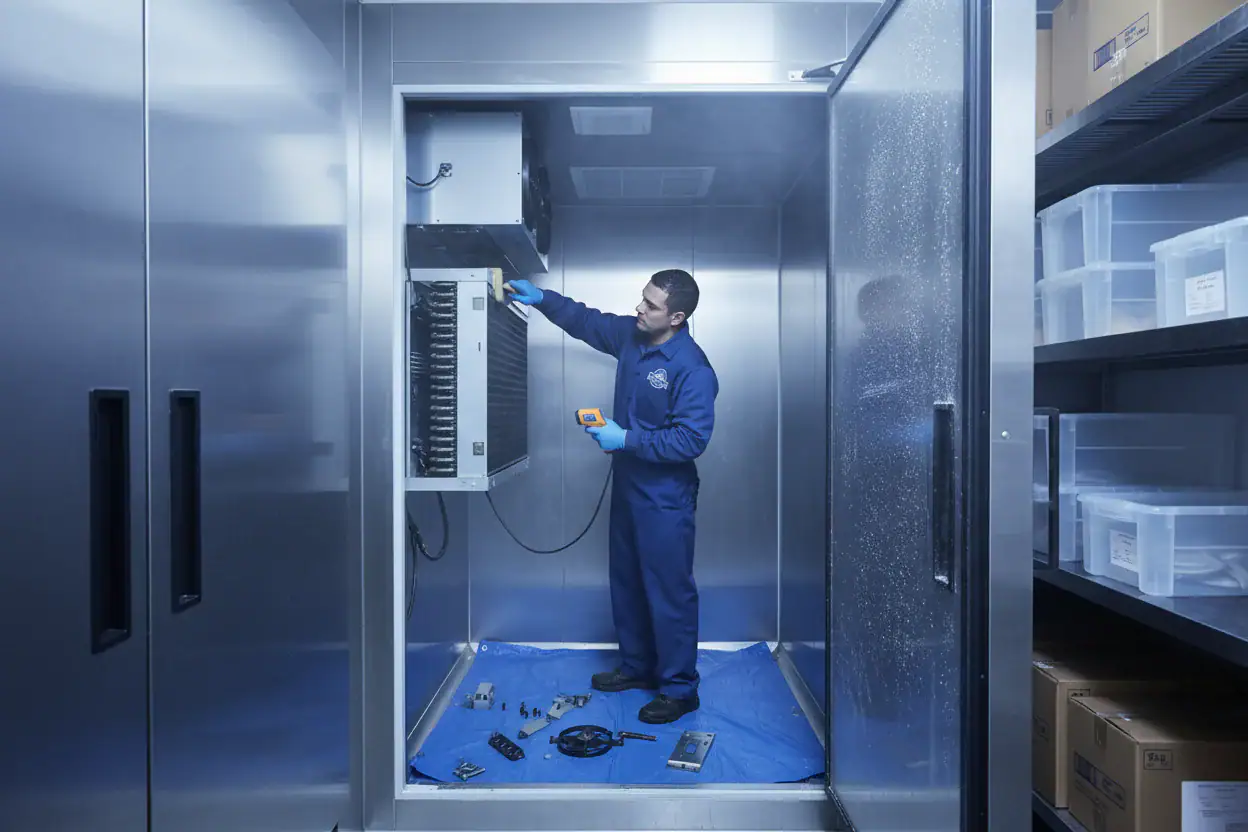
Our technicians show up with trucks stocked with common parts. Capacitors, contactors, fuses, thermostats—the stuff that fails most often. That means if your problem is one of the usual suspects, it gets fixed on the first visit. No waiting three days for a part to ship while you melt. Most emergency AC repair calls in Nassau County get resolved within one to three hours of the technician arriving, assuming parts are in stock.
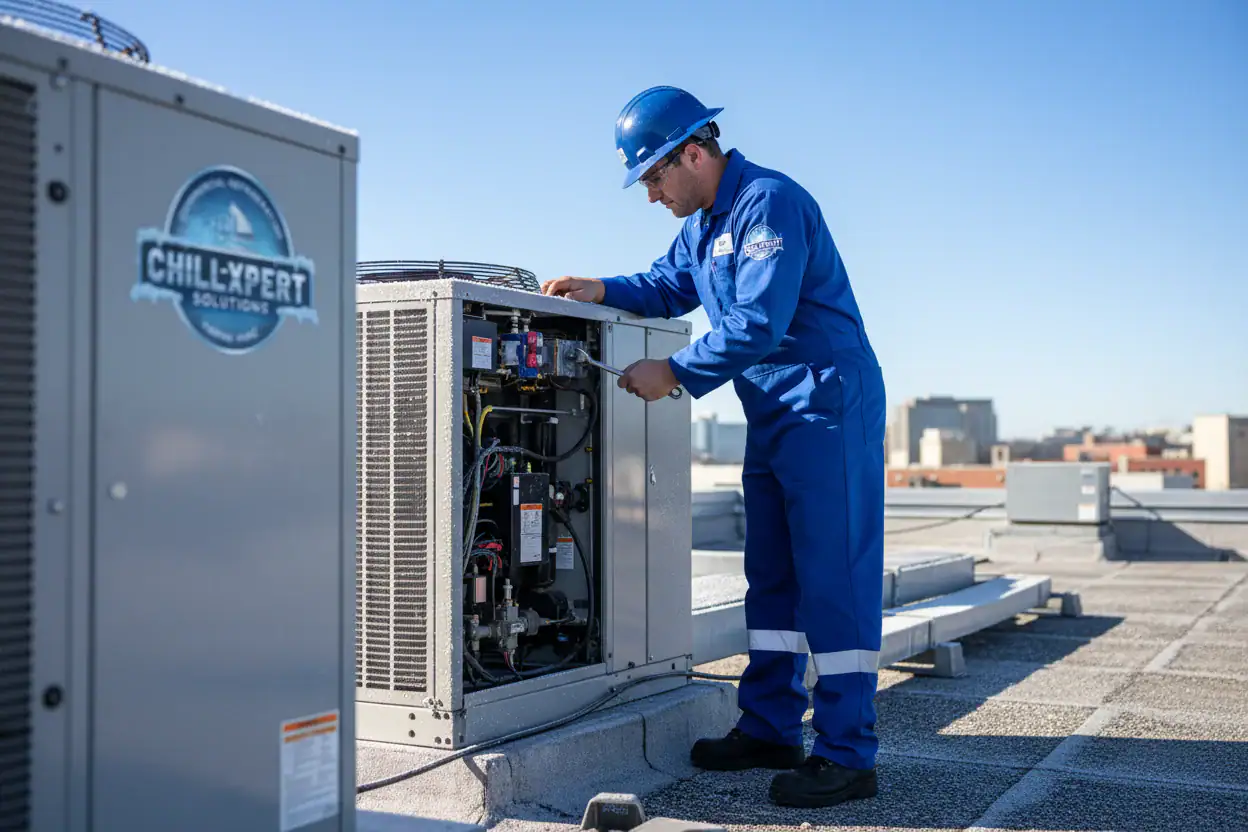
Diagnosis comes first. Always. We don’t start replacing parts until we know what’s actually wrong. We’ll check your thermostat settings, inspect the outdoor unit, test electrical components, measure refrigerant levels, and look for obvious damage or wear.
Most diagnostics take 30 minutes or less. By then, we should be able to tell you exactly what failed, why it failed, and what it’s going to cost to fix. If we can’t give you a clear answer and a firm price before starting work, that’s a problem. Emergency or not, you deserve to know what you’re paying for.
Simple repairs happen fast. A failed capacitor takes 15 minutes to replace. A tripped breaker or blown fuse, even less. Refrigerant recharge takes longer—maybe an hour—because the system has to be evacuated, recharged, and tested. Frozen coils need time to thaw before the underlying problem can even be addressed.
Complex repairs are where things get real. If your compressor is shot, your evaporator coil is cracked, or your blower motor died, those parts might not be sitting in the truck. We’ll be honest about that. We’ll explain what needs to happen, how long it takes to get parts, and whether a temporary fix can keep you limping along until the real repair happens.
With 24 hour AC service, you’re not stuck waiting until Monday morning. The call gets answered, the technician gets dispatched, and the work gets done—even if it’s 2 AM on a Sunday. That’s the difference between a company that actually offers emergency service and one that just says they do.
Emergency service pricing is straightforward when you work with us. You’ll pay more for after-hours work—that’s standard across the industry. Most companies add $50 to $100 for nights, weekends, or holidays. What you shouldn’t see is a 200% markup just because it’s an emergency. Diagnostic fees typically run $89 to $150 and get applied to the repair cost if you move forward. Actual repair costs depend on what broke, but common fixes range from $150 to $600 in Nassau County.
The timeline matters too. If parts need ordering, you’re looking at one to three days for delivery. During that wait, we’ll discuss temporary solutions—portable units, fans, whatever keeps you functional until the permanent fix happens. We’re not leaving you to suffer. We’re managing the situation until it’s completely resolved.
Let’s talk money, because that’s where emergency service gets messy if you’re not careful. Yes, emergency calls cost more. That’s not price gouging. That’s paying someone to drop what they’re doing, come to your house at 10 PM on a Saturday, and fix your problem instead of spending time with their family.
The markup should be reasonable. An extra $50 to $100 for after-hours service is industry standard. If someone’s charging double or triple their normal rates just because you called at night, find someone else. Emergency doesn’t mean “charge whatever we want.” It means “compensate the technician for working outside normal hours.”
Upfront pricing is non-negotiable. Before any work starts, you should know what the diagnostic fee is, what the repair will cost, and what’s included. If a company won’t give you a firm number until after the work is done, that’s a red flag the size of Long Island. We price the job before we touch your equipment.
Here’s what typical costs look like in Nassau County. Diagnostic calls run $89 to $150, and that fee gets credited toward your repair if you proceed. Common repairs—capacitors, contactors, minor electrical fixes—range from $150 to $500. Refrigerant recharge costs $200 to $450 depending on how much you need. Major component replacement (compressor, evaporator coil, blower motor) runs $500 to $1,500 or more.
Emergency AC service adds to that base cost, but it shouldn’t double it. If your regular-hours repair would cost $400, expect to pay $450 to $500 for emergency service. Not $800. Companies that price fairly during emergencies earn customers for life. Companies that gouge lose them just as fast.
The other cost to consider is what happens if you don’t get emergency service. Waiting three days in 90-degree heat isn’t just uncomfortable. It’s expensive. Your energy bills spike as you run fans constantly. You might have to get a hotel room. If you’ve got a business, you’re losing revenue every hour you’re not operational. Sometimes paying a bit more for immediate service saves money compared to the cost of waiting.
Payment options matter too. We offer financing for big repairs, accept credit cards, and work with you if the bill is more than you expected. We’re not trying to empty your bank account. We’re trying to fix your AC and keep you as a customer.
What you’re really paying for with emergency air conditioning service is expertise, speed, and peace of mind. You’re paying for a technician who carries the right parts, knows how to diagnose problems quickly, and fixes things correctly the first time. You’re paying for someone who shows up when they say they will and charges what they said they would. That’s worth more than the cheapest quote from someone who might or might not solve your problem.
When your AC fails and temperatures climb, you need help that’s fast, competent, and honest. Not the cheapest option. Not whoever answers the phone first. The provider who shows up quickly, diagnoses accurately, prices fairly, and fixes the problem correctly the first time.
That means looking for companies with real 24/7 availability, not just an answering service. Technicians who carry common parts and can complete most repairs on the first visit. Transparent pricing that doesn’t change once you’re committed. And local expertise that understands how Nassau County’s climate affects HVAC systems.
Emergency situations are stressful enough without wondering if you’re being taken advantage of. When you need emergency air conditioning service, we bring 40-plus years of expertise, under-two-hour response times across Nassau and Suffolk County, and the kind of transparent communication that turns a crisis into a solved problem.
Article details:
Share:
Continue learning: