You signed a maintenance contract. So why did you still get hit with a surprise bill? Here's what most contracts actually cover — and what they quietly don't.
Share:
Summary:
Most business owners sign an AC maintenance contract thinking it’s a safety net. Then something breaks on a Friday night, they call the number on the agreement, and they find out the repair isn’t covered — or the “priority service” they were promised means waiting until Tuesday.
That gap between what you think you’re buying and what’s actually in the contract is where a lot of Nassau County restaurant owners, deli operators, and food service businesses lose money. We’ve seen it happen too many times. This post is about closing that gap. By the end, you’ll know exactly what to look for, what to push back on, and what a genuinely useful maintenance agreement actually looks like in practice.
The phrase “maintenance contract” gets used to describe everything from a single annual tune-up to a comprehensive parts-and-labor agreement that covers emergency calls around the clock. Those are very different things — and the price difference between them isn’t always obvious until something goes wrong.
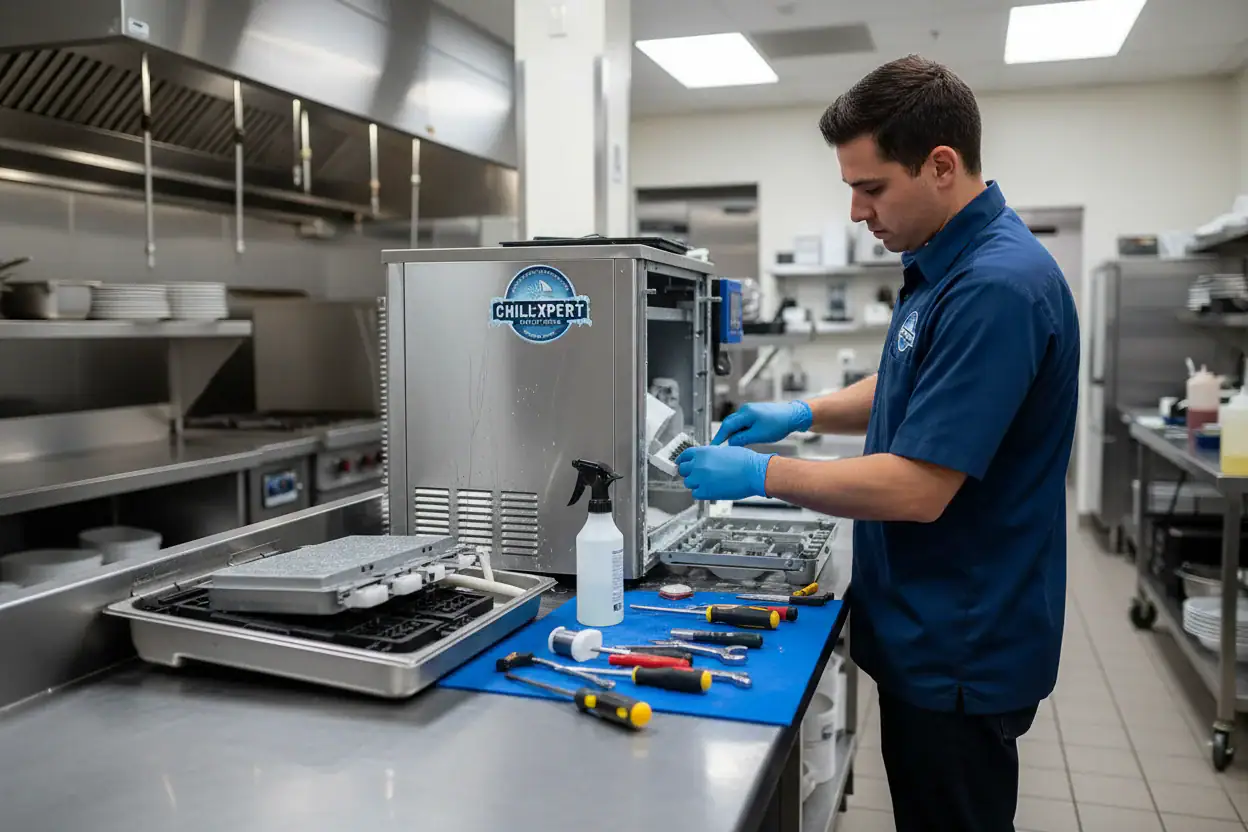
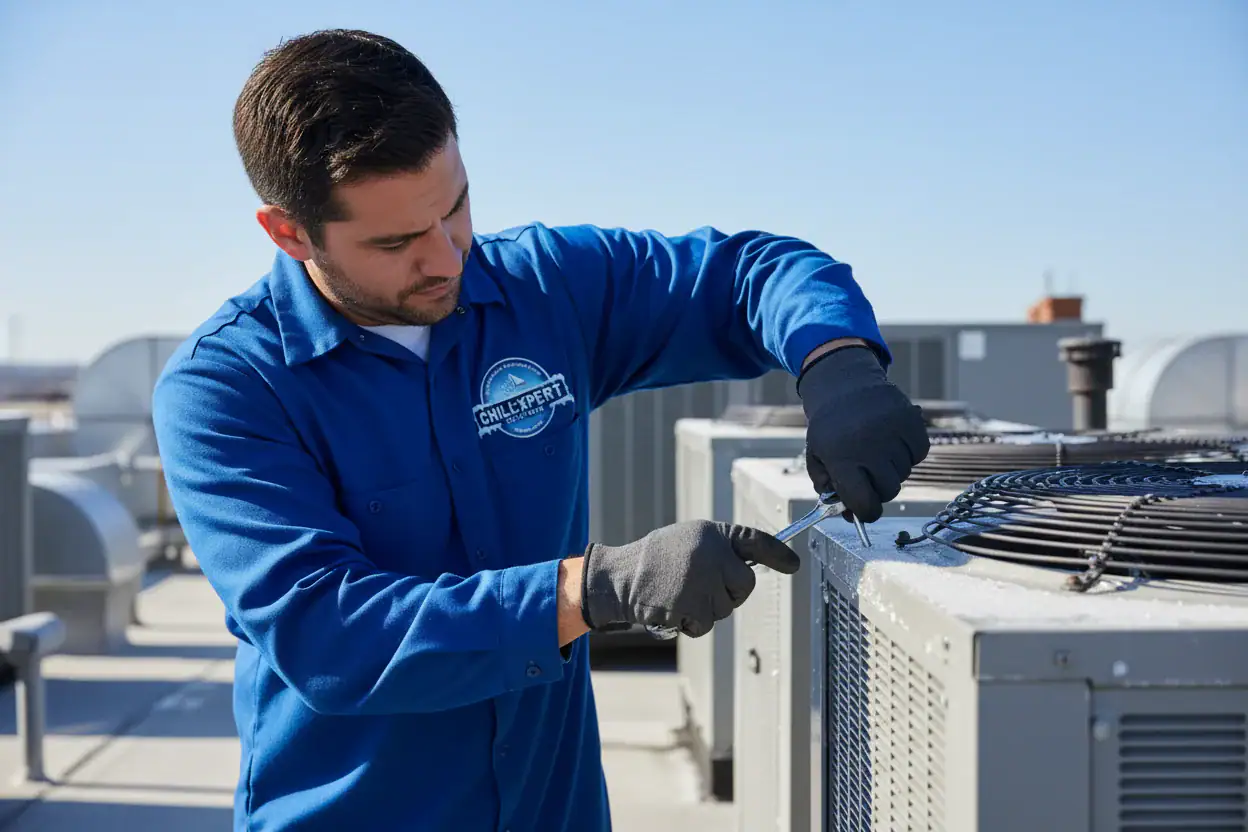
A real commercial AC maintenance agreement should spell out exactly what gets done at each visit: filter changes, coil cleaning on both the evaporator and condenser sides, refrigerant level checks, electrical connection inspections, thermostat calibration, drain line flushing, belt inspections, and defrost cycle testing. That’s the unglamorous work that actually keeps a system running. If your current contract doesn’t list those tasks by name, you’re probably getting a visual inspection and a filter swap — not a real service.
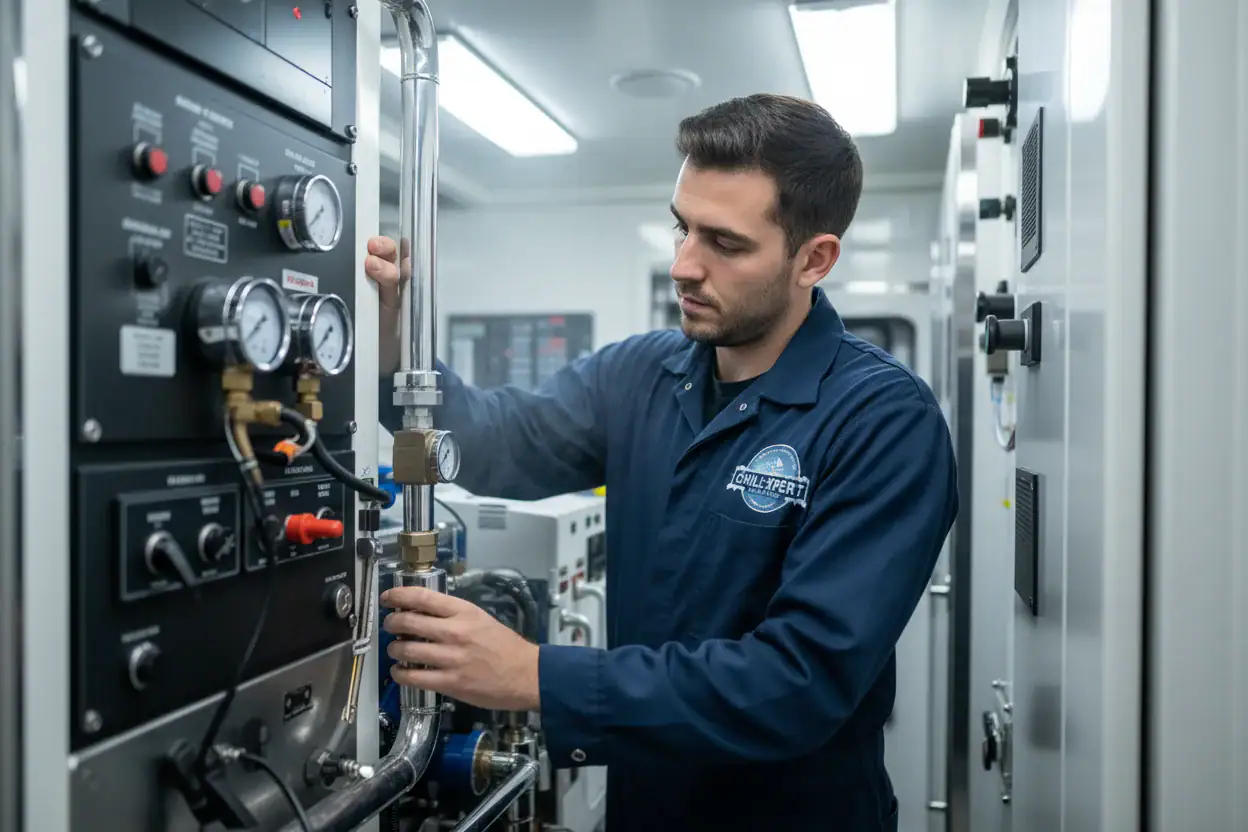
Here’s where most business owners get caught off guard. Standard commercial maintenance contracts almost always exclude major components — compressors, heat exchangers, fan motors, and refrigerant itself beyond a small top-off allowance. After-hours emergency labor is frequently excluded too, even when the contract promises “priority service.” And any work resulting from tenant modifications, deferred repairs, or equipment that was already in poor condition when the contract started? Usually not covered either.
The upsell pattern is real and well-documented. A technician shows up for a routine maintenance visit, finds something that needs attention — which is often legitimate — and quotes you for a repair that wasn’t part of the agreement. This happens often enough that it’s become one of the most common complaints from business owners who buy service contracts. It’s not always bad faith, but it does mean that a maintenance contract without clear scope language is essentially an open invitation for add-on charges.
What you want to see in writing before you sign: a specific list of tasks performed at each visit, a clear statement of what parts and labor are and aren’t covered, a defined response time for emergency calls (not “priority service” — an actual time window), and transparent billing language that prevents surprise invoices. If a contractor can’t or won’t put those specifics in the agreement, that tells you something.
The other thing worth knowing: most equipment manufacturers require documented maintenance records to honor warranty claims. If your system fails and you can’t prove it was regularly serviced by a qualified technician, you may end up paying full price for a repair that should have been covered. A maintenance contract with proper documentation isn’t just about preventing breakdowns — it’s also about protecting the investment you’ve already made in the equipment.
For most commercial environments, quarterly visits are the baseline. High-demand settings — restaurant kitchens, catering halls, facilities running equipment around the clock — often need more frequent attention. The honest answer is that service frequency should be tied to how hard the equipment is working, not to whatever interval is cheapest for the contractor to provide.
Commercial refrigeration is a different animal from residential air conditioning. A walk-in cooler in a deli on Hempstead Turnpike runs every hour of every day, year-round. It doesn’t get a break in October when the weather cools down. The compressor cycles constantly, the door seals take a beating from constant use, and the condenser coils collect grease and dust in ways that a residential system never does. Treating that equipment with the same maintenance schedule as a home AC unit is a mistake — and it’s a mistake that shows up eventually as a failed compressor or a health code violation.
The math on skipping or stretching service intervals is also worth understanding. Systems that don’t receive regular maintenance fail roughly 25 to 30 percent more often than well-maintained equipment. Dirty coils and clogged filters can increase energy consumption by 15 to 30 percent, which means you’re paying more on your utility bill every month in addition to the higher repair risk. And when something does fail without a maintenance history, emergency repair rates run three to five times higher than what a scheduled service call would have cost. The contract fee starts looking pretty reasonable in that context.
What this means practically is that you want a contractor who will tell you the right service frequency for your specific equipment and usage — not one who defaults to twice a year because it’s easier to schedule. If you’re running a full-service kitchen with a walk-in cooler, a reach-in line, and an ice machine, those systems have different needs and different wear patterns. A good maintenance agreement accounts for that.
Want live answers?
Connect with a Chill Xpert Solutions expert for fast, friendly support.
Nassau County’s geography creates equipment conditions that most generic maintenance contracts aren’t designed to address. The Atlantic coastline, the South Shore barrier communities like Long Beach and Atlantic Beach, the waterfront corridors around Freeport and Hewlett Neck — all of that salt air and coastal humidity puts extra stress on commercial HVAC and refrigeration equipment in ways that inland markets simply don’t experience.
Salt air accelerates corrosion on condenser coils. Coastal humidity makes compressors work harder. The combination shortens equipment lifespan and increases the frequency of failures if maintenance isn’t keeping pace. That’s not a sales pitch — it’s just what happens to metal and refrigerant systems in a marine environment over time.
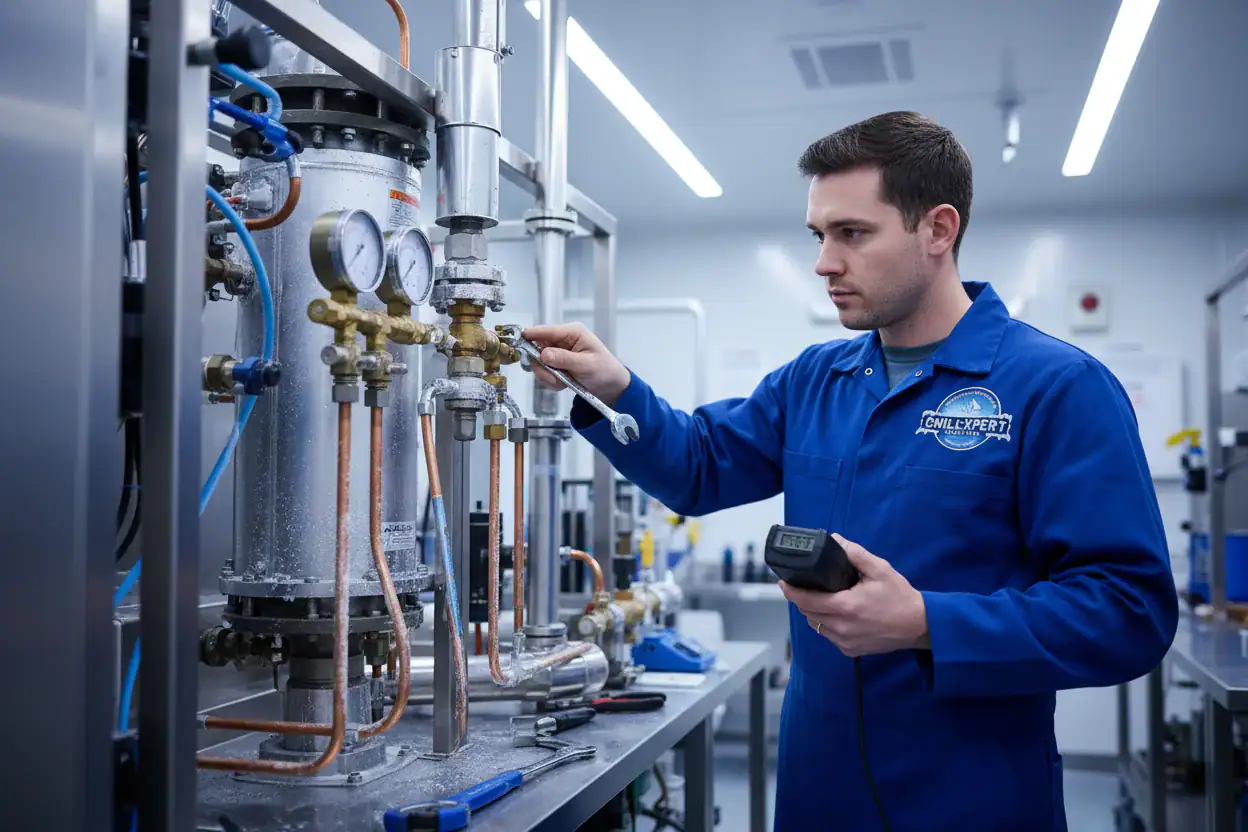
We’ve been servicing commercial refrigeration and HVAC systems across Nassau County since the 1980s, which means we’ve watched what happens to equipment that doesn’t account for coastal conditions. Condenser coils corrode faster near the water. Refrigerant systems work harder during Nassau County’s humid summers — when heat indices regularly push past 90 degrees — and that extra strain accelerates wear on components that a standard maintenance checklist might not catch until they’ve already started to fail.
This is where marine HVAC experience actually matters for land-based commercial operators, even if you’ve never owned a boat. The same understanding of salt air corrosion, humidity management, and coastal climate demands that applies to a vessel’s refrigeration system also applies to a waterfront restaurant’s walk-in cooler or a marina’s commercial kitchen. The physics are the same. The maintenance approach should reflect that.
For businesses along the South Shore — in communities like Long Beach, Freeport, or Island Park — this isn’t a hypothetical. Equipment near the water corrodes faster, runs harder, and needs more thorough maintenance to deliver the same lifespan as identical equipment installed ten miles inland. A contract that doesn’t account for coastal conditions isn’t fully protecting your equipment. It’s checking boxes.
Nassau County also has a high concentration of catering halls and event venues — a well-known characteristic of Long Island’s event industry. These facilities run large-scale refrigeration and HVAC systems that can’t afford to fail during a booked event. A Saturday afternoon wedding with 200 guests and a failed HVAC system isn’t a maintenance problem — it’s a business crisis. The right AC maintenance contract for a catering hall looks very different from a standard commercial agreement, and the contractor you work with should understand that distinction without you having to explain it.
Most contractors will tell you what you want to hear during the sales conversation. The questions that reveal whether they’ll deliver are the ones that require specific answers.
Ask for the exact list of tasks performed at each maintenance visit — not a general description, but a written task list. Ask what the response time guarantee is for emergency calls, and ask for that in writing. “Priority service” is a phrase that means nothing without a time window attached to it. Ask whether parts are stocked on service vehicles or ordered after diagnosis, because the difference between a technician who has the part on the truck and one who needs to order it can be the difference between a two-hour fix and a three-day closure.
Ask specifically what’s excluded from the contract. Major components, after-hours labor, refrigerant beyond a certain amount — these exclusions should be listed clearly, and if a contractor is vague about them, that’s the answer. Ask how service records are documented and whether you’ll receive written reports after each visit. Those records matter for warranty compliance and for your own understanding of how your equipment is performing over time.
One question that often gets overlooked: ask whether the same technician will service your equipment consistently, or whether you’ll see a different face every visit. Relationship continuity matters in commercial refrigeration. A technician who knows your walk-in cooler’s history — the door seal that was replaced last spring, the refrigerant top-off from six months ago — will catch developing problems faster than someone seeing the system for the first time.
We carry thousands of parts across our service vehicles and respond to true emergencies across Nassau County in under two hours. We also provide clear, written estimates before any work begins — no surprises on the invoice, no charges for work you didn’t approve. Those aren’t marketing claims; they’re the baseline for what a commercial maintenance relationship should look like, and they’re worth asking about with any contractor you’re considering.
A maintenance contract is only worth what it actually delivers. The right one catches small problems before they become emergency calls, keeps your equipment running efficiently through Nassau County’s humid summers and year-round refrigeration demands, and gives you a clear record of service that protects your warranty and your investment.
The wrong one is a piece of paper that gives you false confidence until something breaks — and then you find out what’s actually covered.
Before you sign anything, get the specifics in writing: the task list, the response time, the exclusions, the parts policy. And work with a contractor who understands what coastal conditions actually do to commercial equipment over time.
If you’re a restaurant owner, deli operator, catering hall, or food service business in Nassau County, NY and you want a straight answer about what your current maintenance situation is actually giving you — or not giving you — Chill Xpert Solutions is happy to take a look. We offer free estimates, and we’ll tell you exactly what we find.
Article details:
Share:
Continue learning: