A practical walk-in cooler maintenance guide written for Long Island restaurant operators covering what to do yourself, when to call a pro, and why summer is your highest-risk season.
Share:
Summary:
Here is something most Long Island restaurant operators do not realize: a walk-in cooler can be running, feel cold, and still be slowly costing you money every single day. Dirty condenser coils, a slightly torn door gasket, or a fan motor running slower than it should none of these feel like emergencies. But they add up fast, and they tend to reach a breaking point at the worst possible time.
This guide covers what you should be doing on a regular basis, what a professional maintenance visit looks like, and how to know when something needs more than a cleaning. Suffolk County’s coastal climate adds a layer of complexity that most generic maintenance guides completely ignore, so we are going to address that directly.
A lot of operators think of walk-in maintenance as cleaning the shelves, wiping down the walls, and making sure nothing is blocking the vents. That is sanitation, and it matters, but it has almost nothing to do with how your unit holds temperature reliably six months from now.
The maintenance tasks that prevent failures are almost entirely external to the cooler interior. Condenser coils, door gaskets, drain lines, fan motors, refrigerant levels, and compressor health are the components that determine if your unit runs efficiently or quietly burns itself out. Most of them require either a trained eye or a certified technician to assess properly.
Understanding what is involved helps you have better conversations with whoever services your equipment and helps you spot when something is not being done right.
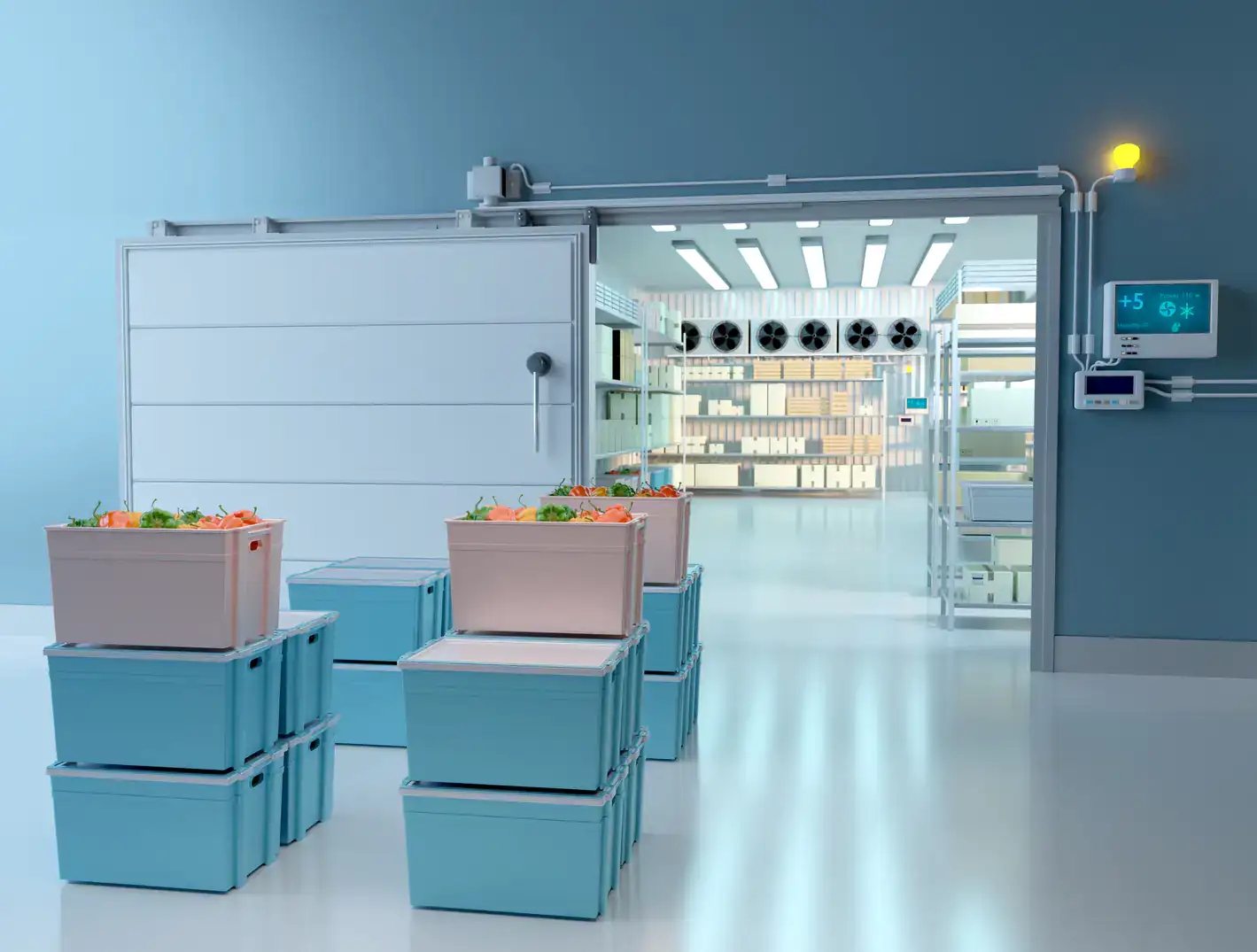
There is a real information gap here, and it is worth addressing honestly. Many operators try to handle everything themselves or assume everything requires a service call. The truth is somewhere in the middle, and knowing the difference saves you time and money.
On the operator side, daily and weekly checks are straightforward and do not require any special tools or training. Check the temperature log every day not just glancing at the display, but confirming the unit held its set point overnight and during peak service hours. Listen for anything unusual: grinding, squealing, or a compressor that seems to be running constantly without cycling off. Check the door gaskets visually every week, running your hand along the seal to feel for any gaps or soft spots where warm air might be getting in. Keep the area around the condenser unit clear, as blocked airflow is one of the most common causes of overworking and premature compressor failure.
Monthly, you can clean the condenser coils yourself if you have access and a coil brush or compressed air. This is one of the highest-impact maintenance tasks you can perform because dirty coils force the compressor to work significantly harder to reject heat. In Long Island’s summer humidity which regularly exceeds 80 percent on the coast a dirty condenser coil is especially punishing. The unit is already working at near-maximum capacity when it is 90 degrees outside, and adding a layer of grease and dust to the coils invites trouble.
What you should not try to handle without a certified technician is anything involving refrigerant. Federal law under EPA Section 608 requires that any technician who handles refrigerants hold a valid certification. Refrigerant work done incorrectly can damage the system, create safety hazards, and result in fines. Beyond refrigerant, a professional service visit should include a compressor health check, defrost system inspection, drain line flushing, fan motor speed verification, and temperature calibration tasks that require both the right equipment and the experience to interpret what they find.
We recommend professional service at least twice a year. For businesses near the water in Suffolk County Patchogue, Smithtown, Sayville, or anywhere along the South Shore that frequency should probably be higher because salt air accelerates corrosion on outdoor condenser components in ways that inland markets simply do not deal with.
Some problems announce themselves clearly. A walk-in that is warm when you open it in the morning is an obvious emergency. But the warning signs that lead to that moment are usually quieter, showing up days or weeks before the failure.
Inconsistent temperatures are the most common early signal. If your unit is holding 38 degrees Fahrenheit overnight but creeping up to 44 degrees Fahrenheit during a busy dinner service, that is not normal variation it is a system under stress. The FDA’s standard is clear: perishable food held above 41 degrees Fahrenheit for more than four hours must be discarded. A unit that cannot maintain temperature during peak load is a food safety liability, not just an equipment issue.
Ice buildup on the evaporator coils is another sign that something is wrong. A small amount of frost is normal, but heavy ice accumulation usually points to a defrost system problem, a refrigerant issue, or a door seal allowing warm, humid air to enter the unit. In Long Island’s summer humidity, a compromised door seal turns into an ice-building machine almost overnight.
Unusual sounds deserve attention too. A compressor that is short-cycling turning on and off rapidly instead of running in normal intervals is often overheating or struggling to build pressure. A squealing fan motor indicates failing bearings. These are not sounds you should monitor and wait to see what happens; they are sounds requiring immediate action.
Then there is the energy bill. This one is easy to miss because it creeps up gradually. Dirty condenser coils, a struggling compressor, and a worn door gasket can collectively add hundreds of dollars per month to your energy costs before anything visibly fails. Refrigeration already accounts for roughly 15 percent of a restaurant’s total energy consumption under normal conditions, and when the system works harder than it should, that number climbs fast. If your bills trend upward without an obvious explanation, your walk-in cooler is a reasonable place to start looking.
Want live answers?
Connect with a Chill Xpert Solutions expert for fast, friendly support.
Generic walk-in cooler maintenance advice is written for a generic climate, and Long Island is not generic. The combination of summer heat, coastal humidity, and year-round salt air creates conditions accelerating equipment wear in ways standard maintenance schedules do not fully account for.
If your restaurant or food service operation is near the water on the South Shore, along the North Shore, or out on the East End your outdoor condenser unit deals with salt air exposure that standard steel components were never designed to handle indefinitely. This is the reality of operating in a coastal environment, which is why maintenance frequency and component selection matter more here than in most other markets.
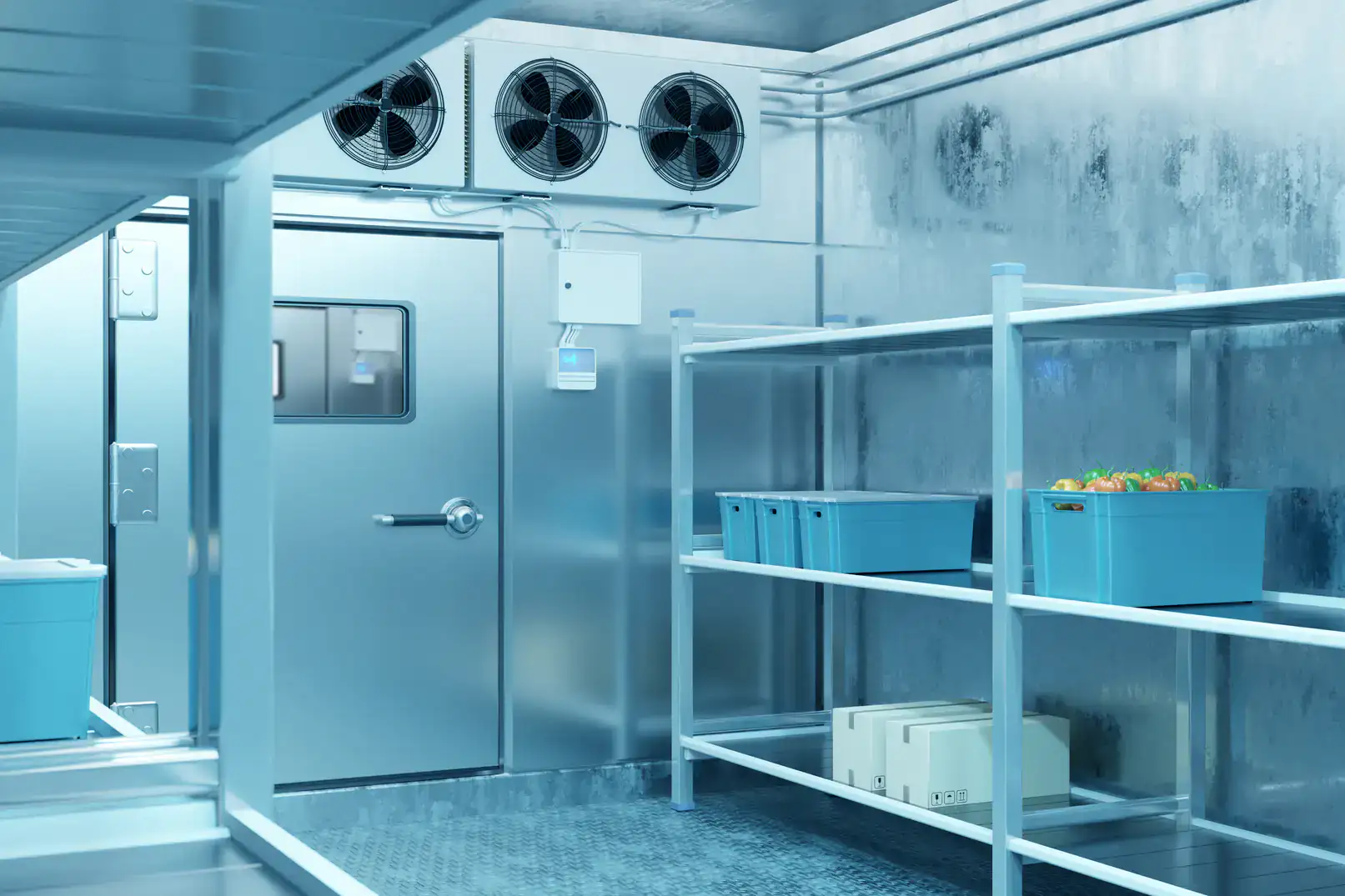
Suffolk County’s East End is one of the highest-volume restaurant markets in the entire Northeast from Memorial Day through Labor Day. The Hamptons, Montauk, and the North Fork wine country go from quiet to slammed in a matter of weeks, and the pressure on every piece of kitchen equipment follows. A walk-in cooler limping along all spring often reaches its breaking point during the first real heat wave of summer, when ambient temperatures push condensing units to their limits and reservation books are full.
This is the scenario operators describe as their worst business nightmare: a cooler failure on a summer Saturday night, a full dining room, and a refrigeration company that cannot get there until Monday. The inventory loss alone from a single event like that can run $4,000 to $10,000 or more. Add lost revenue from a service disruption, emergency repair costs, and restocking expenses, and you are looking at a very bad week.
The preventive answer is straightforward: schedule a professional maintenance visit in the spring before the heat arrives. Clean condenser coils, verified door seals, confirmed refrigerant levels, and a working defrost system going into summer mean your unit is prepared for the hardest months of the year. If something goes wrong, a technician can quickly identify the issue rather than sorting through months of deferred maintenance.
For businesses on Long Island’s coast, that spring visit should also include a close inspection of the outdoor condenser for salt air corrosion. Standard steel components corrode faster in marine-adjacent environments, and a condenser unit looking fine visually can have compromised connections or mounting hardware that becomes problematic under summer load. Using corrosion-resistant or marine-grade components where appropriate is the right call for your operating location.
Nassau County’s Department of Health permits over 5,700 food service establishments, and every one of them is subject to routine inspections. Suffolk County operates under the same New York State Sanitary Code framework. Health inspectors check refrigeration temperature compliance on every visit, and the threshold is firm: refrigerated foods must be maintained at or below 41 degrees Fahrenheit, and frozen foods at or below 0 degrees Fahrenheit. There is no grace period and no partial credit for a unit working fine last week.
A walk-in cooler struggling to maintain temperature is not just an equipment problem; it is a health code problem. A failed inspection carries consequences extending well beyond a fine permit issues, required reinspections, and reputational damage to public health records are all on the table.
The practical protection here is a maintenance log. Every professional service visit should be documented detailing what was inspected, found, done, and when. That log does two things. First, it gives the next technician a baseline so they can see if refrigerant levels changed, if door gaskets were flagged previously, or if the compressor ran hotter than normal. Second, it demonstrates to health inspectors that you take food safety seriously and maintain a documented maintenance history.
For operators in Nassau County’s dense commercial corridors the food service businesses along Hempstead Turnpike and the delis and restaurants throughout suburban communities inspection frequency is an operational reality. A documented maintenance program is one of the most straightforward ways to walk into an inspection with confidence rather than anxiety. Keeping your cooler properly maintained protects equipment while ensuring compliance in this regulatory environment.
Your walk-in cooler does not fail dramatically out of nowhere. It gives signals in your energy bill, in the sounds it makes, and in small temperature fluctuations easy to rationalize away. Operators avoiding expensive failures pay attention to those signals and act before summer, before inspections, and before busy weekends.
A practical maintenance routine does not have to be complicated. Daily temperature checks, weekly door seal inspections, monthly condenser cleaning, and a professional service visit at least twice a year cover the vast majority of what keeps a commercial walk-in running reliably for 15 years or more. In Long Island’s coastal climate, that schedule may need to be more aggressive, especially for businesses near the water.
If you are unsure where your unit stands or if it has been a while since anyone looked at it properly, that is the right place to start. Chill Xpert Solutions has serviced commercial refrigeration across Nassau County, Suffolk County, and the rest of Long Island for over 40 years, and we are available when you need us, including when it is inconvenient.
Article details:
Share:
Continue learning: