Skipping refrigeration maintenance on Long Island is not just risky. It is expensive, and here is what local businesses need to know before something goes wrong.
Share:
Summary:
If your walk-in cooler is running, it is easy to assume everything is fine. Most Long Island restaurant owners, deli operators, and catering hall managers do. Then something breaks, usually at the worst possible moment, and the real cost of skipping maintenance becomes very clear, very fast.
This is not a scare tactic. It is simply math. A walk-in cooler that fails on a Friday night in July costs thousands in spoiled inventory alone, long before factoring in emergency service premiums and lost revenue during downtime. Once you understand what happens inside your refrigeration equipment between service calls, along with what Long Island’s specific environment does to accelerate wear, the case for regular maintenance makes itself.
A lot of businesses think they have a maintenance plan because they have a number to call when something breaks. That is not maintenance, but rather reactive repair. On average, reactive repair costs three to five times more than catching the same problem during a scheduled visit.
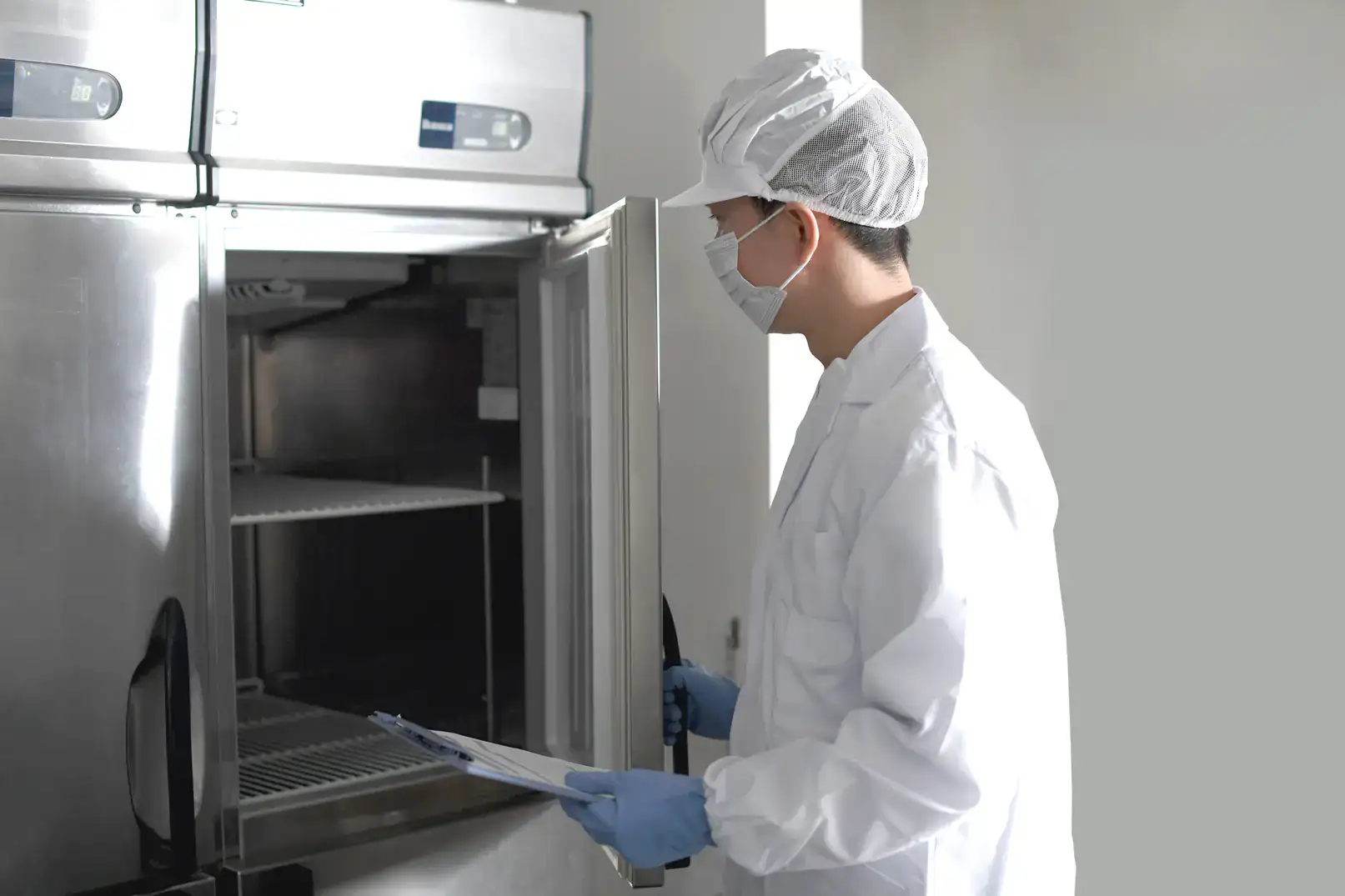
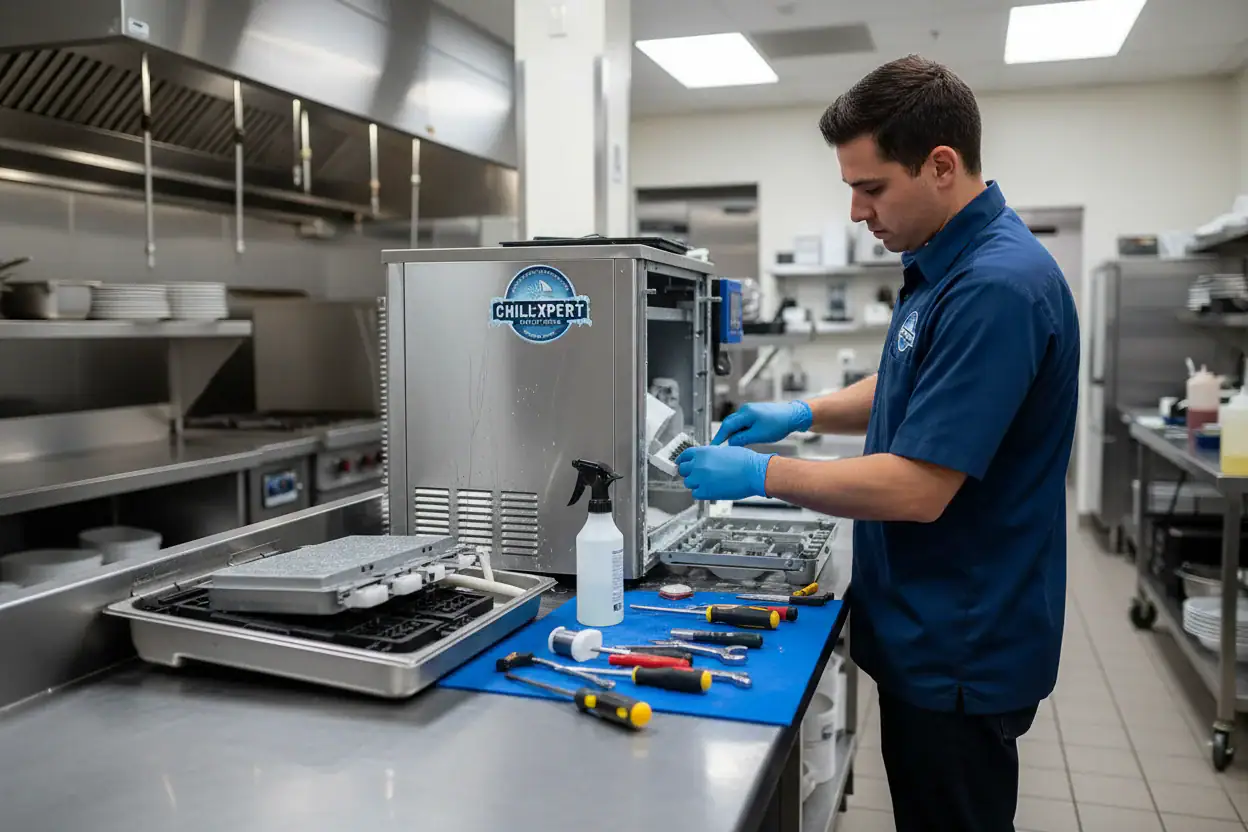
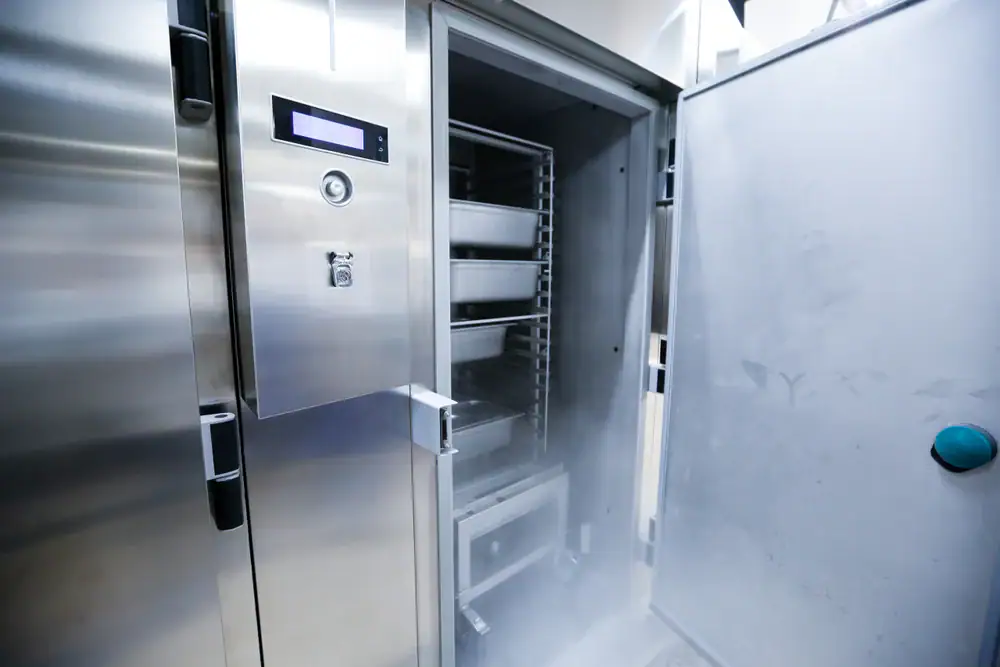
Real preventive maintenance covers the components causing the most failures: condenser and evaporator coil cleaning, refrigerant level checks and leak detection, door gasket and seal inspection, defrost cycle testing, drain line cleaning, and a full electrical component check covering fan motors, thermostats, and controls. Our technicians verify that your units hold correct temperature ranges, which matters for food safety and your next health department inspection in Nassau County or Suffolk County.
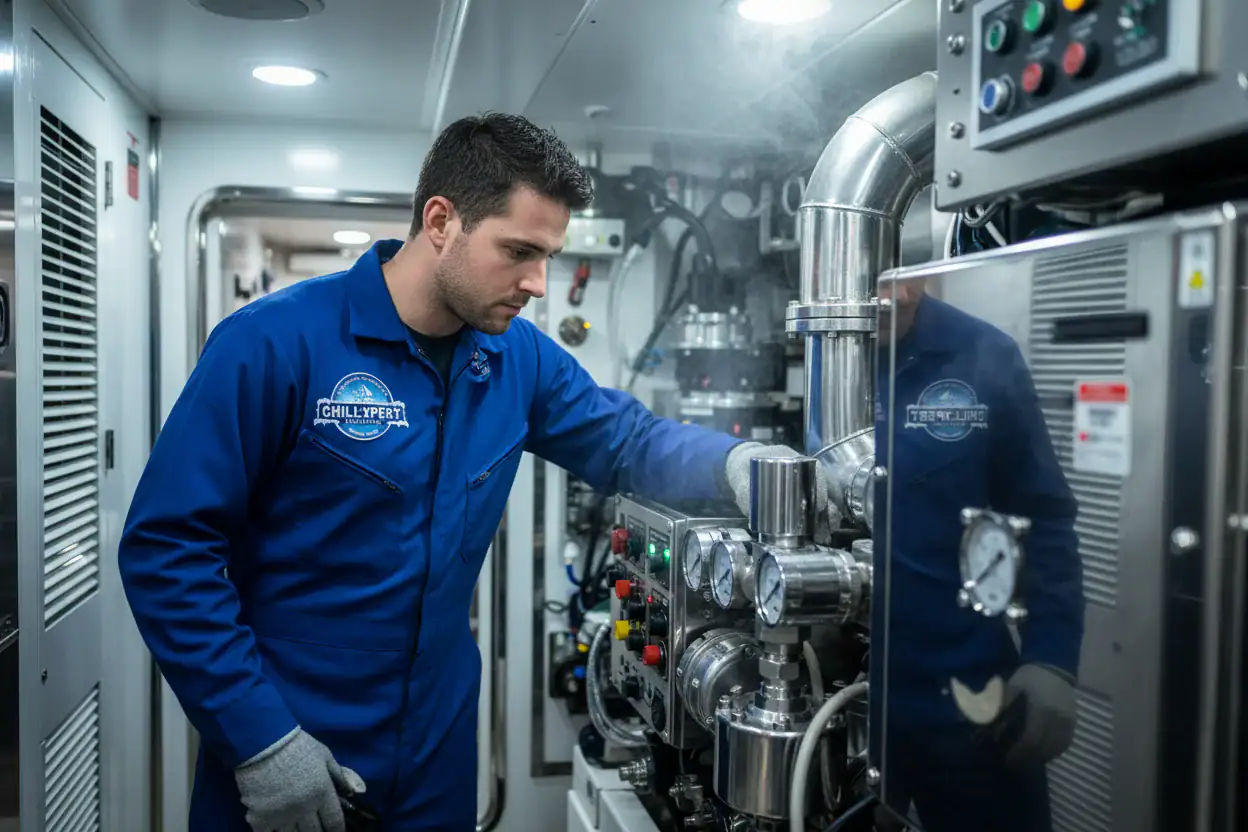
Dirty coils, worn door seals, and refrigerant leaks account for roughly 80 percent of all commercial refrigeration service calls. Every one of those issues is detectable during a routine maintenance visit, which catches between 80 and 90 percent of potential failures before they become emergencies.
Here is what that looks like in practice. A condenser coil clogged with grease and dust may still cool your unit, but the compressor works significantly harder to compensate, consuming more energy, running hotter, and wearing down faster than intended. You will not notice anything until the compressor fails entirely, leaving you facing a major repair or full replacement rather than a simple coil cleaning.
The same logic applies to door gaskets. A worn seal on a walk-in cooler lets warm air in constantly, forcing the unit to work overtime trying to maintain temperature. Energy costs climb, the compressor takes the strain, and eventually, on a busy Friday night in July, the unit gives out.
A gasket replacement during a maintenance visit is a minor fix, whereas the emergency call it prevents is not. This is why the math on maintenance contracts remains so straightforward: the service cost is a fraction of the failure cost it prevents, even before factoring in inventory loss that for a typical Long Island restaurant can run into thousands of dollars in a single incident.
Properly maintained equipment also lasts significantly longer. Industry data puts the lifespan extension from regular maintenance at up to 30 percent. That means the difference between replacing a walk-in cooler at year ten and getting fifteen or more years out of it, a gap paying for years of maintenance visits many times over.
This is the part most generic maintenance guides skip entirely, and it remains one of the most important factors for any business operating in Nassau County, Suffolk County, or anywhere along Long Island’s coastline.
Salt air is corrosive. If your restaurant sits near the Great South Bay, your catering hall is in Nassau County, or your operation is out on the East End near the Peconic Bay, atmospheric salt air accelerates corrosion on condenser coils, electrical connections, and equipment housing in ways landlocked markets never experience. Equipment holding up for fifteen years in a landlocked city degrades significantly faster here without the right maintenance approach and appropriate components.
Long Island summers compound this stress. When outdoor temperatures climb above 90 degrees Fahrenheit through July and August across both counties, compressors work harder to reject heat. If condenser coils are even partially fouled, the compressor operates in conditions it was never designed for. This coincides with peak tourist season across the Hamptons, Montauk, and the South Shore, creating maximum kitchen volume when refrigeration systems have the least margin for error.
Winter introduces a different set of stresses. Freeze-thaw cycles strain door seals, drain lines, and exterior condensing units. Temperature differentials between heated commercial interiors and cold outdoor air generate interior condensation that eventually causes corrosion and electrical issues.
None of this means Long Island businesses are doomed to constant equipment problems. It simply means maintenance frequency and approach must account for the local environment rather than a generic schedule designed for elsewhere. For most food service operations here, twice-yearly professional maintenance serves as the baseline, while high-volume restaurants and 24-hour operations benefit from quarterly service. Staying ahead of environmental wear beats catching up after damage occurs.
Want live answers?
Connect with a Chill Xpert Solutions expert for fast, friendly support.
Not every company calling itself a commercial refrigeration provider is equipped to handle the job. Long Island has no shortage of general HVAC contractors willing to take the call, but commercial refrigeration represents a distinct specialization, and that difference matters when something fails at 11 PM.
A few items warrant checking before signing a service contract. Federal law requires any technician handling refrigerants to hold EPA Section 608 certification, which is a baseline legal requirement rather than a formality. Beyond that, look for factory training on the specific brands you run, such as True, Hoshizaki, Manitowoc, or Turbo Air. A technician familiar with your equipment’s specific failure modes diagnoses problems faster and fixes them correctly the first time.
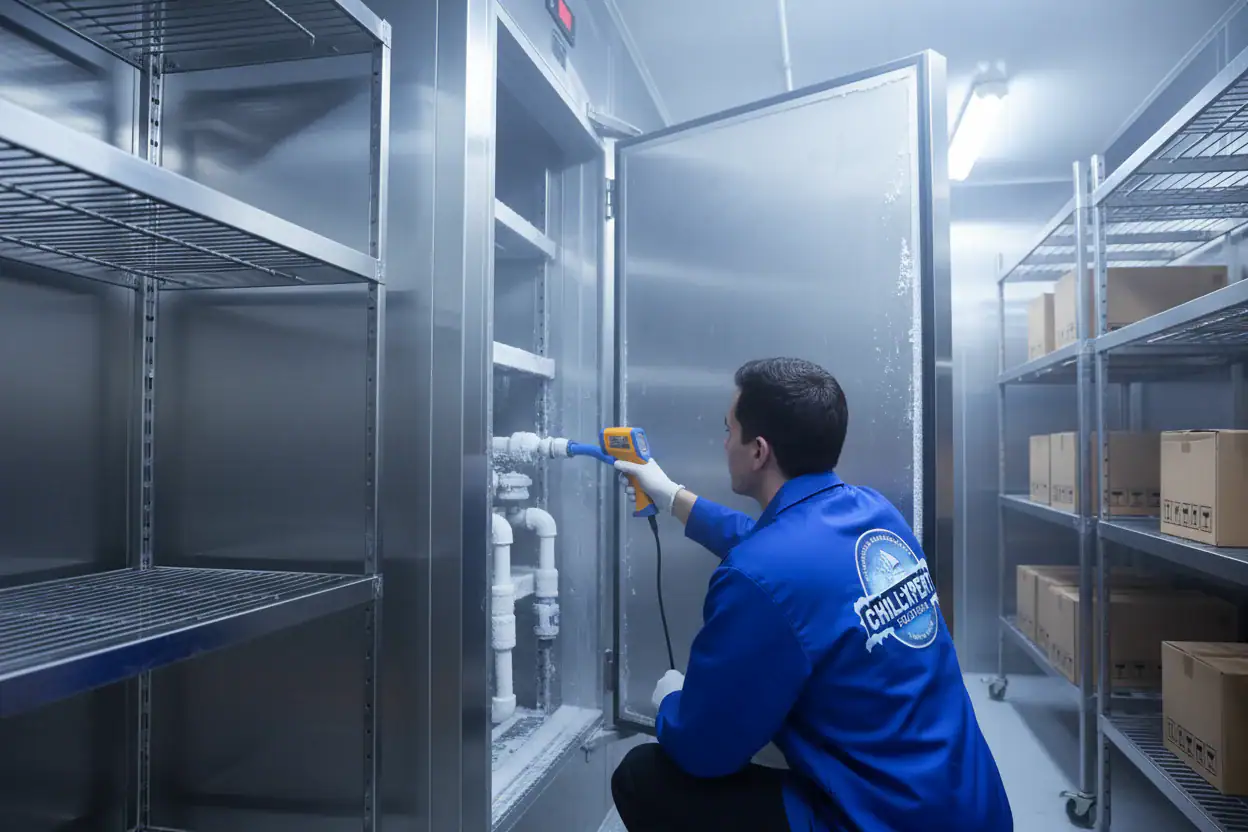
The most useful question to ask a prospective provider is simple: who arrives at your door? Many companies dispatch subcontractors, which are independent technicians whose qualifications cannot be fully verified and who hold no real accountability to the company you called, leaving you unaware until someone unfamiliar shows up.
Ask whether their technicians are direct employees. Ask if service vehicles carry parts inventory for your equipment brands, as same-day fixes depend heavily on stock availability. A provider whose trucks are stocked for major commercial refrigeration brands resolves roughly 70 percent of emergency calls on the same day without waiting on parts orders, representing the difference between reopening for dinner service and staying closed.
Ask about response time specifically, since vague promises mean nothing. An under-two-hour commitment for genuine emergencies, backed by a real person answering the phone at 2 AM rather than a voicemail, provides a concrete standard you can hold someone to.
Inquire about their experience with your specific type of operation. A company servicing airports, catering halls, and high-volume restaurant groups operates in environments where failure proves immediately costly and visible, offering a different level of operational accountability than residential repair providers handling occasional commercial calls.
Finally, ask about their familiarity with New York State food safety requirements. Potentially hazardous foods must be held at 41 degrees Fahrenheit or below under state law, with walk-in coolers running between 35 and 38 degrees Fahrenheit to maintain a safety buffer. A maintenance provider understanding this regulatory context while documenting temperature performance protects you from more than equipment failure, helping you remain compliant during your next Nassau County or Suffolk County health department inspection.
For most Long Island food service operations, the honest answer is yes, and the math supports it quickly.
A maintenance contract typically includes priority service, discounted repair rates, regular preventive visits, and detailed equipment records. Priority service alone holds real value, providing contract customers with faster emergency response that during a peak-season failure can mean the difference between a manageable disruption and a catastrophe.
Energy savings add up as well. Properly maintained refrigeration equipment runs 10 to 20 percent more efficiently than units left to accumulate coil fouling, refrigerant drift, and worn seals. For commercial operations running multiple units like walk-ins, reach-ins, display cases, and ice machines, that efficiency gap shows up on utility bills every month.
The lifespan argument is perhaps the most compelling. Businesses maintaining a consistent maintenance schedule routinely secure 15 or more years out of their commercial refrigeration equipment. Without maintenance, ten years is a reasonable expectation, and some units fail much sooner in Long Island’s coastal climate. Replacing a walk-in cooler years earlier than necessary dwarfs the cost of a preventive maintenance program.
Compliance dimensions are easy to overlook until they turn urgent. Nassau County and Suffolk County health departments actively enforce food safety temperature requirements, making improper refrigeration temperatures a commonly cited critical violation. A maintenance program keeping your equipment calibrated and documented provides defensible records, offering functional equipment alongside proof of responsible management.
Businesses surviving a major Saturday night walk-in breakdown or a holiday weekend ice machine failure usually sign a maintenance contract soon afterward, though making that choice before a failure happens remains the smarter move.
Long Island is not a forgiving environment for commercial refrigeration equipment. Salt air, summer heat, peak-season pressure, and health department scrutiny raise the stakes for businesses relying on dependable cold storage. Maintenance is not an optional line item here, but rather the safeguard preventing manageable situations from turning expensive.
Businesses maximizing equipment life treat maintenance as a fixed operational part rather than a chore scheduled during slow periods. They know their provider’s credentials and expected response times before emergencies strike.
If you operate a restaurant, deli, catering hall, or food service business in Nassau County or Suffolk County and lack confidence in your current maintenance approach, Chill Xpert Solutions has delivered trusted refrigeration service across Long Island for over 40 years, ready to provide straightforward answers about your equipment status.
Article details:
Share:
Continue learning: