When your walk-in goes down, the clock starts immediately. Here's what Nassau County, NY food service operators need to do in the first 30 minutes — before losses spiral.
Share:
Summary:
It’s late. Your walk-in cooler is warm. You’ve got a full house tomorrow — or a Saturday wedding booked — and there’s $6,000 worth of food sitting in a box that’s climbing past 45 degrees. You pull out your phone and start Googling. That’s already too late to be making your first decision.
The operators who come out of a refrigeration emergency with minimal losses aren’t lucky. They had a plan. They knew exactly what to do in the first 30 minutes, and they already had the right number saved. This guide gives you that plan — built specifically for Nassau County, NY food service operators who can’t afford to figure it out on the fly.
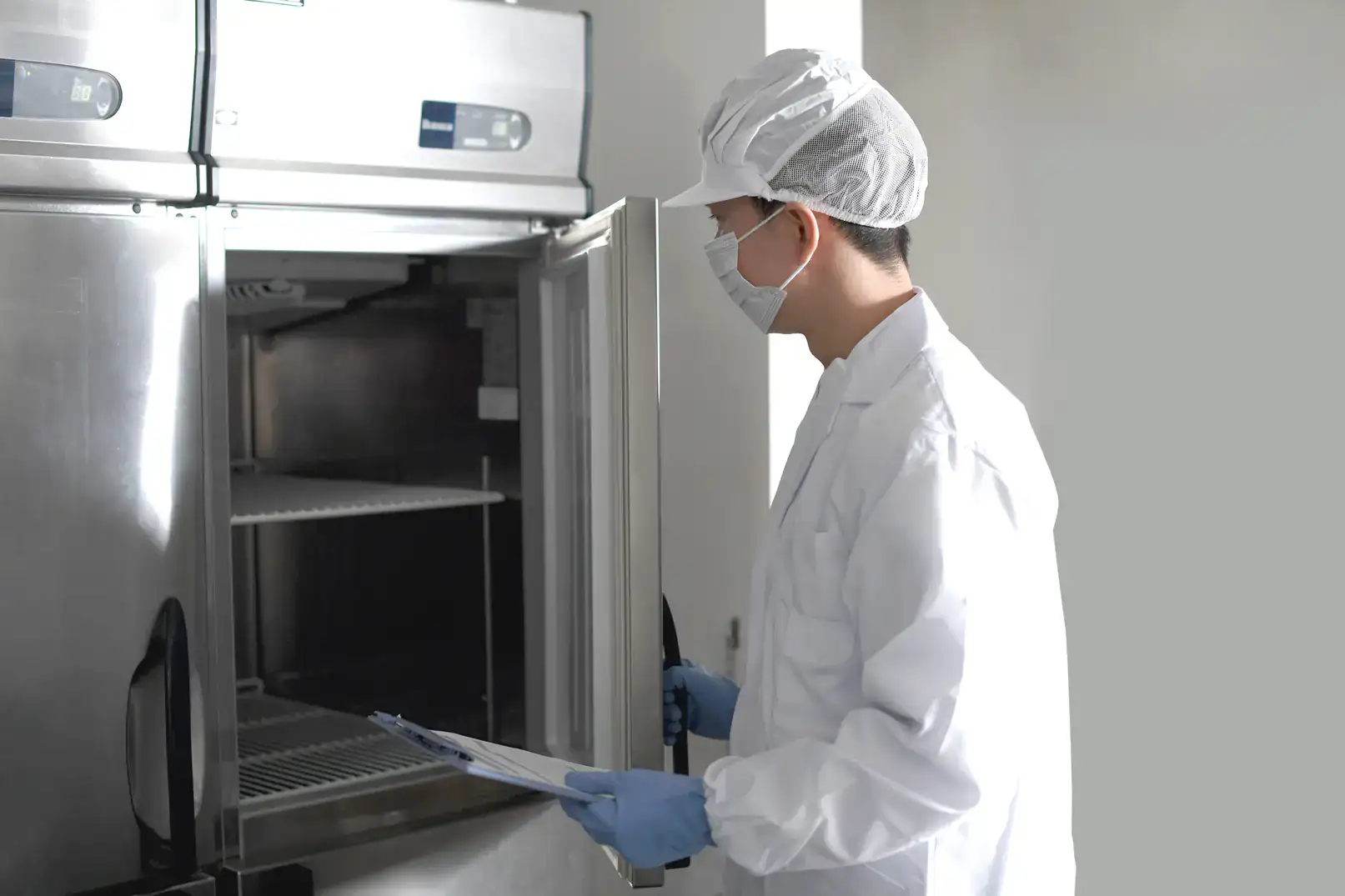
The first thing most operators do when they notice a warm cooler is open the door to check on the food. That’s the wrong move. Every time that door swings open, cold air drops out and warm air rushes in — accelerating the temperature rise and shrinking your window to act. Keep the door closed.
Before you assume the worst, do a quick check of the basics. Is the unit plugged in? Has a breaker tripped? Is the condenser fan running? These take two minutes and occasionally turn out to be the whole problem. If none of that resolves it, stop troubleshooting and start executing your emergency plan.
Here’s why the first 30 minutes matter more than anything that comes after. A sealed walk-in cooler that’s lost power or stopped cooling can hold safe temperatures for approximately four hours — but only if the door stays closed. The moment you start opening it repeatedly, that window collapses fast.
Once food temperatures climb into the 40°F–140°F range that the USDA defines as the bacterial danger zone, the clock on food safety starts ticking hard. Bacteria can double in number every 20 minutes in that range.
Your 30-minute window isn’t about fixing the unit. It’s about making the right decisions before your options narrow. In the first few minutes, you’re confirming the failure is real and doing the basic checks. By minute ten, you should be on the phone with a certified refrigeration technician — not still Googling. By minute twenty, you should know whether you’re getting a tech on-site tonight or whether you need to start thinking about a backup plan for your inventory.
The operators who lose the most in a refrigeration emergency are the ones who spend 45 minutes trying to reset the unit, opening the door every few minutes to check temperatures, and calling three different companies before finding one that actually answers. By the time a technician arrives, the food is already gone.
One more thing worth knowing: a unit that’s still running isn’t necessarily safe. A failing compressor can keep the motor running while losing its ability to cool effectively. The temperature display on the unit can also lag behind actual food temperatures. If something feels off, trust your thermometer — not the display.
Nassau County, NY isn’t an average market for commercial refrigeration. The county is surrounded by water on three sides, and that geography matters more than most operators realize. Salt air accelerates condenser coil corrosion at a measurably faster rate than inland environments. The combination of summer heat and coastal humidity pushes compressors harder than in drier climates.
For restaurants and delis near Oceanside, Freeport, Long Beach, or anywhere along the South Shore, equipment simply wears faster — and fails more often during peak season. June through September is when we see the highest volume of emergency calls across Nassau County, NY. Ice machines run continuously. Ambient temperatures push condensers to their limits. A unit that’s been quietly struggling all spring will often give out on the hottest Saturday of the year, when your walk-in is fullest and you have the least margin for error.
It’s not bad luck — it’s physics. The other factor that makes Nassau County, NY uniquely high-stakes is the density and nature of the food service market here. The county has over 5,700 permitted food service establishments, and a significant number of them are catering halls, event venues, and full-service restaurants operating with substantial weekend inventory. A refrigeration failure during a catering event — a wedding, a bar mitzvah, a corporate dinner — isn’t just a repair bill. It’s a potential five-figure loss in a single night.
We’ve been servicing Nassau County, NY businesses since the 1980s, and the operators who weather these events best are the ones who already have a plan and a trusted technician’s number in their phone.
Want live answers?
Connect with a Chill Xpert Solutions expert for fast, friendly support.
Once you’ve confirmed the failure and made the call, you need to make fast decisions about your inventory. The USDA’s two-hour rule is the baseline: any perishable food that has been in the danger zone (40°F–140°F) for more than two hours should be discarded. If your ambient temperature is above 90°F — which is entirely possible in a Nassau County, NY kitchen in July — that window shrinks to one hour.
The challenge is that you often won’t know exactly when the unit started failing. If you discovered it an hour after closing, the food may have been warming for several hours already. When in doubt, discard. The cost of spoiled inventory is painful. The cost of a foodborne illness outbreak — or a Nassau County Department of Health critical violation — is far worse.
The single most important tool you have right now is a calibrated metal stem thermometer — not the unit’s built-in display. Nassau County, NY’s food safety guidelines require that a separate food product thermometer be present and operable in every food service establishment. If you don’t have one accessible, that’s the first thing to fix after tonight.
Work through your inventory by risk level. Proteins — raw poultry, seafood, ground beef — are your highest-risk items and should be assessed first. Dairy follows closely. Produce is generally more forgiving, but cut fruits and leafy greens need to be evaluated carefully. Anything that’s already above 41°F and has been there for an uncertain amount of time should be discarded, not tasted, not smelled, and not second-guessed.
Pathogenic bacteria like Salmonella and Staphylococcus aureus don’t change the taste, smell, or appearance of food. The only reliable indicator is temperature and time.
Document everything. Write down the time you discovered the failure, the temperatures you measured, which items you discarded and why, and the corrective actions you took. This isn’t just good practice — it’s your paper trail if a Nassau County health inspector follows up. The Office of Food Protection can and does issue critical violations for temperature control failures, and having a documented response shows you handled it properly. A walk-in cooler drifting above 41°F is a citable violation. A business that can show it identified the problem, took immediate corrective action, and discarded compromised food is in a very different position than one that can’t account for what happened.
This is where most operators get burned twice — once by the equipment failure, and once by the repair company they called in a panic. “24/7 emergency service” is one of the most overused claims in commercial refrigeration. What it often means in practice is a voicemail, an answering service that takes a message, or a technician who says they’ll be there first thing in the morning.
Before you commit to any emergency provider, ask three specific questions. First: what is your actual response time right now, tonight? A legitimate emergency service can give you a real answer — not “as soon as possible.” We respond in under two hours across Nassau County, NY. That’s a specific commitment, not a range.
Second: are your technicians EPA 608 certified? This is the federal certification required under the Clean Air Act for anyone who services refrigeration equipment containing regulated refrigerants. In New York State, where there’s no statewide HVAC technician license requirement, EPA 608 is the primary credential that separates qualified refrigeration techs from generalists.
Third: will you give a price estimate before starting work? Any reputable provider should be able to give you a clear estimate upfront. If they won’t, that’s a signal.
The reason to ask these questions now — before an emergency — is that you won’t be in a position to vet anyone carefully at 11 p.m. on a Friday with a warm cooler. We keep our trucks stocked with parts for major brands, which is why we resolve about 70% of emergency calls the same night without waiting on parts orders. We also answer our 24/7 line with a real person — not voicemail, not a service — who can dispatch the nearest available technician immediately. That’s what 24/7 actually means.
The operators who lose the least in a refrigeration emergency are the ones who treated it as a when, not an if. They kept a calibrated thermometer accessible, they knew their inventory by risk level, and they had a certified technician’s number already saved — not searched for in a panic.
Nassau County, NY’s food service market is too competitive and too high-stakes to leave this to chance. Between the coastal climate, the summer demand peaks, and the density of the inspection environment, a refrigeration failure here carries real consequences — financial, regulatory, and reputational.
If you want to know exactly who to call when something goes wrong, Chill Xpert Solutions has been the answer for Nassau County, NY restaurants, delis, catering halls, and food service operations for over 40 years. Save the number now, before you need it.
Article details:
Share:
Continue learning: