Response time is just one piece of the puzzle. Here's what Nassau County restaurant owners need to know before the next breakdown hits.
Share:
Summary:
Your walk-in cooler goes down on a Saturday night. You’ve got a full house, a full unit, and a very short window before the inventory question becomes a food safety question. You call the first company you can find. They say they’ll be there in two hours. Fine. But then they show up, look around, and tell you they don’t have the part. They’ll need to order it. Could be a few days.
That’s the scenario nobody warns you about — and it plays out constantly across Nassau County. This post is about what fast actually means in commercial refrigeration repair, and what to look for before you’re the one standing in a warm walk-in at 9 PM.
The industry benchmark for emergency commercial refrigeration response is two to four hours. That’s the window quality providers are expected to hit when product loss is actively at risk. Anything beyond that starts to feel like a gamble, especially in the summer months when ambient temperatures across Nassau County regularly push into the upper 80s and 90s — conditions that accelerate spoilage fast.
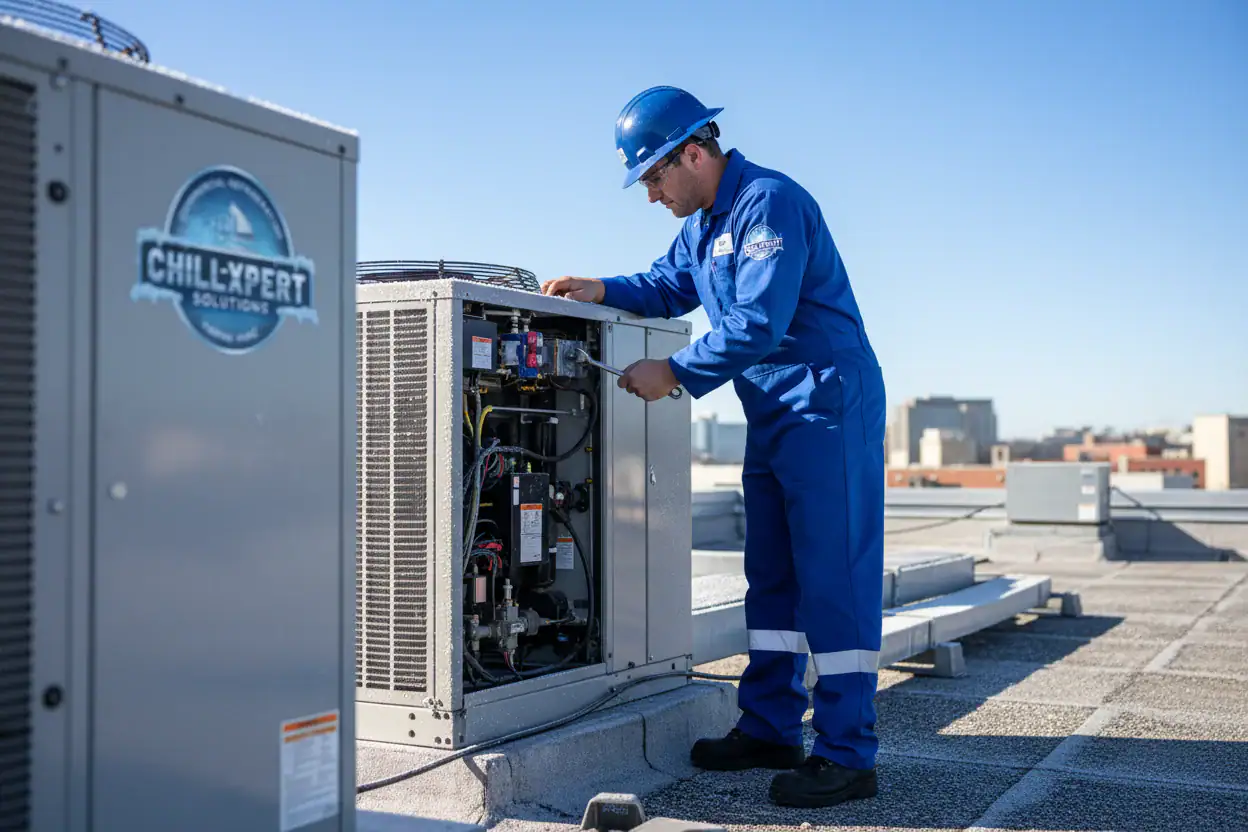
We respond in under two hours across Nassau and Suffolk County. That’s not a marketing line — it’s the standard we hold ourselves to because we understand what’s on the line when a restaurant cooler goes down during service. But here’s the thing: arrival time is only half the equation.
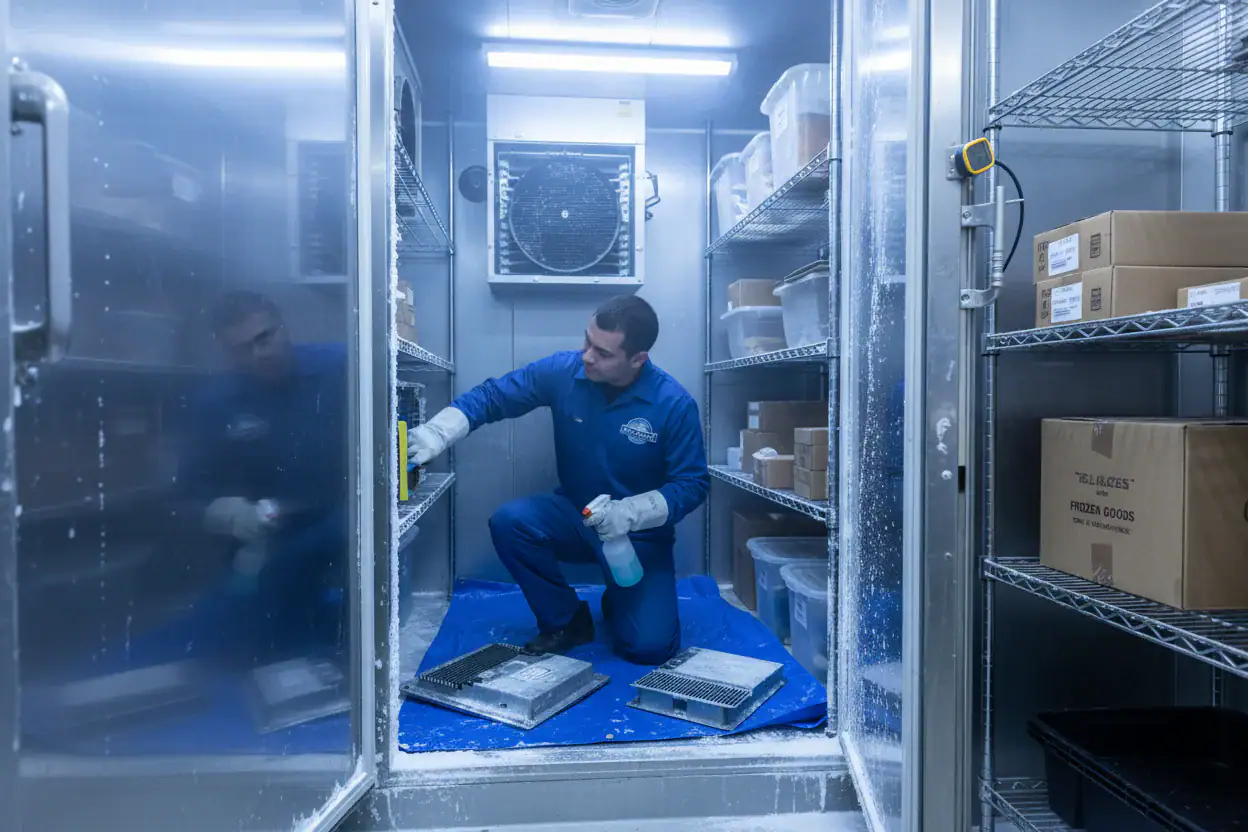
This is the part most companies don’t talk about. A technician can be at your door in 90 minutes and still leave without fixing anything — because they didn’t have the right parts on the truck. Now you’re waiting two, three, maybe four days for a component to be ordered and shipped. Your cooler is still down. Your inventory is still at risk. And you’ve already paid a service call fee.
The metric that actually matters to a restaurant owner isn’t how fast the tech arrives. It’s how fast the repair gets done. Those are two different things, and the gap between them is where most of the frustration in this industry lives.
About 70% of our emergency calls get resolved on the first visit. That’s because our trucks carry extensive parts inventory for major brands — not just the common stuff, but the components that actually fail on commercial refrigeration equipment. When we show up, we show up ready to fix it, not just diagnose it.
For restaurants along Hempstead Turnpike or Jericho Turnpike — where lunch and dinner service run back to back and a two-day parts delay isn’t something you can absorb — this distinction is everything. A company that arrives in two hours and fixes it beats a company that arrives in one hour and doesn’t, every single time.
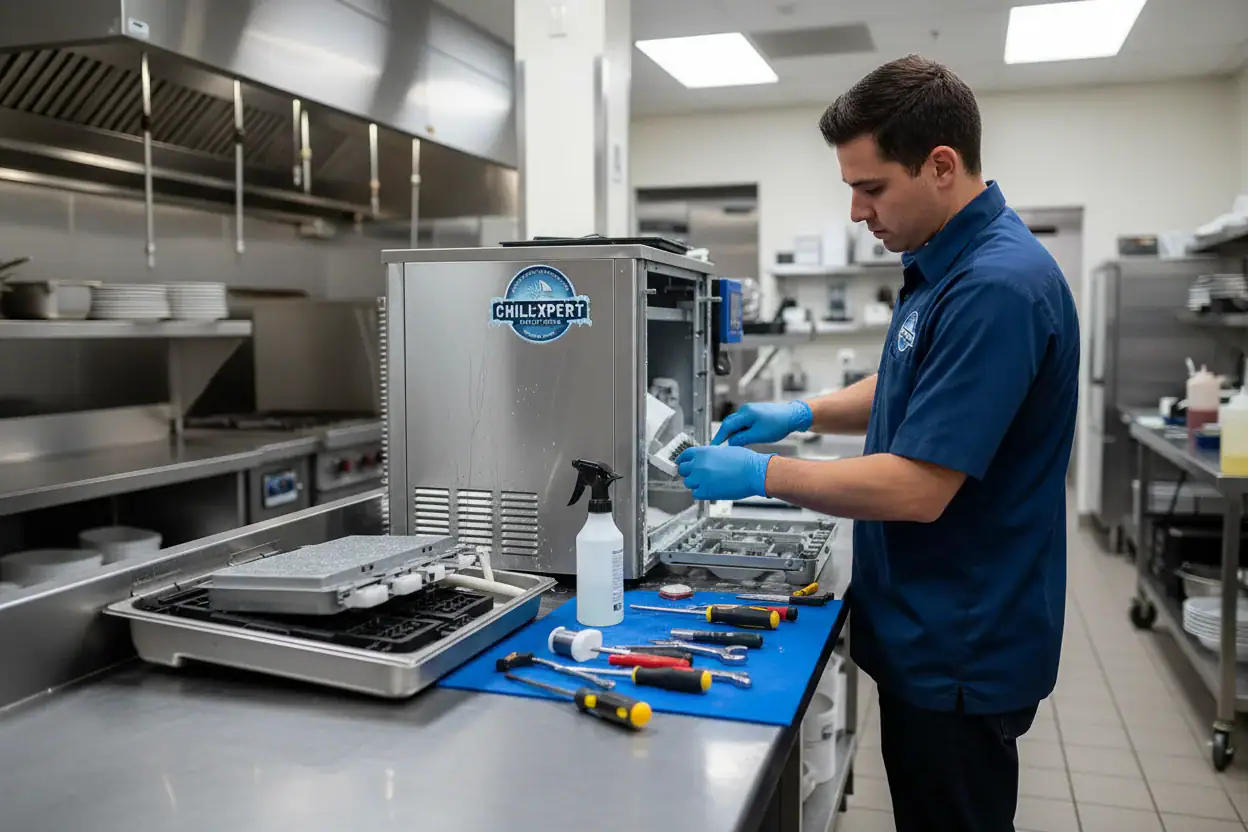
We send our own certified technicians — no subcontractors, no variability. The person who shows up knows commercial refrigeration, carries the right parts, and is accountable to us directly.
While you’re waiting for help to arrive, there are a few things you can do to protect your inventory and stay on the right side of food safety rules. First, stop opening the unit. Every time the door opens, cold air escapes and the temperature climbs faster. If the cooler is still running — even struggling — keeping the door closed buys you time.
Check the temperature. The food safety threshold is 40°F. If your unit is above that and climbing, you need to start making decisions about what gets moved, what gets used immediately, and what can’t be saved. If you have a second unit — a reach-in, a prep table, a freezer with room — start prioritizing what goes where based on what’s most at risk.
Don’t turn the unit off and back on repeatedly trying to reset it. With some compressor issues, cycling the power can actually cause more damage. If it’s running, let it run. If it’s completely dead, leave it off and focus on protecting the product inside.
Document the temperature at the time of failure and when the technician arrives. If you have a health inspection coming up or need to make an insurance claim for spoiled inventory, that record matters. A single commercial refrigeration failure can cost a restaurant thousands of dollars in lost product — having documentation protects you.
If the failure happens overnight or on a weekend, call a company with live dispatch — not one that routes you to voicemail and calls back during business hours. When you call us, you’re talking to someone who can actually send help, regardless of the time or day.
Want live answers?
Connect with a Chill Xpert Solutions expert for fast, friendly support.
Anyone can put “refrigeration repair” on a van. That doesn’t mean they’re legally qualified to work on your equipment. Federal law requires any technician who handles refrigerants to hold EPA Section 608 certification under the Clean Air Act. It’s not optional, it’s not a formality — it’s a federal requirement, and operating without it exposes both the technician and the business owner to serious liability.
Every technician we send holds EPA 608 certification. We’re also fully licensed and insured, which matters if anything goes wrong during a repair. These aren’t things to take for granted, especially in New York, where the NYC Department of Environmental Protection conducts unannounced inspections at commercial properties.
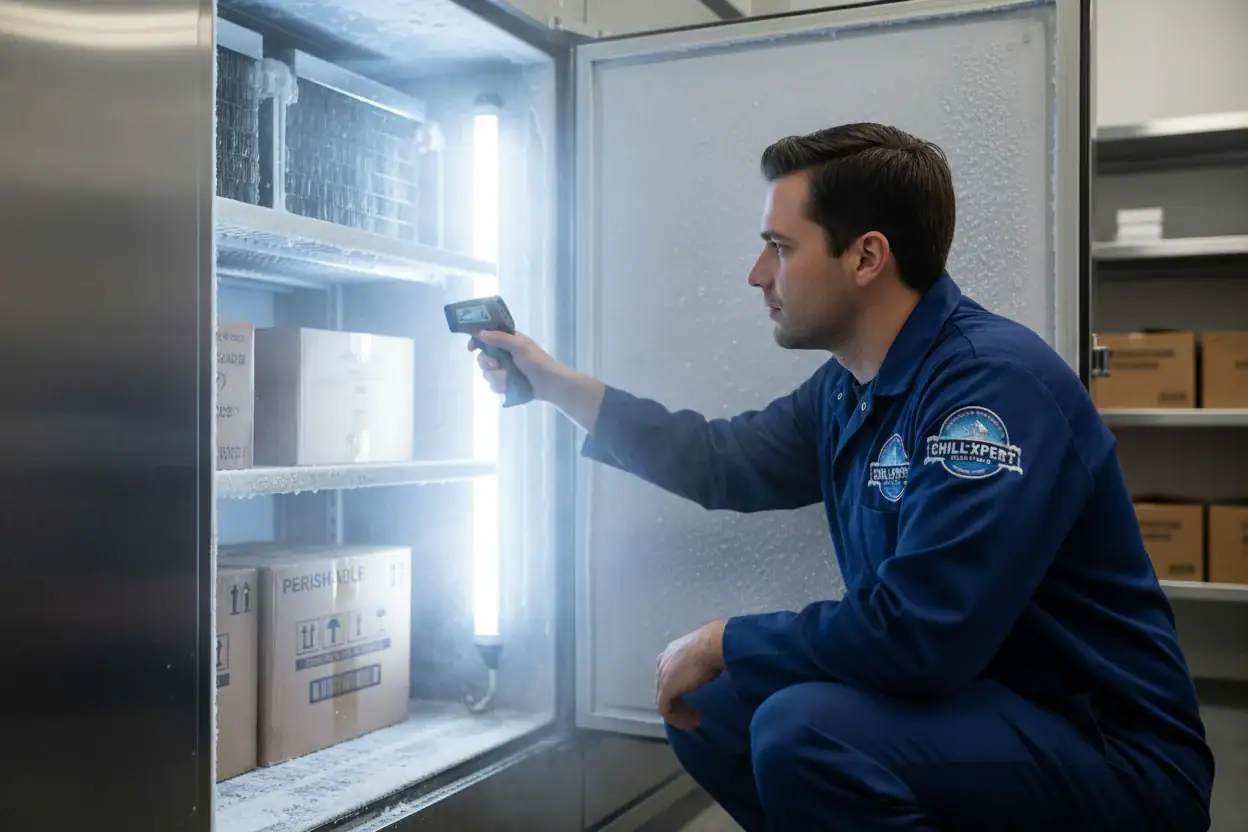
It matters more than most people realize. Commercial refrigeration equipment varies significantly by brand, model, and application. A technician who regularly services the same makes and models will diagnose problems faster, carry the right parts, and be less likely to misread a symptom as something more expensive than it is.
We’re authorized repairers for multiple equipment brands. That means manufacturer-approved training, access to genuine OEM parts, and the ability to perform warranty repairs without voiding your coverage. Aftermarket parts might look the same, but they don’t always perform the same — and when they fail prematurely, you’re back to square one.
This also connects back to the first-visit fix rate. A technician who knows your equipment brand well is far more likely to have the right parts on the truck, because they know what fails and when. That’s not luck — it’s pattern recognition built over decades of working on the same systems.
We’ve been doing this in Nassau County since the 1980s. That’s four decades of commercial refrigeration work in this specific market, through every equipment generation, every summer heat surge, and every coastal climate condition this county throws at refrigeration systems. The salt air off the Long Island Sound is harder on condenser coils than most inland markets account for. Humidity levels during Nassau County summers push compressors harder than they’re designed to run. These aren’t generic problems — they’re local ones, and they require technicians who’ve seen them before.
If you’re running a catering hall in Garden City, NY, a deli on Merrick Road, or a restaurant near the waterfront in Oyster Bay, NY, the conditions your equipment operates in are different from what an inland market deals with. We understand that, because we’ve been servicing equipment in those exact environments for a long time.
This is one of the most common questions we hear, and it’s worth answering honestly: most of the time, repair is the right call. Equipment that’s struggling to hold temperature, running constantly, or making unusual noises isn’t necessarily at the end of its life — it may just need a specific component replaced. Compressor issues, defrost timer failures, fan motor problems, refrigerant leaks — these are all fixable without scrapping the entire unit.
The repair-versus-replace conversation gets complicated when a unit has had multiple failures in a short period, when the cost of repair approaches the cost of a comparable replacement, or when the equipment is so old that parts are no longer readily available. A good technician will give you an honest read on where your unit stands — not push you toward a new sale when a repair would serve you just as well.
We diagnose to the root cause, not the symptom. A unit that keeps breaking down every few months isn’t unlucky — it has an underlying issue that a patch job won’t fix. We explain what we find in plain language, give you upfront pricing before any work begins, and let you make the call with full information. No hidden fees, no pressure, no guesswork.
It’s also worth knowing that a unit showing early warning signs — running longer than usual, struggling on hot days, cycling more frequently — is telling you something before it fails completely. Catching those signs early, through regular maintenance, is almost always less expensive than an emergency repair. Commercial refrigerators in busy restaurant environments should be serviced every three to six months. For high-volume kitchens, monthly service visits make sense. Regular maintenance can also reduce energy costs by up to 20%, which adds up meaningfully over the course of a year.
When something breaks, you want it fixed fast and fixed right. Those two things aren’t always the same, and the difference usually comes down to parts availability, technician experience, and whether the company you called actually specializes in commercial refrigeration or just handles it on the side.
The best time to find a reliable repair company is before you need one. Know who you’re calling, know what their response time commitment actually is, and know whether they carry parts or just show up with a diagnostic kit and a parts catalog.
If you’re a restaurant, deli, catering hall, or food service operation in Nassau County and you want a straight answer about your equipment — or you’re already in the middle of a crisis — reach out to Chill Xpert Solutions. We’ll give you an honest assessment, upfront pricing, and a technician who shows up ready to fix it.
Article details:
Share:
Continue learning: