Walk-in cooler installation quotes on Long Island can vary wildly. Here's what actually drives the price — and what to watch out for before you sign anything.
Share:
Summary:
Getting a quote for a walk-in cooler installation should be straightforward. You describe your space, someone gives you a number, and you make a decision. But if you’ve already started making calls, you’ve probably noticed that the numbers vary wildly — and that nobody seems to be quoting the same thing. That’s not an accident. Walk-in cooler installation pricing has a lot of moving parts, and most quotes only show you a fraction of the picture. This guide walks you through what actually drives the cost here in Nassau County, what tends to get left off the initial quote, and what’s changed in 2025 that’s pushing prices higher than what you may have seen online.
For most commercial projects in Nassau County, total installed cost runs somewhere between $5,000 and $25,000 — and that range isn’t a hedge. It reflects real variation based on unit size, building conditions, electrical capacity, and the specific needs of your operation. A basic 6×6 unit for a small café sits at the lower end. A large, custom-built cooler for a catering hall in Woodbury or a busy deli on Hempstead Turnpike can push well past that.
What makes Nassau County pricing different from what you’ll read in national guides is the regional labor premium. Installation labor in New York averages around $9,638, compared to roughly $5,839 in other markets. That gap is real, and it reflects local labor rates, building code complexity, and the cost of doing business in a high-demand suburban market adjacent to New York City. When you see a national cost estimate online, mentally adjust it upward before you use it to evaluate a local quote.
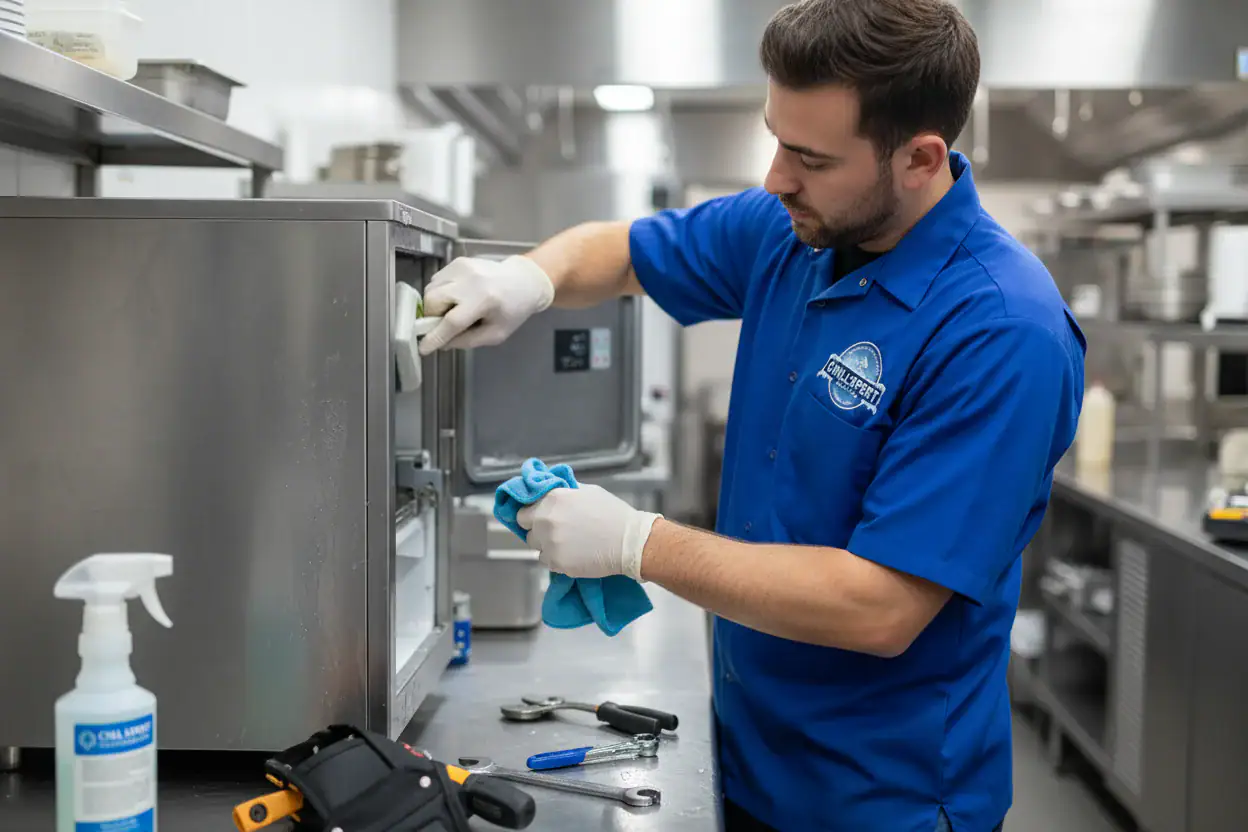
This is the part most buyers don’t find out until the invoice arrives. The base price on most walk-in cooler quotes covers the insulated box — the panels, the door, the hardware. It often doesn’t include the refrigeration system, which on its own represents 30 to 40 percent of total project cost. And it almost never includes electrical work, floor preparation, drainage, site prep, or permitting.
Once you add all of that in, the total installed cost can run 30 to 60 percent above the number you were originally quoted. That’s not necessarily a contractor being dishonest — it’s often just how the industry structures initial estimates. But it’s a real problem for business owners trying to budget accurately, and it’s one of the most common frustrations we hear from Nassau County restaurant owners and facility managers who’ve been through this process before.
The line items that tend to surprise people are the ones tied to the specific conditions of their building. Older commercial buildings along the Sunrise Highway corridor, for example, often need electrical panel upgrades before a new refrigeration system can be added. Buildings with concrete slab floors may need reinforcement or drainage modifications. If the unit is going outdoors — which is common in Nassau County where interior square footage is tight — placement, ventilation clearance, and coastal exposure all factor into the installation plan.
Labor alone typically runs between $2,000 and $7,000 for a standard installation, and that number climbs when electrical or structural modifications are required. The refrigeration system is a separate line item. So is the site assessment, if it’s done properly. A contractor who skips the site assessment before quoting is saving themselves time — and setting you up for a number that changes.
What you want from any installer is a quote that separates these costs clearly and accounts for the actual conditions of your space. That’s the only way to compare quotes accurately and avoid the budget gap that catches so many buyers off guard.
If you got a quote in 2024 and you’re comparing it to what you’re hearing now, there’s a specific reason the numbers may not match — and it has nothing to do with the contractor changing their rates.
As of January 1, 2025, manufacturers can no longer produce new equipment using R-410A refrigerant. Every new commercial walk-in cooler installation now uses A2L refrigerants — specifically R-454B or R-32 — and this equipment costs 15 to 30 percent more than what was available in 2024. This isn’t a Nassau County issue or a contractor markup. It’s a federal regulatory change that affects pricing across the entire industry.
Most buyers searching for walk-in cooler installation costs online are reading guides written before this transition took effect. The numbers they find are already outdated. If you’re planning an installation in 2025, factor in this cost increase when evaluating quotes — and be skeptical of any contractor who can’t explain why their pricing reflects current equipment costs.
The refrigerant transition also affects the technical requirements for installation. A2L refrigerants are classified as mildly flammable, which means proper handling, ventilation, and leak detection considerations become part of a compliant installation. This is exactly the kind of detail that separates an experienced commercial refrigeration contractor from a general HVAC operator who dabbles in walk-in coolers. For Nassau County businesses that need their installation to pass a health department inspection, getting this right from the start matters.
Want live answers?
Connect with a Chill Xpert Solutions expert for fast, friendly support.
These two are often lumped together in searches, but the installation requirements — and the costs — are meaningfully different. A walk-in cooler holds temperatures between 35 and 41°F. A walk-in freezer holds 0°F or below. That temperature difference drives everything: thicker insulation panels (typically 6-inch for freezers vs. 4-inch for coolers), more powerful refrigeration systems, more careful vapor barrier installation, and generally higher operating costs.
For a Nassau County deli or restaurant adding freezer capacity, expect the total installed cost to run higher than a comparably sized cooler — both upfront and monthly. A standard 8×12 cooler costs roughly $117 per month to operate. A freezer of the same footprint will cost more. Over the 15 to 20-year lifespan of commercial refrigeration equipment, that operating cost difference adds up significantly.
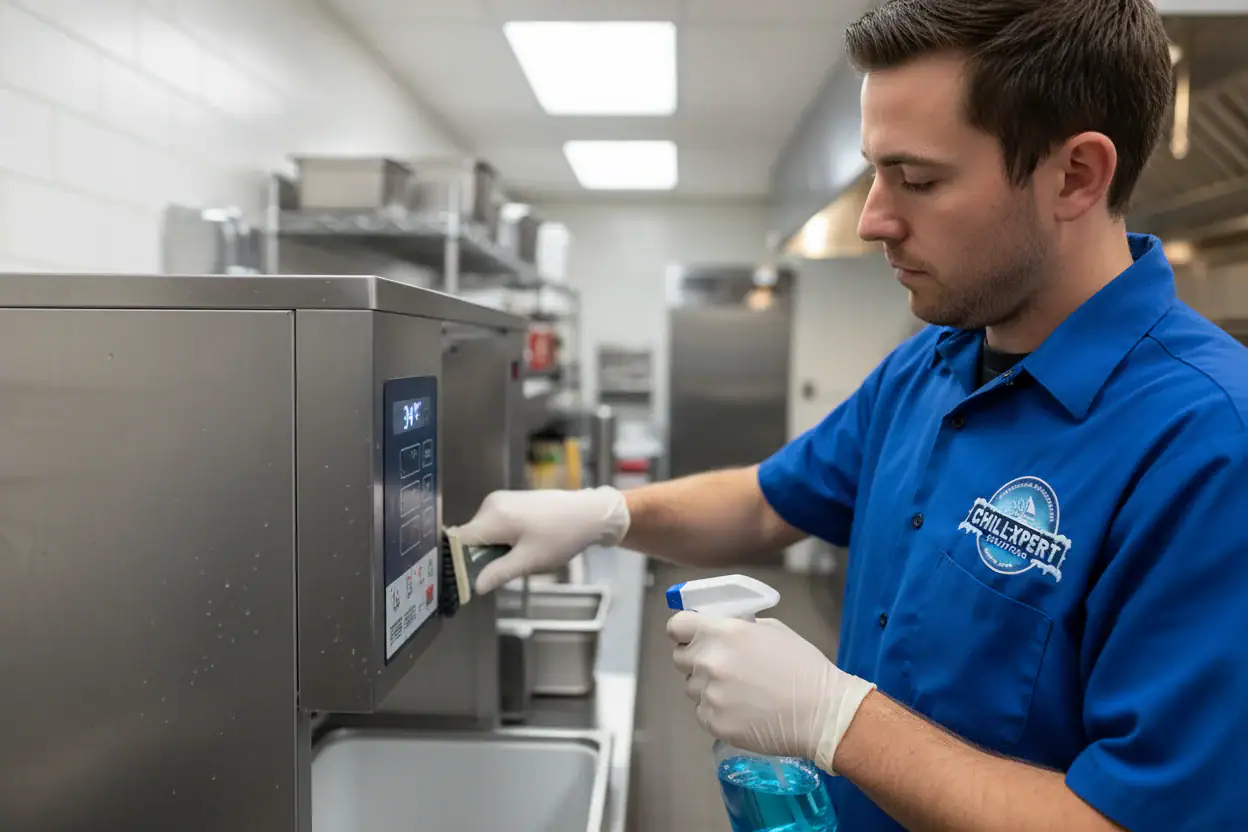
This is something most national cost guides don’t address, and it’s something that matters specifically to businesses in Nassau County — particularly along the South Shore communities like Long Beach, NY; Oceanside, NY; Freeport, NY; and Atlantic Beach, NY.
Outdoor condenser units exposed to Nassau County’s salt air and coastal humidity corrode faster than units installed inland. If your refrigeration system’s condenser is mounted outside — which is common in the commercial layouts you find along Nassau County’s main corridors — the material specifications and protective coatings used at installation directly affect how long that equipment lasts and how often it needs service.
Installers who work primarily in inland markets often spec outdoor units using standard materials that hold up fine in those conditions. On Long Island’s South Shore, those same specifications can lead to premature corrosion, reduced efficiency, and unexpected repair costs within just a few years of installation. The fix isn’t complicated, but it requires knowing the environment you’re working in.
We’ve been installing commercial refrigeration systems in Nassau County since the 1980s. The coastal climate isn’t a footnote to us — it’s something we account for in every outdoor installation, from the materials we recommend to the placement decisions we make during the site assessment. Our background in marine HVAC, where equipment operates in genuinely harsh salt-air environments, gives us a level of coastal environment experience that most commercial refrigeration contractors simply don’t have.
For businesses near the water, or anywhere on Nassau County’s South Shore, this isn’t a minor detail. It’s the difference between a system that holds up for 20 years and one that starts showing problems in five.
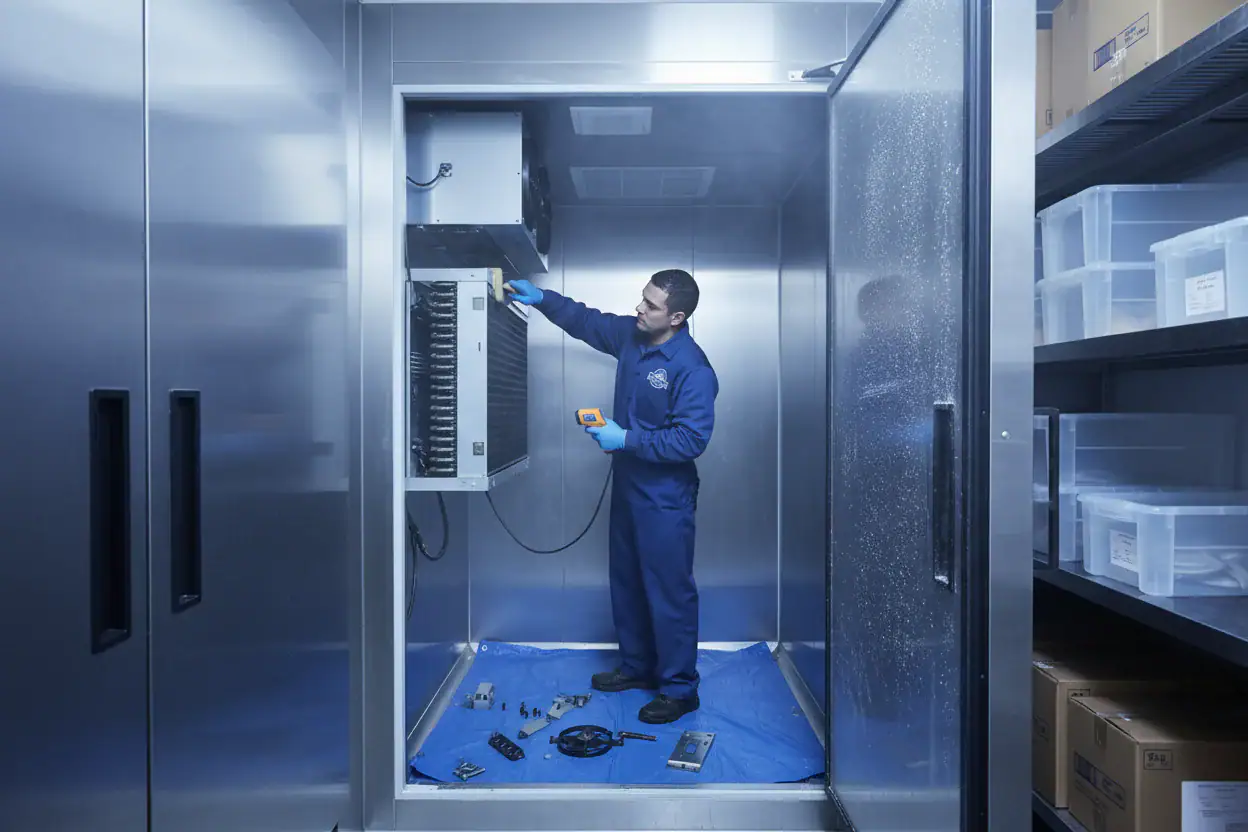
A commercial refrigeration installation done right starts before anyone picks up a tool. The first step is a thorough site assessment — evaluating your electrical capacity, ceiling height, floor conditions, drainage, ventilation clearance, and any structural factors that affect where and how the unit can be installed. This is where the real quote gets built. Without it, you’re working from assumptions.
Once the site assessment is done, a qualified installer should be able to give you a clear, itemized estimate that separates equipment cost from labor, electrical work, site prep, and any modifications your space requires. If a quote doesn’t break these out, you don’t have enough information to evaluate it accurately — or to compare it fairly against other bids.
The installation itself involves assembling the insulated panels, installing the refrigeration system, running electrical connections, setting up drainage, and testing the entire system before sign-off. For Nassau County food service businesses, that final testing phase matters: your walk-in cooler needs to hold the correct temperature range to pass a Nassau County Department of Health inspection. A unit that’s installed but not properly commissioned is a liability, not an asset.
One thing we’re direct about: we don’t use subcontractors. The technicians who assess your space are the same technicians who install your system. That matters for accountability, for warranty continuity, and for the quality of the work. We carry extensive parts inventory in our service vehicles, which means most issues — installation-related or otherwise — get resolved in a single visit rather than stretched across multiple service calls.
For businesses across Nassau County — whether you’re running a deli off Jericho Turnpike, managing a catering hall in Old Westbury, NY, or opening a new restaurant in Freeport, NY — the installation process should be straightforward and transparent from the first conversation. That’s the standard we hold ourselves to, and it’s the standard you should expect from anyone you hire.
The cost of walk-in cooler installation in Nassau County isn’t a mystery — but it does require asking the right questions. What’s included in the quote? What’s not? Has the contractor assessed your specific space, or are they working from a generic estimate? Do they understand the coastal climate conditions that affect outdoor installations on Long Island? And are their numbers current, given the 2025 refrigerant transition that’s changed equipment costs across the board?
A good estimate answers all of those questions before you sign anything. That’s what we provide — a free, comprehensive assessment that accounts for your actual space, your actual electrical capacity, and the real cost of a compliant, durable installation in Nassau County.
With over 40 years of commercial refrigeration experience on Long Island, Chill Xpert Solutions has seen what happens when installations are rushed, underquoted, or handed off to contractors who don’t know this market. Reach out to us before you commit to anything — we’ll give you the full picture.
Article details:
Share:
Continue learning: