Thinking about a walk-in freezer for your Long Island business? The price tag involves more than the equipment—here's what actually drives the total cost.
Share:
Summary:
The baseline number you’ll hear most often is $100 to $150 per square foot. That covers the insulated panels and basic refrigeration equipment—the box itself and the system that keeps it cold.
A 10×10 walk-in freezer (100 square feet) lands somewhere between $10,000 and $15,000 for the equipment. A smaller 6×6 unit might run $5,000 to $10,000. Larger operations looking at 20×20 installations or bigger can easily hit $25,000 to $40,000.
But here’s the part that catches people off guard. That per-square-foot price doesn’t include installation labor, electrical work, site preparation, permits, or any of the other costs that turn a pallet of panels into a functioning freezer. Those extras typically add another $2,000 to $7,000 depending on your specific situation.
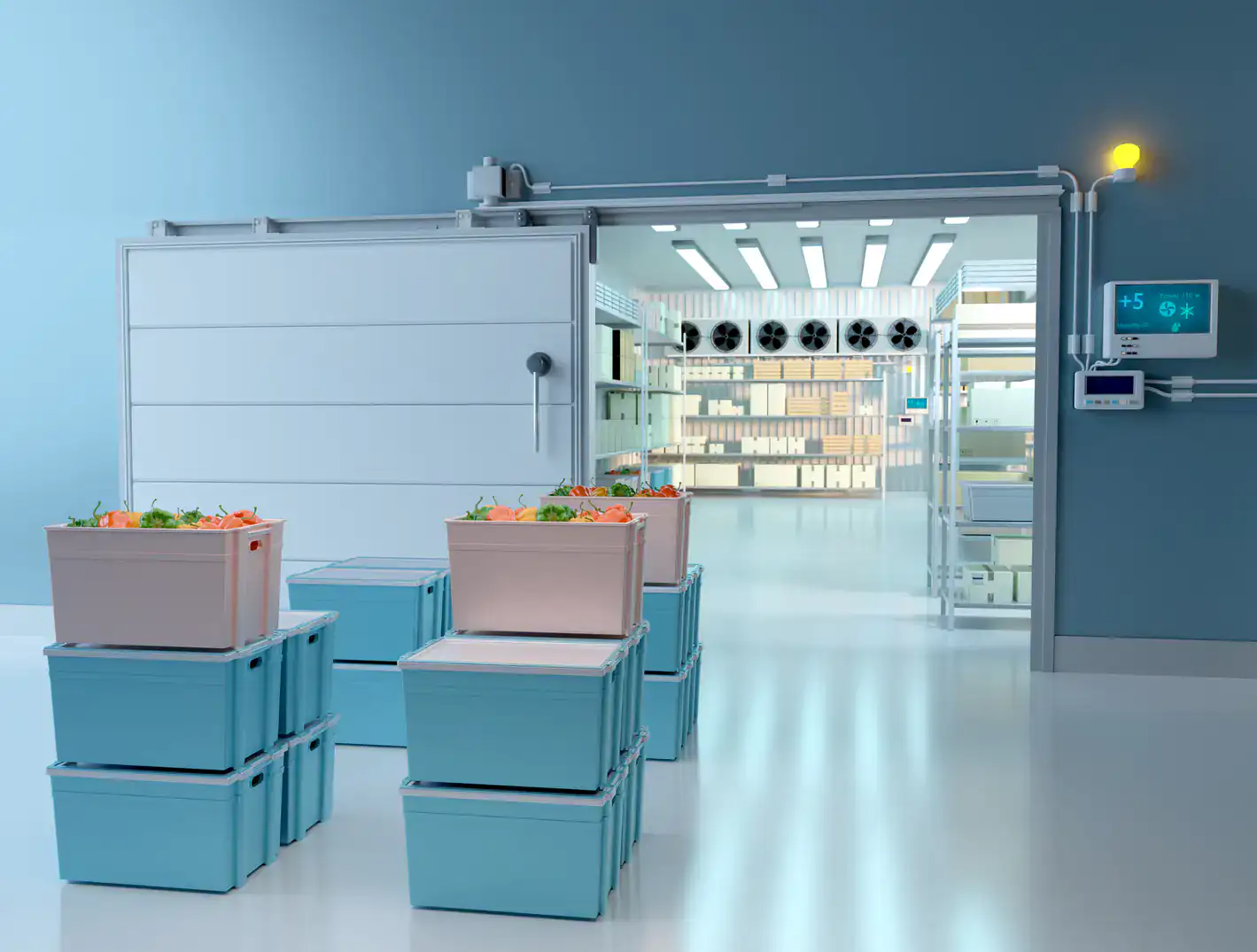
When you see that $100-$150 per square foot figure, you’re paying for the insulated panels that form the walls, ceiling, and sometimes the floor. Freezers need thicker insulation than coolers—usually 5 to 6 inches compared to 4 inches—because they’re maintaining temperatures well below zero instead of just above freezing.
You’re also getting the refrigeration system. That includes the compressor (which does the heavy lifting), the evaporator coil (which sits inside the freezer), and all the refrigerant lines connecting them. The compressor alone accounts for about 35% of your total equipment cost, making it the single most expensive component.
The door is part of the package too. Freezer doors need heated sweeps around the perimeter to prevent frost buildup and ensure a proper seal. Without that heating element, ice forms around the gasket and you end up with air leaks that make the compressor work overtime.
Most standard packages include basic interior lighting and a digital temperature control. Some manufacturers throw in shelving, but many don’t—that’s often a separate line item.
What’s not included? Installation labor, which means someone actually has to assemble all those panels and connect the refrigeration system. Electrical work to get power to the unit. Site preparation if your floor isn’t level or if you need a concrete pad for an outdoor installation. Permits from your local building department. And any customization beyond the standard configuration.
Indoor installations generally cost less than outdoor units because outdoor freezers need weatherproofing and often require additional structural support. But indoor units eat up valuable floor space in your building, which is why many restaurants and delis across Nassau County, NY and Suffolk County, NY opt for outdoor installations despite the higher upfront cost.
The refrigeration system’s efficiency matters more than most people realize. A cheaper, less efficient compressor might save you $1,000 today but cost you an extra $200 per month in electricity over the next 15 years. That’s $36,000 in operating costs. The math changes fast when you’re looking at equipment that runs 16 to 18 hours every single day.
Installation labor typically runs $2,000 to $4,000 for a standard unit, but that number moves around depending on how straightforward the job is. A simple indoor installation in a new building with proper electrical already in place? You’re probably on the lower end. A tight retrofit in an older building that needs electrical upgrades and creative problem-solving? Expect the higher end or beyond.
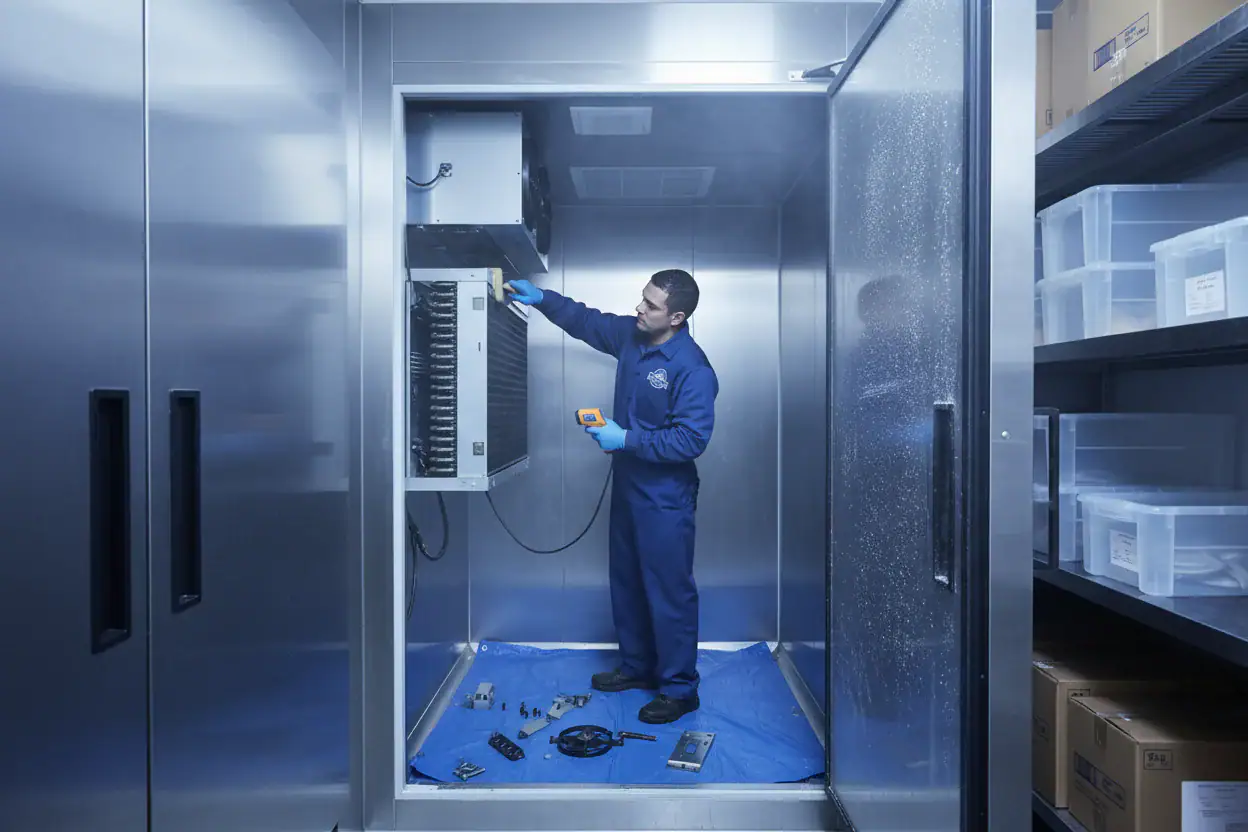
The installation crew assembles the insulated panels using cam-locks—specialized fasteners that hold everything together without thermal breaks that would let cold air escape. They’ll seal all the joints with silicone to control moisture, hang the evaporator coil from the ceiling panels, and make sure the door is properly aligned and seals tight. Most installations take one to three days from start to finish.
Electrical work is where costs can surprise you. Your walk-in freezer needs dedicated circuits, and many older commercial buildings across Long Island, NY weren’t built with that kind of electrical capacity in mind. You might need panel upgrades, new breakers, or even transformer work depending on what’s already there.
A typical commercial freezer needs 208V or 230V power, and the compressor alone might draw 15 to 30 amps depending on the size. Then you’ve got the evaporator fans, the door heaters, the lights, and the defrost system—all pulling power. If your building’s electrical system is already maxed out, you’re looking at additional costs to upgrade before the freezer can even be installed.
Site preparation varies wildly. If you’re installing on an existing concrete slab that’s already level, you’re good to go. If the floor isn’t level, you’ll need shims and possibly some concrete work to create a proper foundation. Outdoor installations often require pouring a new concrete pad, which adds to both cost and timeline.
Permits and inspections are non-negotiable. Your local building department wants to see that everything meets code, and the health department has specific requirements for food service refrigeration. Factor in a few hundred dollars for permits and the time it takes to schedule inspections. Trying to skip this step is a great way to fail a health inspection later and face closure until you bring everything up to code.
Want live answers?
Connect with a Chill Xpert Solutions expert for fast, friendly support.
Size is the obvious factor, but it’s not just about floor space. Taller ceilings mean more panel area and a larger volume of air to keep cold, which requires a more powerful refrigeration system. A 10×10 freezer with a standard 8-foot ceiling costs less than the same footprint with a 10-foot ceiling.
Insulation quality makes a bigger difference than most people realize. Cheaper polystyrene insulation costs less upfront but doesn’t hold its R-value as well over time. Polyurethane insulation costs more initially but provides better long-term performance and energy efficiency. In Long Island’s humid climate where your equipment works harder, that efficiency gap shows up in your monthly electric bill.
The compressor is where you really get what you pay for. Scroll compressors are more efficient and quieter than reciprocating models, but they cost more. Screw compressors offer the highest capacity and efficiency for large installations, but they come with a premium price tag. Matching the compressor to your actual cooling load—not just guessing—prevents you from either undersizing (which means the system runs constantly and wears out faster) or oversizing (which means you paid for capacity you don’t need).
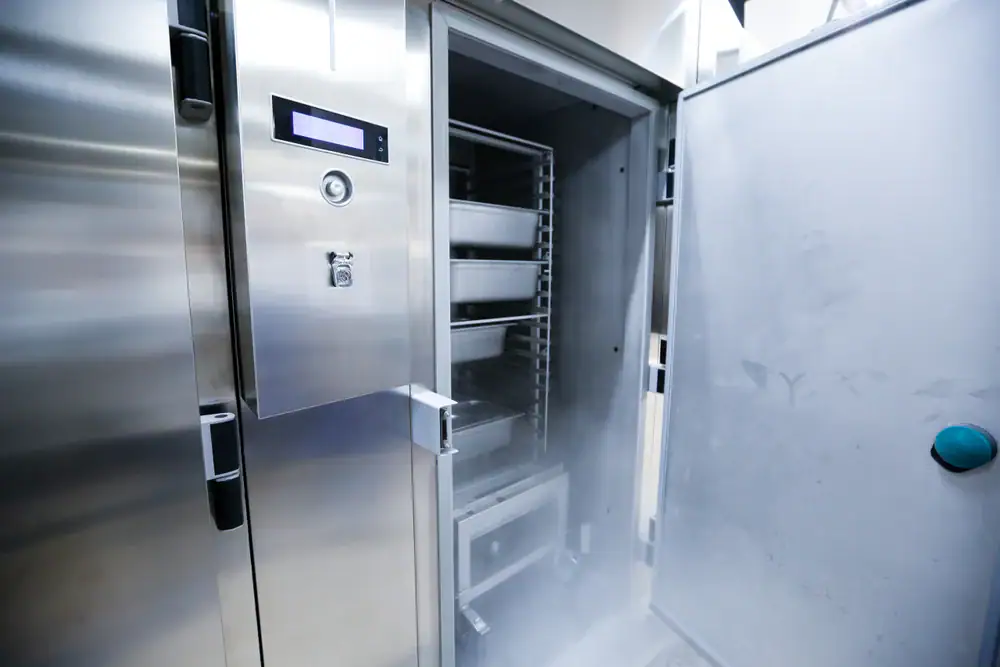
If you’re replacing a compressor rather than buying a new freezer, expect to pay $2,500 to $4,000 for the part and labor combined. The compressor itself might run $1,500 to $2,500 depending on capacity and brand, with installation labor adding another $1,000 to $1,500.
Compressor replacement makes sense when the rest of your system is in good shape. If your walk-in is less than 10 years old and the panels, door, and evaporator coil are all functioning properly, replacing a failed compressor can give you another 5 to 10 years of service for a fraction of what a new unit would cost.
But if your freezer is pushing 15 years old and you’re already dealing with other issues—worn door seals, insulation that’s not performing like it used to, frequent repairs—replacement might not be the smart move. At that point, you’re potentially throwing good money after bad. A new compressor can’t fix poor insulation or air leaks around the door.
The math changes based on your specific situation. A busy restaurant in Huntington that depends on that freezer for daily operations might need the fastest fix possible, which often means replacement rather than full unit replacement. A catering hall in Nassau County, NY preparing for weekend events can’t afford downtime. A seasonal business might have more flexibility to consider longer-term solutions.
Compressor failure doesn’t always announce itself with a dramatic breakdown. Often it’s a gradual decline in performance. You notice the freezer isn’t quite hitting temperature like it used to. The compressor runs longer cycles. Your electric bill creeps up. Strange noises start showing up. By the time it fails completely, you’ve probably been dealing with reduced efficiency for months.
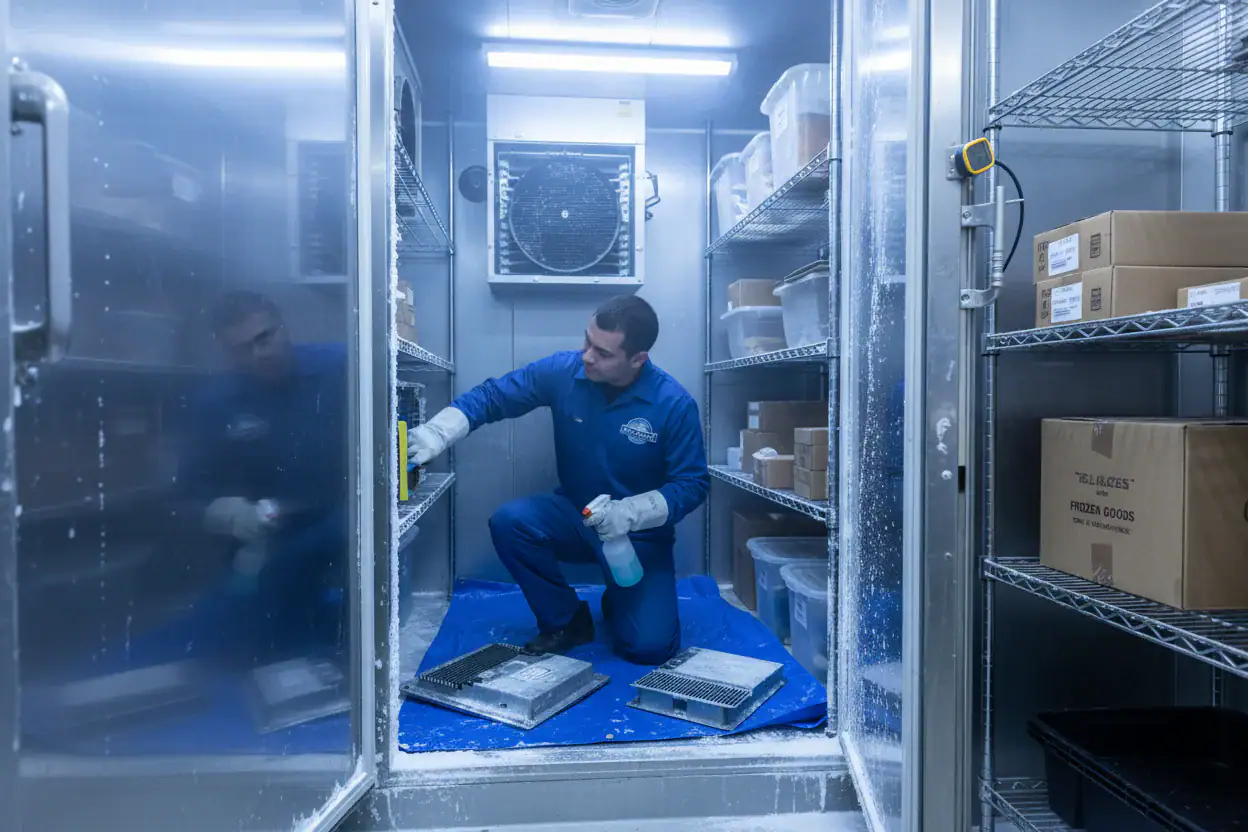
Regular maintenance catches compressor problems early. Cleaning the condenser coils, checking refrigerant levels, and monitoring operating pressures helps a compressor last its full 10 to 15-year lifespan instead of failing prematurely. On Long Island, where salt air and humidity are constantly attacking outdoor components, that maintenance matters even more. Those delis along Jericho Turnpike and seafood markets in Bay Shore deal with conditions that accelerate wear faster than most inland locations.
Monthly electricity costs for a walk-in freezer typically run $200 to $400 depending on size and efficiency, but that’s based on national averages. Long Island’s commercial electricity rates and the region’s climate can push those numbers higher. A freezer consumes roughly three times more energy than a comparable cooler because it’s maintaining temperatures 30 to 40 degrees colder.
Maintenance costs are predictable if you stay on top of them. Budget about $200 to $400 annually for routine coil cleaning, $100 to $300 for gasket replacement when needed, and $500 to $1,000 for professional maintenance visits. That might feel like a lot, but it’s nothing compared to the cost of emergency repairs during peak business hours or the loss of thousands of dollars in spoiled inventory.
Door seals wear out faster than people expect, especially in high-traffic operations where staff are constantly in and out. A worn gasket lets cold air escape, forcing the compressor to run longer to maintain temperature. That wastes energy and accelerates wear on the compressor itself. Replacing gaskets before they fail completely is cheap insurance.
Flooring can be a hidden expense if you didn’t include it in the original installation. Some walk-ins come with insulated floors, others don’t. If you’re installing on a concrete slab without a floor, you’ll need to seal and protect that concrete from moisture and temperature stress. Over time, freeze-thaw cycles can crack unprotected concrete, creating an expensive repair project.
Energy costs compound over the life of the equipment. A freezer that runs for 15 years at $300 per month costs $54,000 in electricity alone. A more efficient unit that costs $2,000 more upfront but saves $50 per month pays for itself in about three years and saves you $7,000 over the equipment’s lifetime. Most business owners focus on the purchase price and ignore the operating costs, which is backwards.
Health department violations can hit your wallet hard. Walk-ins that aren’t maintaining proper temperature, have visible mold or condensation issues, or show signs of poor maintenance can result in citations, fines, and in serious cases, temporary closure until you fix the problems. One failed inspection can cost you more than years of proper maintenance would have. Commercial refrigeration on Long Island needs to meet strict NSF standards and local health codes—there’s no wiggle room when inspectors show up.
Walk-in freezer costs across Nassau County, NY and Suffolk County, NY range from around $7,000 for a small, basic unit to $47,000 or more for large, custom installations when you factor in everything. The equipment typically runs $100 to $150 per square foot, but installation, electrical work, and site-specific requirements add significantly to that baseline.
The businesses that avoid budget surprises are the ones that ask detailed questions upfront. What’s included in the quoted price? What’s not included? What site preparation is required? Are there electrical upgrades needed? What does installation actually involve? How long before the unit is operational? What ongoing maintenance should be budgeted for?
Your specific situation matters more than general pricing ranges. A deli in Bay Shore installing a 10×10 freezer in an existing building faces different costs than a new restaurant in Huntington building from scratch. The age of your building, your current electrical capacity, whether you’re installing indoors or outdoors, your actual storage volume needs—all of it affects the final number.
Working with a commercial refrigeration specialist who knows Long Island’s climate challenges makes a difference. The salt air, humidity, and temperature swings here are harder on equipment than inland locations. Companies with decades of local experience understand what works in these conditions and what doesn’t.
For transparent pricing and expert guidance on commercial walk-in freezer installation across Nassau County, NY, Suffolk County, NY, and throughout Long Island, NY, we bring over 40 years of commercial refrigeration experience to every project. We offer free estimates to help you budget accurately before making any commitments.
Article details:
Share:
Continue learning: