Hear from Our Customers
You’re not asking for much. A boat refrigeration system that keeps your provisions fresh during weekend trips to Shelter Island. Marine air conditioning that doesn’t quit when you’re anchored in Noyack Bay on a 90-degree afternoon. Equipment that lasts more than a season or two before needing another expensive repair.
The problem isn’t the equipment itself—it’s how it’s installed, maintained, and serviced. Marine refrigeration systems face challenges that land-based units never see. Saltwater corrosion eats through components. Limited battery power means every amp counts. Space constraints require custom solutions. And when something breaks, you’re not just inconvenienced—you’re stuck at the dock while everyone else is on the water.
That’s where real expertise matters. Not someone who dabbles in marine work between residential jobs. You need technicians who understand why your boat’s cooling system is different, what actually causes those recurring problems, and how to fix it so you’re not calling again in three weeks.
We’ve spent over 40 years working on marine refrigeration and commercial cooling systems throughout the Greater New York area. We serve boat owners from Noyack to Montauk, along with commercial clients including airports, restaurants, and catering halls across Long Island.
What sets us apart is availability. When you call with an emergency, you talk to a technician who can walk you through immediate steps while already heading to your location. No ten-week backlogs. No unreturned voicemails. Just straight answers and actual solutions.
The Noyack boating community knows the challenges of maintaining marine systems in saltwater environments. We handle everything from routine maintenance to complex custom installations—beer systems for charter boats, walk-in coolers for waterfront restaurants, and marine HVAC retrofits that other companies won’t touch. Every job comes with a free estimate and the kind of transparent communication that’s earned us dozens of five-star reviews.
First, you get an actual conversation. When you contact us about marine refrigeration service in Noyack, you’re talking to someone who understands boat systems—not a call center reading from a script. We’ll ask about symptoms, how long you’ve had the problem, and what you’ve already tried. Often, we can tell you right then whether it’s something urgent or something that can wait until your next haul-out.
If it needs immediate attention, we come to you. Our service trucks stay stocked with common marine refrigeration parts—compressors, thermostats, refrigerant, seals—because most problems fall into predictable categories when you’ve been doing this for 40 years. About 70% of service calls get resolved on the spot. The rest get temporary fixes to keep you running while specialized parts are ordered.
Before any work starts, you get a clear estimate. No surprises, no “we found additional problems” markup. We explain what’s wrong, why it happened, and what it’ll take to fix it properly. Then you decide.
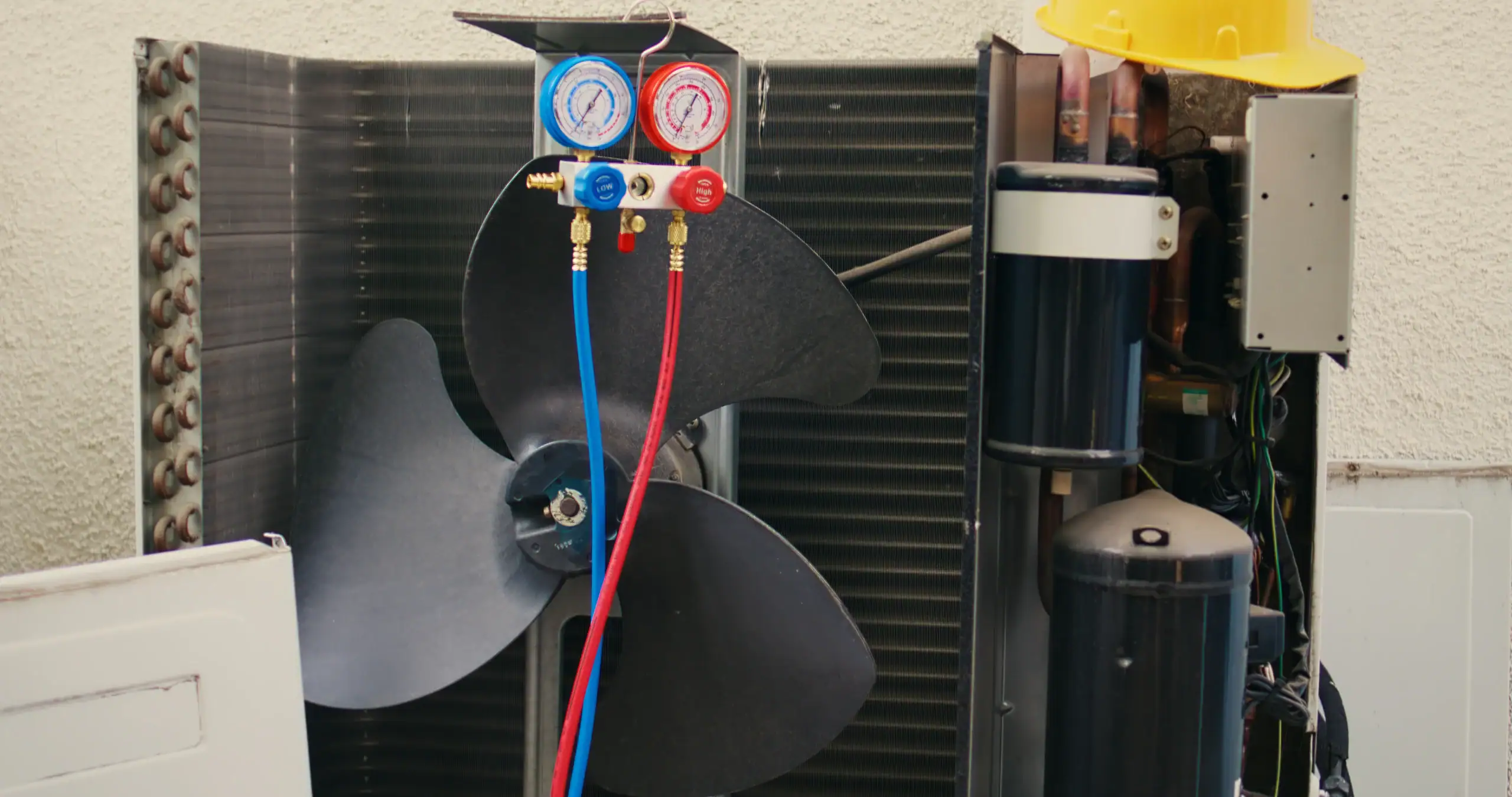
The actual repair process depends on the issue. Refrigerant leaks require leak detection equipment and proper recovery procedures. Compressor replacements involve careful attention to electrical connections and mounting in tight spaces. Condenser cleaning means flushing saltwater buildup without damaging coils. Every repair includes testing under load to make sure it’s actually working before we leave your boat.
For installations, the process is more involved. Proper marine refrigeration installation means calculating your actual cooling load based on insulation quality, ambient temperature, and how you use the boat. It means routing refrigerant lines and electrical connections through spaces that weren’t designed for them. It means mounting equipment where it won’t interfere with other systems and can actually be serviced later. We handle the entire process including permits, electrical work, and teaching you how to maintain it properly.
Ready to get started?
Our marine refrigeration service covers the full spectrum. Emergency repairs when your system fails during a heat wave. Preventive maintenance to catch problems before they strand you. New installations when you’re upgrading from an icebox or replacing a system that’s beyond repair. Retrofits and custom solutions for unusual spaces or specialized cooling needs.
The service includes proper refrigerant handling—critical both for system performance and environmental compliance. It includes electrical diagnostics to track down power issues that cause intermittent failures. It includes cleaning and descaling condenser coils that get clogged with saltwater debris. And it includes honest assessments about when repair makes sense versus when replacement is the smarter investment.
For Noyack boat owners, local expertise matters. Long Island’s marine environment is particularly harsh on cooling systems. Summer heat makes compressors work overtime. Winter storage can lead to corrosion if systems aren’t properly winterized. The constant humidity affects everything from electrical connections to insulation integrity. We understand these local challenges because we’ve been dealing with them for four decades.
We also handle marine air conditioning and boat HVAC systems—the climate control that makes spending time below deck actually comfortable. These systems face the same saltwater and space challenges as refrigeration, plus the added complexity of ductwork and multiple zones. Whether it’s a self-contained unit for a smaller boat or a chilled water system for a larger yacht, our installation and service approach stays the same: do it right, make it last, and keep the customer informed.
You also get 24/7 availability. Marine systems don’t fail on a convenient schedule. They quit when you’re provisioning for a week-long trip or when you’re already two days into a cruise. Having access to actual expertise—not just an answering service—can mean the difference between a minor inconvenience and a ruined vacation.
With proper maintenance, you’re looking at 10 to 15 years minimum for quality marine refrigeration equipment. The key word is “proper”—most boat owners skip maintenance until something breaks, then wonder why their five-year-old system needs major repairs.
Marine refrigeration systems work harder than residential units. They deal with constant motion, saltwater exposure, limited power, and temperature swings that home refrigerators never see. That stress adds up. Components wear faster. Connections corrode. Seals deteriorate.
Regular maintenance extends lifespan significantly. That means cleaning condenser coils to remove saltwater buildup, checking refrigerant levels before leaks become major problems, inspecting electrical connections for corrosion, and monitoring power consumption to catch efficiency issues early. Most of these tasks take minutes but prevent problems that cost hundreds or thousands to fix later. If you’re getting less than ten years from a marine refrigeration system, something’s wrong—either with the installation, the maintenance, or both.
Excessive power consumption usually points to one of three problems: poor insulation, an inefficient or failing compressor, or a system that’s undersized for your actual cooling load. All three make the compressor run longer and more frequently than it should.
Insulation is the biggest culprit. When cold air escapes and warm air infiltrates, your refrigeration system runs constantly trying to maintain temperature. Marine refrigerators rely on thick foam insulation to minimize heat transfer, but that insulation breaks down over time—especially if moisture gets in. Check if the exterior of your refrigerator feels warm or if you see condensation forming. Those are signs that insulation has failed.
Compressor efficiency matters too. As compressors age or develop problems, they draw more power to produce the same cooling. A compressor that once pulled 4 amps might now pull 6 or 7 while delivering less cooling capacity. That’s a clear sign it needs replacement. Finally, system sizing affects power consumption. If your refrigeration system is too small for the space it’s cooling, it’ll run constantly and still struggle to maintain temperature. Proper sizing accounts for insulation quality, ambient temperature, how often you open the door, and what you’re actually storing. Getting that calculation right during installation prevents battery drain problems later.
Marine refrigeration systems face challenges that land-based units never encounter, and those challenges require different design approaches and specialized expertise. The biggest difference is the environment. Saltwater is highly corrosive and attacks compressors, condenser coils, and electrical components if they’re not properly protected.
Constant motion is another factor. Boats pitch, roll, and vibrate continuously, which stresses refrigerant lines, loosens connections, and can cause premature component failure. Marine systems need to be mounted and secured differently than residential units to handle that movement without developing leaks or mechanical problems.
Power limitations change everything. Home refrigerators run on unlimited 120V AC power, so manufacturers can use inefficient oversized compressors without concern. Boat refrigeration runs on limited 12V or 24V DC battery power, where every amp-hour counts. That means marine systems prioritize efficiency over raw cooling capacity. They use variable-speed compressors, larger evaporators to absorb heat quickly, and optimized condensers to reject heat efficiently. Space constraints add another layer of complexity. Marine refrigeration equipment has to fit in tight spaces, often in unusual configurations, while still providing adequate cooling and remaining serviceable. That requires custom solutions and installation expertise that most HVAC technicians simply don’t have.
Age and repair history tell you most of what you need to know. If your marine refrigeration system is over ten years old and you’re facing a major repair—compressor replacement, refrigerant leak repair, or condenser replacement—replacement usually makes more financial sense than repair.
Here’s why: older systems are less efficient than modern equipment. A new marine refrigeration system will cool better while drawing less power, which extends battery life and reduces generator run time. Older systems also tend to develop multiple problems once major components start failing. You fix the compressor, then six months later the condenser fails, then the evaporator develops a leak. You end up spending more on repairs than a new system would have cost.
For newer systems under five years old, repair usually makes sense unless there’s catastrophic damage. Refrigerant leaks, failed thermostats, electrical problems, and even some compressor issues can be repaired cost-effectively on newer equipment. The exception is if the system was improperly sized or installed from the start. In that case, you’ll keep having problems no matter how many repairs you make, and replacement with a properly sized system is the only real solution.
Performance issues also indicate when replacement is needed. If your system runs constantly but barely maintains temperature, if it’s drawing significantly more power than it used to, or if you’re adding refrigerant every season, those are signs that major problems exist and replacement will likely be more cost-effective than trying to repair a failing system.
Yes. We provide mobile service throughout Noyack and the surrounding Long Island area, including at-slip repairs and installations. Our service trucks stay stocked with common marine refrigeration parts, tools, and refrigerant recovery equipment to handle most repairs on-site.
At-slip service makes sense for most marine refrigeration work. Diagnostics, refrigerant leak detection, compressor replacement, electrical repairs, and condenser cleaning can all be done while your boat is in the water. The only exception is major structural work that requires cutting into the hull or extensive modifications below the waterline—those jobs need to happen during haul-out.
Mobile service also means you’re not hauling your boat to a shop and waiting weeks for the work to get done. We come to you, assess the problem, provide an estimate, and often complete the repair the same day. For installations, the process takes longer because of the complexity involved, but the work still happens at your slip rather than requiring you to move the boat.
Our 24/7 availability extends to emergency service calls. If your marine refrigeration system fails on a Friday afternoon before a planned weekend trip, or if you’re already out on the water and need immediate help, you can reach an actual technician who can either talk you through temporary fixes or meet you when you return to the marina. That kind of responsive service is especially valuable during peak boating season when every day on the water counts.
Proper marine refrigeration maintenance focuses on the components that cause most problems: condenser coils, refrigerant levels, electrical connections, door seals, and power consumption monitoring. These areas need attention because they’re directly affected by the marine environment and how you use your boat.
Condenser coil cleaning is critical. Saltwater circulates through the condenser to cool refrigerant, and that saltwater deposits scale, algae, and debris that restricts flow and reduces cooling efficiency. Annual cleaning with pressurized water or weak acid solution removes buildup and restores performance. Skipping this maintenance is one of the fastest ways to kill a marine refrigeration system.
Refrigerant level checks catch small leaks before they become major problems. Low refrigerant means reduced cooling capacity and increased power consumption. It also makes the compressor work harder, which shortens its lifespan. Annual refrigerant checks during routine maintenance identify problems early when they’re cheaper and easier to fix.
Electrical connection inspection prevents failures caused by corrosion. Saltwater environments corrode terminals, connections, and wiring over time. Loose or corroded connections create resistance, which causes voltage drops and intermittent failures. Cleaning terminals, checking connections, and applying corrosion protection prevent most electrical problems.
Door seal inspection ensures cold air stays inside your refrigerator. Damaged or worn seals let warm air infiltrate, which makes the system run constantly and drains batteries. Replacing seals is inexpensive and dramatically improves efficiency. Finally, power consumption monitoring helps identify problems before they cause failures. If your system is suddenly drawing more power or running longer cycles, something’s wrong. Catching those changes during routine maintenance prevents breakdowns and extends equipment life.