
Hear from Our Customers
You’re not losing $8,000 worth of inventory on a Saturday night because your walk-in died. You’re not calling three different companies trying to find someone who’ll show up before Monday. You’re not watching your weekend revenue disappear while a compressor overheats.
When your refrigeration system is designed right and maintained consistently, you get 15 years of reliable operation instead of constant repair calls. Your energy bills stay predictable because the equipment isn’t working overtime to compensate for poor installation. Your health department inspections go smoothly because temperature logs show consistent performance.
The difference isn’t just about having working equipment. It’s about knowing that if something does go wrong at 2 AM on Sunday, someone answers the phone who can actually fix it. Most emergency calls get resolved the same day because our trucks carry parts for major brands. That’s the gap between a minor inconvenience and a catastrophic loss.
We’ve spent over 40 years working on commercial refrigeration and marine HVAC systems across Long Island. That includes everything from restaurants along Route 25A to yacht clubs from Montauk to Manhattan. We handle airports, catering halls, delis, and craft breweries.
Cold Spring Harbor’s climate is tough on refrigeration equipment. Summer humidity makes condensers work overtime. Salt air from the harbor attacks outdoor components. Those beautiful old homes and historic buildings often have space constraints that require custom solutions, not cookie-cutter installations.
We’re available 24/7 because refrigeration emergencies don’t wait for business hours. When a walk-in cooler fails during dinner service, response time matters more than anything else. That’s why our technicians can walk you through immediate steps while driving to your location.
Our process starts with measuring your actual needs, not guessing. That means calculating peak usage during your busiest hours, accounting for how often doors open, factoring in ambient temperature, and building in enough capacity so the system isn’t constantly maxed out. Most commercial refrigeration companies skip this step and just install whatever fits the space.
Installation includes everything required for the system to work correctly from day one. Electrical connections that meet code. Permits and health department compliance documentation. Staff training on proper operation. Maintenance scheduling so small issues get caught before they become expensive problems. You get one point of contact responsible for the entire project, not three different contractors blaming each other when something goes wrong.
After installation, the focus shifts to keeping that system running for 15 years instead of five. Quarterly maintenance visits catch refrigerant leaks, dirty coils, worn door seals, and failing components before they cause downtime. For equipment near the ocean, that means more frequent coil cleanings because salt air accelerates corrosion. The goal is predictable performance and avoiding emergency calls at the worst possible time.
Ready to get started?
Our emergency refrigeration repairs run 24/7, 365 days a year. That’s not an answering service that takes messages. That’s a technician who answers, diagnoses the problem over the phone, and drives to your location with parts already on the truck. About 70% of emergency calls get fixed on the spot because our trucks stock components for major brands.
Walk-in cooler installation covers the full scope: proper sizing for your peak volume, insulation that handles Long Island’s temperature swings, door hardware that seals correctly, and refrigeration equipment matched to the load. The installation includes electrical work, permits, health department compliance, and staff training. You’re not coordinating multiple contractors or wondering who’s responsible when something doesn’t work right.
Our refrigeration maintenance programs are designed around your equipment and usage patterns. A restaurant with constant door traffic needs different attention than a distributor’s cold storage facility. Maintenance visits check refrigerant levels, clean condenser coils, inspect electrical connections, test safety controls, and verify temperature consistency. For Cold Spring Harbor businesses near the water, that includes extra attention to outdoor components where salt air causes faster deterioration. The maintenance records also satisfy health department requirements and help with insurance documentation.
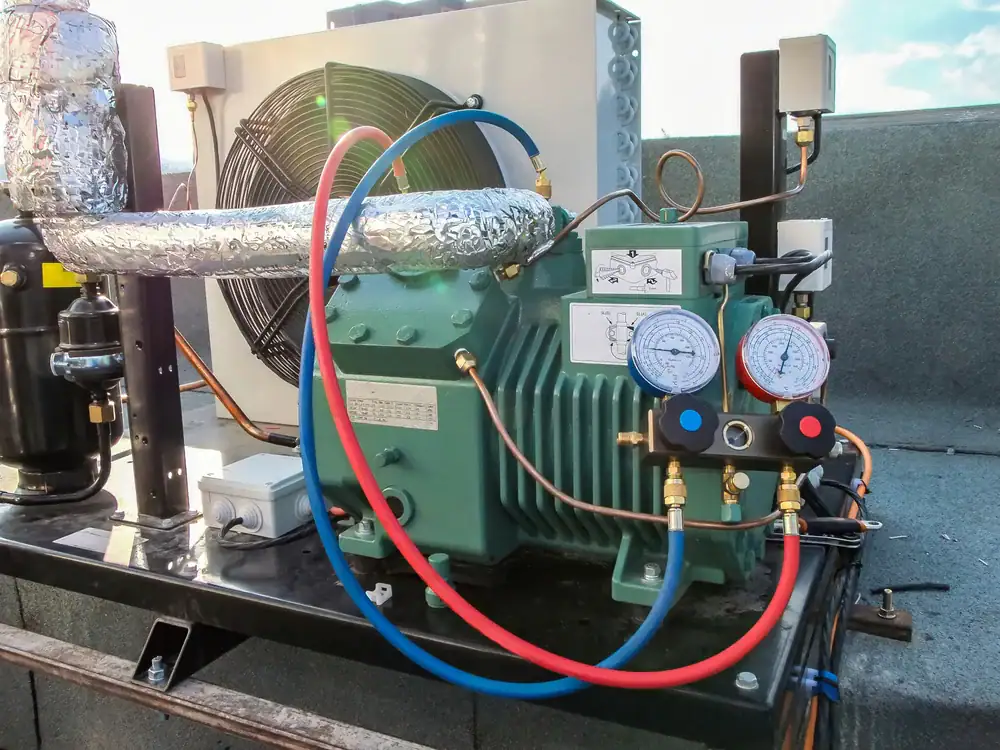
Response time depends on where our technician is when you call, but our goal is arrival within 45 minutes for true emergencies. When you call, you’re talking to someone who can start troubleshooting immediately, not a call center reading from a script.
The technician will ask specific questions to diagnose the problem while driving to your location. Is the compressor running? Are you hearing any unusual sounds? What’s the current temperature reading? That phone diagnosis helps determine which parts to grab before leaving, which is why about 70% of emergency calls get resolved the same day.
If it’s a situation where the fix will take longer than a few hours, we shift focus to temporary solutions that protect your inventory. That might mean bringing in supplemental cooling, transferring product to working units, or implementing other stopgap measures while parts are ordered. The priority is minimizing your loss, not just scheduling a convenient repair appointment.
A properly designed and maintained walk-in cooler should give you 15 years of reliable service. That’s not 15 years of constant repairs and band-aid fixes. That’s 15 years where the system does its job without major component failures.
The difference comes down to two factors: correct installation and consistent maintenance. Installation means sizing the refrigeration equipment to handle your actual load, not just whatever fits in the available space. It means using components rated for commercial use, not residential equipment that can’t handle the duty cycle. It means proper insulation and door seals that don’t leak.
Maintenance means catching small problems before they cascade into expensive failures. A refrigerant leak that drops efficiency by 20% will make the compressor work harder, which shortens its lifespan and drives up your electric bill. A dirty condenser coil has the same effect. Worn door gaskets let warm air in constantly. These are all easy fixes during a scheduled maintenance visit, but they turn into emergency repairs if ignored.
Yes, and that combination is actually what makes us different. Most commercial refrigeration contractors don’t touch marine work because boat systems are more complex. Limited electrical capacity, constant motion, humid conditions, and salt air that destroys standard equipment. Marine refrigeration requires marine-grade components and understanding of boat electrical systems.
That marine expertise translates directly to better commercial installations. Space constraints on a boat are similar to tight kitchen layouts in older Cold Spring Harbor buildings. Power limitations on a yacht are similar to restaurants that can’t upgrade their electrical service. The problem-solving required for marine work makes standard commercial jobs more straightforward.
Our client base includes restaurants, delis, catering halls, airports, food distributors, craft breweries, yacht clubs, and individual boat owners from Montauk marinas to North Shore harbors. That range means experience with different refrigeration challenges, from beer system temperature control to cold storage facilities to walk-in freezers in high-traffic kitchens.
For most food service operations on Long Island, refrigeration accounts for 40% to 60% of total energy use. That’s not a small line item. A walk-in cooler in a busy restaurant can cost $200 to $400 per month in electricity, and a walk-in freezer costs even more.
Long Island’s climate makes those numbers worse. Summer humidity means condensers work harder to reject heat. Equipment near the harbor deals with salt air that corrodes coils and reduces efficiency. Those beautiful old Cold Spring Harbor buildings often have inadequate insulation, which means refrigeration equipment is fighting the ambient temperature constantly.
The way to control operating costs is proper system design and consistent maintenance. Correctly sized equipment doesn’t run at maximum capacity all the time, which saves energy and extends component life. Clean condenser coils transfer heat efficiently instead of making the compressor work overtime. Tight door seals keep cold air where it belongs. Energy-efficient equipment can cut operating costs by 20% to 40% compared to older standard models, and those savings add up quickly when refrigeration is your biggest power draw.
A maintenance visit covers everything that affects system performance and reliability. Our technician checks refrigerant levels and looks for signs of leaks. Cleans condenser coils, which is critical for equipment near the ocean where salt buildup kills efficiency. Inspects electrical connections for corrosion or looseness. Tests safety controls and temperature sensors. Verifies that door seals are tight and hardware operates smoothly.
The visit also includes checking things most business owners don’t think about until they fail. Drain lines that clog and cause water damage. Evaporator fans that develop bearing noise before they seize. Compressor oil levels. Defrost cycle operation. These are the small issues that turn into expensive emergency repairs if ignored.
You get documentation of the maintenance visit, including temperature readings, refrigerant pressures, and any components that are showing wear. That record satisfies health department requirements and helps with insurance claims if equipment does fail. More importantly, it gives you advance warning about parts that need replacement soon, so you can budget for repairs instead of getting hit with an emergency bill at the worst possible time.
Yes, and that’s actually a common scenario. Many Cold Spring Harbor buildings have space constraints, older electrical systems, and structural considerations that require custom solutions. You can’t just drop in a standard walk-in cooler and expect it to work correctly.
Our process starts with a site assessment that looks at available space, electrical capacity, ventilation for condenser units, and structural support for equipment weight. Older buildings often need electrical upgrades to handle refrigeration loads safely. Outdoor condenser placement has to account for local codes, neighbor proximity, and salt air exposure if you’re near the harbor.
Installation in older buildings also means working around existing operations. Most restaurants and food service businesses can’t shut down for a week while new refrigeration goes in. We schedule the installation in phases that minimize disruption, and temporary cooling solutions keep existing inventory safe during the transition. The goal is a system that works correctly for 15 years, not a quick installation that causes problems from day one because shortcuts were taken to fit equipment into inadequate space.