
Hear from Our Customers
Your walk-in stays cold during the dinner rush. Your product doesn’t spoil overnight. You’re not scrambling to find a technician at 2 AM because your compressor died.
That’s what reliable refrigeration systems look like. No surprise failures during your busiest season. No $5,000 emergency service calls because a small problem became a big one. No health code violations because your cooler can’t hold temp.
You get equipment that handles Long Island’s humidity without constant breakdowns. You get a team that understands salt air eats through components faster here than it does inland. And when something does go wrong, you get someone who answers the phone and shows up—not a voicemail telling you they’ll call back Monday.
Most refrigeration problems aren’t complicated. Dirty coils, worn seals, and refrigerant leaks cause most failures. The difference is fixing what’s actually broken, not just resetting the system until it breaks again next month.
We’ve been handling commercial refrigeration and marine HVAC across Head of the Harbor and the Greater New York area for over four decades. We’re not a general appliance repair shop that dabbles in commercial work. This is what we do.
Restaurants, delis, catering halls, airports, marinas—we’ve seen what breaks, what lasts, and what actually works in this climate. Head of the Harbor sits right on the water, which means your equipment deals with salt air, high humidity, and temperature swings that stress every component.
We know how to size systems correctly the first time. We stock parts other contractors have to order. And when you call our emergency line, you reach a real person who can get someone to your location—not an answering service that takes a message.
You call or submit a request. We ask what’s happening, how long it’s been an issue, and whether you’re losing product right now. If it’s an emergency, we dispatch immediately. If it’s not, we schedule a time that doesn’t disrupt your operation.
We show up and diagnose the actual problem—not just the symptom. A system that’s short-cycling might have a bad relay, but it might also be undersized for your space or fighting against poor ventilation. We figure out which one it is before we start replacing parts.
You get a written estimate that breaks down equipment, labor, and what needs to happen. No surprises. No “we’ll figure it out as we go.” If you’re dealing with a full system replacement, we walk through sizing, efficiency, and what makes sense for your volume and layout.
Once you approve, we handle permits, installation, and startup. For maintenance contracts, we schedule regular service to catch problems before they become emergencies. Cleaning coils and checking refrigerant levels twice a year typically prevents the failures that cost thousands to fix.
Ready to get started?
You’re getting refrigeration systems designed for Head of the Harbor’s climate. That means accounting for summer humidity that makes compressors work harder, salt air that corrodes components faster, and the seasonal swings that stress door seals and gaskets.
For restaurants and food service operations, that includes walk-in coolers and freezers, reach-in units, display cases, and custom installations like beer tap cooling systems. For marine businesses—yacht clubs, marinas, boat owners—it’s marine-grade HVAC and refrigeration that can handle constant motion, limited electrical capacity, and the wet, salty environment that destroys standard equipment.
You’re also getting 24/7 emergency response. When your system fails during a holiday weekend or in the middle of a wedding reception, you can’t wait until Monday. Our typical response time for critical failures is under two hours, because we understand that every hour your cooler is down costs you money in spoiled product and lost sales.
Maintenance programs include coil cleaning, refrigerant level checks, door seal inspections, and electrical component testing. Most service calls we run are preventable—which is why annual maintenance typically saves $3,000 to $6,000 per location in avoided emergency repairs and product loss.
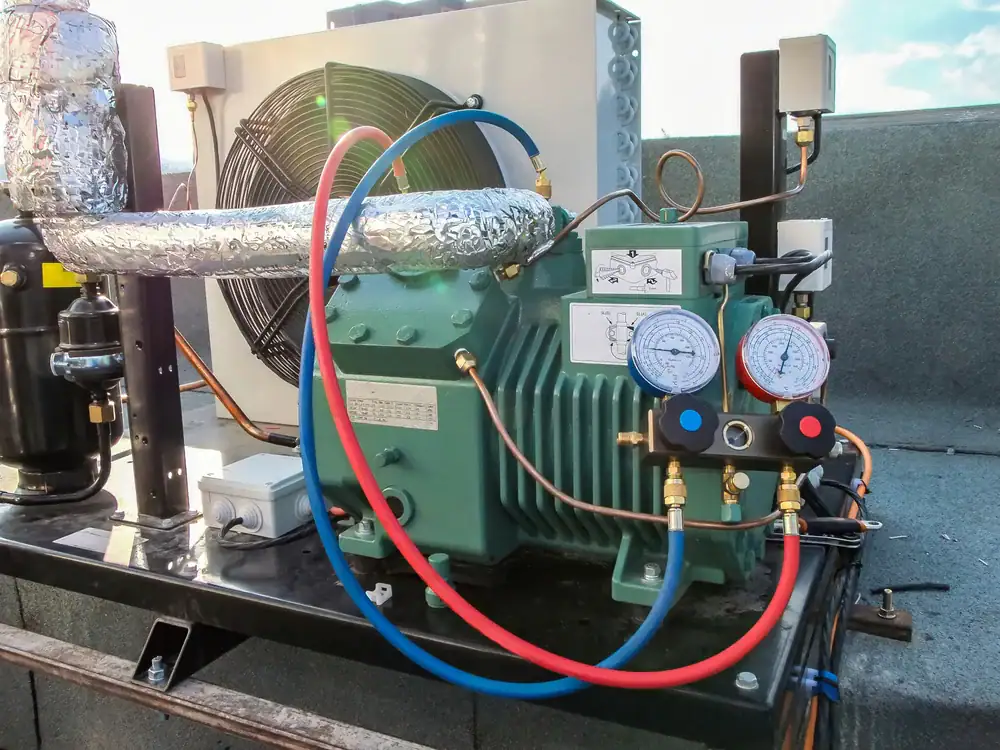
We aim for under two hours for critical failures, and we’re available 24/7. When you call our emergency line, you reach a real technician who can assess the situation and dispatch immediately—not an answering service.
Critical means your walk-in is climbing past 41°F and you’re at risk of losing product or violating health codes. In those situations, every hour counts. The average emergency refrigeration failure costs between $2,500 and $8,000 when you factor in overtime labor, expedited parts, and spoiled inventory.
We keep common parts in stock and have supplier relationships to source specialty components fast. For Head of the Harbor businesses, we understand you’re often dealing with seasonal rushes where downtime isn’t an option. Summer weekends, holiday events, wedding season—that’s when equipment gets stressed and when you need someone who actually shows up.
Salt air and humidity. Head of the Harbor sits right on the water, which means your equipment is constantly exposed to corrosive salt air that eats through coils, electrical connections, and metal components faster than it would inland.
High humidity makes compressors work harder to maintain temperature, especially during summer months. That extra strain shortens component life and increases the chance of failure during your busiest seasons. Door seals also take a beating from constant temperature and humidity changes, which leads to air leaks and inefficient operation.
Most contractors don’t account for these conditions when they size or install systems. They use the same approach they’d use in a landlocked location, and the equipment fails early. We factor in coastal conditions from the start—better coatings, proper ventilation, and components rated for marine environments. It costs slightly more upfront, but it saves you from replacing the entire system in five years instead of fifteen.
Yes. That combination is rare, but it’s exactly what makes us valuable to Head of the Harbor businesses—especially waterfront restaurants, yacht clubs, and marinas that need both.
Marine HVAC is a completely different animal. Boats have limited electrical capacity, constant motion, high humidity, and brutal salt exposure. Standard residential or commercial systems don’t last. You need marine-grade components, proper mounting to handle movement, and an understanding of how to work within the electrical constraints of a vessel.
We’ve been doing marine HVAC and commercial refrigeration for over 40 years. That means we can handle your restaurant’s walk-in cooler and your charter boat’s air conditioning system with the same level of expertise. Most contractors specialize in one or the other. When you need both, you’re usually calling two different companies. With us, you’re working with one team that understands both environments.
It depends on size, type, and complexity, but you’re typically looking at $8,000 to $30,000 for a walk-in cooler or freezer replacement, and $2,000 to $8,000 for reach-in units. Custom installations like beer tap systems or multi-case setups run higher.
The real cost isn’t just the equipment—it’s what happens if you choose the wrong system or the wrong installer. An undersized unit runs constantly, drives up your electric bill, and fails early. An oversized unit short-cycles, which is just as bad. Poor installation leads to refrigerant leaks, airflow problems, and premature breakdowns.
We give you a written estimate that breaks down equipment, labor, permits, and any site prep that’s needed. No hidden costs. No “we’ll figure it out when we get there.” You’ll know exactly what you’re paying for and why it makes sense for your operation. And because we’ve been doing this for four decades, we can tell you what actually lasts and what’s going to cost you more in repairs than it saves upfront.
First, check the obvious stuff—make sure the door is sealing properly and nothing is blocking the evaporator fan. If the cooler is still climbing above 41°F, you need to call someone immediately. Every hour above that temperature puts you at risk for health code violations and spoiled product.
Common causes include low refrigerant, a failing compressor, dirty condenser coils, or a bad thermostat. Sometimes it’s as simple as a door that’s been left propped open too long or a gasket that’s worn out. Other times it’s a compressor that’s on its last legs and needs replacement.
Don’t wait to see if it fixes itself. It won’t. Temperature issues get worse, not better, and the longer you wait, the more product you lose. Call us, tell us what’s happening, and we’ll walk you through whether it’s something you can address immediately or if we need to get someone on-site. If you’re losing temp fast, we treat it as an emergency and respond accordingly.
Yes, because it’s significantly cheaper than emergency repairs. Annual preventive maintenance typically costs $300 to $800 per unit depending on size and complexity. The average emergency service call costs $2,500 to $8,000 when you include overtime labor, expedited parts, and lost product.
Preventive maintenance catches the small problems before they become expensive ones. Dirty coils make your compressor work harder and fail sooner. Low refrigerant means your system can’t maintain temperature. Worn door seals let warm air in and cold air out, which drives up your electric bill and stresses the equipment.
We clean coils, check refrigerant levels, inspect electrical connections, test door seals, and verify that your system is running efficiently. Most of our maintenance customers avoid one or two major failures per year, which more than pays for the service. And because we’re checking your equipment regularly, we can tell you when a component is wearing out—so you can replace it on your schedule, not during your busiest weekend when it fails catastrophically.