
Hear from Our Customers
Your refrigeration system isn’t supposed to be something you think about. It should keep product cold, run efficiently, and not wake you up with emergency calls during dinner rush.
That’s what happens when the equipment gets maintained by people who understand Long Island’s humidity doesn’t just make summers uncomfortable—it makes your condensers work twice as hard. When coils get cleaned before they’re caked with salt residue. When door seals get replaced before they leak enough cold air to spike your electric bill.
You stop losing product to temperature swings. You stop wondering if that walk-in freezer will make it through another summer. Your kitchen staff stops complaining about the reach-in that’s “kind of warm” because someone actually fixed the root problem instead of just topping off the refrigerant.
Most commercial refrigeration problems aren’t complicated. Dirty coils, worn seals, and slow leaks account for most service calls. The difference is whether someone fixes what’s actually broken or just resets the thermostat and calls it done.
We’ve spent over 40 years working on commercial refrigeration systems across South Hempstead and the rest of Nassau County. We’ve seen what breaks, what lasts, and what causes the same problem to come back three months later.
Our technicians carry EPA 608 certification and enough parts inventory to handle most repairs the same day. We work on everything from single reach-in coolers in delis to complex beer systems in catering halls to marine HVAC units that deal with saltwater corrosion at yacht clubs from Montauk to Manhattan.
South Hempstead businesses deal with the same climate challenges as the rest of Long Island—humid summers that overwork compressors, salt air that corrodes outdoor components, and freeze-thaw cycles that stress seals and gaskets. We’ve been handling those conditions since before most of your equipment was manufactured.
You call with a problem. We ask the right questions to understand what’s happening—not just “it’s not cold enough” but what temperature it’s running, how long it’s been off, and whether you’re hearing unusual sounds.
If it’s an emergency, we dispatch the closest available technician, usually within hours. They show up with diagnostic tools and a truck stocked with the parts that fix 70% of commercial refrigeration failures on the spot.
The technician identifies the actual problem. Not the symptom—the cause. If your walk-in cooler isn’t holding temperature, that could be a failed compressor, a refrigerant leak, a bad thermostat, or just coils that haven’t been cleaned in two years. Each one has a different fix and a different price.
You get a clear explanation of what’s wrong and what it costs to fix before any work starts. No surprises. No “we’ll see once we get in there” pricing that doubles by the time the invoice shows up.
Once you approve the work, we fix it right. That means addressing the root cause, not just patching symptoms. If your system needs refrigerant every six months, you have a leak—and we find it instead of just charging you for another top-off.
Ready to get started?
Commercial refrigeration equipment in South Hempstead faces conditions that most manufacturers don’t account for in their maintenance schedules. Your condensers collect more dirt and salt residue in three months here than they would in a year somewhere inland.
That’s why maintenance intervals matter. High-volume restaurants need quarterly coil cleanings just to keep systems running efficiently. Delis and convenience stores can usually get by with twice-yearly service. But skip it entirely, and you’re looking at equipment that dies at 10 years instead of lasting 15 to 20.
Regular maintenance includes cleaning condenser coils, checking refrigerant levels, inspecting door seals, testing thermostats, and catching small problems before they become expensive failures. It’s not glamorous, but it’s the difference between a system that runs reliably and one that quits during your busiest week of the year.
We also handle new installations for walk-in coolers, walk-in freezers, display cases, ice machines, prep tables, and blast chillers. If you’re opening a new location or replacing aging equipment, we’ll help you choose systems that fit your space, your volume, and your budget—not just whatever the distributor is pushing this quarter.
Energy efficiency matters too. Commercial refrigeration systems can account for 40% of your total energy costs if you’re running a supermarket or large-scale food operation. Newer systems with better insulation and more efficient compressors pay for themselves faster than most owners expect.
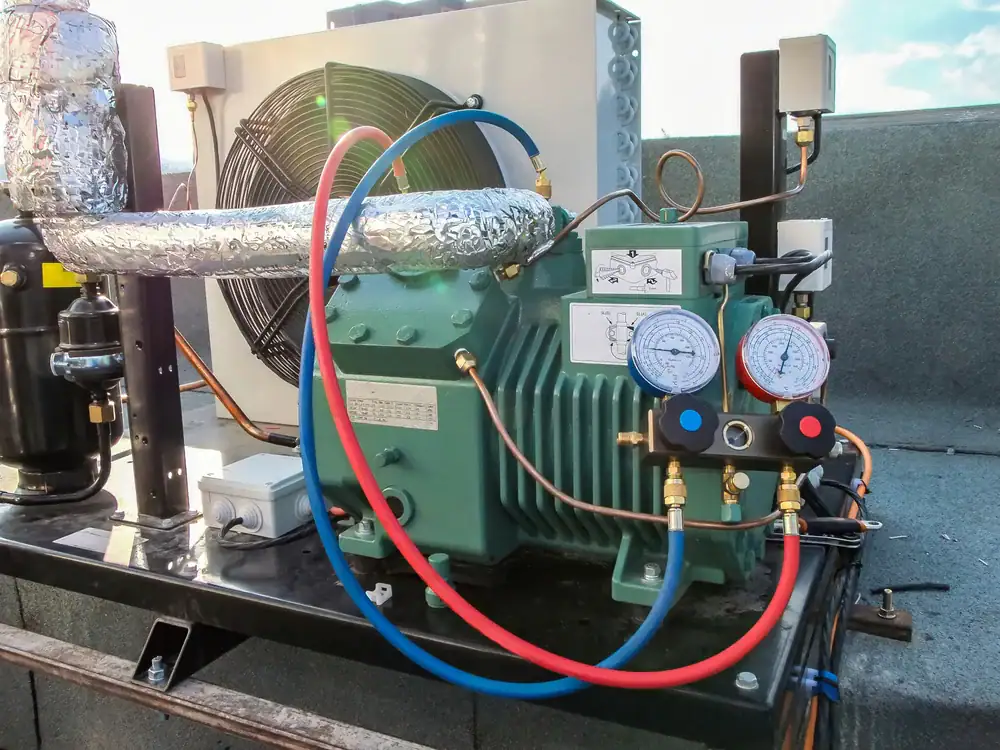
We dispatch emergency calls as fast as we can get a technician to your location—usually within a few hours, depending on where our trucks are and what time you call. South Hempstead is central enough in Nassau County that we can typically reach you faster than companies based farther out on the Island.
Our technicians carry extensive parts inventory, which means about 70% of emergency repairs get completed the same day. The most common failures—bad contactors, failed fan motors, refrigerant leaks, clogged filters—are things we stock in every truck.
The calls that take longer are the ones that require specialty parts or custom fabrication. If you need a compressor for a 15-year-old walk-in freezer or a control board that’s been discontinued, we’ll get it ordered and installed as quickly as possible, but that’s usually a next-day situation at best.
A proper maintenance visit covers everything that affects how well your system runs and how long it lasts. We start by cleaning condenser coils, which is the single most important thing you can do to prevent breakdowns in Long Island’s humid, salty climate.
Then we check refrigerant levels and look for leaks. If your system is low on refrigerant, it’s leaking somewhere—refrigerant doesn’t just evaporate. We find the leak and fix it instead of just topping it off and sending you a bill every few months.
We inspect door seals and gaskets for wear, test thermostats and controls for accuracy, check electrical connections, and look at the overall condition of the unit. If something’s wearing out, we’ll tell you so you can plan for it instead of dealing with an emergency failure three weeks later. Most of our maintenance customers get 15-plus years out of equipment that would normally die at 10.
We service walk-in coolers, walk-in freezers, reach-in refrigerators and freezers, display cases, prep tables, ice machines, beverage coolers, and blast chillers. Basically, if it’s commercial refrigeration equipment, we’ve worked on it.
We also handle more specialized systems that a lot of companies won’t touch—complex beer systems for bars and restaurants, custom marine HVAC installations for yachts and boat clubs, and refrigeration setups for medical facilities that need precise temperature control.
The equipment brand usually doesn’t matter. We work on True, Turbo Air, Beverage-Air, Hoshizaki, Manitowoc, Scotsman, and most other commercial brands. If it’s an obscure or discontinued model, parts might take longer to source, but we can usually find what’s needed.
Repair costs depend entirely on what’s broken. A simple fix like replacing a worn door gasket or cleaning coils might run a few hundred dollars. A failed compressor on a large walk-in cooler could cost several thousand.
Most emergency service calls fall somewhere in between. Fan motor replacements, thermostat issues, and minor refrigerant leaks typically cost less than a thousand dollars including labor and parts. Bigger problems like compressor failures or extensive refrigerant leaks cost more.
We give you a clear price before we start work. You’ll know what the repair costs and whether it makes sense to fix the unit or start planning for a replacement. Some equipment is worth fixing. Some isn’t. We’ll tell you honestly which situation you’re in instead of just running up a bill.
Most commercial refrigeration equipment is designed to last 10 to 15 years under normal conditions. In reality, how long your system lasts depends almost entirely on how well it’s maintained and how hard it works.
A reach-in cooler in a deli that gets opened 50 times a day will wear out faster than one in a catering hall that only runs hard on weekends. A walk-in freezer with coils that never get cleaned will die years earlier than one that gets proper maintenance.
Long Island’s climate is harder on refrigeration systems than most places. The humidity makes compressors and condensers work overtime. Salt air corrodes outdoor components. If you’re not staying on top of maintenance, you’re looking at the low end of that lifespan.
Our maintenance customers routinely get 15 to 20 years out of equipment because we’re catching problems early and keeping systems clean. That’s not marketing talk—that’s just what happens when coils get cleaned, refrigerant levels stay correct, and worn parts get replaced before they fail.
Call us. We offer 24/7 emergency service because refrigeration failures don’t wait for business hours. If your system goes down at 9 PM on a Sunday, your product starts spoiling immediately—you can’t wait until Monday morning.
While you’re waiting for the technician, move as much product as possible to any working coolers or freezers you have. If you’ve got ice, pack it around high-value items. The goal is to keep everything below 40 degrees for refrigerated goods and below zero for frozen.
Don’t try to fix it yourself unless you actually know what you’re doing. We’ve seen people make problems worse by resetting breakers repeatedly, adjusting thermostats randomly, or adding refrigerant without checking for leaks. If the system isn’t working, there’s a reason—and guessing at solutions usually just adds to the repair bill.