
Hear from Our Customers
Your boat’s refrigeration and air conditioning aren’t luxuries—they’re essential. Whether you’re running a charter operation that depends on keeping the day’s catch cold or you need reliable climate control for extended trips, a failed system means lost time, lost money, or a miserable day on the water.
You need a fix that lasts. Not a temporary patch that fails again next month. Not someone who shows up, guesses at the problem, and charges you anyway.
What you get with proper marine refrigeration service is simple: systems that work when you need them, diagnosed correctly the first time, and repaired by someone who’s seen every type of failure these systems can throw at you. You get your boat back to doing what it’s supposed to do without wondering if the repair will hold.
We bring over 40 years of marine HVAC and refrigeration experience to Montauk and the greater Long Island area. We’ve built our reputation on actually showing up, communicating clearly, and fixing systems right the first time.
Montauk’s marine industry doesn’t have room for amateurs. Between the fishing charters, commercial vessels, and recreational boats that depend on reliable cooling systems, boat owners here need technicians who understand the unique demands of marine environments—saltwater corrosion, continuous operation, raw water cooling, and the reality that these systems can’t fail mid-season.
That’s exactly what we deliver. Dozens of five-star reviews. 24/7 availability. Free estimates. And the kind of hands-on expertise that only comes from four decades in the field.
First, you reach out—phone, email, whatever works. You’ll get a response fast, not a week from now. We discuss what’s happening with your system, ask the right questions, and schedule a time that works for you. No ten-week backlogs.
When we arrive, we assess the full system—not just the obvious problem. Marine refrigeration and AC failures often have underlying causes that get missed if you’re not looking for them. Air flow issues. Water flow problems. Corrosion. Refrigerant leaks that signal bigger system deterioration. The goal is to identify what’s actually wrong so you’re not paying for the same repair twice.
Once the diagnosis is clear, you get a straightforward explanation and a free estimate. No jargon. No upselling. Just honest information about what needs to happen and what it costs. If it’s a repair, the work gets done properly with quality parts. If the system needs replacement, you’ll get guidance on the right equipment for your boat size and usage—whether that’s a self-contained unit, split system, or something more complex.
After the work is complete, everything gets tested to confirm it’s operating correctly. You’re not left guessing whether the fix will hold. And if you have questions later, we’re available 24/7 for consulting and support.
Ready to get started?
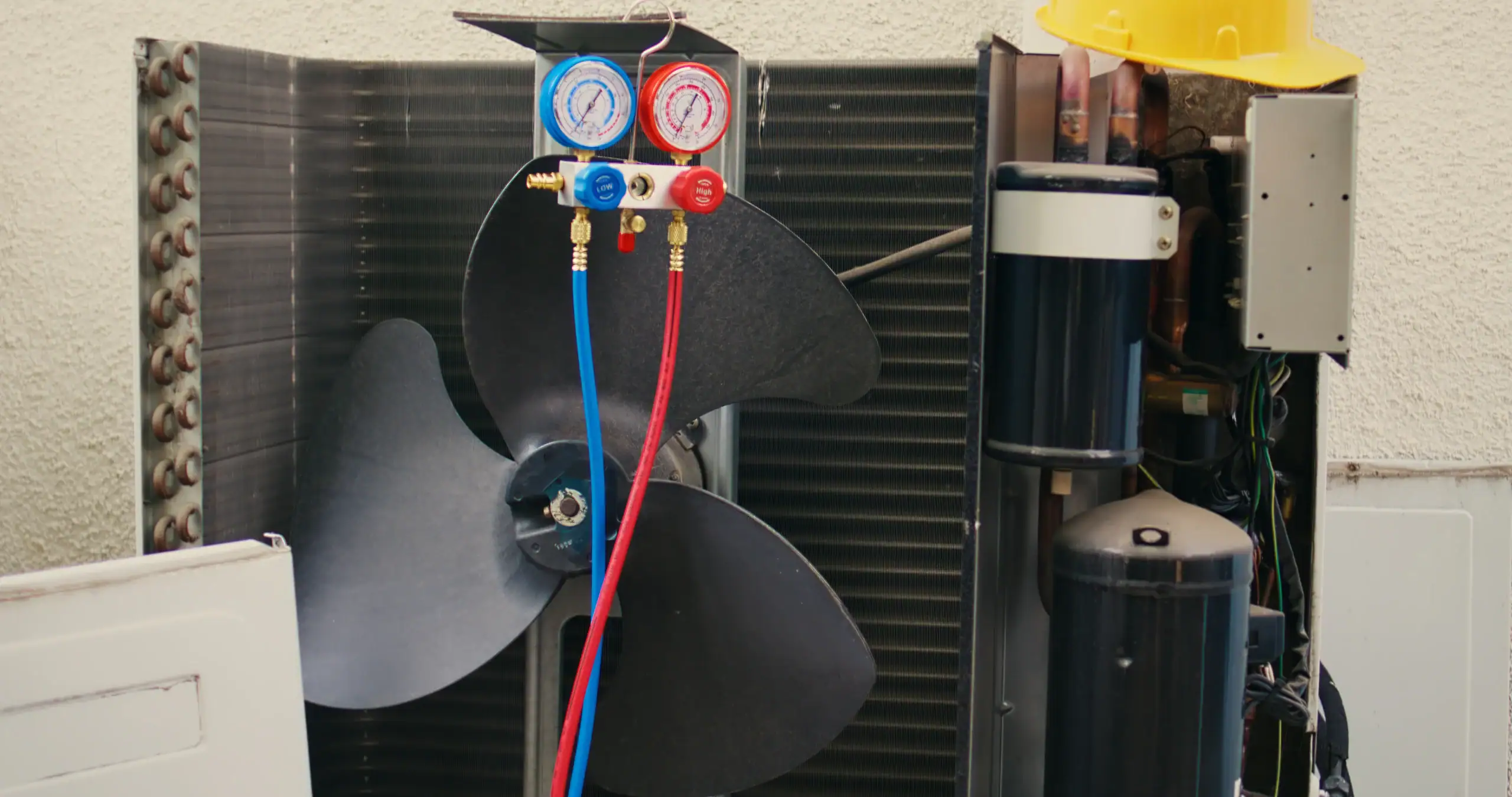
Marine refrigeration and boat air conditioning service covers everything from emergency repairs to full system installations. That includes diagnosing high pressure faults—the most common failure in marine AC systems—and addressing the root causes like clogged condensers, inadequate water flow, or failing pumps.
In Montauk, where saltwater and marine growth create constant challenges, maintenance matters. Systems that run continuously while drawing raw water need regular attention, especially during summer months when biological growth accelerates. Proper service includes cleaning coils, checking strainers, inspecting seawater pumps, and ensuring adequate air flow through evaporators.
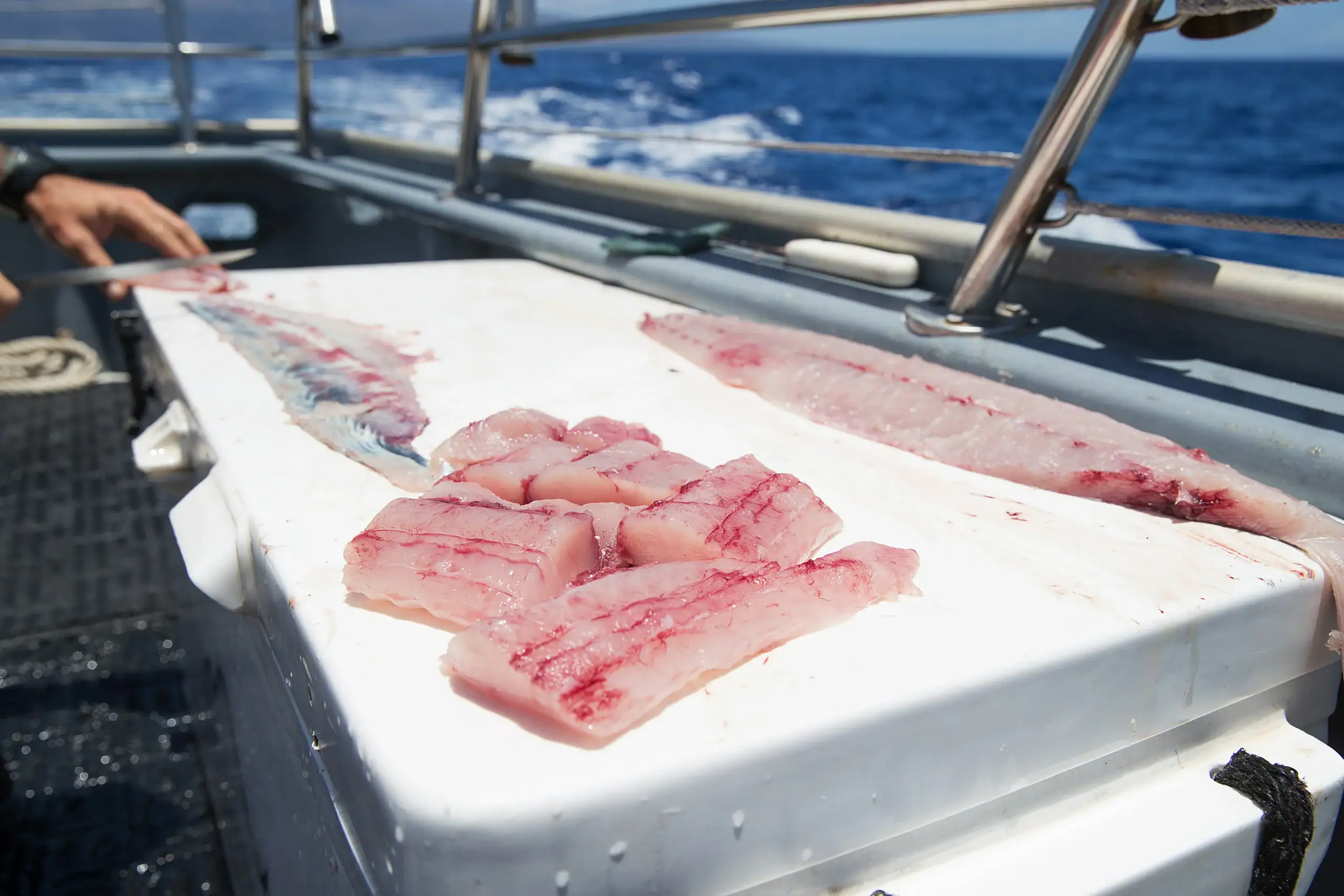
For fishing charters and commercial vessels operating out of Montauk’s busy harbor, refrigeration isn’t optional—it’s how you protect your catch and your livelihood. Custom installations for fish boxes, cockpit freezers, and holding systems require someone who understands the specific cooling demands and space constraints of working boats.
Boat HVAC service also means handling different system types correctly. Smaller vessels typically use self-contained units. Larger yachts might have split systems or chilled water setups. Each requires different expertise, different parts, and different installation approaches. Getting it wrong means poor performance, repeated failures, or damage to other boat systems.
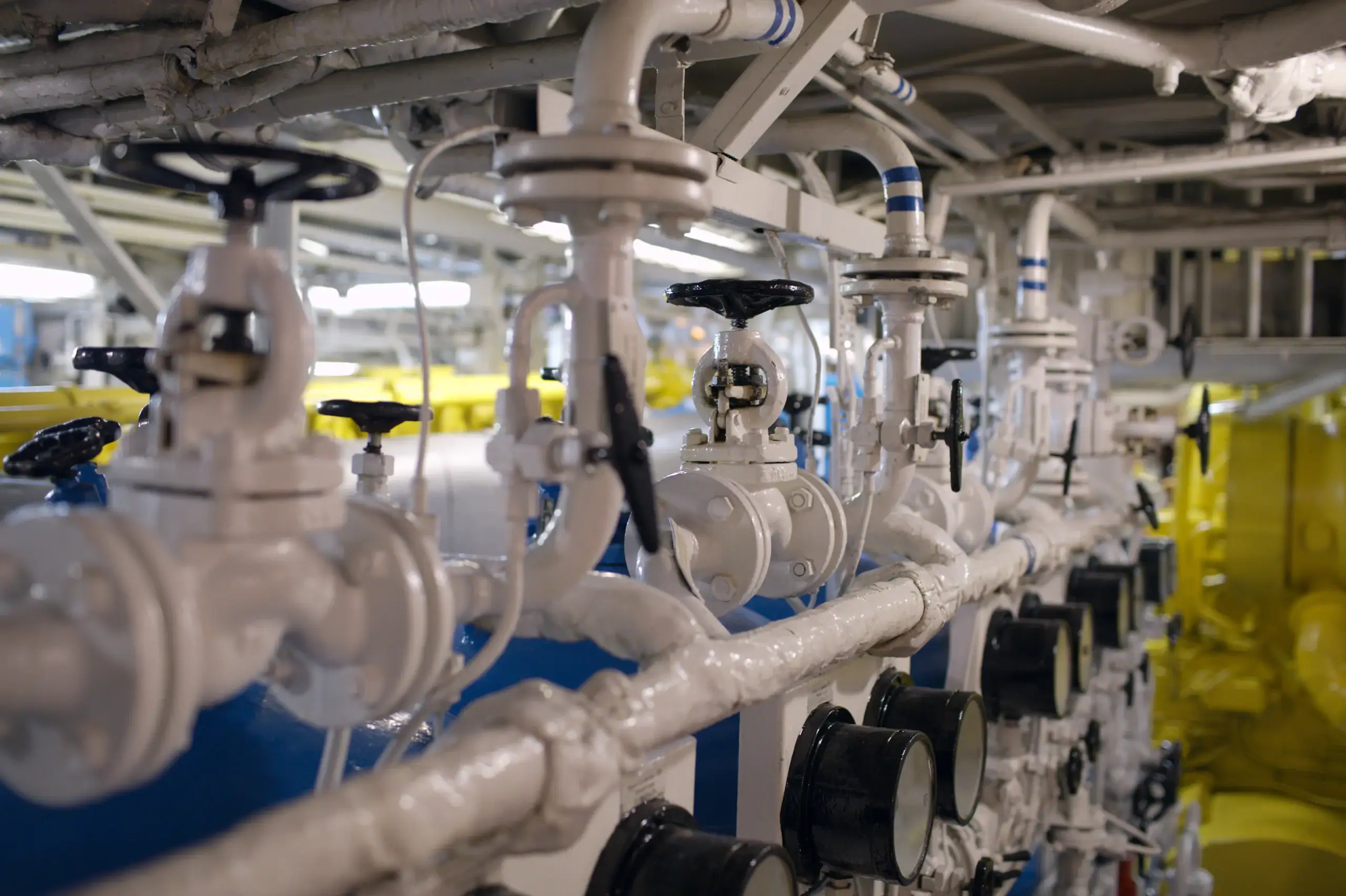
High pressure faults are the most common problem in boat AC systems, and they usually point to one of three issues: restricted water flow, blocked air flow, or low refrigerant. When your marine AC can’t reject heat properly, pressure builds up and the system shuts down to protect itself.
Start with water flow. Check your raw water strainer for debris, inspect the seawater pump for proper operation, and make sure the condenser coils aren’t clogged with marine growth. In Montauk’s waters, biological fouling happens fast during warm months. A restricted water supply is the number one cause of high pressure faults.
Air flow matters too. Dirty air filters and clogged evaporator coils reduce the system’s ability to move heat. If the unit can’t circulate air properly, pressure climbs. Regular cleaning prevents this.
Low refrigerant usually indicates a leak, and with marine systems, that often means corrosion is spreading. Saltwater environments are brutal on components. If you’re adding refrigerant repeatedly, you’re treating symptoms, not the problem. At that point, replacement often makes more sense than chasing leaks in a corroding system.
At minimum, you should have your boat’s refrigeration and AC systems serviced at the start of each season—before you’re relying on them daily. But if your boat stays in the water year-round or you’re running a commercial operation, maintenance should happen more frequently.
Marine systems work harder than residential equipment. They run continuously, pull raw water that carries debris and marine organisms, and operate in a corrosive saltwater environment. That combination accelerates wear. Strainers need regular cleaning. Coils need inspection. Pumps need monitoring.
During Montauk’s peak summer season, marine growth becomes especially aggressive. Barnacles, algae, and other organisms can clog water intake systems within weeks. If you’re noticing reduced cooling performance or high pressure faults, don’t wait—those are signs your system needs attention now, not at the end of the season.
For charter boats and commercial fishing vessels that depend on refrigeration daily, preventive maintenance isn’t optional. A failed system during peak season means lost revenue. Regular service catches small problems before they become expensive failures that sideline your boat.
If your marine AC is showing refrigerant leaks, the answer usually leans toward replacement. In saltwater environments, leaks typically indicate broader corrosion, not just one isolated failure point. Fixing one leak often means another appears shortly after. You end up spending repair money on a system that’s fundamentally deteriorating.
Age matters too. If your system is over 10-15 years old and having repeated problems, replacement makes more financial sense than continued repairs. Newer marine AC units are more efficient, quieter, and more reliable. The upfront cost pays off in fewer breakdowns and lower operating costs.
However, if the problem is a failed pump, clogged strainer, dirty coils, or a bad control board—and the rest of the system is in good shape—repair is absolutely the right call. These are maintenance issues, not signs of system failure.
The key is getting an honest assessment from someone who’s not trying to sell you either option. We’ll tell you straight whether your system has useful life left or whether you’re throwing money at something that’s done. That’s the kind of transparency that matters when you’re making decisions about expensive boat equipment.
The right system depends entirely on your boat size, how you use it, and your space constraints. For boats under 40 feet, self-contained units typically make the most sense. They’re budget-friendly, relatively easy to install, and effective for smaller cabin spaces. These units use raw water cooling and can be mounted in cabinets or living areas without major modifications.
Larger vessels—40 to 80 feet—often benefit from split systems. These separate the condensing unit (which goes in the engine room) from the air handlers in living spaces. Split systems offer better cooling capacity and quieter operation in cabins, though they require more complex installation.
For serious cruising yachts or boats over 80 feet, chilled water systems provide the best performance. They can cool multiple cabins simultaneously and handle larger heat loads. But they’re more expensive and require more space for equipment.
In Montauk’s climate, where you’ll use AC heavily during summer but might want heat during shoulder seasons, reverse cycle units that both cool and heat are worth considering. Many modern marine HVAC systems offer this capability, pulling heat from the water to warm your boat when needed.
The honest answer: there’s no universal “best” system. What matters is matching the equipment to your actual needs, your boat’s configuration, and how you’ll realistically use it.
You’re not imagining it—responsiveness is a real problem in the marine service industry. Many boat owners report waiting weeks or even months for service calls, and that’s not acceptable when your system fails during peak season.
Part of the issue is specialization. Marine HVAC and refrigeration require different knowledge than residential or commercial land-based systems. The raw water cooling, saltwater corrosion, space constraints, and electrical considerations are unique. Many general HVAC techs won’t touch marine systems because they’re unfamiliar with them. Even marine mechanics often avoid AC and refrigeration work because it’s specialized and time-consuming.
That creates a bottleneck. Too few qualified technicians, too many boats needing service, especially during Montauk’s busy summer season. Companies that do this work well get overwhelmed with demand.
The other factor is simply business practices. Some marine service providers don’t prioritize communication or scheduling. Calls don’t get returned. Appointments get pushed. Follow-up doesn’t happen.
That’s exactly why finding a marine HVAC company that actually answers the phone, shows up when scheduled, and communicates throughout the process matters so much. Those basics shouldn’t be rare, but in this industry, they often are. When you find a provider who handles marine systems competently and treats your time with respect, you stick with them.
Repair costs vary widely depending on what’s actually wrong. A service call to diagnose an issue and perform basic maintenance—cleaning coils, replacing filters, checking refrigerant—might run a few hundred dollars. That’s preventive work that keeps systems running.
Component replacements cost more. A failed seawater pump, control board, or expansion valve could run anywhere from several hundred to over a thousand dollars depending on the part and labor involved. If you need a new compressor or condenser, you’re looking at higher costs—sometimes approaching the price of a new unit, which is why replacement becomes the smarter option at that point.
Full system replacement depends on boat size and system type. Self-contained units for smaller boats start in the low thousands. Larger split systems or chilled water setups for bigger vessels can run significantly more, especially when installation complexity increases.
Here’s what matters more than specific numbers: getting an honest, upfront estimate before work begins. No surprises. No discovering the bill after the fact. We’ll assess the problem, explain what needs to happen, and give you clear pricing so you can make an informed decision.
The worst cost is paying for a repair that doesn’t fix the underlying problem, then paying again when it fails next month. That’s why proper diagnosis from someone with real marine system experience is worth finding.