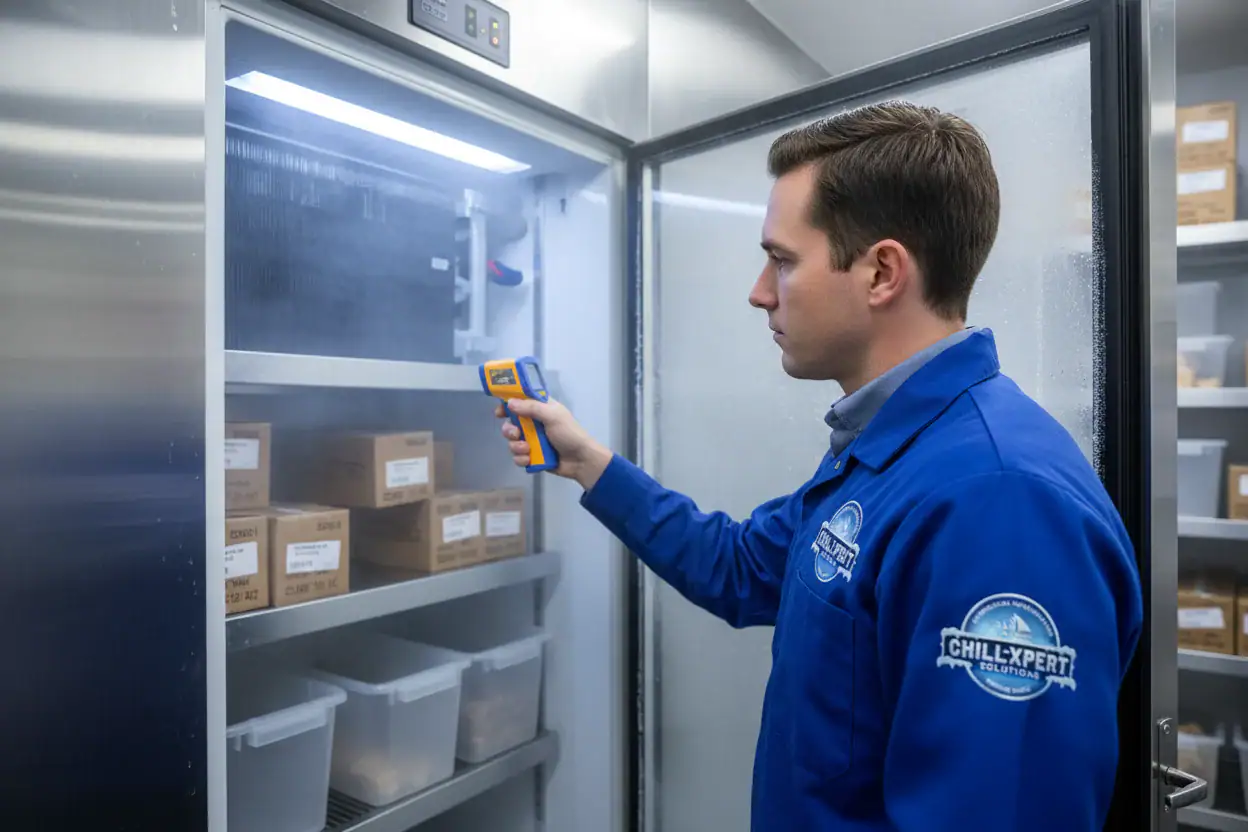
When your walk-in cooler fails, you're not just losing cold air. Discover what refrigeration downtime actually costs Long Island restaurants and food businesses—and how to prevent it.
Share:
Summary:
Most business owners think about refrigeration repair in terms of the technician’s bill. That’s the visible cost. But it’s just the tip of the iceberg.
When your commercial refrigeration system fails, you’re facing multiple financial hits happening simultaneously. There’s the immediate inventory loss as temperatures rise above safe levels. There’s the revenue you can’t generate because you don’t have the product to sell. There’s the labor cost of staff scrambling to move inventory, monitor temperatures, and manage the crisis instead of serving customers.
Then come the consequences you don’t see until later. Health code violations that result in fines or point deductions. Customers who leave because you can’t serve what they ordered. The reputation damage when word spreads that you had to throw out food or close early. For Long Island businesses already operating on tight margins, these cascading costs can be devastating.
Let’s talk actual dollars. A typical restaurant walk-in cooler failure results in $20,000 to $40,000 in total losses when you factor in everything. That’s not an exaggeration—that’s the reality documented by industry studies.
The spoiled inventory alone can hit $26,000 for a single outage, depending on what you’re storing. Meat, dairy, produce, and prepared foods all have different shelf lives once temperatures rise, but none of them last long. If your cooler fails overnight and you don’t catch it until morning, you could be looking at a complete inventory loss.
But inventory is just the beginning. If you’re a retail store, every hour that your refrigerated display cases are down costs you $168 in lost sales. For restaurants, the math gets even worse during peak service hours. Think about your average Saturday night: how many covers do you turn? What’s your average check? Now multiply that by the hours you’re shut down or operating at reduced capacity.
Emergency repair fees add another layer of cost. After-hours service calls come with premium rates. Rush parts orders cost more. If you need a temporary rental unit while repairs are completed, that’s another expense. And if the failure happens because you’ve been putting off maintenance, you might be facing a complete system replacement that could have been avoided.
The labor costs are easy to overlook but they add up fast. Your staff isn’t serving customers or prepping food—they’re moving inventory, cleaning up, dealing with the crisis. You’re paying them to manage a problem instead of generating revenue. In some cases, you might even need to send staff home early because you can’t operate, which means you’re still covering labor costs without any corresponding sales.
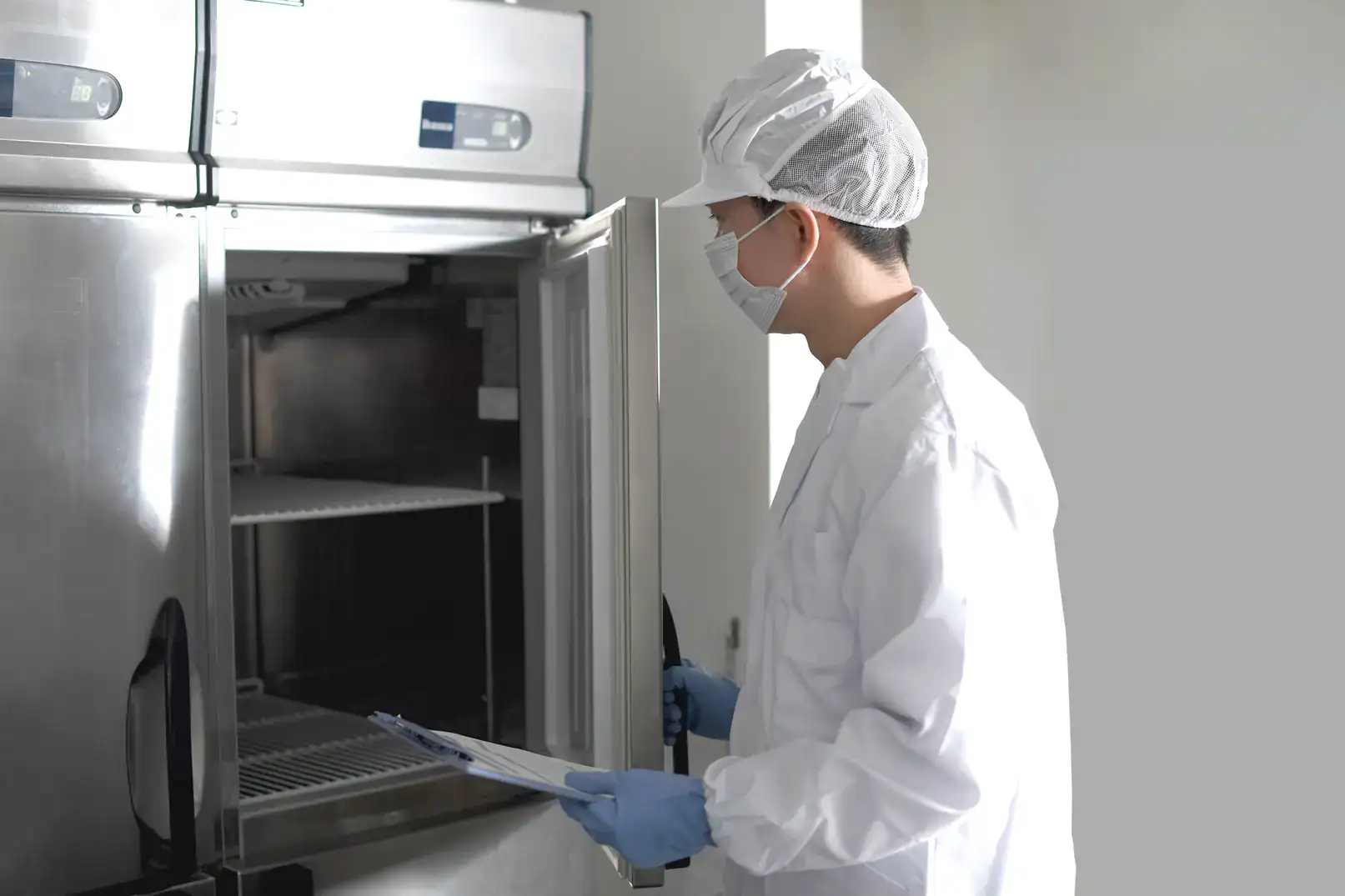
New York State doesn’t mess around with food safety. Refrigeration units must maintain potentially hazardous foods at 41°F or below. That’s not a suggestion—it’s the law. When your system can’t hold that temperature, you’re in violation the moment food rises above the safe zone.
Nassau County health department inspection reports regularly show critical violations for improper refrigeration temperatures. These aren’t minor infractions. Critical violations can result in point deductions that affect your inspection grade, fines that hit your bottom line, and in severe cases, closure orders that shut you down until the problem is fixed.
Here’s what makes this particularly painful: even if you fix the refrigeration problem quickly, the violation stays on your record. That inspection report is public. Customers can look it up online. Potential customers checking reviews or inspection grades will see that you had a refrigeration failure. In an industry where reputation is everything, that kind of damage takes time and effort to overcome.
The compliance risk extends beyond the immediate violation. If a health inspector happens to visit during a refrigeration failure, they’re required to document it. If customers got sick from food that was stored at improper temperatures, you’re looking at potential liability issues. Your insurance might cover some of the costs, but not the reputation damage or the stress of dealing with the situation.
For Long Island businesses, where competition is fierce and customers have plenty of options, a health code violation related to refrigeration can be a death sentence. The restaurants that closed across Nassau and Suffolk County in 2024 weren’t just victims of rising costs—many struggled with operational issues that damaged customer trust. Refrigeration failures fall squarely into that category.
Want live answers?
Connect with a Chill Xpert Solutions expert for fast, friendly support.
When you reframe commercial refrigeration maintenance as risk management instead of an operating expense, the math changes completely. You’re not spending money on maintenance—you’re investing in protection against catastrophic losses.
Industry data shows that preventive maintenance can increase the lifespan of commercial refrigeration systems by up to 30%. That means the equipment you might replace in 10 years could last 13 years with proper care. The equipment that fails at year 5 could run smoothly for 7 or 8 years. That extended lifespan alone pays for maintenance programs multiple times over.
But the bigger return comes from avoided emergencies. Studies show that preventive maintenance can reduce energy costs by 10-20%. Since refrigeration typically accounts for up to 50% of a restaurant’s total energy consumption, that’s real money back in your pocket every single month. A well-maintained system runs more efficiently, works less hard to maintain temperature, and costs less to operate.
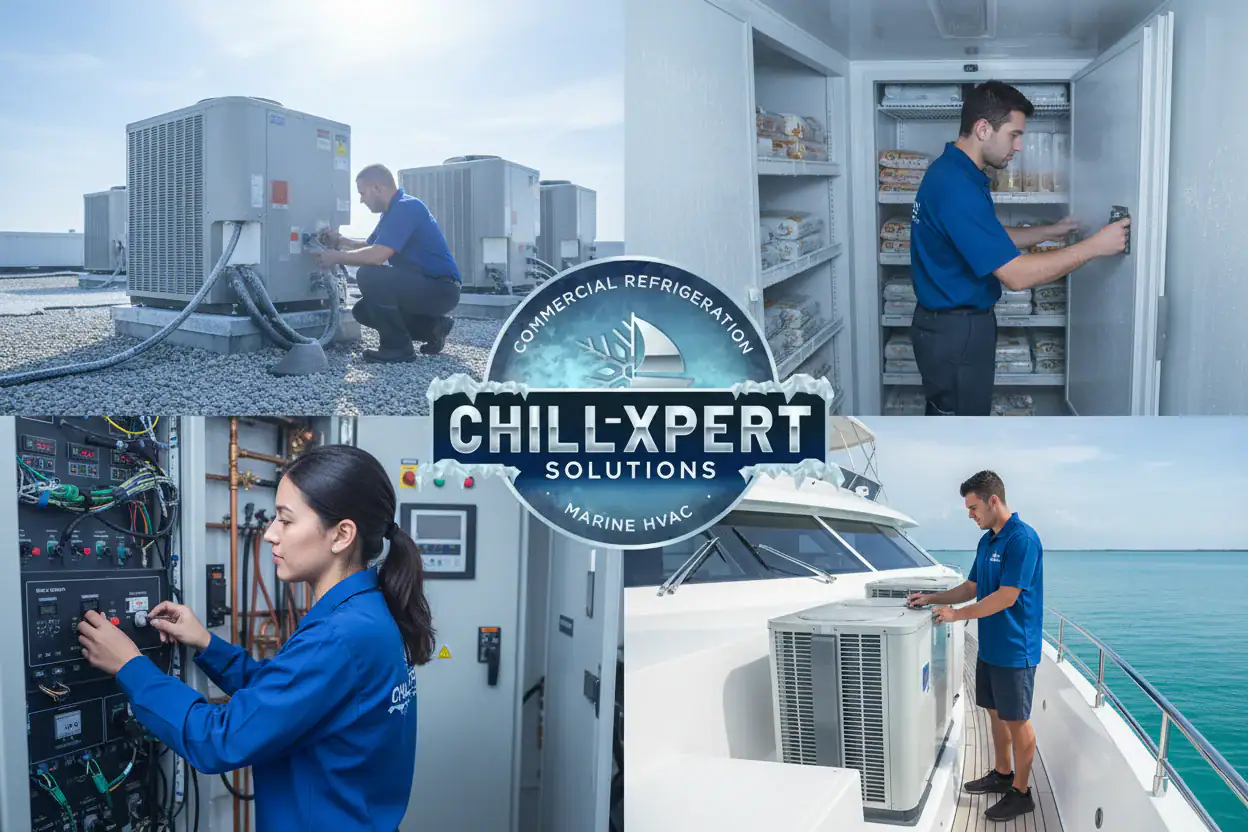
Most refrigeration failures don’t happen out of nowhere. They start as small issues that gradually get worse until something breaks. A dirty condenser coil makes your compressor work harder. A worn door gasket lets cold air escape. A refrigerant leak slowly reduces cooling capacity. These problems are easy to catch and fix during routine maintenance. They’re expensive emergencies if you ignore them.
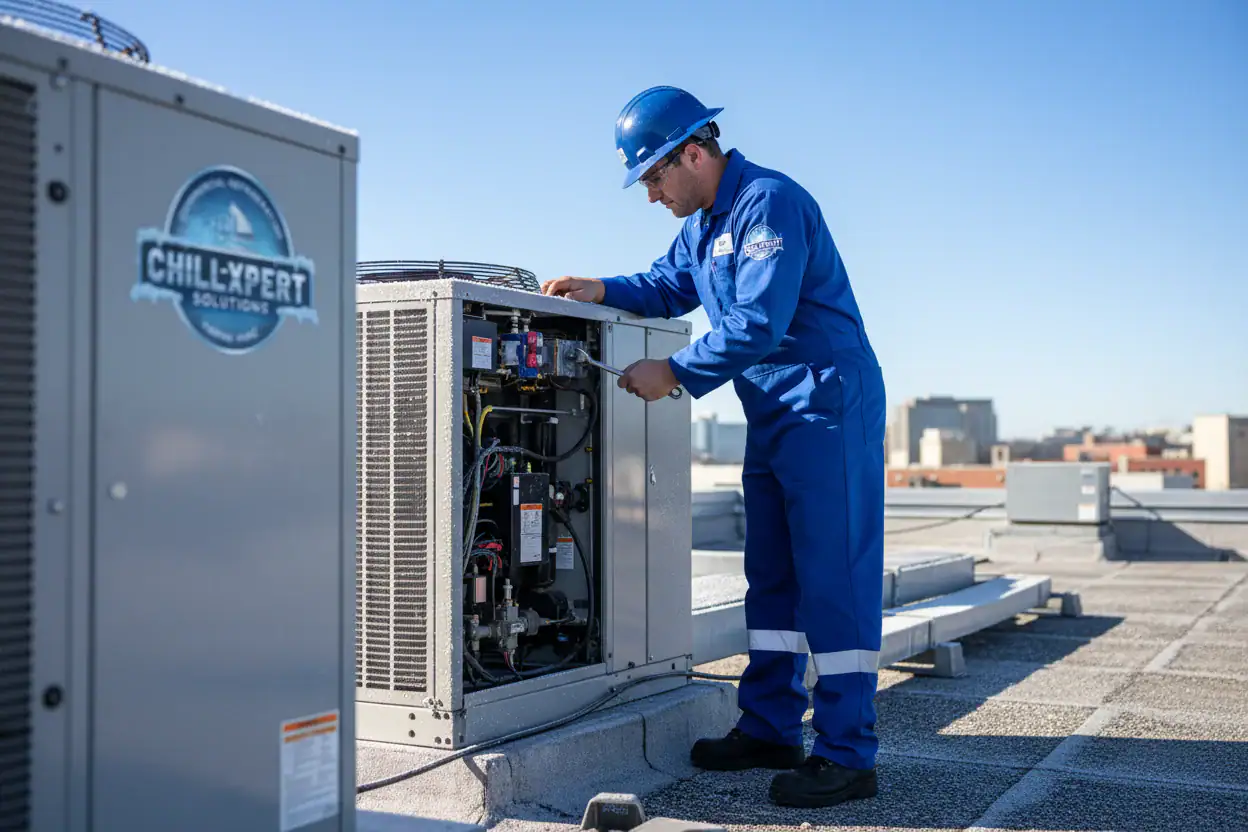
Professional maintenance visits catch these issues before they become failures. Technicians clean condenser coils that are clogged with dust and debris. They check refrigerant levels and top them off if needed. They inspect door seals and replace them before they fail completely. They test electrical components and tighten connections that have loosened over time.
The maintenance checklist covers everything that typically goes wrong with commercial refrigeration systems. Thermostats get calibrated to ensure accurate temperature readings. Defrost systems get tested to prevent ice buildup. Drain lines get cleared to avoid water damage. Fan motors get lubricated to prevent premature failure. Every item on that checklist exists because it’s a common failure point that causes downtime if neglected.
Think about it this way: most commercial refrigeration service calls are for problems that could have been prevented. A compressor failure often starts with a dirty coil that made it overheat. A complete system shutdown often traces back to a failed component that was showing warning signs for weeks. Emergency calls typically happen because small problems were ignored until they became big problems.
Regular maintenance also gives you predictability. You know when service visits are scheduled. You can plan around them. You’re not dealing with surprise failures during your busiest service periods. You’re not scrambling to find an emergency technician at 2 AM on a Saturday night. You’re not explaining to a full dining room why you can’t serve half your menu.
Let’s look at real numbers. A professional maintenance program typically costs a few hundred dollars per visit, with most businesses scheduling service twice a year at minimum. High-volume operations or older equipment might benefit from quarterly service. That’s an annual investment of perhaps $1,000 to $2,000 depending on your equipment and needs.
Now compare that to the cost of a single emergency. A walk-in cooler failure that results in $20,000 to $40,000 in losses. A compressor replacement that runs $2,000 to $5,000 plus installation. Lost revenue from even a few hours of downtime during peak service. The math isn’t close—maintenance pays for itself many times over by preventing just one major failure.
The energy savings alone can cover a significant portion of maintenance costs. If your refrigeration accounts for 50% of your energy bill and maintenance reduces that by 10%, you’re saving 5% on your total energy costs every month. For many Long Island businesses, that’s hundreds of dollars monthly that goes straight to your bottom line instead of the utility company.
But the real ROI goes beyond direct financial returns. It’s the peace of mind knowing your refrigeration won’t fail during Saturday dinner service. It’s the confidence that you’ll pass your next health inspection. It’s the ability to focus on running your business instead of worrying about equipment failures. It’s the reputation you maintain as a reliable establishment that consistently delivers quality.
Professional service also catches problems when they’re still small and affordable to fix. A $200 repair during a maintenance visit beats a $2,000 emergency repair every single time. A $50 door gasket replacement beats a $10,000 inventory loss. A $100 refrigerant top-off beats a $3,000 compressor replacement. Preventive maintenance is cheap insurance against expensive disasters.
For Long Island businesses facing the operational pressures that closed so many restaurants in 2024, controlling costs while maintaining quality is essential. Refrigeration maintenance does both. It reduces your operating costs through improved efficiency while ensuring you never face the catastrophic losses that come with system failures.
The true cost of refrigeration downtime goes far beyond the repair bill. It’s the inventory loss, the revenue you can’t generate, the health code violations, the reputation damage, and the stress of managing a crisis during your busiest hours. For Long Island businesses operating in Nassau and Suffolk County, where margins are tight and competition is fierce, these costs can be devastating.
Preventive maintenance isn’t an expense—it’s the most cost-effective insurance policy you can buy. It extends equipment lifespan, reduces energy costs, prevents catastrophic failures, and gives you the peace of mind to focus on what matters: running your business and serving your customers.
When you work with experienced professionals who understand commercial refrigeration systems and the unique challenges of the Long Island market, you’re not just buying maintenance service. You’re investing in protection against the failures that cost businesses thousands of dollars and countless hours of stress. You’re choosing reliability over risk, prevention over crisis management.
At Chill Xpert Solutions, we bring over 40 years of industry experience to every commercial refrigeration project across Nassau County, Suffolk County, and Long Island. With 24/7 emergency service, comprehensive maintenance programs, and the expertise to handle everything from routine service to complex custom installations, we help businesses avoid the costly downtime that puts operations at risk.
Article details:
Share:
Continue learning: