Your AC doesn't quit overnight. Small issues build until something breaks. These five maintenance tasks catch problems early and keep your system running through Long Island summers.
Share:
Summary:
Your air conditioner doesn’t fail overnight. It gives you signs. Weaker airflow. Rooms that won’t cool evenly. Bills that creep up for no clear reason. Most breakdowns happen because small problems got ignored until they turned into expensive ones.
The good news? You can catch most of those problems early. Regular AC maintenance isn’t complicated, and it doesn’t require a degree in HVAC. A few simple tasks—some you can do yourself, others that need a pro—can save you hundreds or thousands in emergency repairs. Here’s what actually matters when it comes to keeping your Nassau County, NY home cool and your system running.
Your air filter does more work than you probably realize. Every cooling cycle, it scrubs dust, pollen, pet hair, and debris from the air before it reaches your system’s internal components. When that filter gets clogged, your AC has to work harder to pull air through. That extra strain reduces efficiency, drives up your energy bill, and puts unnecessary wear on your blower motor.
A dirty filter doesn’t just make your system work harder. It lets dirt bypass the filter entirely and settle on your evaporator coil, which reduces its ability to absorb heat. Over time, that buildup can cause your coil to freeze or your system to shut down completely. Replacing a clogged filter with a clean one can lower your air conditioner’s energy consumption by up to fifteen percent, and it protects your system from dirt buildup that leads to premature failure.

There’s no universal answer because it depends on your home. If you have pets, live in a dusty area, or run your AC heavily during Long Island summers, you’ll need to check your filter every month and replace it more often. Most disposable filters should be swapped out every one to three months during the cooling season. Reusable filters need to be cleaned monthly according to the manufacturer’s instructions.
Here’s a simple test. Pull your filter out and hold it up to the light. If you can’t see through it clearly, it’s time for a replacement. Don’t wait until your system starts struggling.
Where you find your filter matters too. It’s usually located in one of three places. You’ll find it along the return duct at the indoor air handler, behind the return grille within your living space, or in the grill that faces the room. Check your system’s manual if you’re not sure, or look for the large vent that pulls air into your system.
When you replace the filter, pay attention to the airflow arrow printed on the frame. That arrow needs to point toward the blower and away from the return duct. Installing it backward restricts airflow and defeats the purpose of changing it in the first place. Use the correct filter size for your system, and stick with the MERV rating recommended by your manufacturer. A filter that’s too restrictive can actually suffocate your system and damage the compressor over time.
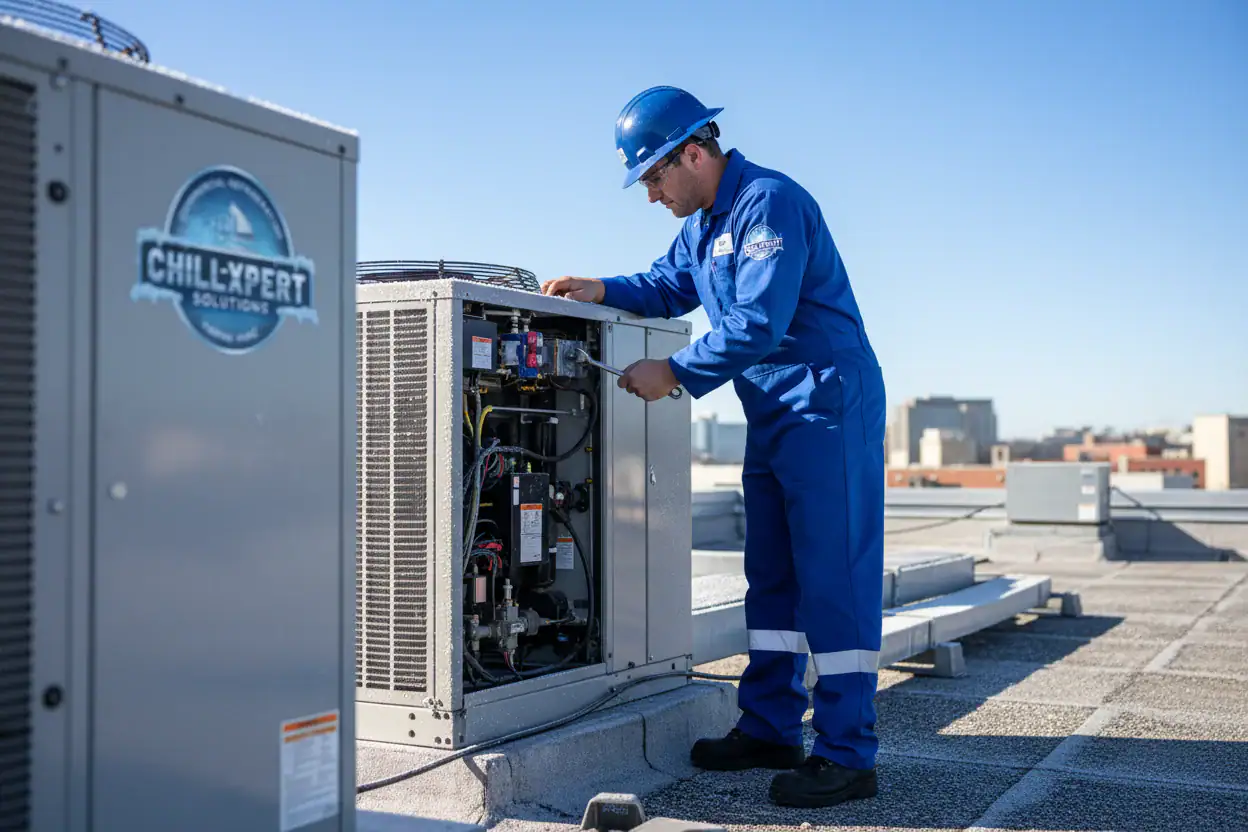
Your outdoor condenser unit sits outside year-round, exposed to everything Nassau County, NY weather throws at it. Leaves, grass clippings, pollen, dirt, and debris accumulate around the unit and on the coil fins. When airflow gets blocked, your system can’t release heat efficiently. That makes your compressor work harder, increases your energy bills, and shortens the life of your equipment.
Keeping the area around your condenser clean isn’t complicated, but it matters. Trim back any foliage, shrubs, or plants to at least two feet from the unit on all sides. Remove leaves, twigs, and debris by hand or with a vacuum. If you’re comfortable doing it, you can gently rinse the exterior fins with a garden hose at low pressure—just make sure the power is off first.
Don’t ignore the fins themselves. Those thin aluminum pieces attached to the coil bend easily, and bent fins block airflow just like dirt does. A qualified HVAC contractor can use a fin comb to straighten them during a professional tune-up, restoring proper airflow and system efficiency. Trying to do this yourself without the right tool can cause more damage than it fixes.
One more thing. If your condenser sits in direct sunlight all day, it’s working harder than it needs to. Sunlight heats up the unit, which reduces efficiency by as much as ten percent and causes refrigerant to evaporate more quickly. If possible, provide some shade with an awning or strategically placed landscaping—but never block airflow.
Want live answers?
Connect with a Chill Xpert Solutions expert for fast, friendly support.
Some air conditioning maintenance tasks are straightforward enough for homeowners to handle. Others require specialized tools, training, and licensing. Knowing the difference keeps you safe, protects your warranty, and ensures your system gets the care it actually needs.
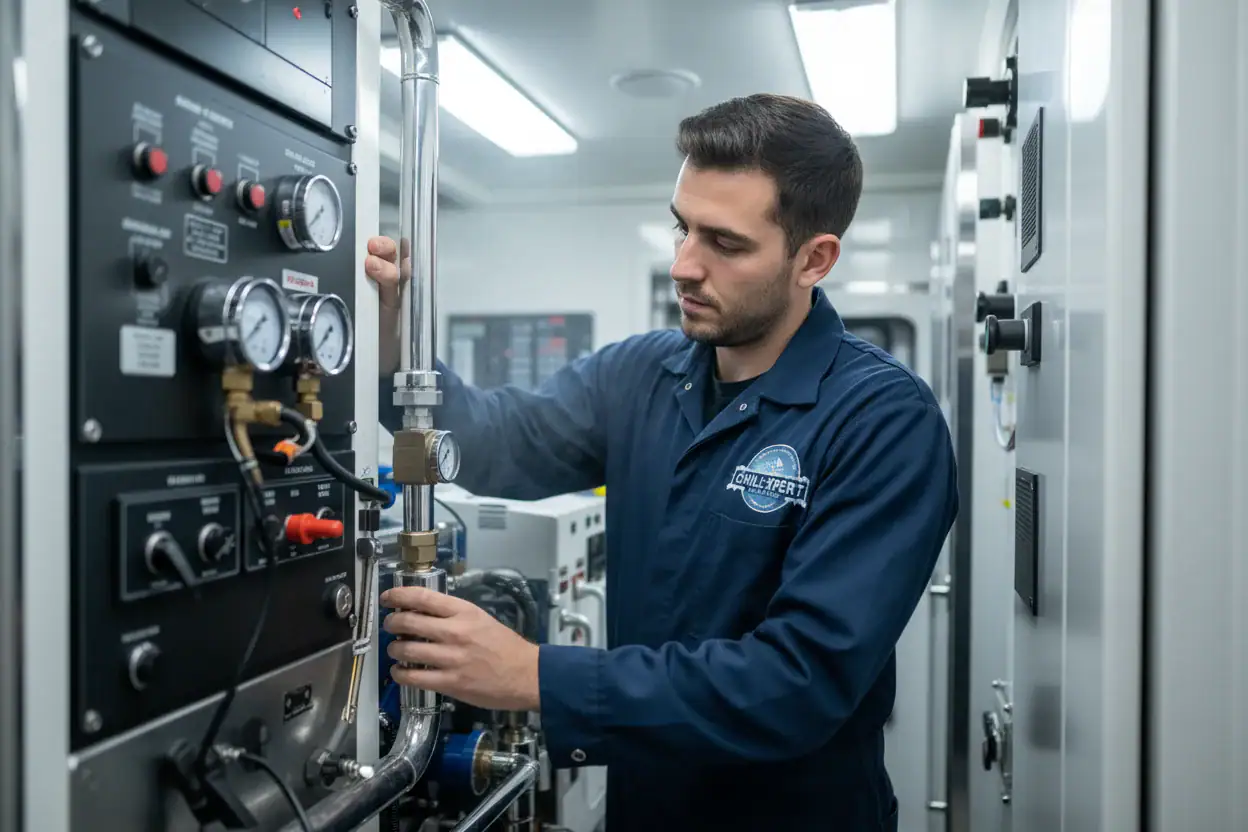
Professional AC maintenance goes beyond what you can do with a new filter and a garden hose. A qualified technician inspects, tests, and services components that most homeowners can’t safely access. That includes checking refrigerant levels, testing for leaks, inspecting electrical connections, measuring airflow across the evaporator coil, and verifying that your heating and cooling systems don’t operate simultaneously.
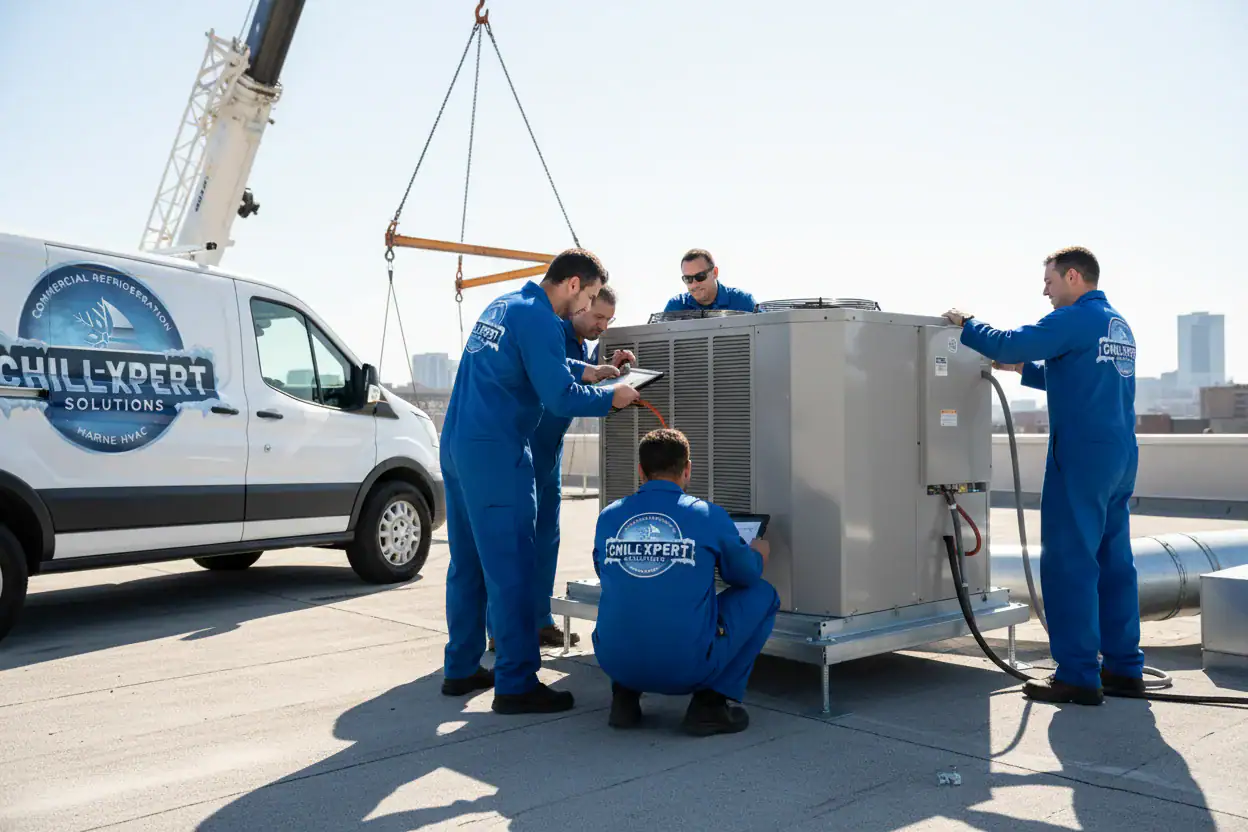
Refrigerant is one of the most critical components in your air conditioning system, and it’s also one of the most misunderstood. Your AC doesn’t “use up” refrigerant the way a car burns gas. It’s a closed system. If your refrigerant level is low, you have a leak. Topping it off without fixing the leak just kicks the problem down the road and wastes money.
Handling refrigerant requires EPA certification for good reason. It’s a pressurized substance that can cause injury if mishandled, and releasing it into the atmosphere is illegal. During a proper service check, technicians inspect for leaks, check pressure levels, and test cooling efficiency. Too much or too little refrigerant makes your system less efficient, increases energy costs, and reduces the life of your equipment. You can’t guess your way through this, and you shouldn’t try.
Electrical components are another area where DIY maintenance crosses into dangerous territory. Your AC system is essentially a mini power station, with capacitors, contactors, relays, and high-voltage wiring. Faulty electrical connections cause unsafe operation and reduce the life of major components. One weak link—a worn capacitor, a corroded contactor, a loose wire—and suddenly you’re looking at flickering systems, odd noises, or no response at all. Resetting the breaker isn’t a solution. It’s a stall.
A skilled technician checks every wire, connection, and fuse for signs of wear, corrosion, or heat damage. They tighten all electrical connections and measure voltage and current on motors to ensure everything operates within the manufacturer’s safe parameters. That’s the kind of work that prevents shutdowns and the smell of something burning when your system kicks on. HVAC maintenance without electrical inspection is just cosmetic.
Coil cleaning is another task that sounds simple but requires professional attention. Your AC has two coils—the evaporator coil inside and the condenser coil outside. Both get dirty over time, even with a clean filter. Dirty coils are the primary cause of inefficient cooling. They reduce your system’s ability to cool your home and cause the system to run longer, which increases energy costs and reduces equipment life. In Nassau County, NY, where humidity and seasonal pollen put extra strain on systems, coil maintenance becomes even more important.
Cleaning coils the wrong way can damage the delicate fins and make things worse. Professionals use specialized equipment and techniques to clean coils thoroughly without bending fins or forcing debris deeper into the system. They also inspect the coil for signs of corrosion, leaks, or damage that could lead to bigger problems down the road.
Not everything requires a service call. There are several central AC maintenance tasks that homeowners can safely perform between professional tune-ups, and staying on top of these tasks makes a real difference in how your system performs.
You already know about filter changes, but visual inspections matter too. Walk around your outdoor unit at least once a month during cooling season. Look for visible debris, check that nothing is blocking airflow, and listen for unusual sounds when the system runs. If you hear grinding, screeching, banging, or buzzing, something’s wrong. Shut the system off and call a technician before the problem gets worse.
Your condensate drain line is another area you can monitor. As your AC removes humidity from the air—and there’s plenty of that in Long Island summers—it creates condensation that drains away through a built-in tray and drain line. Mold, algae, and debris can block that drain and cause water to back up. Watch for water pooling near the indoor unit, musty odors, or higher indoor humidity than usual. If you suspect a clog, you can try clearing it with a wet-dry vacuum, but for severe blockages, call a professional. Water damage from a backed-up drain line costs a lot more than a service call.
Keep your vents and registers clear too. Blocked or closed vents disrupt the airflow your HVAC system was designed for, which leads to hot and cold spots in your home and puts unnecessary strain on your fan motor. Walk through your home and make sure none of your supply or return vents are blocked by furniture, rugs, or curtains. Remove the vent covers occasionally and use a vacuum with a brush attachment to clean out dust and debris.
Check your thermostat settings before you assume something’s broken. Make sure it’s set to cool mode, the temperature is set correctly, and the batteries are fresh if it’s battery-powered. Thermostats exposed to direct sunlight, drafts, or heat sources can give inaccurate readings and cause your system to cycle incorrectly. If your thermostat consistently reads a different temperature than a separate thermometer in the same room, you might need a professional to evaluate wiring, sensor placement, or airflow issues.
AC breakdowns don’t usually happen out of nowhere. They’re the result of small problems that got ignored until they turned into expensive failures. A clogged filter here, a dirty coil there, a refrigerant leak that goes unnoticed for months—those are the things that turn a $150 air conditioner tune up into a $1,500 emergency repair.
The math is straightforward. Most homeowners spend between $120 and $200 annually on professional tune-ups. Emergency repairs average $300 to $600, and major failures can run $2,000 or more. A well-maintained system lasts fifteen to twenty years. A neglected one might give you eight to twelve before it needs replacement. Regular AC maintenance isn’t an expense. It’s an investment that pays for itself in lower energy bills, fewer repairs, and a system that actually works when you need it.
If your AC hasn’t been serviced in a while, or if you’re noticing any of the warning signs—weak airflow, uneven cooling, rising energy bills, strange noises—don’t wait for a breakdown. Get it checked now, before Long Island summer heat puts your system to the test. We offer free estimates and have been serving Nassau County, NY and Suffolk County homes and businesses for over 40 years. Whether you need a professional tune-up or guidance on what your system actually needs, reach out and get it handled before the heat wave hits.
Article details:
Share:
Continue learning: