Replacing your HVAC system in Nassau County costs between $7,500 and $22,000 in 2026, but the final number depends on sizing, efficiency, and what's actually included in your quote.
Share:
Summary:
You’ve got quotes ranging from $6,000 to $18,000 for what seems like the same work. One contractor says you need a 4-ton unit. Another recommends 3 tons. A third mentions ductwork modifications that weren’t in the original estimate.
Welcome to HVAC replacement pricing in 2026, where the numbers vary wildly and the details matter more than you’d think. The national average sits between $7,500 and $15,500, but Nassau County homeowners typically land 15-25% higher due to local labor rates, permit requirements, and coastal climate considerations. What you actually pay depends less on the equipment itself and more on whether your contractor is sizing correctly, quoting honestly, and including everything your installation actually needs.
The average HVAC replacement cost in 2026 ranges from $7,500 to $15,500 nationally, with most homeowners paying around $11,590 to $14,100 based on recent project data. That’s for a complete system including both heating and cooling components, professional installation, and the basic infrastructure work that makes everything function properly.
Nassau County projects typically run higher. Between local labor rates that hit $100-$250 per hour, permit fees averaging $250-$400, and the reality that many Long Island homes need ductwork modifications to handle newer high-efficiency systems, you’re looking at the upper end of that range or beyond. A straightforward replacement reusing existing ductwork might start around $9,000. A full system with duct modifications, electrical upgrades, and proper load calculations can push past $18,000.
The gap between those numbers isn’t arbitrary. It’s the difference between a contractor who sizes based on square footage alone and one who actually calculates your home’s heating and cooling load. It’s the space between a quote that includes permits and one that adds them as a surprise charge three days into the job.
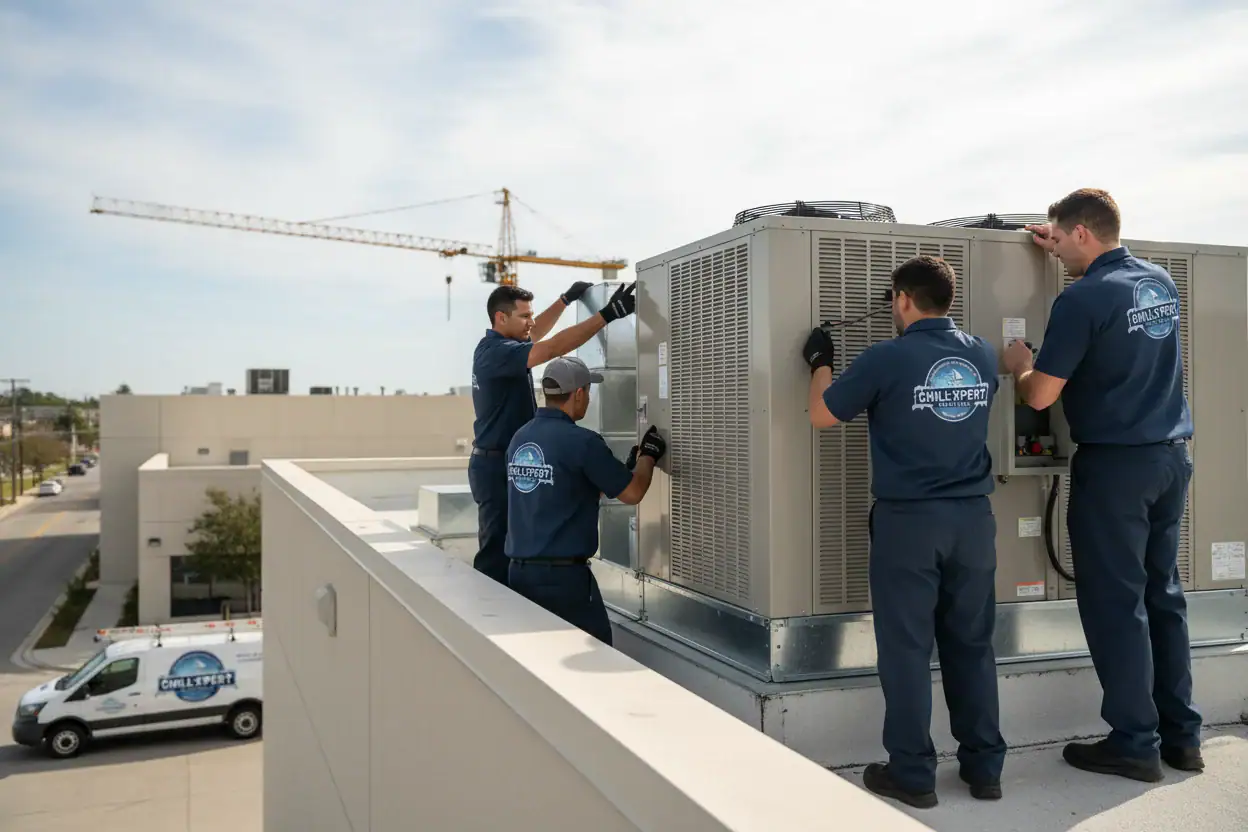
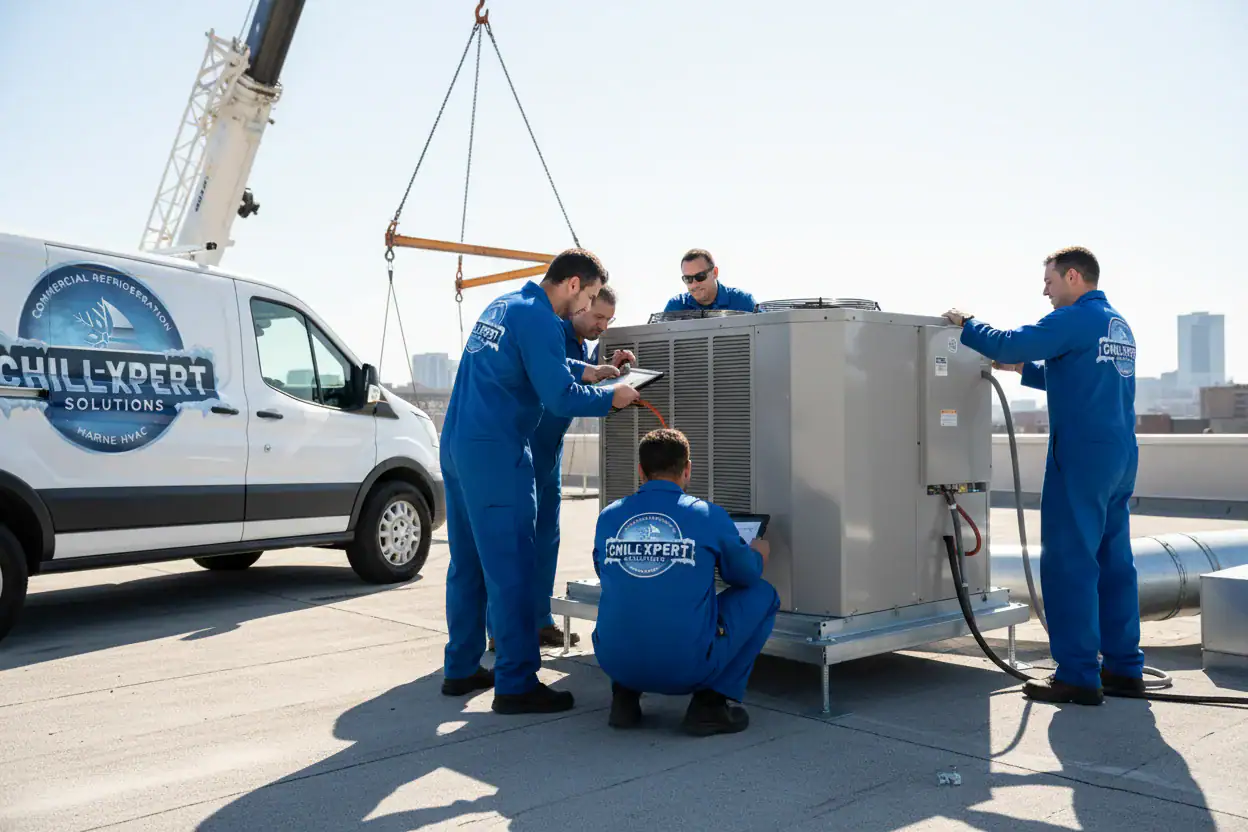
A full HVAC replacement cost includes more than the equipment sitting in your yard and basement. The outdoor condenser unit, indoor air handler or furnace, refrigerant lines, electrical connections, thermostat, and labor to install everything correctly make up the base price. But that’s rarely the complete picture.
Equipment typically accounts for 50-60% of your total cost. A mid-range 3-ton central AC unit with a gas furnace runs $3,300 to $8,000 for the equipment alone. High-efficiency models with SEER2 ratings above 16 and AFUE ratings over 90% push equipment costs toward $10,000-$16,000. You’re paying for components that use less energy, last longer, and qualify for federal tax credits up to $2,000.
Labor averages around $1,500 but varies significantly based on installation complexity. Tight attic access, difficult ductwork routing, or the need to relocate equipment adds hours and cost. Removing your old system and properly disposing of refrigerants adds another $100-$200. Permits in Nassau County run $100-$400 depending on project scope and whether you’re just swapping equipment or modifying ductwork and electrical systems.
Then come the variables that separate a $9,000 project from a $15,000 one. Ductwork modifications cost $500-$2,500 if your existing ducts are leaky, undersized, or damaged by years of coastal humidity. Electrical panel upgrades run $2,000-$4,500 when your current 100-amp service can’t safely handle a modern high-efficiency system. A new programmable or smart thermostat adds $150-$500. Each of these items should appear in a detailed quote before work begins, not as a surprise addition when the installer discovers them.
We provide itemized estimates listing equipment model numbers, SEER and AFUE ratings, labor breakdown, permit fees, and anticipated ductwork or electrical needs because we believe in being honest about what your installation actually requires. The contractors offering suspiciously low numbers often exclude half the work, then explain the “necessary additions” once you’ve already committed.
Home HVAC replacement cost scales with system size, but not in the straightforward way most homeowners expect. A 2-ton system doesn’t cost exactly half what a 4-ton system costs, and your home’s square footage alone doesn’t determine which size you need.
HVAC systems are measured in tons, with one ton equaling 12,000 BTUs of cooling capacity. A 1,500 square foot home might need anywhere from 2 to 3.5 tons depending on insulation quality, window efficiency, ceiling height, and how much direct sun hits the building. The same square footage in a well-insulated new construction with energy-efficient windows needs less capacity than a 1970s build with original single-pane glass and minimal attic insulation.
A 2-ton system typically costs $5,000-$8,000 installed. A 3-ton system runs $6,500-$10,000. A 4-ton system hits $8,000-$13,000. A 5-ton system for larger homes over 2,500 square feet can reach $10,000-$16,000. But these ranges assume existing ductwork in decent condition and no major electrical upgrades.
The problem is that many contractors still use outdated rules of thumb, recommending 400-600 square feet per ton or 20-25 BTU per square foot. These shortcuts ignore insulation levels, window quality and orientation, ceiling height, and local climate. A contractor who says “your home is 2,000 square feet so you need a 4-ton unit” without measuring anything else is guessing. And that guess often results in an oversized system that short-cycles, wastes 15-30% more energy, and fails years earlier than it should.
Proper sizing requires a Manual J load calculation that accounts for your home’s actual heat loss and heat gain. This engineering calculation considers wall and ceiling insulation R-values, window area and orientation, infiltration rates, number of occupants, and Nassau County’s specific climate zone. It’s not optional if you want a system that performs efficiently for its full 15-20 year lifespan.
An oversized system reaches target temperature too quickly, shuts off before completing a full cycle, then restarts as temperature drifts. This constant on-off pattern uses more electricity than steady operation, never runs long enough to properly dehumidify your home, and wears out compressors and blower motors through repeated startup stress. An undersized system runs continuously without ever reaching the temperature you set, drives up energy bills through constant operation, and burns out from overwork.
The cost difference between a correctly sized 3-ton system and an incorrectly sized 4-ton system might be $1,500 upfront. But the oversized unit will cost you an extra $200-$400 annually in wasted energy, plus the likelihood of replacement 5-7 years earlier than necessary. The math favors proper sizing every time.
Want live answers?
Connect with a Chill Xpert Solutions expert for fast, friendly support.
HVAC furnace replacement cost depends on fuel type, efficiency rating, and whether you’re replacing just the furnace or the entire heating and cooling system simultaneously. A standalone furnace replacement runs $3,500-$10,000. Replacing both furnace and AC together costs $5,000-$15,000, but bundling often saves $2,000-$5,000 in total labor costs compared to separate installations.
Gas furnaces dominate Nassau County installations, with replacement costs ranging from $3,800-$10,000 depending on efficiency and capacity. An 80% AFUE furnace costs less upfront but uses more fuel monthly. A 90-95% AFUE furnace costs $1,500-$3,000 more but cuts heating bills by 15-25% annually. Electric furnaces run $1,900-$5,600 and work well for homes without gas lines, though higher electricity rates in New York make operating costs steeper than gas in most cases.
The efficiency rating directly impacts long-term costs. A furnace with 80% AFUE converts 80% of fuel to heat, wasting 20% up the flue. A 95% AFUE furnace wastes only 5%. On a $1,200 annual heating bill, that efficiency difference saves $180-$225 per year. Over a 15-year lifespan, the high-efficiency model saves $2,700-$3,375, often exceeding its higher purchase price.
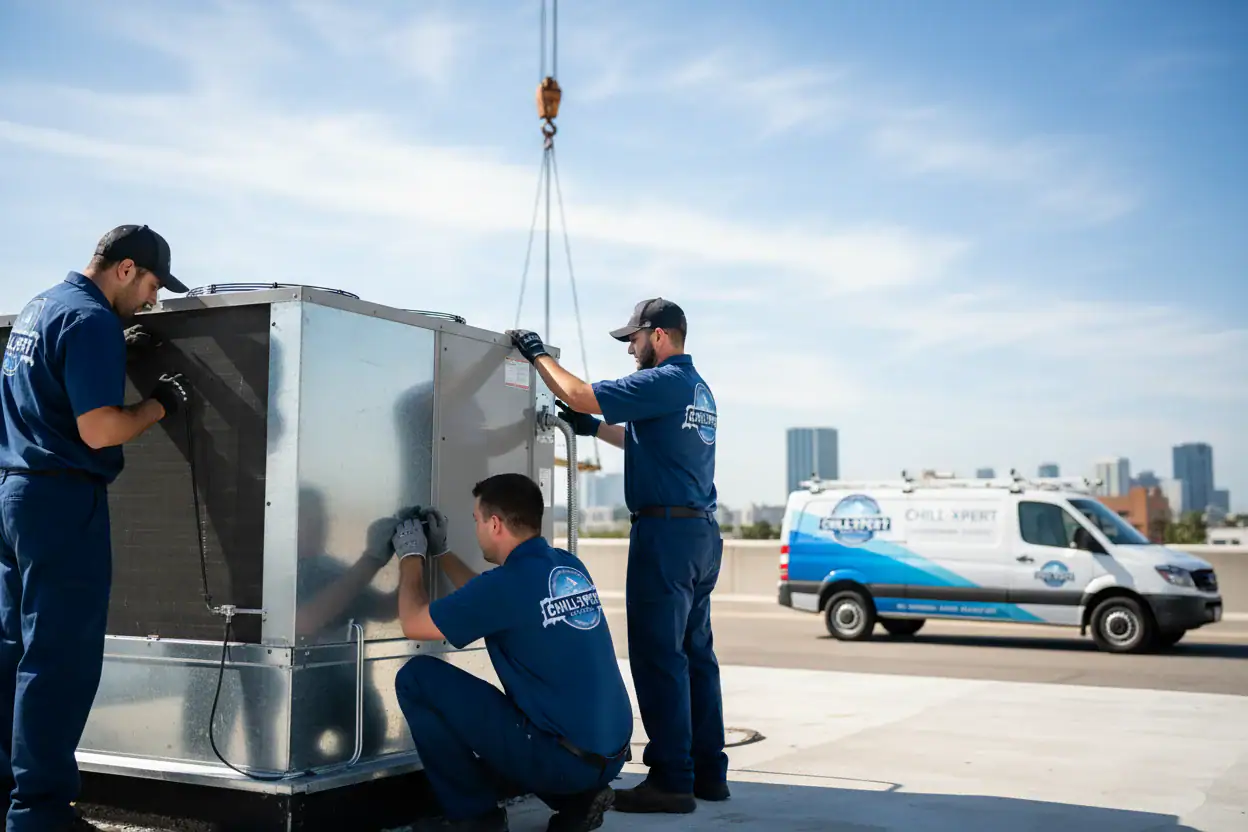
HVAC and furnace replacement cost drops significantly when you replace both heating and cooling systems together rather than separately. The labor to install a furnace overlaps substantially with AC installation since both connect to the same ductwork, share the indoor air handler in many configurations, and require similar electrical and permit work.
Replacing both systems at once typically costs $5,000-$15,000 total, with most Nassau County homeowners paying $8,000-$12,000. Replacing them separately might total $12,000-$18,000 once you factor in duplicate labor charges, two separate permit fees, and the inefficiency of having contractors work on your system twice.
Beyond cost savings, simultaneous replacement ensures your heating and cooling systems are properly matched. Modern high-efficiency AC systems work best with compatible furnaces or air handlers that can handle variable-speed airflow. Pairing a new 18 SEER2 AC with a 15-year-old furnace creates performance mismatches that reduce efficiency and void manufacturer warranties in many cases.
The shared blower motor and ductwork mean both systems affect each other’s performance. An old furnace with a single-speed blower can’t properly support a new variable-speed AC that needs precise airflow control. You end up paying for high-efficiency cooling but getting mid-grade performance because half your system is outdated.
Timing matters too. If your AC is 14 years old and failing while your furnace is 12 years old and still functional, replacing both now prevents the scenario where you pay full installation labor twice within a 3-year span. HVAC systems installed at the same time typically fail around the same time. Addressing both together makes financial sense even if one component still has a few years of life remaining.
We often discount bundled installations by $500-$2,000 because we’re completing all work in one visit rather than mobilizing crews, pulling permits, and inspecting twice. You save on labor, permits, and the hassle of coordinating two separate projects. Just make sure the quote clearly breaks down equipment and labor costs for each component so you can verify you’re actually getting a bundle discount rather than paying full price for both.
Several factors push HVAC furnace replacement cost above baseline estimates, and knowing them helps you budget accurately rather than facing surprise charges mid-project.
Ductwork condition matters more than most homeowners realize. Nassau County’s coastal humidity accelerates duct deterioration, particularly for flexible ducts in unconditioned attics and crawl spaces. Ducts that might last 12-15 years in drier climates often need replacement after 8-10 years on Long Island. Leaky, torn, or undersized ductwork reduces system efficiency by 20-30%, making duct sealing or replacement a necessary part of many installations. Duct modifications cost $500-$2,500 for a typical home, with complete replacement reaching $3,500-$5,000.
Electrical system upgrades catch homeowners off guard frequently. Homes built before 1990 often have 100-amp electrical panels that can’t safely support modern high-efficiency HVAC systems drawing 30-50 amps at startup. Upgrading to a 200-amp panel costs $2,000-$4,500 in Nassau County, including the panel itself, rewiring, permit fees, and utility coordination. This isn’t optional when your existing electrical service can’t handle the load.
Structural access issues add labor hours and cost. Tight attic spaces, crawlspaces with limited clearance, or equipment located in finished areas that require cutting and patching drywall increase installation time. What takes 6-8 hours in a home with easy access can take 12-14 hours in a challenging layout. At $100-$250 per hour for skilled HVAC labor in Nassau County, access difficulty can add $1,000-$2,000 to your final bill.
Refrigerant regulations affect costs too. Older systems using R-22 refrigerant (phased out in 2020) can’t be recharged affordably anymore. New systems use R-410A or the newer R-454B refrigerant. The transition requires new refrigerant lines in many cases, adding $300-$800 to installation costs. Proper refrigerant handling and disposal must follow EPA regulations, with certified technicians required to perform the work legally.
Permit requirements vary by project scope. A simple equipment swap might need only a basic mechanical permit costing $100-$150. A project involving ductwork modifications, electrical upgrades, and gas line work can require multiple permits totaling $300-$500. Some contractors include permits in their quotes. Others charge them separately. Always ask which approach your estimate uses to avoid a $400 surprise on installation day.
Thermostat compatibility creates additional costs when your existing thermostat can’t communicate with your new system. Basic programmable thermostats cost $150-$250 installed. Smart thermostats with Wi-Fi connectivity, learning algorithms, and remote control run $250-$500. While not required, a quality thermostat improves comfort and efficiency enough to justify the upgrade in most cases.
When we walk through your home, inspect your ductwork, check your electrical panel capacity, and ask about access issues before quoting, we’re not being thorough for fun. We’re identifying the real costs your project will incur so you can budget appropriately rather than discovering them halfway through installation.
The average HVAC replacement cost in Nassau County ranges from $7,500 to $22,000 in 2026, but where you land in that range depends on system size, efficiency ratings, installation complexity, and whether your contractor includes everything your project actually needs upfront.
Proper sizing through Manual J load calculations prevents the energy waste and premature failure that plague oversized and undersized systems. Transparent quotes itemizing equipment, labor, permits, ductwork, and electrical work protect you from surprise charges that inflate final bills by thousands. Understanding when bundled furnace and AC replacement saves money versus replacing components separately helps you time your investment wisely.
The lowest quote isn’t always the best value when it excludes half the work. The highest quote isn’t necessarily premium service when it includes proper engineering and comprehensive scope. What matters is working with contractors who size systems correctly, quote honestly, and deliver installations that perform efficiently for their full 15-20 year lifespan. For Nassau County homeowners ready to move forward with transparent pricing and proper system design, we provide the expertise and honest communication that turns a major home investment into long-term comfort and reliability.
Article details:
Share:
Continue learning: