When your cooler goes down, the last thing you need is the wrong contractor. Here's what to look for — and what to avoid — before you make that call.
Share:
Summary:
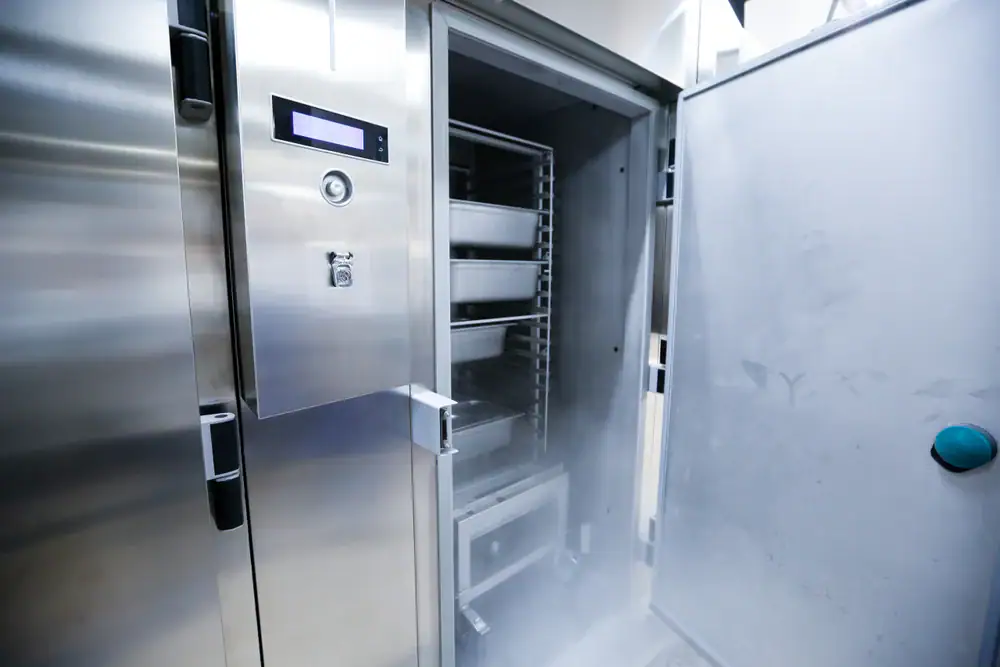
Your walk-in cooler doesn’t care that it’s Saturday night and you’re fully booked. It doesn’t care that you’ve got a catering event tomorrow or that the health inspector is due next week. When something goes wrong, it goes wrong on its own schedule — and who you call in that moment matters more than most restaurant operators realize until they’ve already made a costly mistake.
This isn’t a pitch. It’s a practical guide for Nassau County restaurant owners and managers who want to know what good refrigeration repair actually looks like — what credentials to ask about, what red flags to watch for, and why the contractor you used for your HVAC might not be the right call for your cooler.
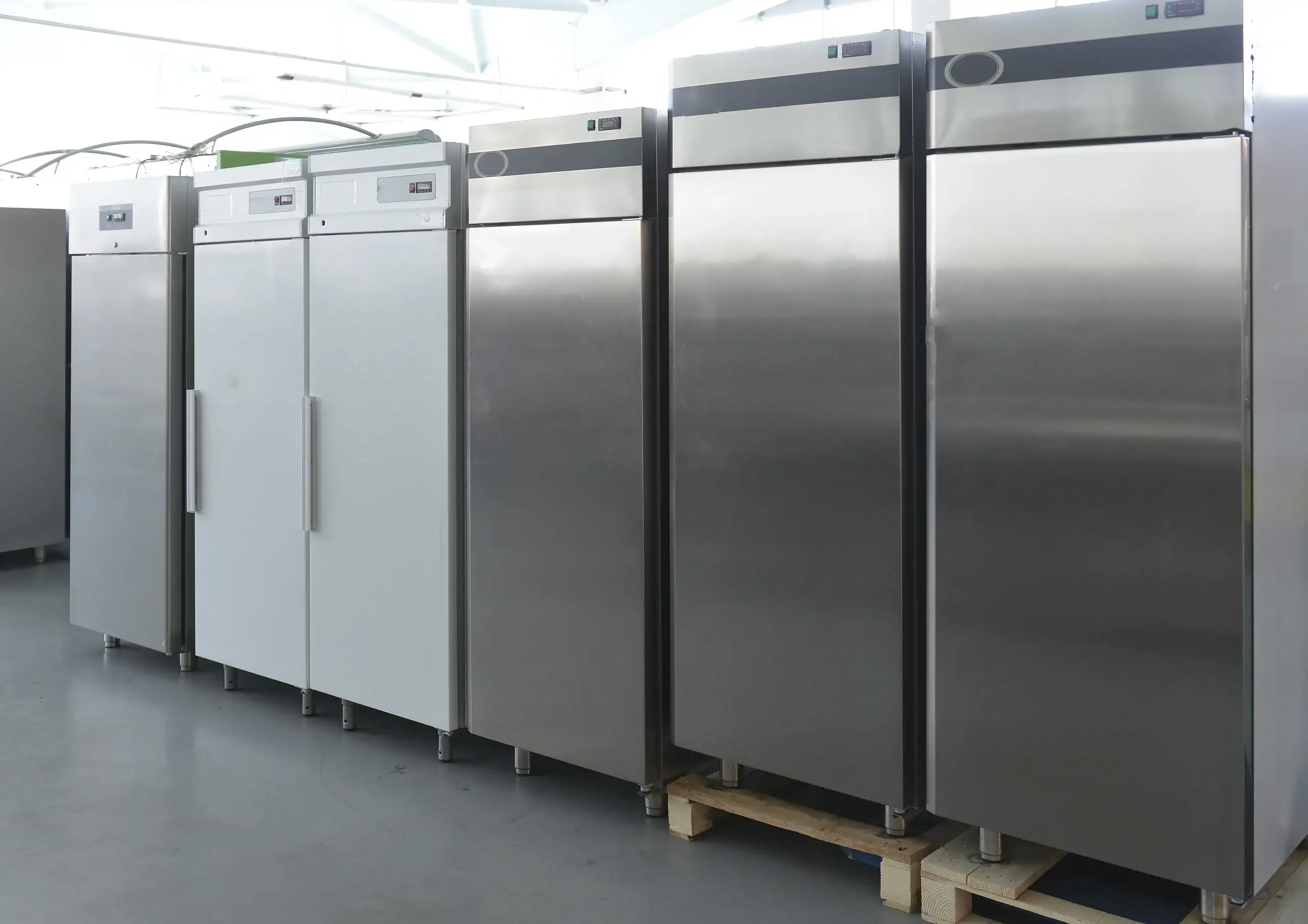
Most restaurant operators think of refrigeration as “the walk-in” and maybe “the reach-ins.” But a typical food service operation in Nassau County is running far more than that.
Walk-in coolers and freezers, prep table coolers, under-counter units, display cases, bar coolers, ice machines, wine coolers — and if you’re serving draft beer, a glycol-based beer system on top of it all. That’s potentially six to ten separate refrigeration systems, each with different failure modes, different maintenance needs, and different consequences when something breaks.
Understanding the full scope of what you’re running matters because not every contractor is equipped to service all of it. A technician who knows walk-in coolers inside and out may have never touched a glycol beer system. Someone comfortable with reach-in units may not have the diagnostic tools for a blast chiller. The breadth of your equipment should be one of the first things you consider when evaluating who to call.
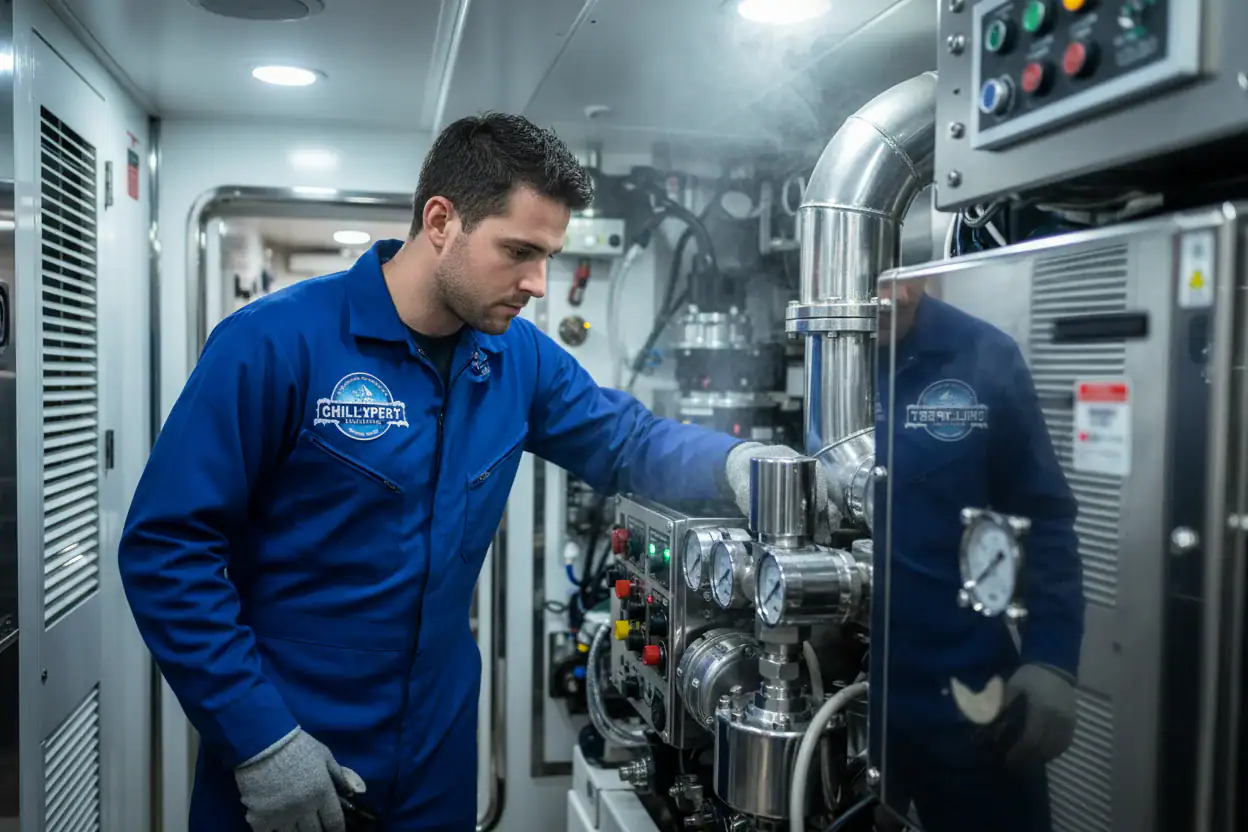
This is probably the most common mistake we see in the Nassau County restaurant market. An operator has a relationship with an HVAC company — they service the rooftop units, they show up when called — so when the walk-in cooler starts struggling, that’s the number that gets dialed. It makes sense on the surface. But commercial refrigeration and commercial HVAC are not the same discipline, and the gap between them is wider than most people expect.
General HVAC contractors are trained for air handling, ductwork, heating systems, and comfort cooling. Commercial refrigeration — especially the kind running in a restaurant — involves entirely different pressures, refrigerant types, temperature tolerances, and regulatory requirements. Walk-in freezers, prep line coolers, and display cases operate in ranges that require specific diagnostic tools and a working knowledge of food safety temperature standards that most HVAC technicians simply don’t have.
There’s also the legal side. Anyone who maintains, services, or repairs equipment containing regulated refrigerants is required by federal law to hold EPA Section 608 certification. This isn’t a nice credential to have on a wall — it’s the federally mandated baseline under the Clean Air Act, and it exists in four levels, with Universal Certification being the highest. A contractor who can’t confirm their technicians hold this credential should not be handling your refrigeration equipment, full stop.
Beyond credentials, there’s the practical reality of what happens when you send the wrong person to diagnose a problem they’re not trained for. You get guesswork. You get parts ordered on a hunch. You get a repair that addresses the symptom but not the cause — and three weeks later, you’re dealing with the same failure again, except now it’s happening during your busiest service of the week.
The distinction between a generalist and a specialist isn’t about snobbery. It’s about whether the person standing in front of your equipment has actually spent years working on systems like yours, or whether yours is just the next job on a mixed schedule.
Nassau County’s geography creates refrigeration challenges that don’t exist in most inland markets, and they’re worth understanding if you want to get ahead of failures rather than just react to them.
The county sits between the Atlantic Ocean to the south and Long Island Sound to the north. That means ambient humidity is consistently higher here than in most of the country, and salt air is a real factor — especially for restaurants in waterfront communities like Long Beach, Freeport, Oyster Bay, and Port Washington. High humidity forces refrigeration systems to work harder to maintain target temperatures, which puts extra strain on compressors over time. Salt air accelerates corrosion on condenser coils, refrigerant lines, and electrical connections — often in ways that aren’t visible until something fails.
Summer compounds all of this. Nassau County summers bring sustained heat and humidity for weeks at a time, and that’s exactly when restaurant refrigeration systems are running at maximum load. The combination of peak ambient temperatures, high humidity, and peak operational demand is when compressor failures, refrigerant leaks, and condenser coil failures are most common. It’s also when your restaurant is at peak revenue, which means every hour of downtime carries the highest possible cost.
Winter creates a different set of stressors. Freeze-thaw cycles stress walk-in cooler door gaskets and drainage systems. Outdoor condensing units take a beating through temperature swings. Restaurants that skip winter maintenance often find themselves dealing with spring failures that were entirely preventable.
A contractor who works primarily on office building HVAC systems won’t have the same familiarity with how coastal conditions affect commercial refrigeration equipment. It’s a specific knowledge set — one that comes from years of working in this environment, not just from being licensed.
Want live answers?
Connect with a Chill Xpert Solutions expert for fast, friendly support.
When your walk-in cooler goes down, the pressure to call someone — anyone — is real. But taking sixty seconds to ask the right questions before you commit can save you from a multi-day repair ordeal, an unexpected invoice, or a technician who’s clearly out of their depth.
The questions aren’t complicated. Do your technicians hold EPA Section 608 certification? Do you carry parts on your truck, or will you need to order them? Can you give me a written estimate before you start? Do you work on restaurants specifically, or is this more of a general service call for you?
The answers will tell you a lot — and a contractor who hesitates on any of them is worth a second look before you say yes.
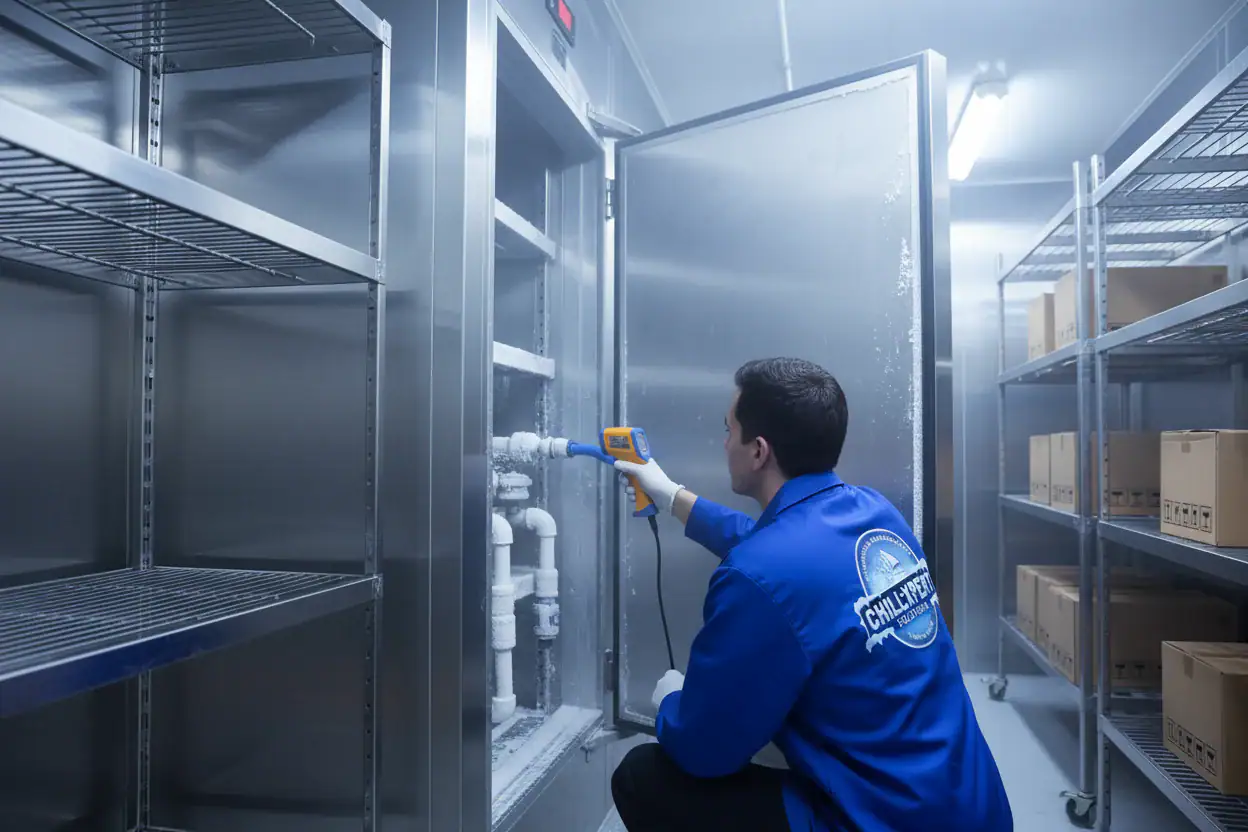
One of the most frustrating experiences in commercial refrigeration repair — and one of the most common — is the two-visit repair. A technician comes out, diagnoses the problem, and then tells you the part needs to be ordered. You’re now waiting two, three, sometimes more days for a component to arrive while your cooler is still down, your inventory is at risk, and your operation is working around the failure.
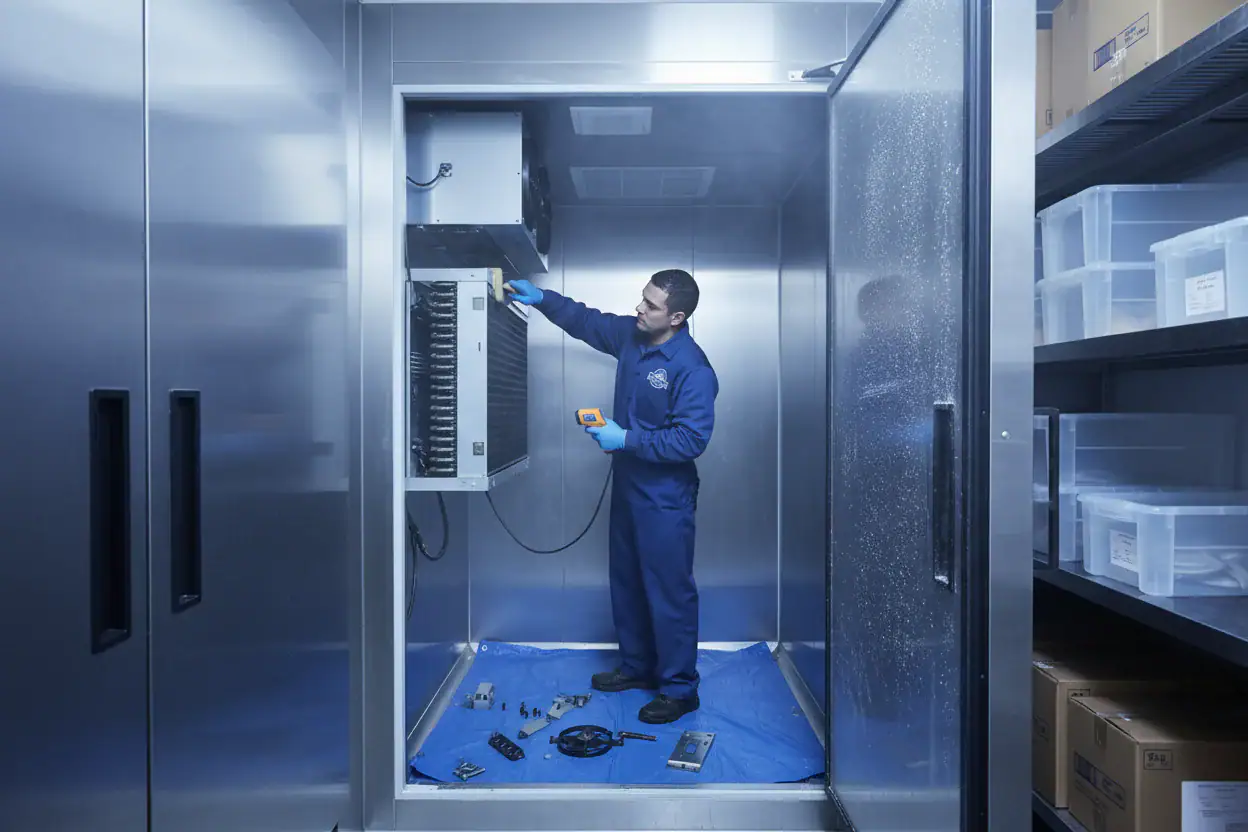
This isn’t inevitable. It’s a function of how a contractor runs their business. A technician who stocks their truck with a broad inventory of genuine parts for the most common commercial refrigeration failures can resolve the majority of issues on the first visit. That’s not luck — it’s preparation, and it requires a real commitment to keeping inventory on hand rather than ordering reactively.
For Nassau County restaurant operators, this matters in a specific way. When a walk-in cooler fails on a busy Friday night along Rockville Centre’s restaurant corridor, or during a weekend catering event in Garden City, or in the middle of a summer dinner rush in Freeport, the difference between a same-day fix and a part-on-order situation is enormous. The cost of spoiled inventory alone can run into thousands of dollars, and that’s before you factor in the operational disruption and the customers who don’t get to sit down.
We carry a deep inventory of genuine parts on every service truck specifically because we’ve seen what the alternative looks like. When we arrive, the goal is to leave with the problem solved — not to diagnose and reschedule.
There’s also a quality dimension to parts. Aftermarket components may fit, but they don’t always perform to the same standard as OEM parts, and they can shorten the life of the equipment around them. Genuine parts matter for the longevity of your investment, not just for the immediate repair.
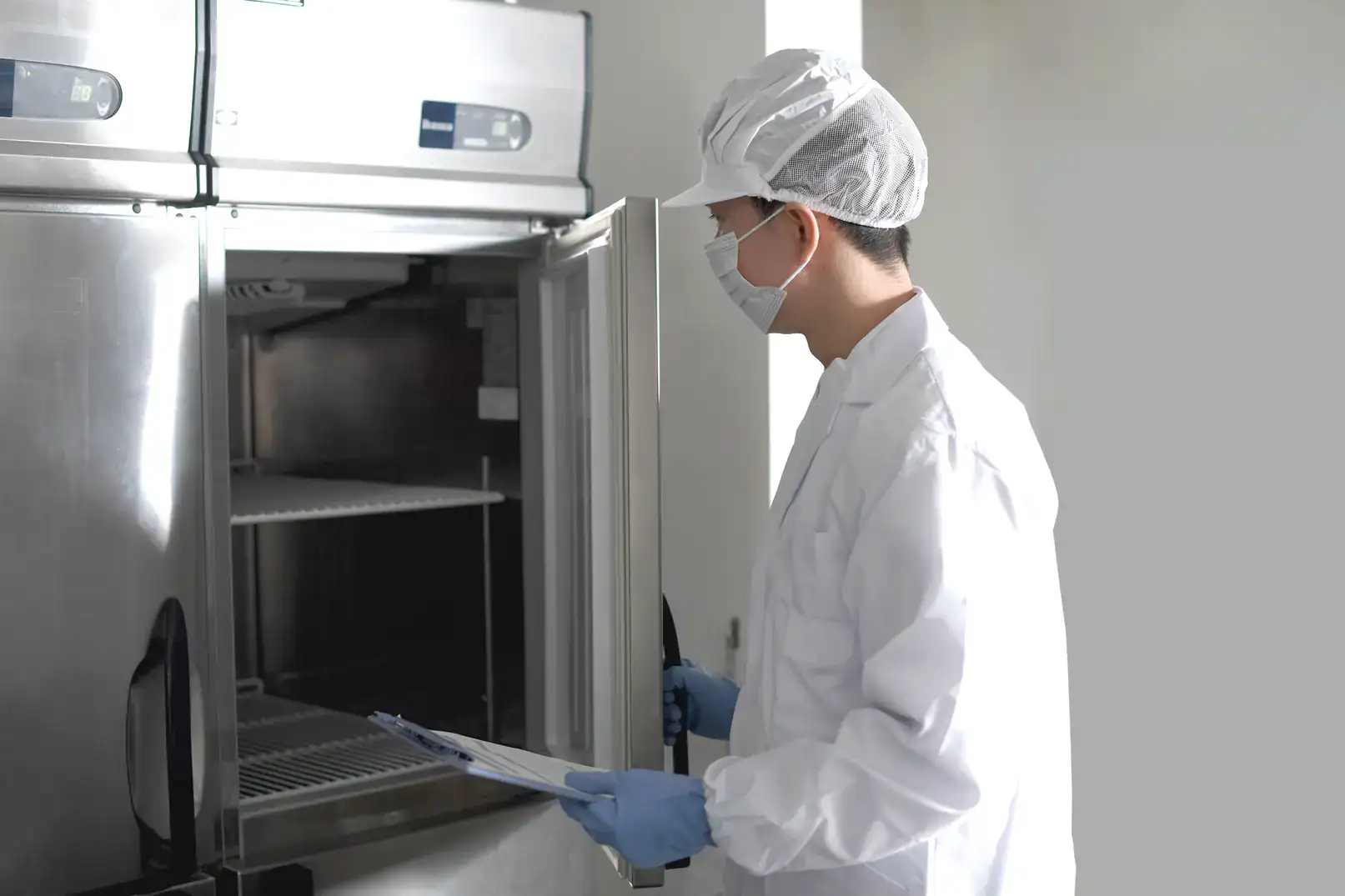
Nassau County restaurants operate under oversight from both the New York State Department of Health and the Nassau County Department of Health. Health inspectors check cold-holding temperatures as a standard part of every inspection, and a refrigeration unit that can’t reliably maintain consistent temperatures isn’t just a mechanical problem — it’s a compliance problem.
If food temperatures exceed safe limits for long enough, health codes may require disposal of the affected inventory. That’s a costly but non-negotiable outcome, and it’s one that a refrigeration failure can trigger without warning. Operators who have experienced a mid-inspection cooler failure know how quickly the situation can escalate — and how much it costs when it does.
This is one of the reasons why who you hire for commercial cooler repair matters beyond just getting the temperature back down. A contractor who understands food safety temperature requirements — not just the mechanical side of refrigeration — is in a fundamentally different position to help you. They can assess whether your equipment is holding correctly, flag developing issues before they become failures, and give you documentation of the service work that demonstrates due diligence to an inspector.
The generalist who services your office HVAC is unlikely to have this context. They can fix a broken component, but they may not recognize that the system is running marginally — technically cold, but not reliably cold — in a way that creates compliance risk over time.
We’ve worked with restaurants, delis, and catering halls across Nassau County long enough to understand what the health department looks for and what “compliant” actually means in practice. That’s not something you learn from a textbook — it comes from years of working specifically in food service environments, understanding the stakes, and knowing the difference between a system that’s running and a system that’s running right.
It’s also worth noting that the beer systems and draft cooling setups common in Nassau County bars and restaurants add another layer of complexity. These glycol-based systems require specific knowledge to service correctly, and most general refrigeration contractors either decline the work or approach it without the right background. If your operation includes a draft system, that’s a specific capability worth asking about before you commit to a contractor.
The short version: not every contractor who answers the phone is equipped to handle what’s running in your kitchen. The right one holds EPA Section 608 certification, carries parts, works specifically in commercial food service, understands the coastal conditions that affect equipment on Long Island, and will give you a clear estimate before touching anything.
Those aren’t high standards — they’re the baseline. And they’re worth verifying before you’re standing in a failing cooler at 10 PM trying to figure out who to trust.
If you’re in Nassau County and want to talk through what you’re running, what’s been giving you trouble, or what a proper service relationship actually looks like, reach out to Chill Xpert Solutions. We’ve been doing this for over 40 years, and we’re not hard to get ahold of.
Article details:
Share:
Continue learning: