Most homeowners don't know what a proper duct repair visit is supposed to include. This guide lays it out clearly, so you're never left guessing.
Share:
Summary:
You’ve noticed it — one room that never cools down no matter what you set the thermostat to, energy bills that keep climbing without explanation, or a layer of dust that reappears days after you clean. These are frustrating problems, and they’re easy to misdiagnose. A lot of homeowners replace thermostats, upgrade filters, or even swap out their AC unit entirely before anyone thinks to look at the ductwork.
This guide is here to change that. We’ll walk you through what AC duct repair actually covers, what a complete service visit should look like, and how to make sure you’re getting the full job done — not just a patch that buys you a few months.
This is the question most homeowners never think to ask — until they’ve already paid for a service visit that didn’t solve the problem. Duct repair is not a single task. It’s a diagnostic and repair process that should cover the full condition of your ductwork, from the connections at the air handler to the supply and return vents in each room.
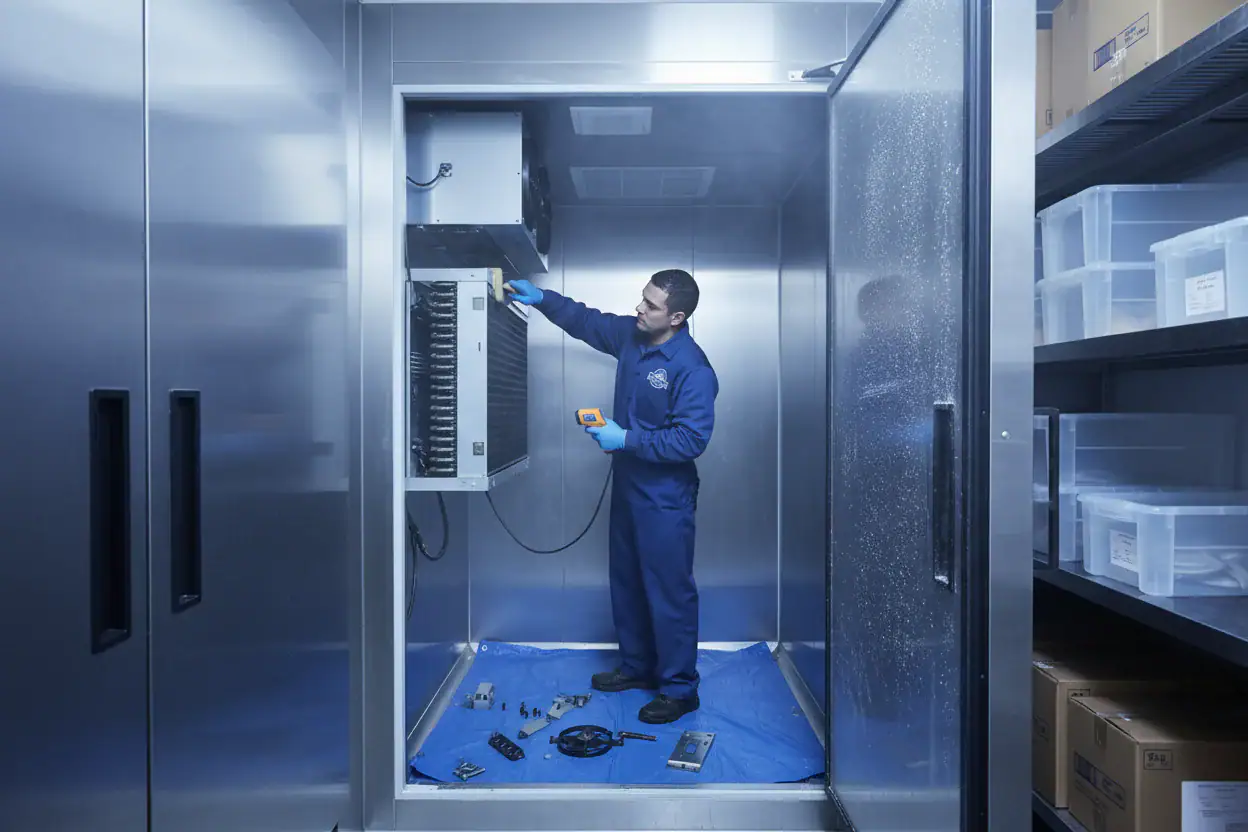
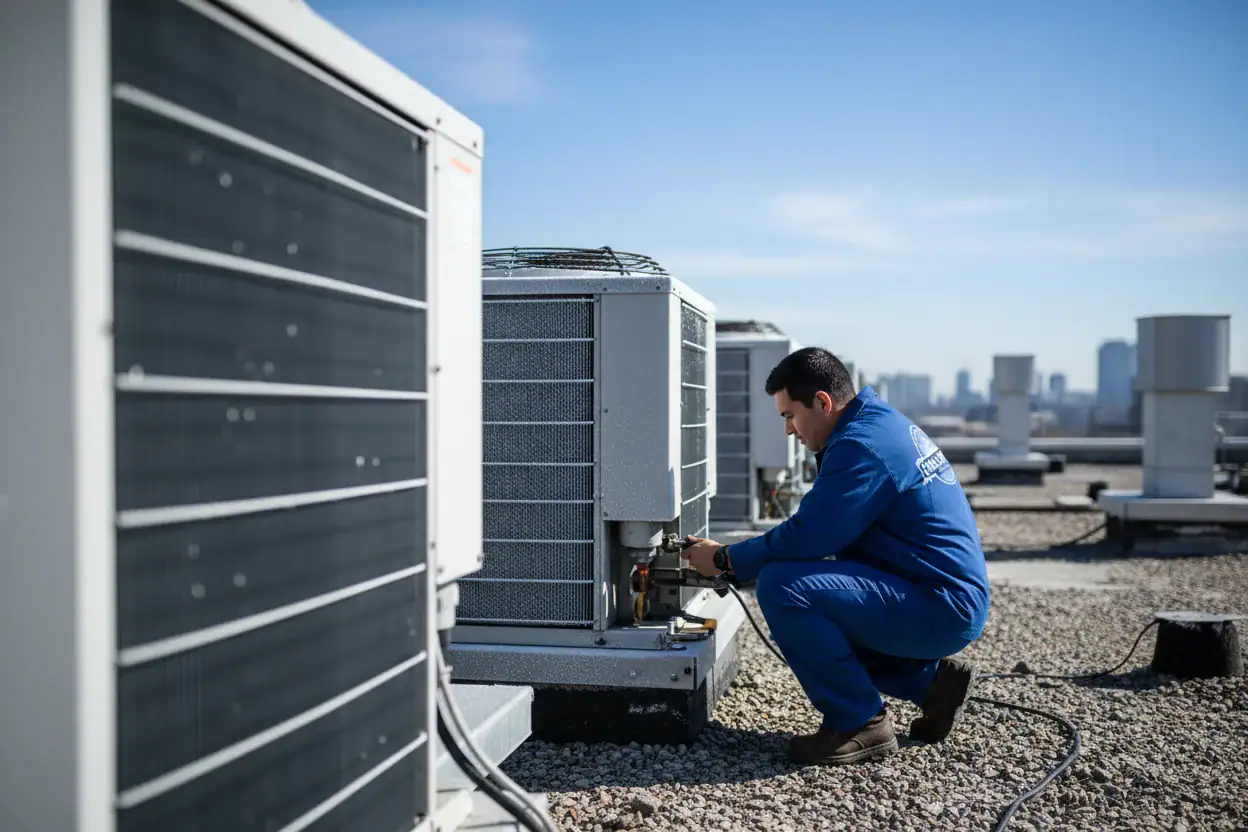
A complete service visit should begin with an assessment — not just a visual walk-through, but an actual evaluation of where air is escaping, where insulation has failed, and whether any sections are disconnected, crushed, or corroded. From there, the repair scope depends on what’s found. That might mean sealing joints with mastic or foil-backed metal tape, replacing a deteriorated section of flex duct, re-securing a disconnected run, or insulating duct that passes through an unconditioned space like an attic or crawl space.
What it should not be is a technician patching one obvious spot and calling it done. That’s the most common failure mode in this industry, and it’s exactly why so many homeowners end up scheduling a second visit for the same problem.
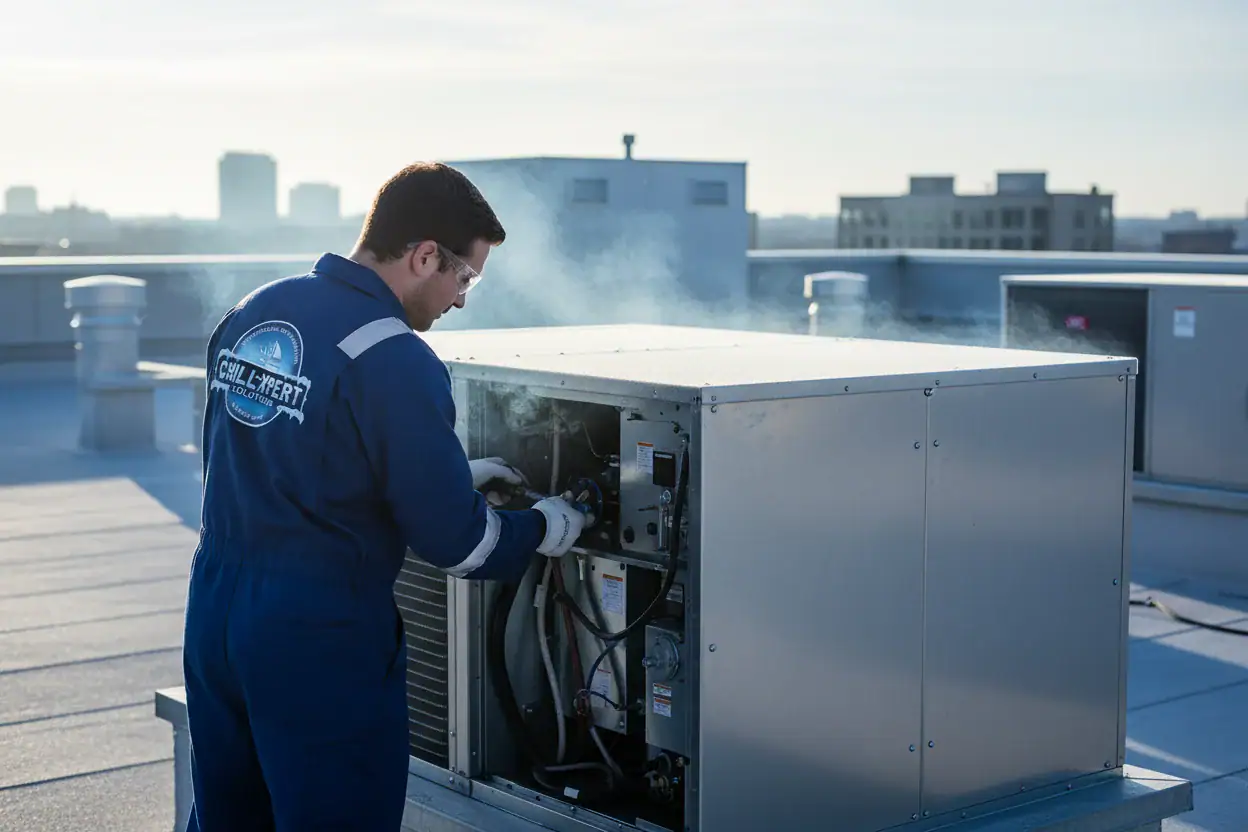
One of the most common misdiagnoses in residential HVAC is treating a duct problem as a central air unit problem. A homeowner notices uneven cooling, calls for a central air repair, and the technician checks refrigerant levels, inspects the coil, and finds nothing obviously wrong with the equipment. The unit gets a clean bill of health. The problem persists.
What often goes unchecked in that scenario is the duct system carrying the conditioned air from the unit to each room. If a supply duct has a gap at a joint, or a section of flex duct has collapsed in the attic, or a return duct is pulling in unconditioned air from a wall cavity — the central air unit can be in perfect working condition and still fail to cool your home effectively. The equipment isn’t the bottleneck. The delivery system is.
This matters especially across Nassau County, where a significant portion of the housing stock dates back to the postwar suburban boom of the late 1940s through the 1960s. Homes built during that era in communities like Hempstead, Elmont, and Merrick often have ductwork that is original or has been patched multiple times over the decades. Sheet metal ducts from that period can develop rust, loose joints, and pinhole leaks that don’t announce themselves dramatically — they just quietly bleed conditioned air into wall cavities and attic spaces year after year.
The diagnostic step is what separates a thorough central air repair from a surface-level checkup. A proper evaluation of the duct system — not just the mechanical components — is the only way to know whether the ducts are contributing to the problem. When we respond to a service call, that assessment is part of the process, not an add-on.
It’s also worth understanding that leaky ducts create a secondary problem beyond comfort. When return ducts leak, they pull in unconditioned, unfiltered air from wherever they run. That air often carries dust, insulation particles, and humidity — which then gets pushed through your system, coats your evaporator coil, and accelerates wear on the equipment. So a duct problem that starts as a comfort issue can quietly become an equipment problem if it goes unaddressed long enough.
There’s a tendency to think about duct repair as a summer concern — you notice the problem when the AC is running and the house isn’t cooling down. But your ductwork carries heated air just as much as cooled air, and the same leaks that waste conditioned air in July are wasting heated air in January.
This is worth understanding if you’re scheduling heat and air repair in the fall or winter and the technician focuses only on the heating equipment. Duct leaks in runs that pass through unconditioned attic or crawl space are losing heat the same way they lose cool air — the air escapes before it reaches the room. The result is a heating system that runs longer cycles, uses more energy, and still leaves certain rooms cold. The U.S. Department of Energy is direct about this: supply duct leaks force conditioned air out through unsealed joints, while return duct leaks pull in unconditioned air. That’s a two-sided efficiency problem that affects both seasons equally.
For Nassau County homeowners, this has a specific financial dimension. With median home values well above $700,000, the carrying costs of maintaining a home here are already significant. Duct leaks that quietly add to your monthly energy bills — both in summer and winter — are a drain that compounds over time. Research suggests leaky ductwork can cost homeowners $200 or more per year in wasted energy, and that’s a conservative estimate for a home where the AC and heating systems are working hard against a Long Island climate that swings from humid 90-degree summers to cold, wet winters.
The practical takeaway is simple: if you’re scheduling any heat and air repair and duct performance hasn’t been assessed recently, it’s worth asking for that evaluation to be included. A system that moves air efficiently in both directions is doing its job. One that leaks is costing you money in every season.
Want live answers?
Connect with a Chill Xpert Solutions expert for fast, friendly support.
After forty-plus years of working on HVAC systems across Nassau County — from older homes in Hempstead and Elmont to high-value properties along the Gold Coast in Kensington and Old Brookville — we’ve heard most of the questions homeowners have before they commit to a duct repair service. A few of them come up more than others, and they’re worth answering clearly.
The most common one isn’t really a question. It’s a hesitation: “I don’t want to pay for a repair and then find out I need a full replacement anyway.” That’s a reasonable concern, and it’s one a proper diagnostic visit is designed to answer before any work begins.
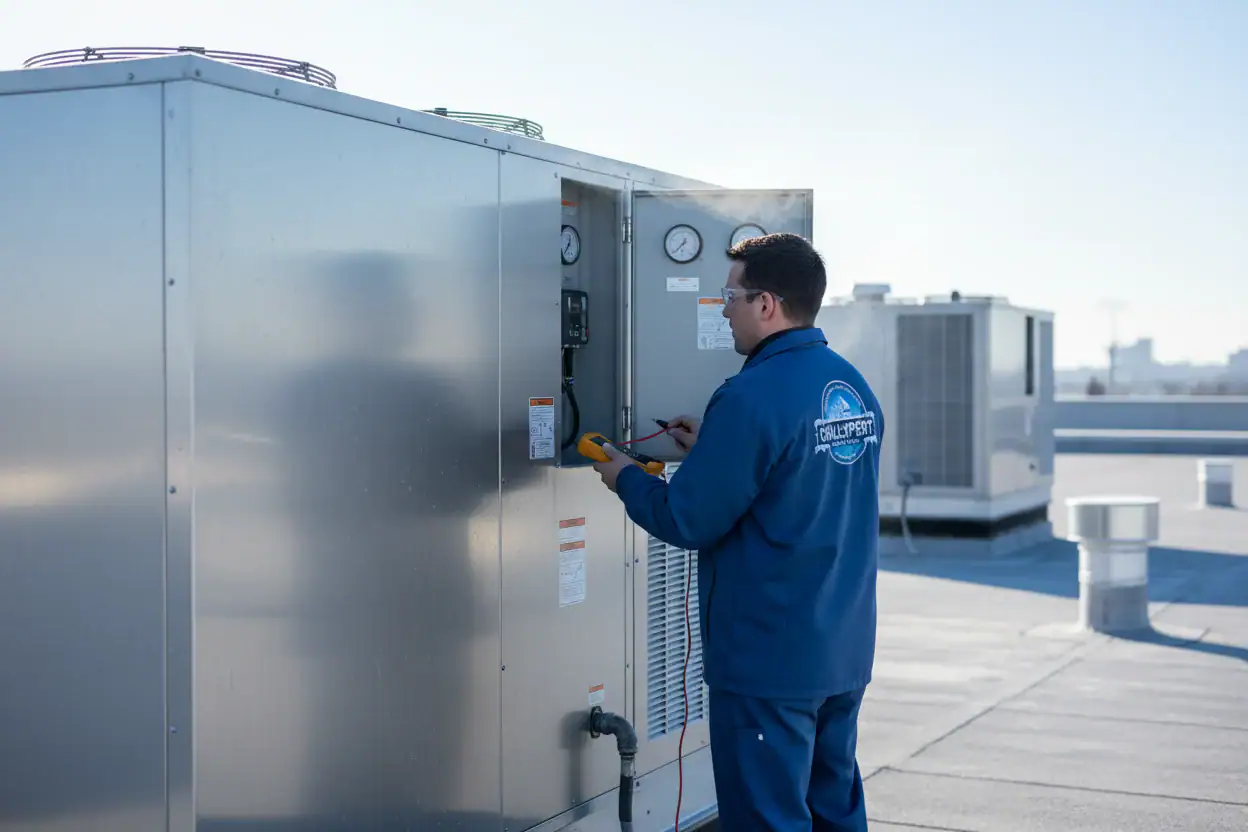
This is the decision that creates the most uncertainty for homeowners, and it’s the one that gets glossed over most often in the industry. The honest answer is: it depends on the condition and age of your existing ductwork, where the damage is located, and how extensive the problems are.
Repair is typically the right call when damage is isolated — a disconnected joint here, a section of deteriorated flex duct there, a few gaps at connections that can be sealed properly. If the overall system is structurally sound and the issues are addressable without tearing into walls or ceilings, targeted repair is almost always more cost-effective than replacement.
Replacement makes more sense when the ductwork is severely deteriorated throughout, when flex duct installed in the 1970s or 1980s has reached the end of its service life, or when the system was never properly designed in the first place. Ductwork that was sized incorrectly from the start — without proper load calculations — will continue to underperform no matter how well it’s repaired.
In Nassau County, the age of the housing stock makes this question particularly relevant. A home built in 1955 in Merrick or Oceanside, NY may have ductwork that has been patched by three or four different contractors over the decades. At some point, the patchwork itself becomes the problem. A thorough diagnostic visit should give you a clear picture of which category your system falls into — and a straight answer about whether repair or replacement is the more sensible path.
One thing worth knowing: quality duct sealing done with the right materials lasts ten to fifteen years or more. If a contractor is recommending replacement on a system that could be effectively sealed and repaired, it’s worth getting a second opinion. Conversely, if a contractor is recommending repair on a system that’s genuinely at end of life, you’re likely paying for a short-term fix on a long-term problem.
This is a question that comes up frequently, especially for homeowners who weren’t expecting to deal with a duct issue and are hoping their coverage will absorb some of the cost. The short answer is: sometimes, depending on the cause and the policy.
Homeowners insurance generally covers duct damage when it results from a sudden, accidental event — a fire, a burst pipe, storm damage, or something similar that damages the ductwork as part of a broader covered loss. What it typically does not cover is gradual deterioration, wear and tear, or damage that developed over time. If your ducts have been slowly corroding or separating at joints over the past decade, that’s usually outside the scope of a standard homeowners policy.
Home warranties are a different story. Many home warranty plans include ductwork as part of the HVAC system coverage, which means repair or replacement of covered duct components may be eligible for a claim. The specifics vary by plan and provider, so it’s worth reviewing your warranty documentation before scheduling a service visit — or calling your warranty company to ask directly whether duct repair is a covered item.
For Nassau County homeowners in coastal communities like Oceanside, Long Beach, or Bayville, NY, there’s an additional factor worth knowing. Salt air accelerates corrosion in metal ductwork. A system that might last thirty years in an inland market can develop rust and joint failures faster in a home a few blocks from the water. That kind of damage is typically classified as gradual deterioration rather than sudden damage, which means it usually falls outside insurance coverage — but it’s still a real and common problem that needs to be addressed.
If you’re unsure about your coverage situation, the best approach is to get a diagnostic assessment first, understand exactly what needs to be repaired and why, and then contact your insurance or warranty provider with that information in hand. Going in with a clear scope of work makes the conversation much more straightforward.
The through-line of everything above is pretty simple: a duct repair visit should leave you with a complete picture of your system and a complete fix — not a patch that sends you back to square one in two months. Knowing what the service should include, understanding the repair-versus-replace question, and having clarity on what your coverage does and doesn’t apply to puts you in a much better position before anyone shows up at your door.
We’ve been working on HVAC systems across Nassau County since the 1980s. We respond in under two hours, we carry parts so roughly 70% of service calls get resolved on the spot, and we’ll give you a straight assessment of what your system actually needs before any work begins. No pressure, no guesswork, no return trips for something that should have been handled the first time.
If your AC isn’t keeping up and you’re not sure whether the ducts are part of the problem, reach out to Chill Xpert Solutions for a free estimate. We’ll tell you exactly what we find.
Article details:
Share:
Continue learning: