Trying to decide between a refrigeration service contract and on-demand repairs? Here's what the math actually looks like — before something breaks.
Share:
Summary:
If you’re running a restaurant, deli, or catering hall in Nassau County, NY, you already know that refrigeration isn’t something you think about until it stops working. And when it does stop — usually on a Friday night, usually in July — the decision you made months ago about how to handle service is suddenly the most expensive decision you’ve made all year.
This isn’t a sales pitch for service contracts. It’s a straightforward look at both options, what they actually cost, what can go wrong with each, and how to protect yourself either way. By the end, you’ll have a clearer picture of which approach makes sense for your operation.
On-demand service is exactly what it sounds like — you call when something breaks, a technician comes out, they fix it, and you pay for the visit. No ongoing commitment, no monthly fee. For some business owners, that feels like the financially responsible choice. You’re only paying when you need it.
The problem is that “when you need it” almost always means the worst possible moment. Emergency refrigeration calls don’t come at standard rates. Once you factor in after-hours dispatch fees, overtime labor premiums, and expedited parts costs, that single emergency visit can run two to three times what a planned service call would have cost.
A major repair — compressor failure, refrigerant leak, condenser burnout — commonly runs anywhere from $1,200 to over $4,000, and that’s before the cost of whatever inventory you lost while waiting for a technician to arrive.
A service contract flips that equation. Instead of reacting to failures, you’re catching problems before they become expensive ones.
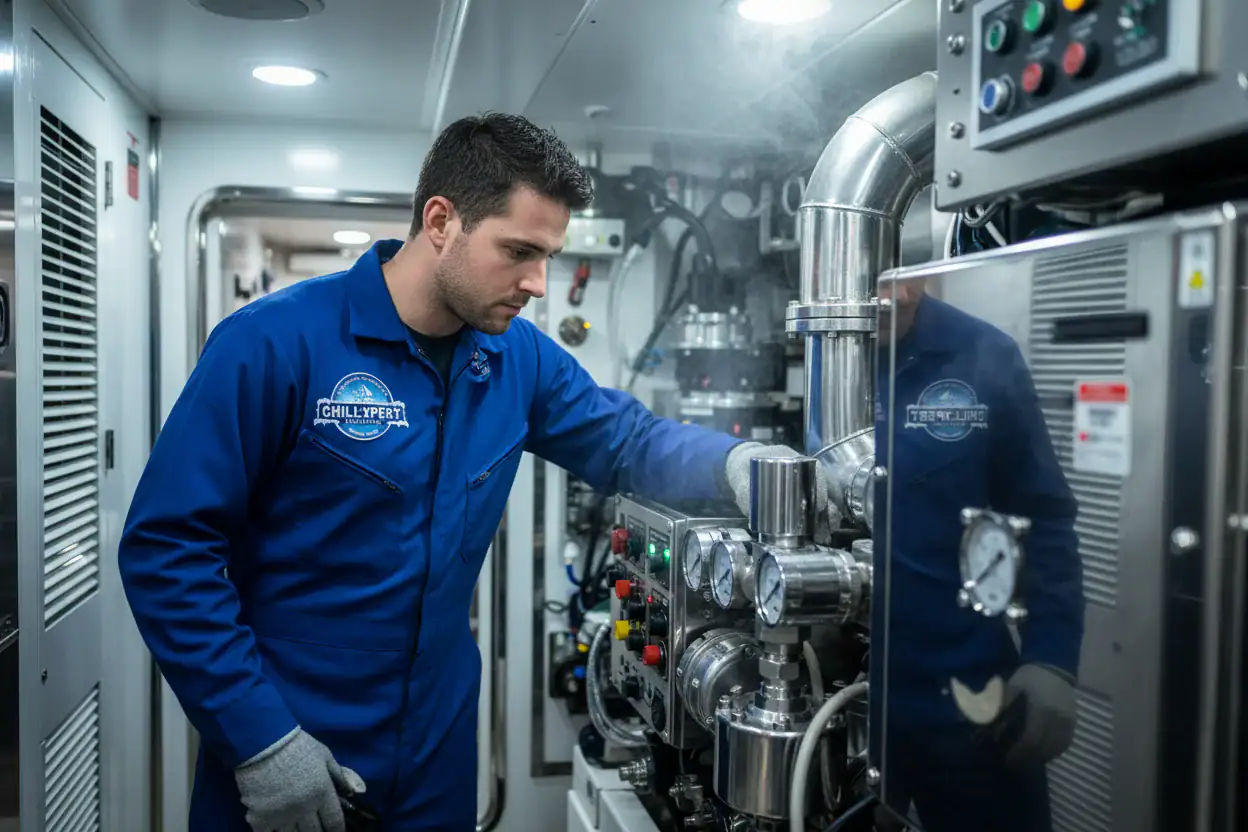
Here’s where a lot of Nassau County business owners get burned, and it’s worth being direct about it: there are no industry-wide standards for what a service contract must include. A contract is only as good as the company behind it, and plenty of companies use vague language to collect fees while delivering minimal service.
Before you sign anything, understand the three basic types of agreements that exist in commercial refrigeration service.
The first is a preventive maintenance agreement. This covers scheduled visits — typically quarterly for most food service operations — where a technician inspects the system, cleans condenser coils, checks refrigerant levels, tests electrical connections, and replaces worn components before they fail. It does not cover repairs. If something breaks between visits, you’re calling for service at standard rates. This is the most affordable tier and the most commonly misunderstood one.
The second type is a full labor agreement. This covers all labor costs for repairs in addition to preventive maintenance visits. You still pay for parts, but you’re not getting hit with hourly labor charges every time something needs fixing. For businesses with aging equipment that requires more frequent attention, this middle tier often makes financial sense.
The third type is full coverage — parts, labor, emergency service, and preventive maintenance all included. It’s the most expensive tier, but it’s also the one that gives you true budget predictability. When a compressor goes out at 10 p.m. on a Saturday before a catering event, you’re not doing math in your head about whether to call.
The tier you need depends on your equipment age, your volume, and your risk tolerance. What matters most is that you know exactly which tier you’re buying — and that the contract spells it out clearly, including what’s excluded, what the emergency response commitment is, and what happens if the provider doesn’t deliver.
The on-demand model feels cheaper because you’re not writing a check every month. But the total cost of ownership tells a different story — and it’s one that most Nassau County business owners don’t calculate until they’ve already been through a bad season.
Start with the emergency premium. After-hours and emergency refrigeration calls typically carry overtime surcharges of 25 to 50 percent on top of standard labor rates, plus minimum hour charges and travel fees. A repair that would cost $600 during business hours on a Tuesday can easily run $900 or more on a Saturday night. That’s before parts.
Then there’s the inventory loss. A walk-in cooler that fails on a Friday afternoon in August — which is exactly when Nassau County restaurants are running at full capacity — can mean thousands of dollars in spoiled product gone before a technician even arrives. That loss doesn’t show up on a repair invoice, but it shows up on your bottom line.
There’s also the equipment lifespan factor. Commercial refrigeration that runs without regular maintenance degrades faster. Dirty condenser coils make compressors work harder. Small refrigerant leaks become large ones. Worn door gaskets let warm air in and force the system to run longer cycles. With proper maintenance, a quality commercial refrigerator can last 10 to 15 years or more. Without it, you’re replacing equipment years earlier than you should — and that’s a capital expense that dwarfs any service contract fee.
And finally, there’s the health code risk. In New York, cold-holding violations carry real consequences — fines, failed inspections, and in serious cases, forced closure. A Nassau County restaurant that loses a walk-in cooler during a health inspection window isn’t just dealing with a repair bill. They’re dealing with a grade, a reputation, and a news cycle they didn’t plan for. A maintenance agreement with temperature monitoring is one of the more straightforward ways to stay ahead of that risk.
Want live answers?
Connect with a Chill Xpert Solutions expert for fast, friendly support.
A real maintenance program isn’t a technician showing up once a year to look at the unit and hand you a form. It’s a structured, documented process that tracks your equipment’s condition over time and catches the small problems before they become large ones.
For most restaurants and delis in Nassau County, NY, quarterly visits are the right cadence. High-volume operations — catering halls running weekend events, delis with heavy daily traffic, airport food service facilities — may benefit from more frequent service. The goal is consistent visibility into your system’s health, not just a check-the-box visit.
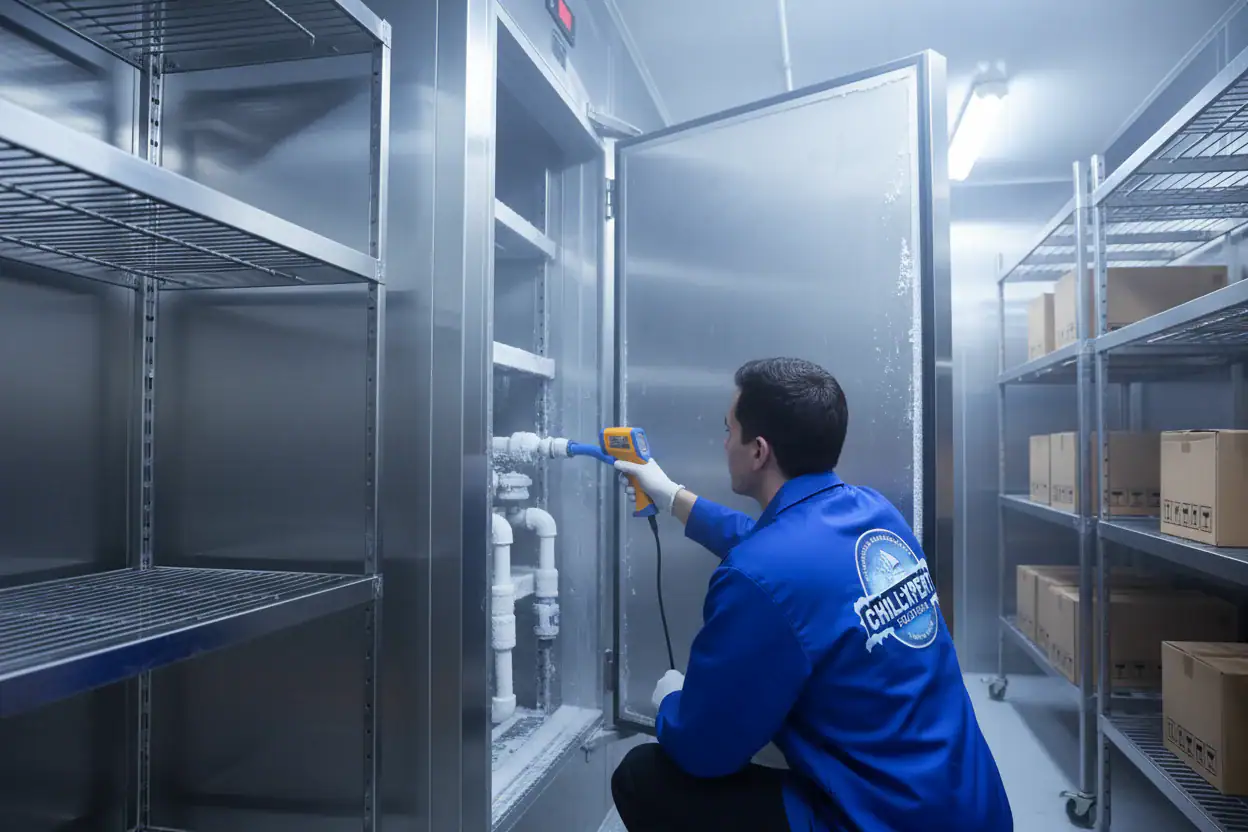
A thorough commercial refrigeration maintenance visit covers more ground than most business owners realize, and knowing what to expect helps you evaluate whether you’re actually getting what you’re paying for.
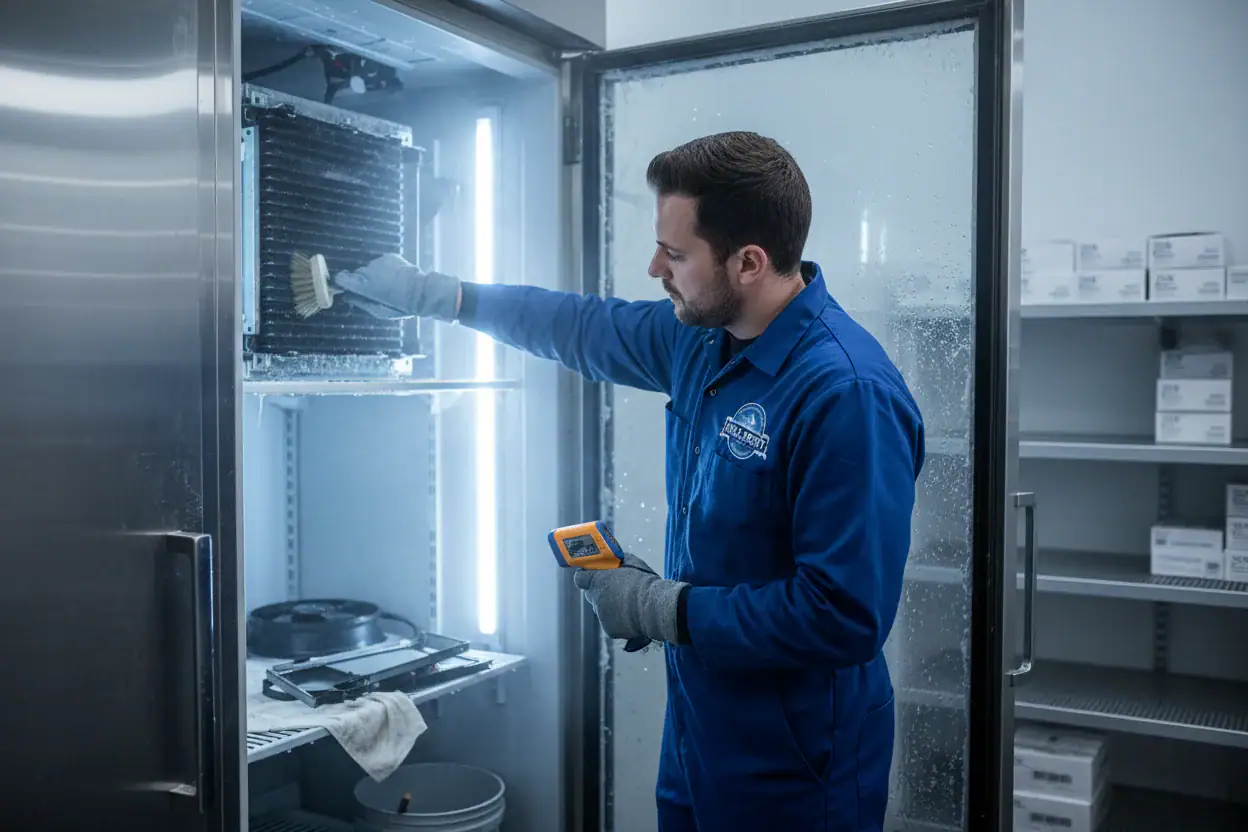
Condenser coil cleaning is one of the most important tasks — and one of the most commonly skipped by companies doing the minimum. Dirty coils force the compressor to work harder, which raises energy consumption and shortens the compressor’s life. Clean coils alone can reduce energy usage by 15 to 25 percent, which adds up over a year of operation.
Beyond coils, a proper visit includes checking refrigerant levels and inspecting for leaks, testing the thermostat and temperature controls for accuracy, inspecting door gaskets and seals for wear, examining electrical connections and components for signs of corrosion or deterioration, and verifying that drain lines are clear. On Long Island’s coastal areas — where salt air from the Atlantic and Long Island Sound accelerates corrosion on condenser coils and electrical connections — that last point matters more than it does in inland markets. Equipment near the water degrades faster and needs to be checked more carefully.
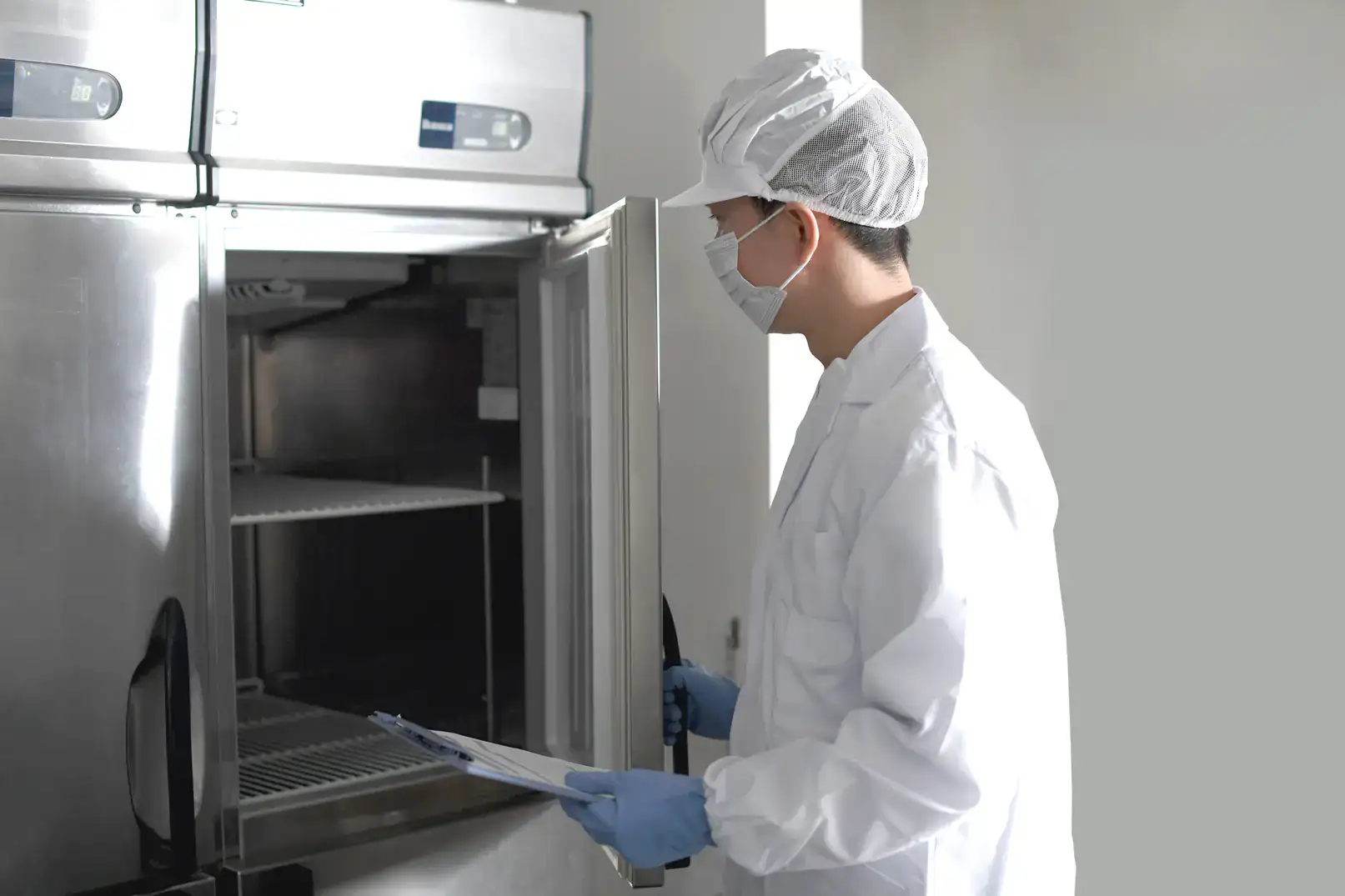
After every visit, you should receive written documentation of what was inspected, what was found, and what was done. This isn’t just good practice — it creates a service history for your equipment that’s valuable when you’re making repair-versus-replace decisions, and it supports compliance if you’re ever subject to a health inspection. A company that can’t or won’t provide that documentation after a visit is telling you something important about how they operate.
We carry genuine OEM parts on our trucks specifically because we’ve seen what happens when a technician has to order parts after the fact. Every day a unit is down is a day your business is absorbing the cost. Having the right parts on hand for same-day repairs isn’t a convenience — it’s the whole point.
The most important thing we can tell you about service contracts in the commercial refrigeration industry is this: the contract is only as good as the company behind it. Because there are no mandatory standards for what a contract must include, two agreements that look similar on paper can deliver completely different results in practice.
A contract worth signing will tell you exactly which pieces of equipment are covered, by serial number if possible. It will specify what is included and — just as importantly — what is excluded. Major component replacement, refrigerant recharge beyond a capped amount, and damage from misuse or weather events are common exclusions that can surprise business owners when they actually need a repair. If a contract doesn’t address these things explicitly, ask before you sign.
It will also commit to a specific emergency response time. “Prompt response” is not a commitment. A specific window — like under two hours across Nassau and Suffolk County — is a commitment. If a provider won’t put a response time in writing, that’s a signal worth taking seriously.
Look at who’s actually doing the work. Some service providers subcontract the labor to third-party technicians who don’t know your equipment and have no direct accountability to the company whose name is on the contract. Every technician we send is our own — EPA 608 certified, fully licensed and insured, and accountable to the same standards we’ve maintained for over 40 years.
And finally, talk to the company before you sign. The quality of that conversation tells you a lot. Are they asking about your equipment, your volume, your hours of operation? Or are they handing you a standard agreement and moving on? A service relationship that works is one where the provider actually understands your operation. That’s how you avoid being on the wrong end of a complaint that should never have happened.
There’s no universal right answer between a service contract and on-demand repair. But there is a right answer for your business — and it depends on your equipment age, your operation’s volume, your exposure to peak-season risk, and how much financial uncertainty you can absorb when something goes wrong at the worst possible time.
What we’d suggest is this: run the numbers honestly. Don’t just compare the monthly contract fee to zero. Compare it to what one emergency failure actually costs — the repair, the inventory, the downtime, and the health code exposure. For most Nassau County restaurants, delis, and catering halls, that math shifts the conversation pretty quickly.
If you want a straight answer about which approach makes sense for your specific situation, reach out to Chill Xpert Solutions. We offer free estimates and 24/7 consulting — not because it’s a tagline, but because that’s genuinely how we prefer to work with people before they need us in a crisis.
Article details:
Share:
Continue learning: