Wondering what AC leak repair will actually cost? Get transparent pricing ranges, understand what drives costs up or down, and learn when repair makes sense versus replacement.
Share:
Summary:
Your AC isn’t cooling like it should. Maybe you’ve noticed ice buildup on the refrigerant lines, or your energy bills climbed without explanation. A refrigerant leak is probably the culprit, and now you’re wondering what it’ll actually cost to fix.
The problem isn’t just the repair itself. It’s not knowing if the quote you get is fair, inflated, or missing half the story. You need real numbers, honest context, and a clear path forward so you can make a smart decision without second-guessing yourself.
This breakdown covers what AC leak repair actually costs in Nassau County, NY, what drives those costs, and when repair makes sense versus replacement.
Most AC leak repairs in Nassau County fall between $200 and $1,500, with the average landing around $800. That’s not a small range, and the difference comes down to where the leak is, how bad it is, and what refrigerant your system uses.
A simple leak in an accessible refrigerant line might cost $200 to $500 to seal and recharge. A leak buried in your evaporator coil or condenser coil, on the other hand, often means replacing the entire component, which pushes costs to $900 to $4,500 depending on warranty status and system age.
The refrigerant itself adds another layer. If your system uses R-410A, a refill runs $100 to $320. If you’re still running R-22—the older refrigerant that’s been phased out—expect $180 to $600 or more, and that cost keeps climbing as supplies dry up.
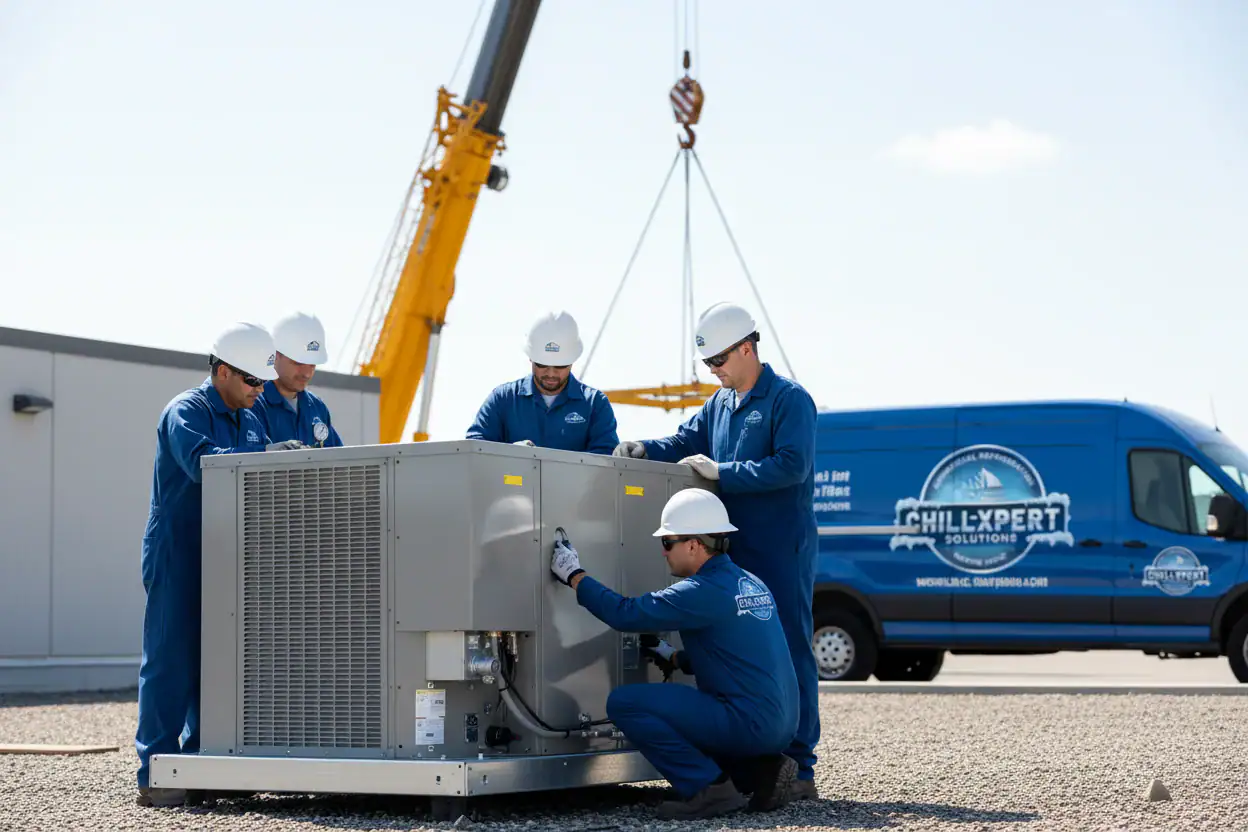
When you call for AC leak repair, the first charge you’ll see is the diagnostic fee. In Nassau County, that typically runs $75 to $150, sometimes higher for emergency calls. This isn’t just a “truck roll” fee. You’re paying for a trained technician to locate the leak using specialized tools—electronic detectors, UV dye tests, or nitrogen pressure testing—and diagnose the root cause.
We apply that diagnostic fee toward your repair if you move forward. If you don’t, you still got value: an accurate diagnosis you can use to compare quotes or make an informed decision about replacement.
Labor costs vary based on how difficult the repair is. Fixing a leak in an exposed refrigerant line takes less time than accessing a coil buried inside your air handler. HVAC technicians in Nassau County typically charge $75 to $150 per hour, and leak repairs can take anywhere from one to several hours depending on complexity and accessibility.
Parts drive the other half of your bill. A simple valve or fitting might cost $50 to $150. A condenser coil runs $900 to $2,300. An evaporator coil replacement can hit $1,000 to $4,500 if you’re out of warranty. And if your compressor failed because it ran low on refrigerant for too long, you’re looking at $1,800 to $2,800 for a replacement that’s not covered by warranty.
The refrigerant recharge itself is straightforward, but the type matters. R-410A is readily available and relatively affordable. R-22 is scarce, expensive, and only getting worse. If your system uses R-22 and you’re facing a significant leak, replacement often makes more financial sense than continuing to pay premium prices for a dying refrigerant.
Nassau County’s coastal environment adds another consideration. Salt air and humidity accelerate corrosion on outdoor units, which means condenser coils and refrigerant lines face more wear than systems inland. That’s not an excuse for premature failure, but it does explain why leak detection and prevention matter more here than in drier climates.
An AC tune-up and a leak repair aren’t the same thing, but they’re related in ways that matter to your wallet. A standard tune-up in Nassau County costs $65 to $200 and covers routine maintenance: cleaning coils, checking refrigerant levels, testing electrical components, and catching small problems before they become expensive failures.
If a technician finds low refrigerant during a tune-up, that’s a red flag. Your system doesn’t “use up” refrigerant like gas in a car. If levels are low, you have a leak. Addressing it early—when it’s still small and accessible—saves you from the more expensive repairs that come later when the leak gets worse or causes collateral damage to your compressor.
Skipping tune-ups doesn’t just risk breakdowns. It hides leaks until they’re serious. A slow leak might lose an ounce or two per year, barely noticeable at first. But over time, your compressor works harder to compensate, wearing itself out and racking up energy costs. By the time you notice the problem, you’re not just fixing a leak. You’re replacing a compressor or dealing with a system that’s been running inefficiently for months.
Regular maintenance catches those issues early. It also keeps your warranty valid—many manufacturers require annual professional service to honor coverage. If you skip maintenance and then face a major repair, you might be paying full price for parts that would’ve been covered.
The math is simple. A $100 tune-up that finds a $300 leak saves you from a $2,000 coil replacement or a $2,500 compressor failure down the line. Prevention isn’t just cheaper. It’s predictable.
Want live answers?
Connect with a Chill Xpert Solutions expert for fast, friendly support.
Sometimes the leak isn’t in a line you can patch. It’s in the condenser coil itself, and when that happens, you’re not repairing it—you’re replacing it. In Nassau County, condenser coil replacement costs $900 to $2,300, and full condenser unit replacement runs $1,300 to $6,100 depending on size, efficiency, and whether your system is under warranty.
If your condenser is still under warranty, you might only pay for labor, which drops your cost to $300 to $1,200. If it’s not, you’re covering both parts and labor, and at that point you need to ask a bigger question: does it make sense to replace one expensive component in an aging system, or should you replace the whole thing?
Age matters here. If your AC is 6 years old and the condenser fails, replacing it makes sense. You’re protecting the rest of a relatively young system. If your AC is 12 years old and you’re looking at a $2,500 condenser replacement, you’re putting serious money into equipment that’s already approaching end-of-life.
The type of refrigerant your system uses changes the entire repair-versus-replace conversation. If you’re running R-410A, refrigerant is readily available and reasonably priced. Repairs make sense as long as the system itself is in decent shape.
If you’re running R-22, you’re in a different situation. R-22 was banned from new production in 2020, and the remaining supply is limited and expensive. A recharge that would cost $200 with R-410A can hit $600 or more with R-22, and that price isn’t coming down. It’s only getting worse as supplies shrink.
Systems that use R-22 are typically over 10 years old, which puts them in the replacement zone anyway. When you combine an aging system with expensive, scarce refrigerant, the math shifts. Spending $1,200 to fix a leak in a 14-year-old system that uses R-22 doesn’t protect you from the next failure. It just delays the inevitable while burning money on a refrigerant that’s being phased out.
Modern systems use R-410A or newer alternatives like R-454B. They’re more efficient, more reliable, and don’t saddle you with escalating refrigerant costs every time something goes wrong. If your current system uses R-22 and you’re facing a significant repair, replacement is usually the smarter long-term play.
There’s also compatibility to consider. You can’t just swap R-22 for R-410A in an old system. The refrigerants operate at different pressures and require different components. If you want to move to modern refrigerant, you need a modern system.
HVAC professionals use a simple formula to help homeowners decide between repair and replacement: multiply the repair cost by your system’s age in years. If the result exceeds $5,000, replacement typically makes more financial sense.
Here’s what that looks like in practice. You have an 8-year-old AC with a $400 leak repair. 8 times $400 equals $3,200. Repair makes sense. You’re protecting a system that still has useful life left. But if that same repair costs $700, you’re at $5,600. At that point, you’re better off putting that money toward a new system instead of prolonging an aging one.
The rule isn’t perfect, but it accounts for two realities. First, older systems are more likely to fail again soon. Fixing one problem doesn’t prevent the next. Second, repair costs on older systems tend to be higher because parts are harder to find, labor is more complex, and collateral damage from the initial failure is more common.
Age alone tells part of the story. Systems over 10 years old face compatibility issues with newer refrigerants and components. They’re less efficient than modern equipment, which means higher energy bills even when they’re working correctly. And if you’re facing a major repair on a 12-year-old system, you’re likely looking at more repairs within the next few years.
A new system costs more upfront—typically $5,000 to $8,300 installed—but it comes with a warranty, better efficiency, and the confidence that you’re not throwing good money after bad. It also eliminates the R-22 problem entirely if that’s what your old system uses.
The decision isn’t just about this repair. It’s about what the next three years look like. If you’re confident your system will run reliably after this fix, repair makes sense. If you’re bracing for the next call, replacement is the move.
AC leak repair costs in Nassau County range from $200 to $1,500, but the real question isn’t just what it costs—it’s whether repair makes sense for your situation. A $300 fix on a 5-year-old system is a no-brainer. A $1,200 repair on a 14-year-old system using R-22 refrigerant is a different story.
Understanding the cost factors—leak location, refrigerant type, system age, and warranty status—gives you the context you need to evaluate quotes and make a decision you won’t regret. And knowing when to walk away from repair and invest in replacement protects you from pouring money into a system that’s on its way out.
If you’re facing an AC leak in Nassau County and want an honest assessment with transparent pricing, we provide free estimates and upfront costs so you know exactly what you’re dealing with before any work begins. No surprises, no pressure—just clear information and expert guidance to help you make the right call.
Article details:
Share:
Continue learning: