Nassau County AC down? Learn what air conditioner repair actually costs in 2026, which problems need immediate attention, and when replacement makes more financial sense than another repair.
Share:
Summary:
Your AC stopped blowing cold air. It’s 85 degrees outside, humidity is climbing, and you’re trying to figure out if this is a quick fix or a major expense. You don’t need a sales pitch right now. You need to know what’s wrong, what it’ll cost, and whether calling someone tonight is worth the emergency fee.
Nassau County summers don’t wait, and neither should you when it comes to understanding your options. Here’s what air conditioner repair actually looks like in 2026, what drives costs up or down, and when a repair makes sense versus when you’re throwing money at a system that’s already done.
The first question everyone asks is the same one you’re asking right now: how much is this going to cost? Fair question. The problem is most companies won’t tell you until they show up, diagnose the issue, and hand you a number that feels like it came out of thin air.
Let’s fix that. Diagnostic fees in Nassau County typically run $89 to $129 just to figure out what’s wrong. Most companies waive or credit that fee if you hire them for the repair, but you’re still paying it upfront.
From there, costs split based on what’s actually broken. A capacitor replacement might run $150 to $400. Refrigerant recharge sits around $200 to $800, but here’s the thing: if you need a recharge, you probably have a leak. The recharge fixes the symptom. Finding and fixing the leak is the real repair, and that adds another $200 to $500 on top.
Not all repairs cost the same, and understanding the difference helps you make better decisions when a technician hands you an estimate. Some fixes are straightforward and relatively affordable. Others signal that your system is approaching the end of its useful life.
Contactor replacement costs $150 to $400. The contactor is the switch that tells your AC to turn on and off. When it fails, your system might not start at all, or it might run constantly without shutting off. It’s a common wear item, especially on systems that run hard through humid Nassau County summers.
Blower motor replacement is a bigger job. You’re looking at $400 to $900 depending on whether it’s a standard or variable speed motor. You’ll usually notice weak airflow or strange noises from the air handler before this one fails completely. It’s not an emergency repair, but it’s also not something you want to ignore for weeks.
Compressor replacement is the expensive one. In Nassau County, you’re looking at $1,200 to $2,800 for the part and labor. This is where the repair versus replacement conversation gets real. If your system is over 10 years old and you’re staring at a $2,000 compressor replacement, you’re probably better off putting that money toward a new system.
A new central AC installation runs $4,500 to $8,000 depending on size and efficiency rating, so a $2,500 repair on an aging system doesn’t make financial sense. The 50% rule provides a simple framework: if repair costs exceed 50% of replacement cost, replacement makes more financial sense. If a contractor quotes $1,800 to fix your condenser and replacement would cost $3,000, you’re better off replacing. You get a new system with a warranty instead of pouring money into aging equipment that might fail again next season.
Time of year matters too. Emergency AC repair in July or August costs more than a scheduled fix in May. Every HVAC contractor on Long Island is slammed during peak summer. If you can get ahead of it with a spring tune-up, you’ll save money and avoid the wait.
Your AC condenser is the outdoor unit that does the heavy lifting of heat exchange. When it fails, you’re looking at one of the more expensive repair decisions homeowners face. AC condenser replacement in Nassau County runs between $1,300 and $6,100 in 2026, with most homeowners paying around $2,900 for a standard residential system.
That price includes the condenser unit itself, labor to remove the old unit and install the new one, refrigerant, and any necessary electrical connections. The range exists because not all condensers are created equal. A basic 2-ton unit with a standard efficiency rating sits at the lower end. A 5-ton high-efficiency system with a premium SEER2 rating pushes you toward the upper limit.
Labor accounts for roughly 40-60% of your total cost, and in Nassau County, HVAC professionals charge between $100 and $250 per hour depending on experience and demand. Brand also matters. High-end manufacturers like Trane, Carrier, and Lennox charge premium prices but typically offer longer warranties and better component quality. Mid-tier brands deliver solid performance at lower price points. The cheapest option might save you $800 upfront but cost you more in repairs over the system’s lifespan.
Here’s what most homeowners don’t consider: if your condenser needs replacement and your system is over 10 years old, you’re probably looking at other aging components too. The indoor air handler, the evaporator coil, the refrigerant lines—they’ve all been working just as hard as that condenser. Replacing just the condenser means you’re pairing a new outdoor unit with old indoor components that might fail within a year or two.
That’s why we often recommend full system replacement when a condenser fails on an older system. It’s not a sales tactic. Sometimes it’s just honest math. You avoid the scenario where you spend $3,000 on a new condenser this year and another $1,500 on an evaporator coil next year. The air conditioner unit replacement cost conversation needs to include what you’re actually getting for your money—not just the equipment, but years of reliable cooling without constant repair calls.
Want live answers?
Connect with a Chill Xpert Solutions expert for fast, friendly support.
Maintenance isn’t the most exciting topic, but it’s the difference between a $200 tune-up in April and a $1,500 emergency repair in July. The cost of a professional AC tune-up in Nassau County typically runs between $175 and $350. That might feel like a lot upfront, but compare it to what you’re avoiding: emergency repairs that start at $300 and can easily hit $1,500 or more, plus the wasted energy that quietly inflates your bills every month.
When your system runs efficiently, you save 5% to 15% on energy costs. On a typical summer cooling bill, that’s $100 to $300 back in your pocket over the season. Regular maintenance prevents up to 95% of common HVAC breakdowns and extends your system’s lifespan by years. The air conditioning maintenance cost is an investment that pays for itself.
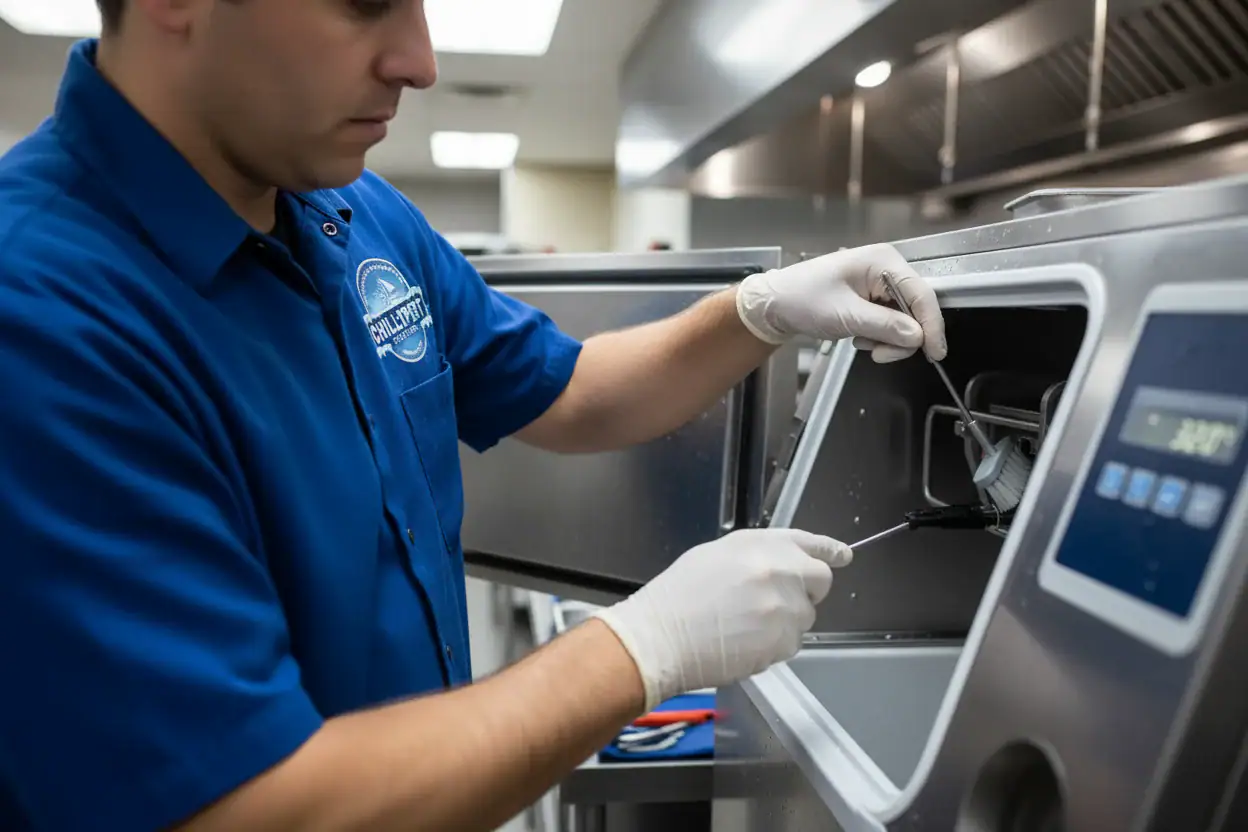
A proper AC tune-up isn’t just changing the filter and calling it done. It’s a systematic inspection and cleaning of the components that keep your system running efficiently. You should expect your technician to clean the evaporator and condenser coils, check refrigerant levels, inspect and tighten electrical connections, lubricate moving parts like fan motors, and verify your thermostat is working correctly.
We also clear debris around your outdoor unit and make sure air is moving freely through your system. Poor airflow is one of the top causes of AC problems. It leads to uneven cooling, higher energy bills, and frozen coils. We check your blower motor, inspect ductwork for leaks or blockages, and make sure air is moving freely through your system.
Nassau County weather doesn’t do your AC any favors. Summers here aren’t just hot—they’re humid, unpredictable, and long. That combination forces your air conditioner to work harder than systems in drier climates. The high humidity levels can cause serious damage to your condensate drain, leading to water pooling around your unit that goes beyond normal condensation. Frozen coils are another frequent problem when airflow gets restricted, often due to dirty filters or blocked return ducts.
Most homeowners should schedule AC maintenance at least once per year, ideally in early spring before temperatures climb and demand spikes. If you have an older system or you run your AC heavily, twice-yearly maintenance makes sense. The spring visit prepares your system for summer, and a fall check catches any issues before you switch over to heating. The home AC tune-up cost is minimal compared to what you’ll spend on repairs if you skip it.
There’s a massive cost difference between scheduled maintenance and emergency repairs, and it’s not just the premium you pay for after-hours work. It’s everything that comes with waiting. When your system fails during a Nassau County heat wave, you’re not the only one calling for help. Every HVAC company in the area is fielding calls from people in the same situation.
You might wait days for an appointment. You might pay 10% to 20% more because it’s peak season and demand is maxed out. You might end up taking time off work to be home when the technician finally arrives. And while you’re waiting, your building is heating up. Your energy bills are climbing because the system is struggling or not working at all.
Here’s the part that really drives up costs: small problems become big problems when you skip maintenance. A minor refrigerant leak that could have been fixed for $300 during a routine visit turns into a $1,500 compressor replacement when the low refrigerant causes the compressor to overheat and fail. Dirty coils have the same effect. When coils are clogged with dust and debris, your system can’t transfer heat efficiently. The compressor runs longer, works harder, and wears out faster.
Property owners in Nassau County who skip regular AC maintenance typically spend three to four times more on repairs over the system’s lifetime. They’re not just paying for the repairs themselves—they’re paying for all the additional damage that happened because the original problem wasn’t caught during routine central AC maintenance. A $100 coil cleaning during preventive maintenance could have prevented a $1,000+ compressor failure down the line.
AC emergencies don’t wait for business hours. Your system fails at 2 AM on a Saturday, or it quits during the hottest week of summer when every technician in Nassau County is booked solid. Emergency AC service costs more than scheduled appointments—typically $150 to $300 more—but sometimes waiting isn’t an option.
The question you need to answer is whether your situation actually qualifies as an emergency. If your AC stops working completely during a heat wave, especially if you have young children, elderly family members, or anyone with respiratory issues in the home, that’s an emergency. If your system is blowing warm air but still running, that’s urgent but probably not a middle-of-the-night call.
Article details:
Share:
Continue learning: