Breaking down what you'll actually pay for central AC installation in Nassau County—equipment, labor, permits, and the factors that drive your final price in 2026.
Share:
Summary:
You’re trying to figure out what central AC installation actually costs, and every website gives you a different number. One says $5,000. Another says $12,000. A third throws out $7,500 and calls it “average.”
Here’s what you actually need to know: central AC installation in Nassau County, NY typically runs between $4,000 and $12,000 in 2026, but your real number depends on factors most contractors don’t explain until after you’ve already committed. This guide walks you through the actual cost breakdown—equipment, labor, permits, ductwork—so you can budget accurately and spot the difference between a fair estimate and one that’s missing half the story.
Your final price isn’t random. It’s determined by specific factors that either drive costs up or keep them reasonable.
System size matters first. A 1,200-square-foot home needs less cooling capacity than a 2,500-square-foot house. Contractors measure this in tons—one ton equals 12,000 BTUs of cooling capacity. Most homes in Nassau County need between 2.5 and 4 tons, and larger systems cost more upfront.
But here’s where it gets tricky: your home’s square footage alone doesn’t determine the right size. Insulation quality, window placement, ceiling height, and sun exposure all factor into what’s called a Manual J load calculation. That calculation tells you the actual capacity your home needs. Skip it, and you might end up with an oversized system that cycles on and off constantly, wasting energy and leaving you uncomfortable.
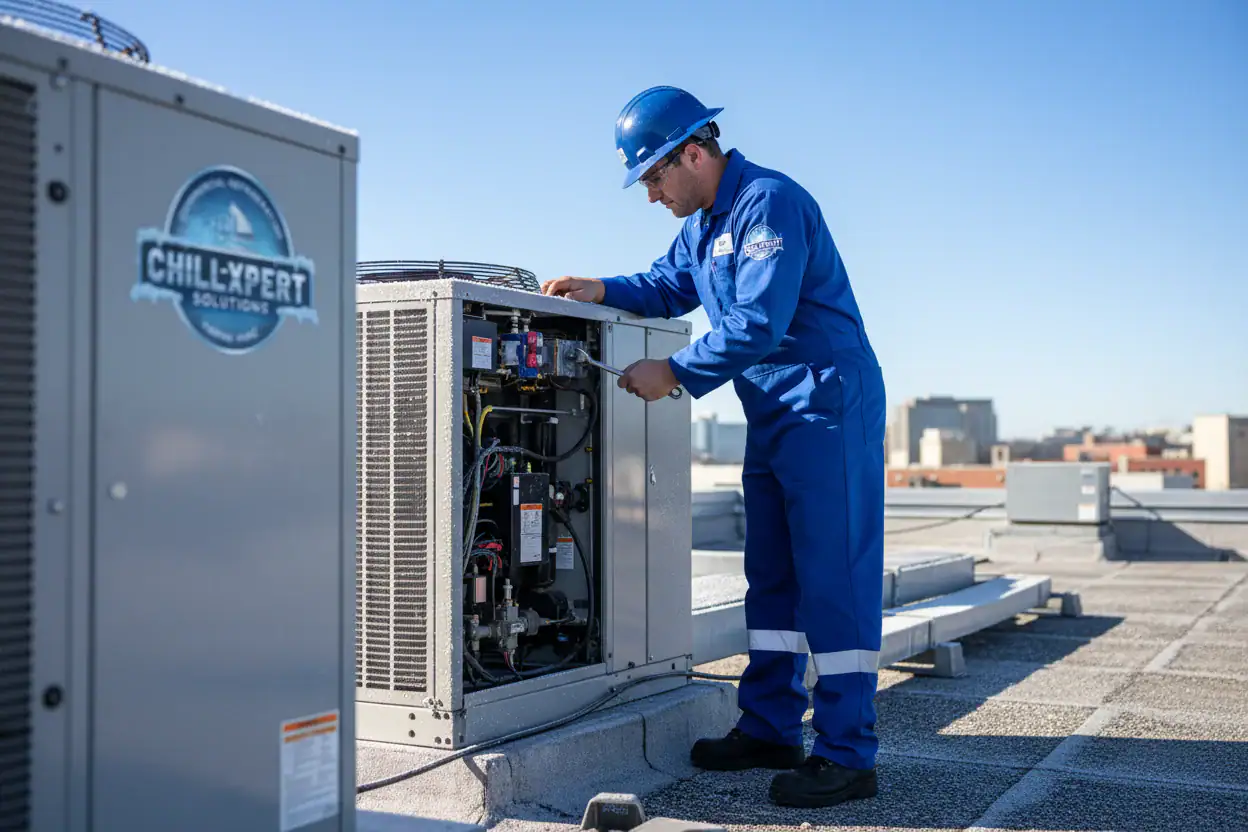
The equipment itself—condenser, evaporator coil, refrigerant lines, and thermostat—makes up roughly 45% of your total installation cost. In Nassau County, NY, expect to pay anywhere from $3,000 to $8,000 for the unit alone in 2026, depending on efficiency and features.
SEER2 ratings measure efficiency. Higher ratings mean lower operating costs over time. New York requires a minimum 14 SEER2 for new installations. Budget units hit that minimum and typically cost $3,000 to $4,500. Mid-range systems land around 16 to 18 SEER2 and run $4,500 to $6,500. Premium models push 20 SEER2 or higher and can reach $7,000 to $8,000.
The difference between a 14 SEER2 and 16 SEER2 system might add $1,500 to your upfront cost, but you’ll save roughly 13% on cooling bills every summer. Over 15 years, that adds up. If you’re planning to stay in your home long-term, the higher efficiency often pays for itself.
Variable-speed systems cost more than single-stage units but offer better temperature control and humidity management—something that matters during Nassau County’s humid summers. They ramp up or down based on demand instead of just running full blast until the thermostat clicks off. That means fewer temperature swings, quieter operation, and lower energy bills. The premium usually runs $1,000 to $2,500 over a basic single-stage system.
Brand matters, but not as much as you’d think. When comparing similar models, the cost difference between a top-tier brand and a mid-tier option is usually less than 10%. What matters more is proper installation. A premium brand installed poorly will underperform a mid-tier system installed correctly.
Labor typically accounts for $1,500 to $3,000 of your total cost in Nassau County, NY, depending on installation complexity. Replacing an existing system in a straightforward setup takes less time than installing central air in a home that’s never had it.
Accessibility drives labor costs. If your attic is cramped, your basement has low clearance, or the outdoor unit needs to be placed somewhere that requires creative routing, expect to pay more. Technicians need time to work safely and correctly, and difficult access slows everything down.
Electrical work can add to your labor bill. Older homes in Nassau County sometimes need panel upgrades to handle a new AC system’s electrical load. If your current setup can’t support the amperage, you’re looking at an additional $500 to $2,000 for electrical modifications.
Installation quality matters more than speed. Some contractors rush through jobs to maximize their daily output. Others take the time to check refrigerant charge, verify airflow, seal connections properly, and test the system under load. You want the second kind. Proper installation can improve efficiency by 30% compared to sloppy work, even with identical equipment.
Permits and inspections are required in Nassau County for HVAC installations. The permit fee itself runs around $300 for plan review, but processing times average four to eight weeks for standard residential projects. A good contractor handles this for you and builds it into their estimate. If your quote doesn’t mention permits, ask why.
Disposal of your old system should be included in labor costs, but not all contractors include it automatically. Confirm whether removal and haul-away are part of the quote or if they’ll add a fee later. Typical disposal fees run $100 to $300 if charged separately.
Want live answers?
Connect with a Chill Xpert Solutions expert for fast, friendly support.
Replacing an existing central AC system costs less than installing one from scratch. If your home already has ductwork, an outdoor pad, and the necessary electrical connections, you’re looking at the lower end of the cost range—typically $4,000 to $7,500 for most Nassau County homes.
New installations require more. You’ll need ductwork installed throughout the house, which adds $2,000 to $7,500 depending on your home’s size and layout. Larger homes and multi-story houses cost more because they need more ductwork and longer refrigerant line runs.
Even if you have existing ducts, they might need work. Leaky, undersized, or poorly routed ductwork reduces efficiency and comfort. Minor duct repairs typically cost $300 to $1,000. Extensive modifications or replacement can push that to $2,000 or more.
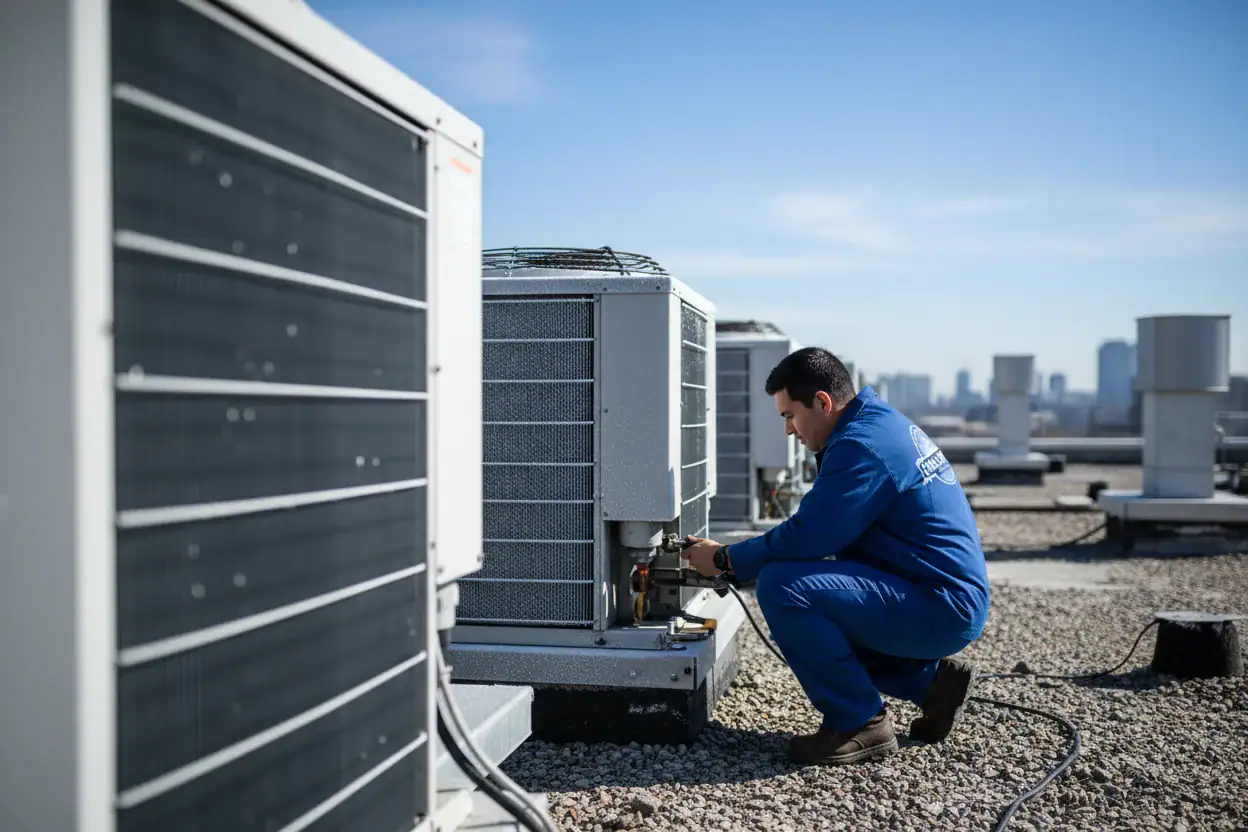
When you’re replacing an existing system, your costs break down into a few clear categories: equipment, labor, and any necessary upgrades to supporting systems.
Equipment costs for a straightforward replacement range from $3,500 to $7,000 for most Nassau County, NY homes. That includes the outdoor condenser, indoor evaporator coil, refrigerant, and a basic thermostat. If you’re upgrading to a smart thermostat or adding features like zoning controls, add another $500 to $1,500.
Labor for a replacement typically runs $1,500 to $2,500. This covers removing the old system, installing the new equipment, charging the refrigerant properly, and testing everything to confirm it’s working correctly. Most replacements take one to two days, depending on whether any complications come up.
Ductwork inspection should be part of any replacement project. Even if your ducts look fine, they might have leaks or damage you can’t see. A contractor who skips this step is cutting corners. Proper duct sealing and insulation can improve system efficiency by 20% or more, which translates directly to lower energy bills.
Matching your new AC to your existing furnace or air handler matters. If you’re installing a variable-speed AC but your furnace has a single-speed blower, you won’t get the full efficiency benefits. Sometimes replacing both at once makes sense, even if the furnace still works. You save on labor by doing both jobs together, and you ensure the systems are compatible.
Refrigerant type affects cost. Older systems used R-22, which is being phased out. New systems use R-410A or newer refrigerants. If your existing refrigerant lines are incompatible, they’ll need to be replaced, adding to your total cost. Most contractors include this in their estimate, but confirm it’s covered.
The biggest complaints about HVAC installation revolve around costs that weren’t mentioned upfront. Permits, ductwork modifications, electrical upgrades, and disposal fees all have a way of appearing on the final bill if they weren’t clearly spelled out in the estimate.
A detailed estimate should list every major component: equipment model and SEER rating, labor broken down by task, permits and inspection fees, ductwork modifications if needed, electrical work if required, and disposal of the old system. If your quote just says “AC installation – $8,500” without any breakdown, you’re flying blind.
Capacitor replacements and coil cleaning sometimes get added as “necessary” mid-project. While these might legitimately be needed, they should be identified during the initial assessment, not discovered halfway through installation. A thorough contractor inspects your existing setup and flags potential issues before work begins.
Ductwork surprises are common. A contractor might quote you for a replacement assuming your ducts are fine, then “discover” they need extensive repairs once the job is underway. This is why a pre-installation duct inspection matters. It protects you from unexpected costs and protects the contractor from underestimating the job.
Structural modifications occasionally come up in older homes across Nassau County and Suffolk County. If your existing ductwork needs to be rerouted, or if wall studs need reinforcement to support new equipment, those costs can add up quickly. A good contractor identifies these issues during the estimate phase, not after they’ve already started tearing things apart.
Financing terms can hide costs too. Some contractors offer “0% financing” but build the interest into the equipment price. Others use deferred interest plans that charge you for all accumulated interest if you don’t pay in full by the promo end date. Read the terms carefully and compare the cash price to the financed price to see what you’re actually paying.
The most important thing you can do is get detailed, itemized estimates from at least three contractors. Not vague quotes. Not ballpark numbers. Actual written estimates that break down equipment, labor, permits, and any additional work your home needs.
Ask about Manual J load calculations. If a contractor sizes your system based only on square footage, they’re guessing. Proper sizing accounts for insulation, windows, orientation, and a dozen other factors that affect your actual cooling needs. It’s the difference between a system that works efficiently and one that wastes energy while leaving you uncomfortable.
Confirm what’s included and what’s not. Permits, disposal, ductwork inspection, electrical modifications—these should all be addressed in the estimate. If something’s missing, ask whether it’s not needed or just not mentioned. The answer tells you a lot about how the contractor operates.
We provide free estimates with complete pricing transparency for central AC installation across Nassau County, NY. With over 40 years of experience and a commitment to proper system sizing, we handle everything from straightforward replacements to complex installations that require ductwork modifications or electrical upgrades—all with upfront pricing and no surprise charges.
Article details:
Share:
Continue learning: