When your walk-in goes down, who you call matters more than you think. Here's what Chill Xpert Solutions looks for in commercial kitchen refrigeration repair before we hire anyone for Nassau County.
Share:
Summary:
When a walk-in cooler goes down mid-service, the repair bill is rarely the biggest problem. It’s the thousands of dollars of perishable food sitting inside it. It’s the health inspection that’s coming up. It’s the Friday dinner rush you’re now scrambling to get through with a failing unit.
If you’ve been through that, you already know: not all repair calls end the same way. Some fix the problem. Some buy you two more weeks before the same thing happens again. This page is about understanding the difference — and knowing what to look for when you’re choosing who to trust with your equipment across Nassau County.
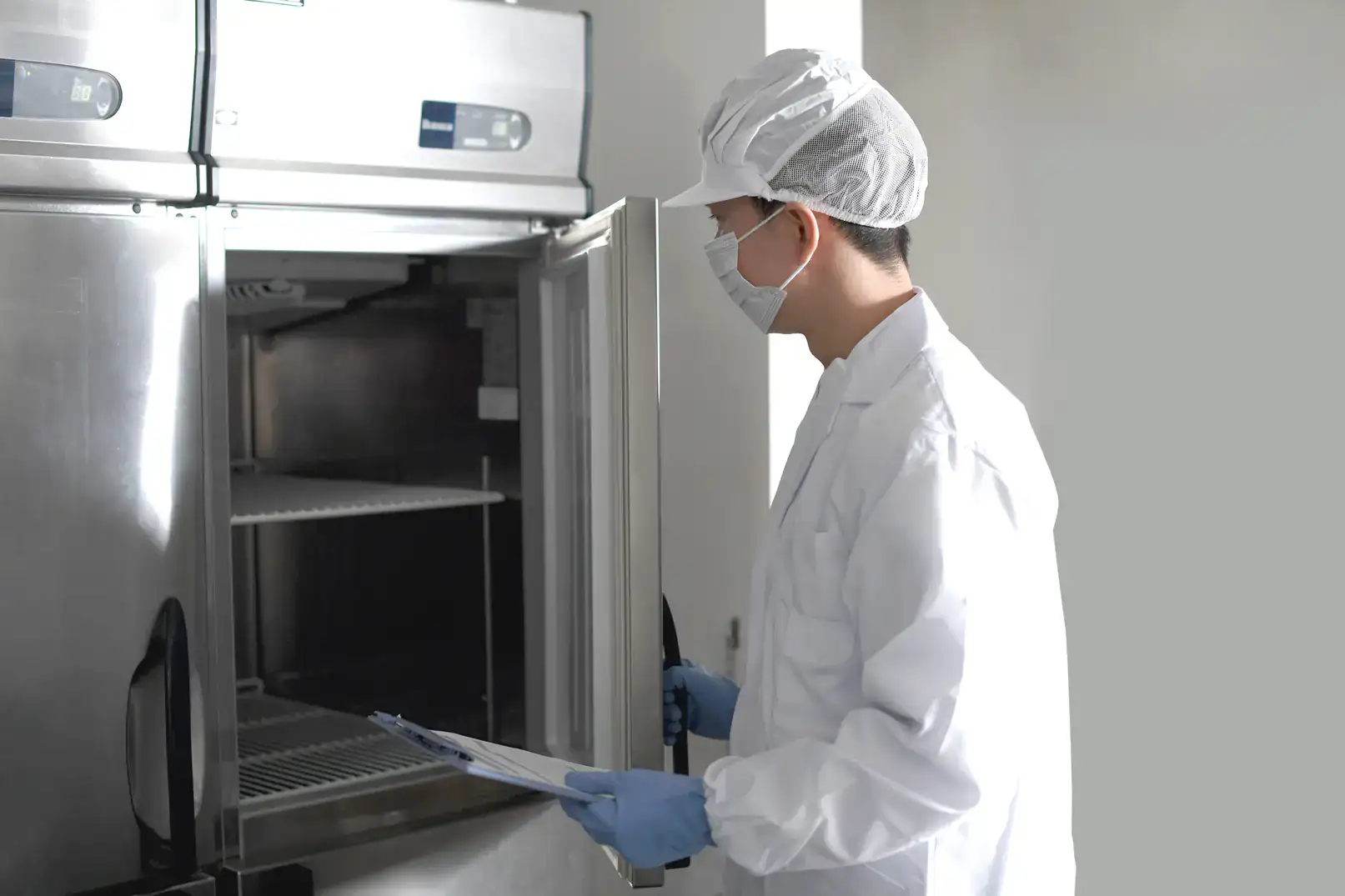
Commercial refrigeration repair isn’t the same as calling someone to fix a residential fridge. The equipment is more complex, the stakes are higher, and the technician working on it is legally required to hold EPA Section 608 certification just to handle the refrigerants inside. That’s a federal requirement — not a marketing credential. Anyone who can’t produce that certification shouldn’t be touching your equipment.
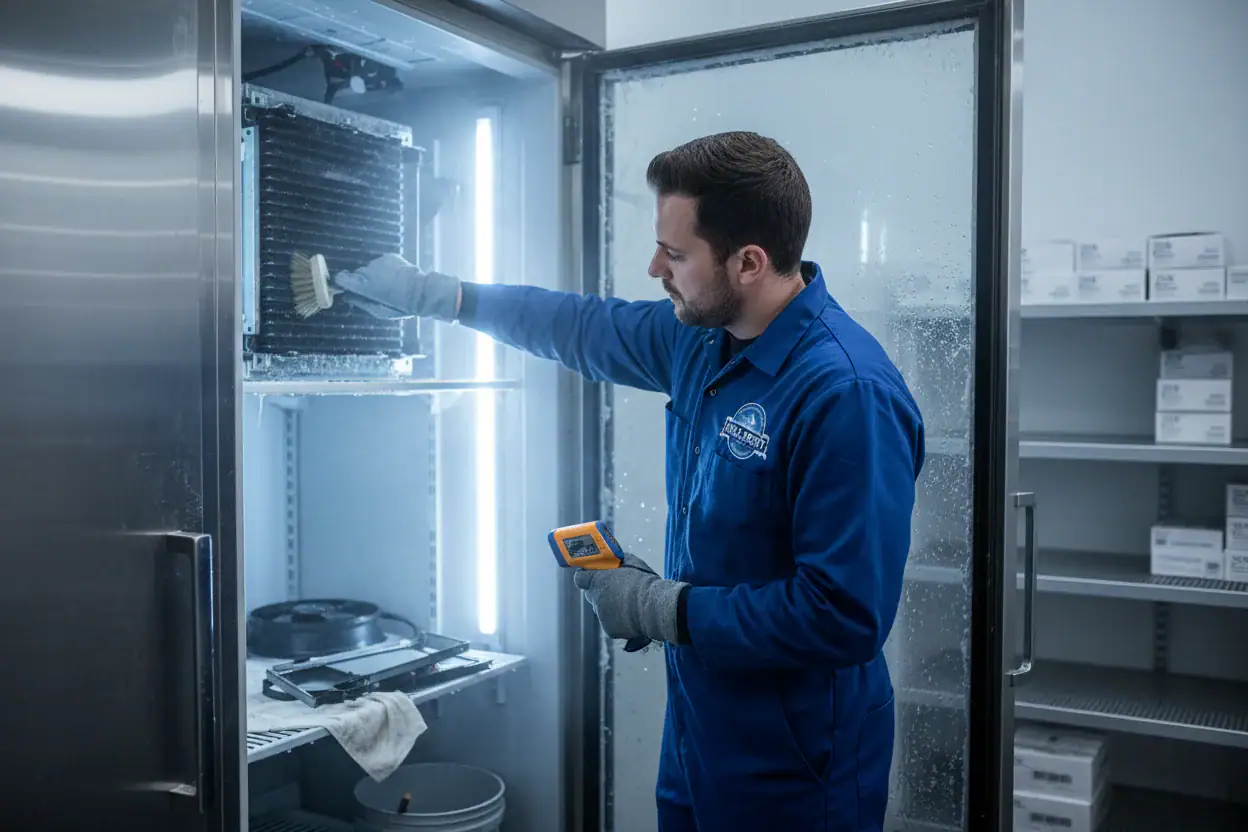
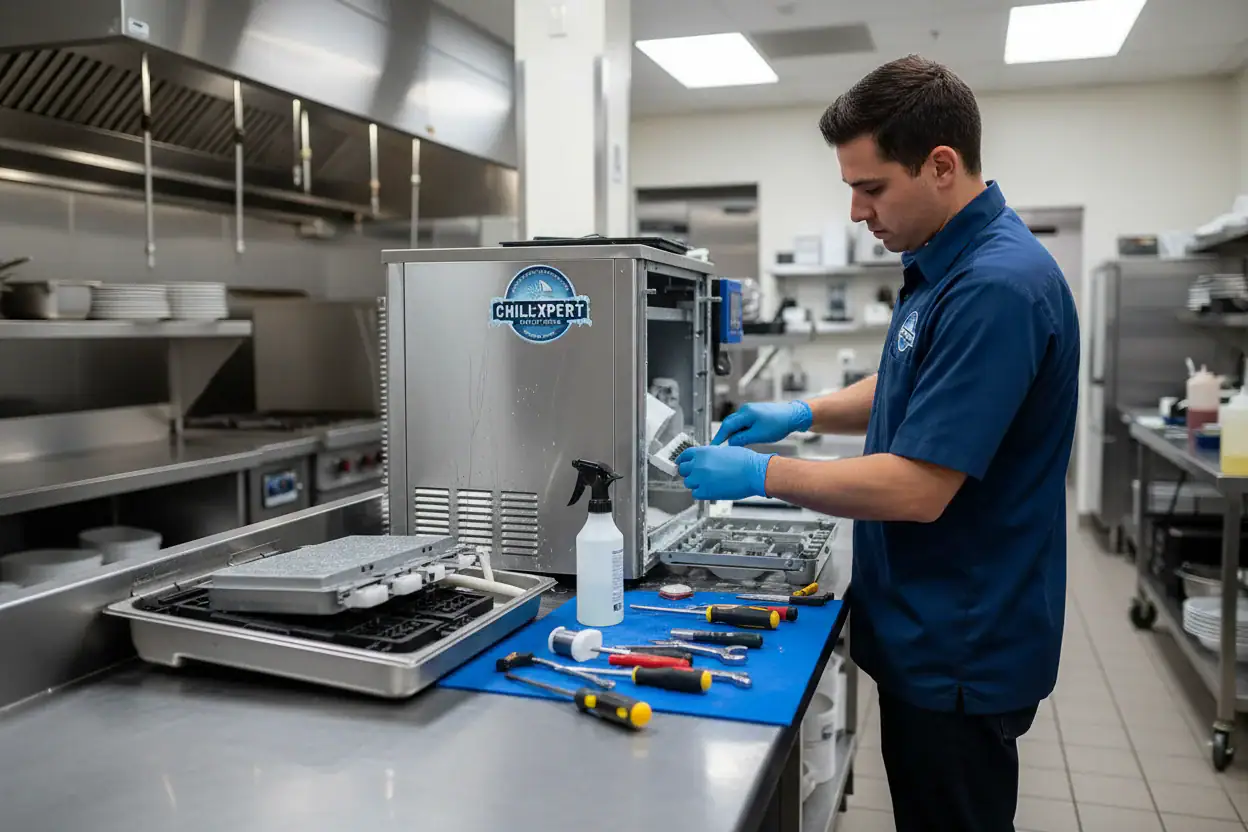
A proper repair starts with a thorough diagnostic. Not a glance at the thermostat, not a guess based on the symptom you described over the phone — an actual assessment of the system. From there, a qualified technician identifies the root cause, explains what they found in plain language, and gives you a clear estimate before any work begins. That’s what the process should look like.
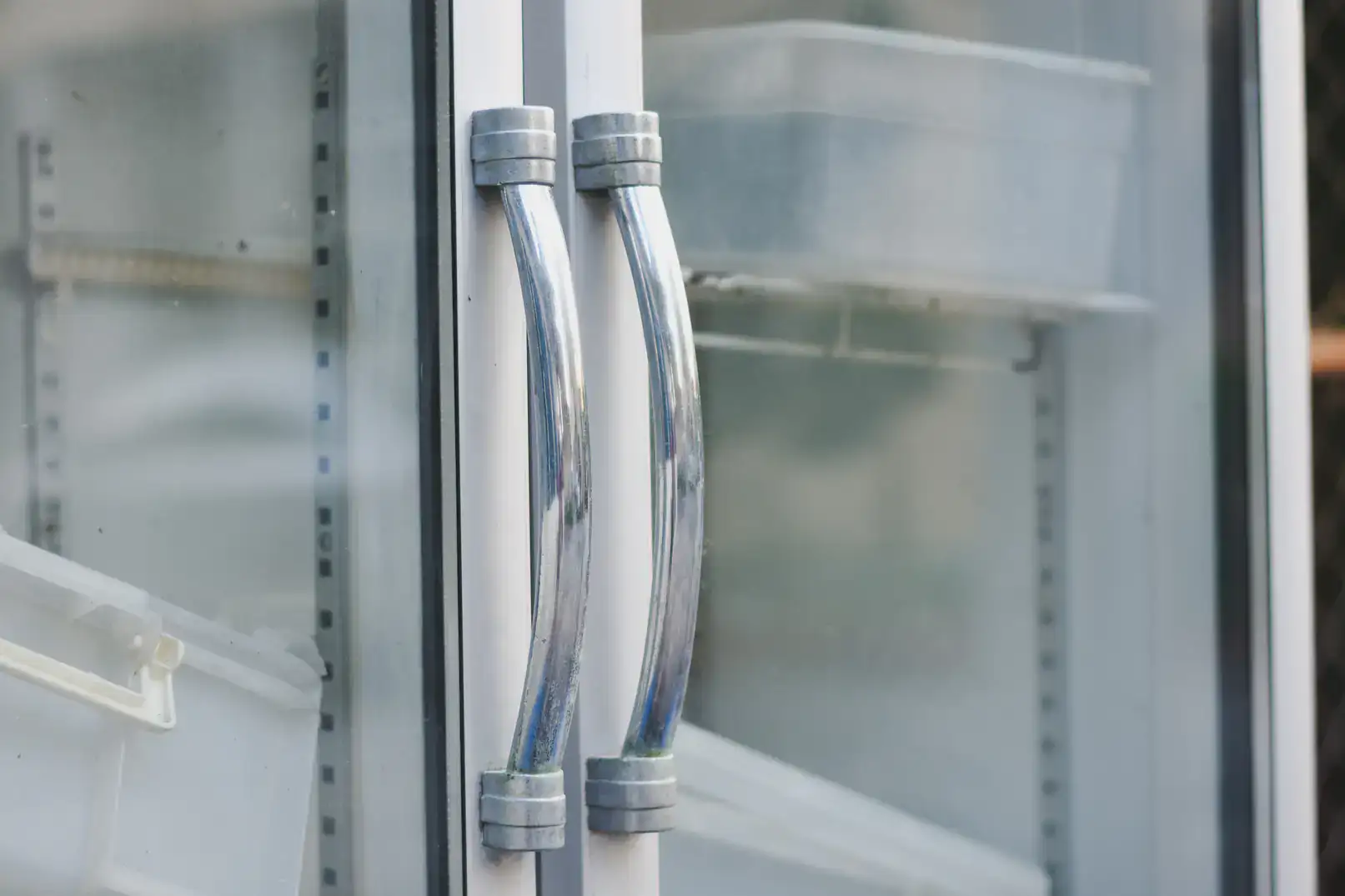
Most failures in commercial kitchen refrigeration trace back to a handful of recurring culprits. Faulty thermostats and damaged door gaskets are among the most frequent — and also among the most preventable. A gasket that’s worn or warped stops forming a proper seal, which forces the compressor to work harder to maintain temperature. Over time, that extra strain shortens the life of the entire system.
Clogged drain lines are another common issue, especially in high-humidity environments. When a drain line backs up, water pools inside the unit or underneath it — and if that goes unaddressed long enough, it starts affecting other components. On Long Island, where coastal humidity is a real factor for businesses along the North Shore and South Shore, drain line blockages happen more often than operators in drier climates typically deal with.
Compressor problems sit at the more serious end of the spectrum. A failing compressor often announces itself gradually — the unit runs longer than it used to, struggles to hold temperature during peak hours, or starts drawing more power than normal. By the time it fails outright, the signs have usually been there for a while.
Capacitors and relays are smaller components, but when they go, they can cause the unit to click, buzz, run intermittently, or trip a breaker without an obvious reason. Control boards failing can shut down an entire system without warning, which makes them particularly frustrating to diagnose without the right equipment and experience.
The pattern across all of these is the same: problems that get caught early are usually inexpensive to fix. Problems that get ignored have a way of becoming compressor replacements or full equipment failures at the worst possible time.
Here’s something worth understanding before you hire anyone: there’s a meaningful difference between a technician who fixes the root cause and one who addresses the symptom well enough to get the unit running again. Both will hand you an invoice. Only one of them actually solved the problem.
A temporary patch might hold for two weeks. It might hold for two months. But if the underlying issue — a failing compressor, a damaged component, a refrigerant leak that wasn’t fully traced — was never actually addressed, you’re going to be making another call. And another. Each time, you’re paying a service fee, potentially losing inventory, and running a unit that’s working harder than it should be, which drives up your energy costs in the meantime.
A clogged or dirty filter alone can strain the compressor enough to increase energy costs noticeably over time. That’s a small maintenance item. Now imagine a more significant problem being patched instead of fixed — the cumulative cost adds up fast.
The way to avoid this is straightforward: ask the technician to walk you through the diagnosis. A good technician will explain what they found, why it caused the problem, and what the repair actually addresses. If the explanation is vague, or if the tech seems more focused on getting the unit running than on telling you what caused it to fail, that’s worth paying attention to.
We built our approach around fixing the root cause rather than slapping on a temporary solution — not because it’s a better sales pitch, but because it’s the only approach that actually serves our customers. A repair that holds is the only repair worth doing.
Want live answers?
Connect with a Chill Xpert Solutions expert for fast, friendly support.
Nassau County’s food service landscape is dense and demanding. Independent restaurants, delis, and diners along Jericho Turnpike and Hempstead Turnpike, catering halls, waterfront venues on the North Shore — all of them are running commercial refrigeration equipment that gets opened dozens of times a day, operates in a high-humidity coastal environment, and needs to stay within temperature compliance for Nassau County Health Department inspections.
That context matters when you’re choosing who to call. A technician who primarily works on residential equipment in a lower-volume setting isn’t dealing with the same conditions your kitchen creates. The wear patterns are different. The failure modes are different. And the urgency is different — because your equipment doesn’t fail during slow periods.
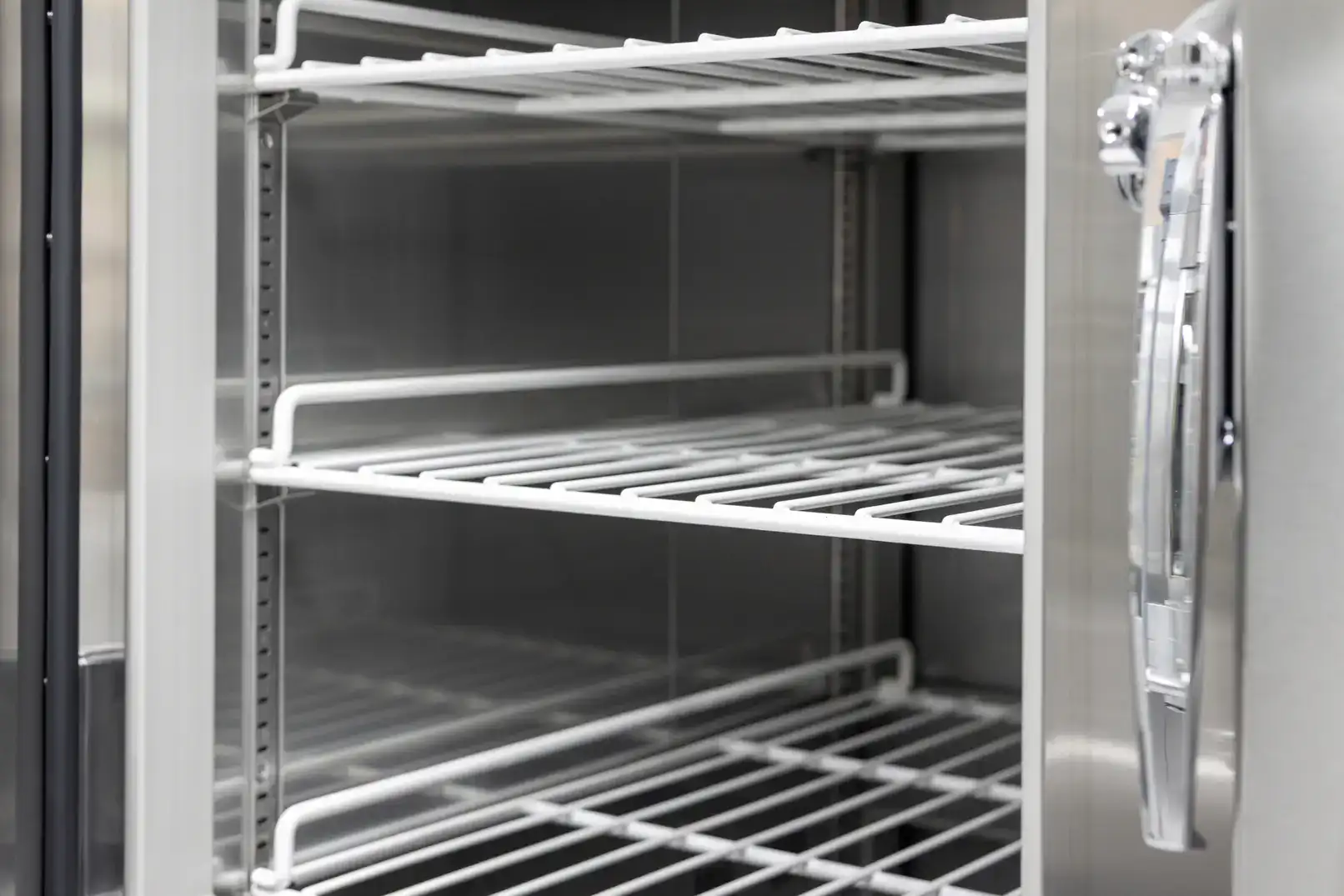
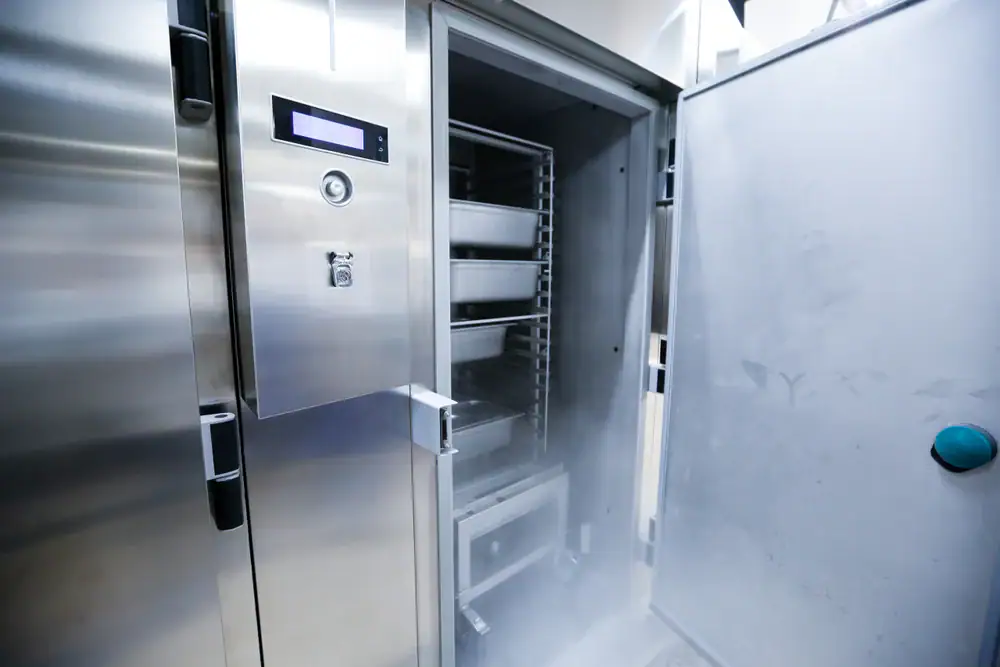
Walk-in coolers are the piece of equipment most operators can least afford to lose. They hold the most inventory, they’re the hardest to work around when they fail, and they’re often the unit that gets pushed hardest during peak season. When you’re looking for a walk-in cooler technician in Nassau County, there are a few things that actually matter — beyond just who can get there fastest.
EPA Section 608 certification is the baseline. It’s legally required for anyone handling refrigerants, and it’s not a credential you should have to ask about — a qualified technician will have it. Beyond that, authorized brand service status tells you the technician has been trained by the manufacturer and is using genuine OEM parts. That matters because an unauthorized repair with aftermarket components can void your equipment warranty, which on a commercial walk-in is worth protecting.
Response time is real, but it needs to be specific. “Fast service” means nothing. Under two hours across Nassau and Suffolk County — that’s a claim you can hold someone to. When your walk-in goes down on a Saturday afternoon in July, the difference between a one-hour response and a next-day response is the difference between saving your inventory and losing it. Long Island summers push compressors hard. The heat index regularly climbs above 95 degrees Fahrenheit, and that’s exactly when equipment that’s been running fine all spring decides it’s done.
Ask about parts availability before you commit to anyone. A technician who has to order the part and come back in three to five days is not the same as one who carries extensive inventory on the truck and can complete the repair in a single visit. That distinction is worth asking about directly.
**How do I know if my walk-in cooler needs repair or replacement?**
This is one of the most common questions, and it doesn’t have a universal answer — it depends on the age of the unit, the nature of the failure, and the cost of the repair relative to the remaining useful life of the equipment. A qualified technician should give you an honest assessment of both options, not default to the one that generates a larger invoice.
If the compressor on a 15-year-old unit fails and the repair cost approaches what a new unit would cost, replacement is often the smarter long-term decision. If it’s a gasket, a capacitor, or a drain line issue on a unit that’s otherwise in good shape, repair is almost always the right call. For Nassau County restaurants and delis operating on tight margins, that distinction can mean the difference between a manageable expense and a capital investment you weren’t planning for.
**What should I do if my walk-in cooler breaks down during service hours?**
The first hour matters most. If the unit is failing but still running, minimize how often the door is opened — every time it opens, warm air enters and accelerates how quickly the internal temperature rises. Cold food needs to stay below 41 degrees Fahrenheit to remain out of the FDA’s temperature danger zone, where bacteria multiply rapidly.
If you have another unit available, start moving the most temperature-sensitive inventory. Then call for emergency service immediately. In Nassau County, a company with a genuine under-two-hour response time and stocked trucks can often get there before the situation becomes a full inventory loss. We’ve handled Saturday afternoon emergencies across Garden City, Hempstead, and the North Shore communities — that’s when response time actually proves itself.
**How often should commercial refrigeration equipment be serviced?**
The honest answer is more often than most operators schedule it. High-volume commercial kitchens — where cooler doors open every few minutes — put significantly more wear on equipment than lower-traffic settings. A preventive maintenance visit catches the small things (dirty condenser coils, worn gaskets, early-stage drain line buildup) before they become emergency calls.
For most Nassau County restaurant and deli operations, a service interval of at least twice a year is reasonable, with a pre-summer check being particularly important given Long Island’s heat and humidity in July and August. That one visit in May or June can prevent the emergency call in the middle of your busiest season.
**Does it matter if the technician is authorized to service my specific equipment brand?**
Yes, and more than most operators realize. Authorized service means the technician has been trained by the manufacturer, follows manufacturer repair protocols, and uses genuine OEM parts. An unauthorized repair — even a technically competent one — can void your equipment warranty.
On commercial refrigeration equipment, that warranty is worth protecting. We’re authorized to service multiple brands, which means we can work on your equipment the right way without putting your coverage at risk.
The right repair service fixes the actual problem, shows up when it says it will, explains what it found, and doesn’t surprise you with the invoice. That’s not a high bar — but it’s one that a surprising number of operators only discover their service company can’t clear after something has already gone wrong.
Nassau County’s food service environment is demanding enough without adding unreliable equipment service to the list of things you’re managing. Whether you’re running a deli in Garden City, a catering hall near Jericho Turnpike, or a waterfront restaurant on the North Shore, your refrigeration equipment is working hard — and it deserves service that matches.
We’ve been doing this for forty years. We answer the phone. We show up when we say we will. And we fix the actual problem, not just the symptom. If you have questions about your equipment or want to know what a proper diagnostic looks like before committing to anything, reach out to Chill Xpert Solutions.
Article details:
Share:
Continue learning: