What does skipping refrigeration maintenance cost a Long Island restaurant? More than most owners realize, and the timing could not be worse.
Share:
Summary:
If you run a restaurant in Suffolk County, you already know the pressure. Margins are thin, the summer rush is relentless, and your equipment does not care that you are fully booked on a Saturday night. When a walk-in cooler starts struggling or stops working entirely, the consequences hit fast: spoiled inventory, a compromised service, and a health inspection risk you did not need.
Most refrigeration problems do not announce themselves dramatically. They build quietly until something breaks at the worst possible moment. We have covered what restaurant refrigeration maintenance involves, what it costs to skip it, and why Long Island’s specific conditions make regular servicing more important here than almost anywhere else.
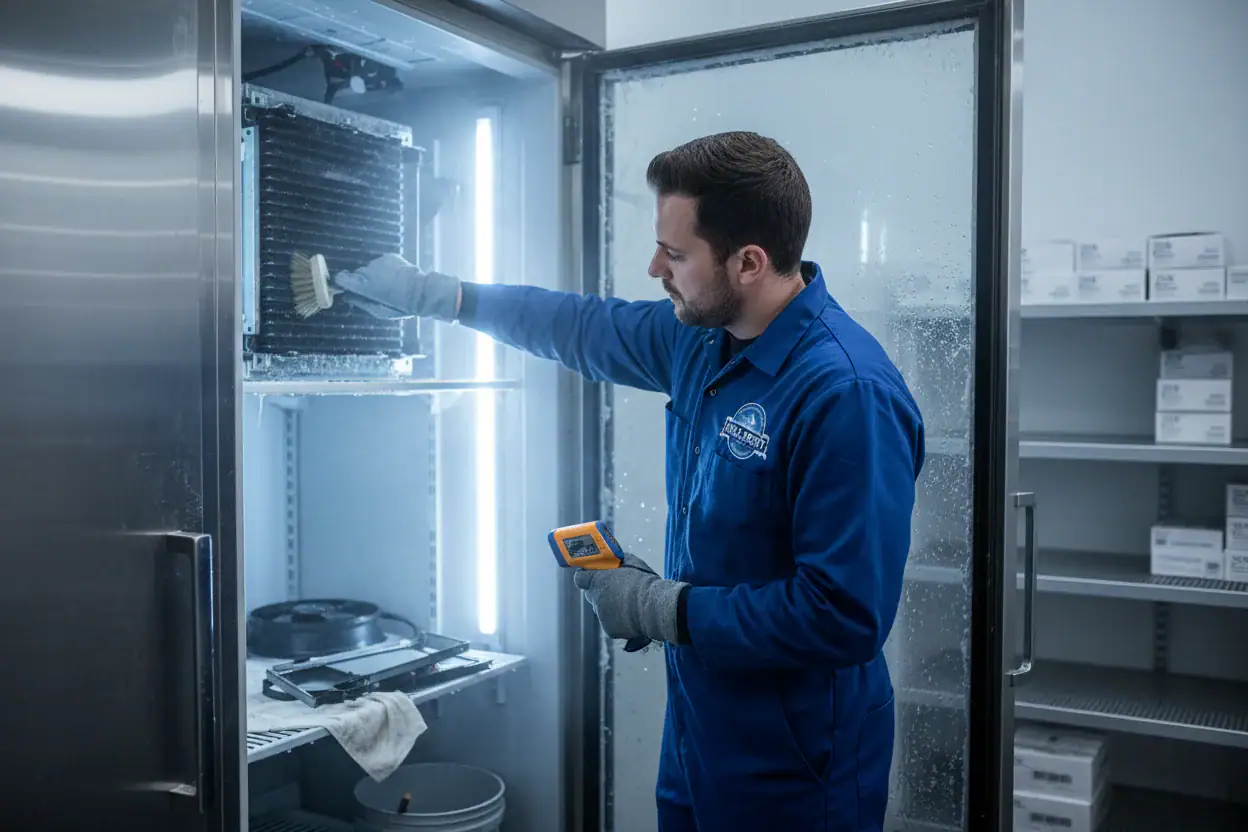
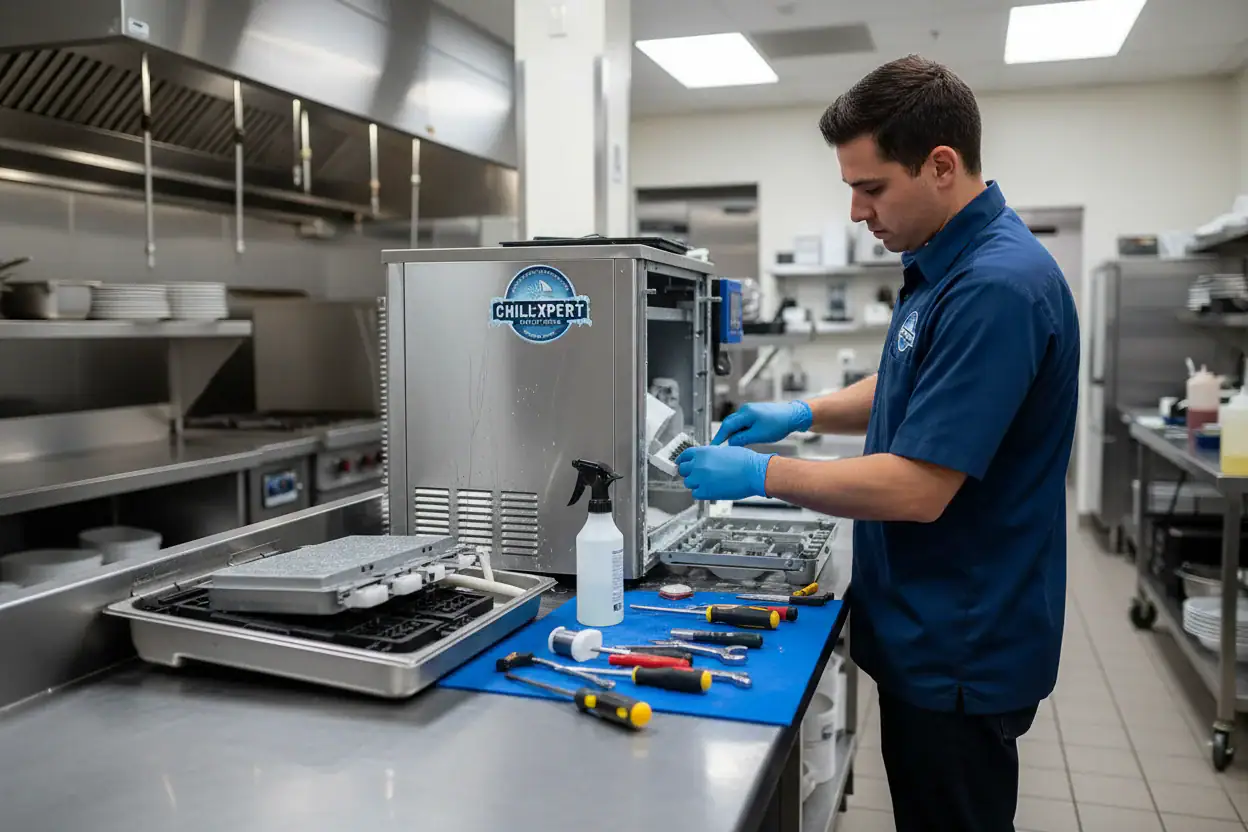
There is a common misconception that refrigeration maintenance is just cleaning the coils. It isn’t. A proper commercial maintenance visit covers the full system, including condenser coils, door seals and gaskets, refrigerant levels, compressor performance, electrical connections, thermostat calibration, fan motors, and drain lines. Every component that can quietly degrade between visits gets checked.
The goal is not to find something wrong. It is to catch early signs of wear before they turn into a failure. A door gasket that starts pulling away from the frame is not an emergency today, but left alone through a Long Island summer, it forces your compressor to work harder in the heat. That is how a $200 fix becomes a $700 compressor repair, plus labor and downtime.
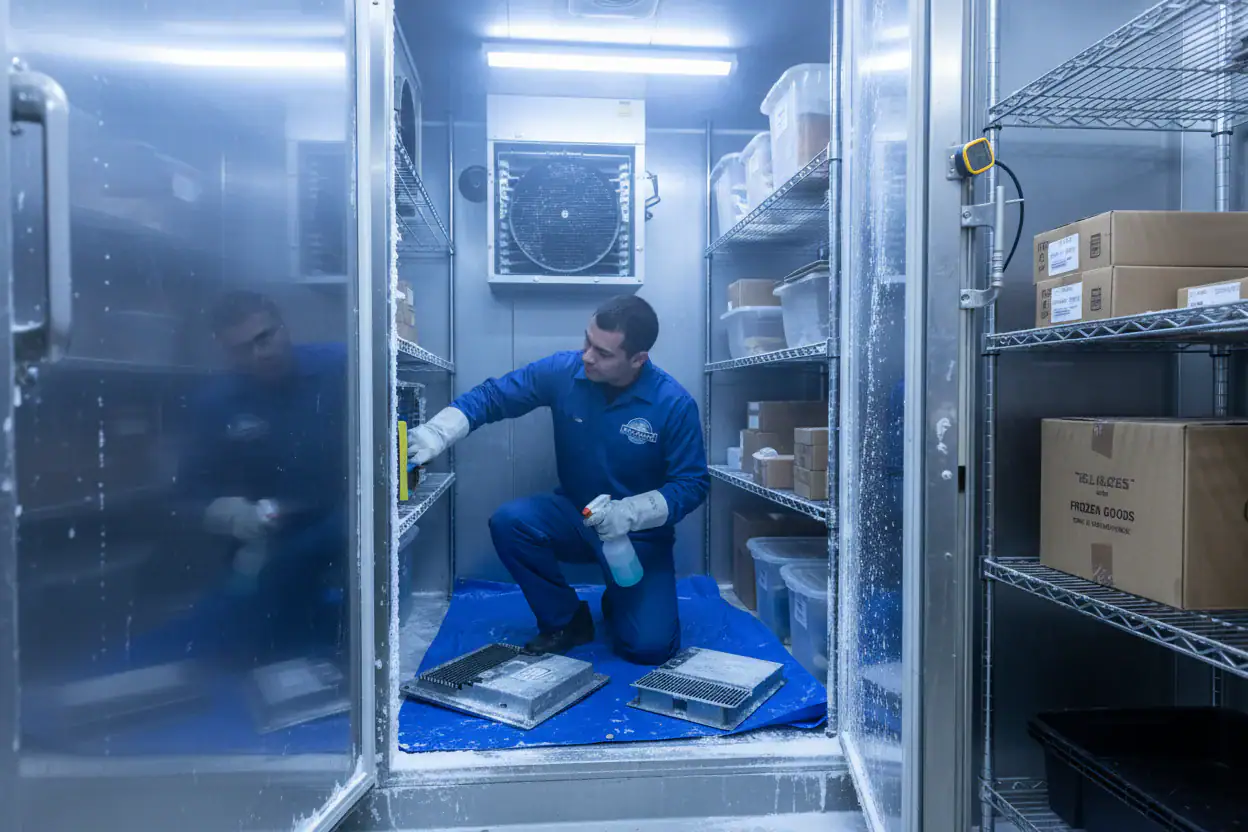
For most commercial operations on Long Island, twice a year is the baseline. High-volume restaurants, such as those doing heavy covers every night, running multiple walk-ins, or operating through the Hamptons summer season, benefit from quarterly visits. The equipment works harder, the stakes of a failure are higher, and the window between something being off and something breaking is shorter.
Timing matters too. We recommend scheduling a maintenance visit in April or early May, before the heat arrives. Long Island summers push into the mid-80s with high humidity, and that combination is genuinely hard on refrigeration compressors. The condenser has to reject heat into an already-hot environment, and if there is any restriction in airflow or loss of refrigerant charge, the system labors through the hottest months in a degraded state.
Waiting until fall to schedule maintenance means you have already run your equipment through its most demanding period without a professional assessment. By October, you might be looking at the damage summer caused rather than preventing it.
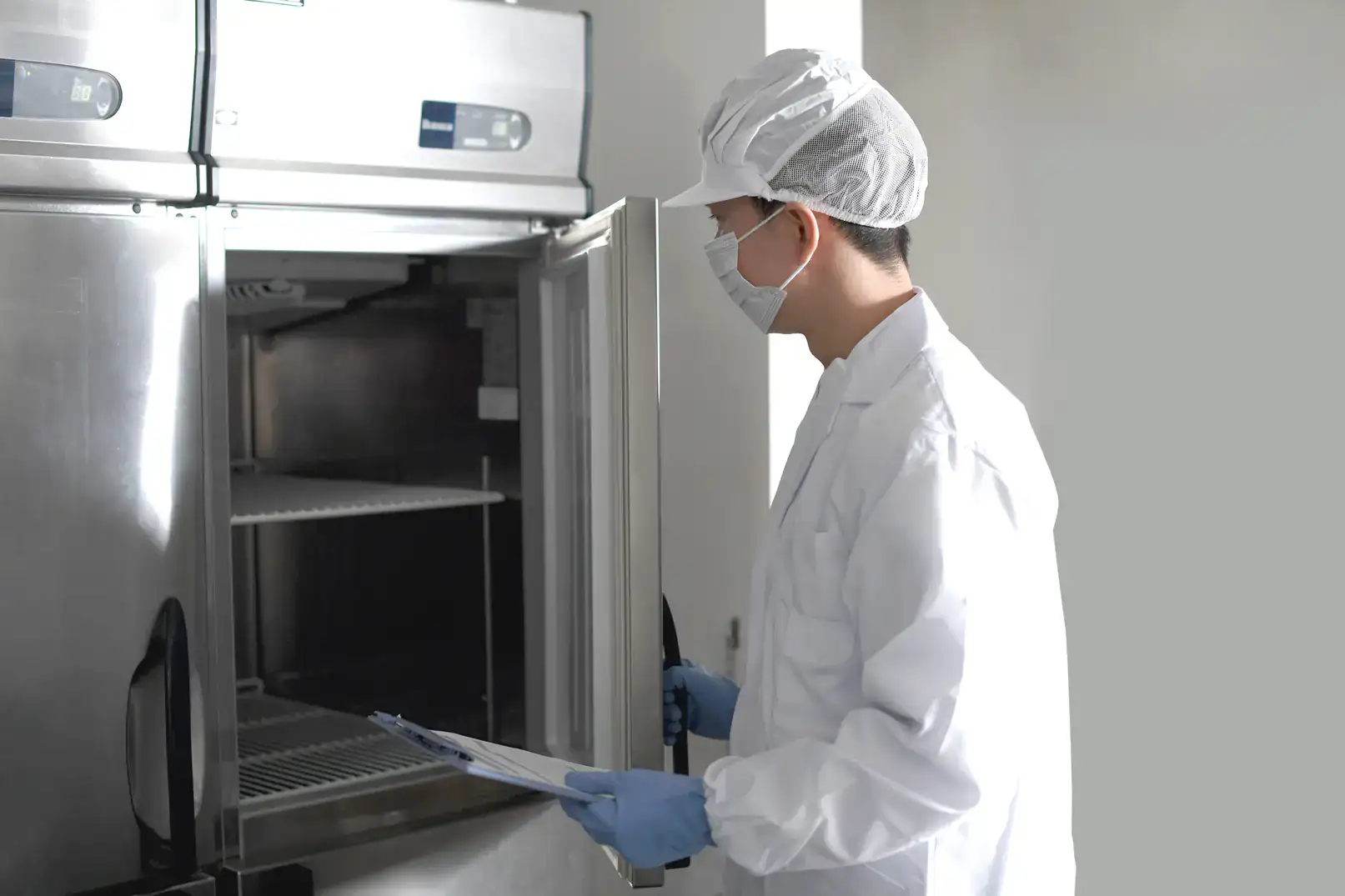
There is also a health inspection angle that does not get talked about enough. The Nassau County Department of Health’s Office of Food Protection oversees more than 5,700 permitted food service establishments across the county. Inspectors check cold-holding temperatures because the FDA Food Code requires 41 degrees Fahrenheit or below, and bacteria can double in number in as little as 20 minutes once food enters the temperature danger zone. A refrigeration system running warm because a coil has not been cleaned or a refrigerant charge is low is not just an equipment problem. It is a compliance problem. Staying ahead of maintenance is one of the more direct ways to stay ahead of inspection issues.
The equipment lifespan argument is real too. Industry data consistently shows that preventive maintenance can extend the life of commercial refrigeration systems by up to 30 percent. For a walk-in cooler that might otherwise need replacement in ten years, that means three additional years of use. The upfront cost of regular maintenance is minor compared to replacing a major refrigeration system ahead of schedule.
Consider the number most restaurant operators ignore until it is too late: a single walk-in cooler failure can destroy between $5,000 and $20,000 in perishable inventory in under four hours. That happens before the emergency service call, before parts, and before lost revenue from a compromised dinner service.
Emergency repairs cost three to five times more than scheduled maintenance. A compressor failure alone can run $200 to $700 in parts, plus $100 to $200 per hour in labor. Factor in a four-hour outage at a restaurant doing solid volume on a summer weekend, and the total cost of that single event, covering inventory, repair, and lost sales, easily reaches $5,000 to $15,000.
The harder cost to quantify involves what happens afterward. A restaurant losing a walk-in on a Friday night scrambles. Staff improvise, service suffers, and if a health inspector visits during or shortly after a temperature excursion, the consequences extend well beyond the repair bill.
The math makes a strong case for maintenance being one of the most financially sound decisions a restaurant operator can make. Research consistently shows that preventive maintenance reduces emergency refrigeration repairs by roughly 70 percent. Most failures do not come out of nowhere; they result from deferred maintenance.
For restaurants in Suffolk County running through the summer tourism surge, when volume peaks, temperatures hit their highest points, and every component works under maximum load, the margin for error is thin. The time to address a struggling system comes before the Hamptons season, not during it.
Want live answers?
Connect with a Chill Xpert Solutions expert for fast, friendly support.
Long Island is not a generic commercial market, and the refrigeration challenges here are not generic either. The combination of coastal humidity, salt air from the Long Island Sound and the Atlantic, summer heat, and dramatic seasonal volume swings creates specific demands on commercial refrigeration equipment that technicians without local experience may not fully appreciate.
Salt air accelerates corrosion on standard components. High humidity puts additional strain on systems already struggling to maintain cold temperatures in hot kitchens. Furthermore, the seasonal nature of the Long Island restaurant market means equipment sitting relatively quiet in January gets pushed hard starting Memorial Day weekend, often without anyone checking its condition in the interim.
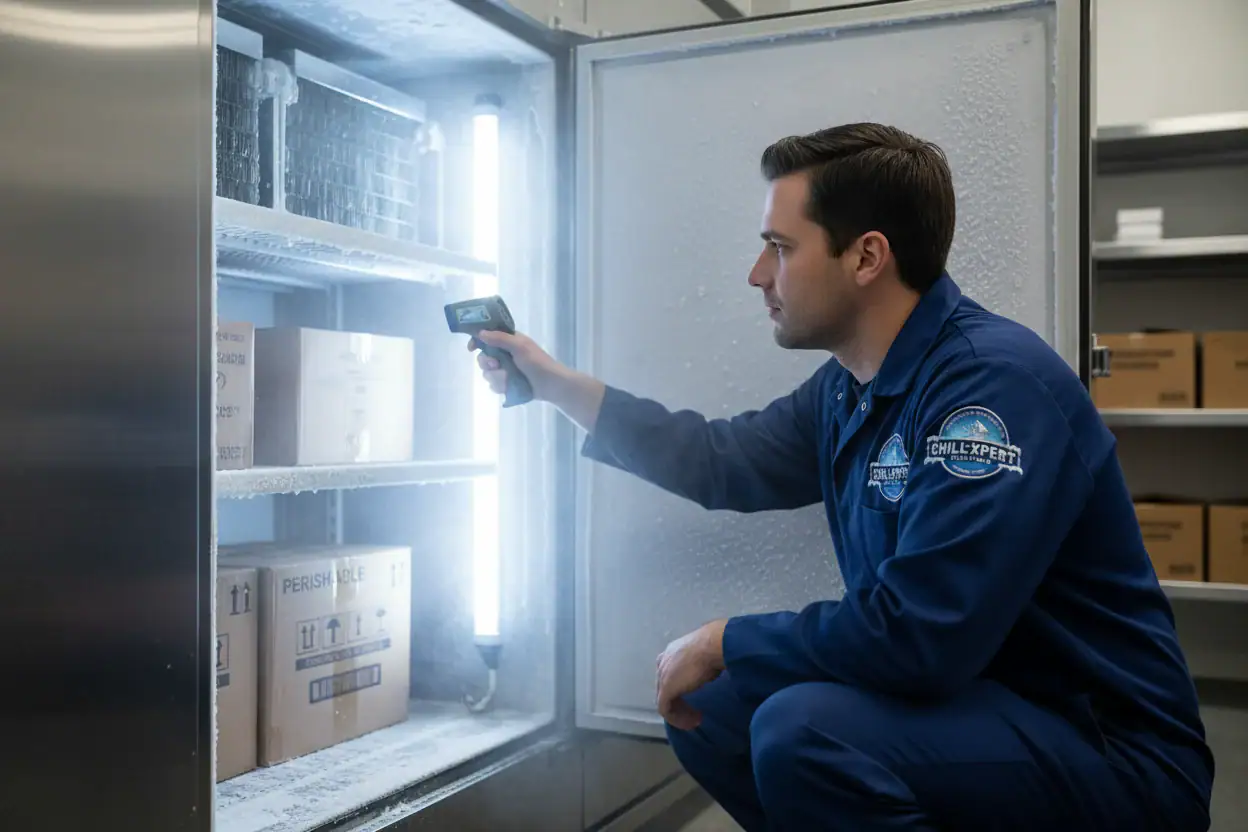
Most commercial refrigeration equipment is designed and tested for standard indoor environments. Long Island’s coastal conditions add variables accelerating wear in ways that are not always obvious until something fails.
Salt air serves as the most direct factor. Facilities near the water, such as restaurants in Island Park, delis in East Atlantic Beach, or catering operations along the South Shore, deal with airborne salt particles settling on condenser coils and electrical components. Over time, this accelerates corrosion on metal surfaces and degrades connections that would otherwise last years longer in inland environments. Regular maintenance including cleaning and inspecting these components is more important in coastal settings, not less.
Humidity compounds the issue. When ambient air stays consistently humid, describing most of Long Island from late spring through early fall, refrigeration systems must work harder to maintain temperature. Condensers reject heat less efficiently in humid air. Door seals and gaskets degrade faster when cycling repeatedly between cold, dry interior air and warm, humid exterior air throughout busy services. Ice machines are particularly sensitive to humidity fluctuations.
Then there is the seasonal volume factor. The North Fork wine country, the Hamptons, Fire Island, and the broader South Shore coastal communities experience dramatic tourist population increases from Memorial Day through Labor Day. A restaurant serving a few hundred covers on a January weeknight might execute three to five times that volume on a July Saturday. That poses no problem if equipment is in good shape, but it quickly becomes an issue if a compressor already runs hot or a refrigerant charge is slightly low heading into the season.
We have spent over four decades servicing equipment across Nassau County and Suffolk County, including marine HVAC systems for yacht clubs from Montauk to Manhattan where saltwater corrosion and humidity are constant factors. That experience provides a deeper familiarity with how Long Island’s environment impacts refrigeration equipment over time, shaping how we prioritize maintenance and identify concerns.
One frequent question concerns the difference between refrigeration maintenance and refrigeration repair. Maintenance is scheduled, proactive, and focused on keeping systems running at full efficiency through cleaning, calibrating, checking, and catching early wear before failure strikes. Repair is reactive, happening after something breaks. This distinction matters because reactive repair almost always costs more, takes longer, and happens at the worst possible times.
Another common question asks if new equipment still needs maintenance. Yes. New commercial refrigeration equipment requires regular servicing to perform as designed, maintain manufacturer warranty coverage, and catch installation-related issues developing in the first year of operation. Skipping early maintenance on new equipment is a reliable way to void warranties and establish early failure patterns.
What signs should you watch for before failure occurs? The indicators are usually subtle: units running longer than usual before cycling off, frost buildup in unusual places, slight increases in temperature readings, or compressors sounding different by running louder or more continuously. Any of these warrants a call before turning into an emergency.
For restaurants in Suffolk County specifically, does it matter if technicians possess local experience? It does, particularly for coastal locations. Technicians understanding how salt air affects condenser coils, what Long Island summer humidity means for system load, and what Nassau County Department of Health inspection standards require for cold-holding compliance bring essential context that generalists lack.
Finally, is a maintenance contract worth it for smaller operations? That depends on volume and equipment age, but the math generally favors it. Predictable maintenance costs prove easier to budget than unpredictable emergency calls. For restaurants running through the summer season on Long Island, where peak-volume failures prove costly, scheduled maintenance relationships offer clear value.
The right maintenance provider is not just someone showing up when things break. It is someone who knows your equipment, understands Long Island’s specific conditions, and identifies problems before they develop. We hold EPA Section 608 certification, avoid subcontractors entirely, and have spent over four decades working across Nassau County and Suffolk County. That experience differentiates providers who treat your kitchen like any random job from those who truly understand your operational realities.
If your refrigeration equipment is overdue for a service visit, or if you are heading into summer without a maintenance plan, getting ahead of it now is wise. Reach out to Chill Xpert Solutions for a free estimate to discover what a scheduled maintenance relationship looks like for your operation.
Article details:
Share:
Continue learning: