Repair or replace? It's the question every Nassau County restaurant owner dreads. Here's the honest financial framework that helps you decide — without relying on a contractor's word alone.
Share:
Summary:
You get a call — or you walk into your kitchen yourself — and the cooler isn’t holding temperature. Maybe it’s been struggling for a while. Maybe it just died overnight. Either way, you’re now staring at a decision that could cost you anywhere from a few hundred dollars to tens of thousands, and you need to make it fast.
The problem is, most business owners in Nassau County, NY make this call based on whatever a technician tells them — and not every technician has your best interests in mind. We’ve built our reputation on giving you a real framework for thinking through the repair-or-replace decision on your own terms, so you’re not flying blind when someone hands you a quote.
The repair-or-replace decision isn’t a gut call — it’s a math problem with a few key variables. The most important ones are the age of your unit, the cost of the repair relative to what a replacement would run, how often you’ve needed service in the past year, and what your energy bills have been doing lately.
A unit that’s under ten years old, hasn’t needed repeated repairs, and has a straightforward fix — a failed thermostat, a worn door gasket, a relay that needs swapping — is almost always worth repairing. The math is simple: minor repairs typically run between $150 and $400, and that’s a fraction of what a new walk-in cooler costs to purchase and install.
Where it gets more complicated is when the repair is major, the unit is aging, or you’ve already paid for two or three service calls in the past twelve months. That’s when the calculation shifts.
The industry standard most technicians reference is something called the 50% rule: if the cost of a repair exceeds 50% of what it would cost to replace the unit outright, replacement deserves serious consideration. It’s a useful starting point, but it’s not the whole picture.
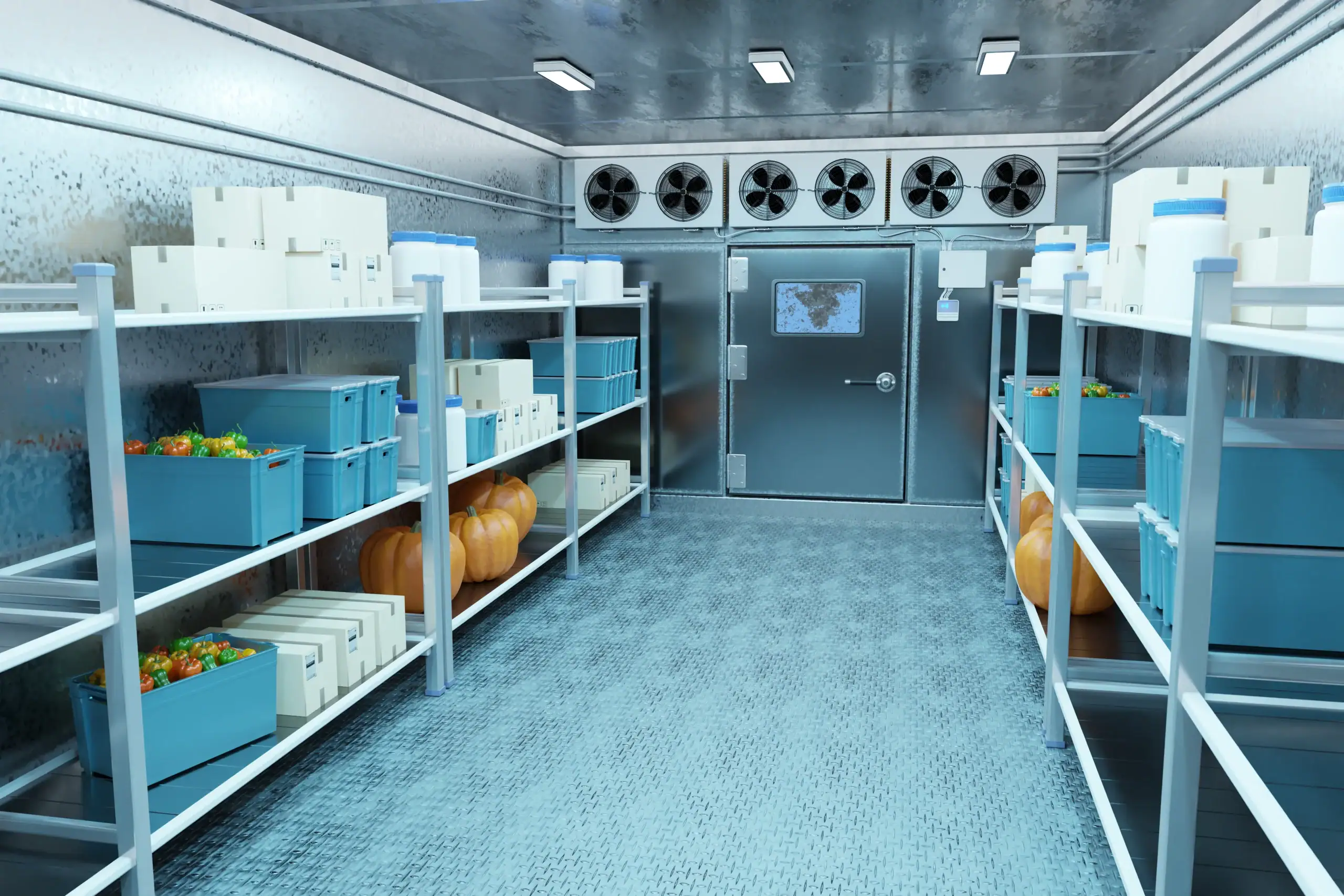
Age matters a lot here. Walk-in coolers are rated by most manufacturers for about 15 years of useful life, though well-maintained units routinely last 15 to 20 years. If your unit is under 10 years old and the repair cost is well below that 50% threshold, repair is almost certainly the right call.
But if you’re looking at a compressor failure on a 13-year-old unit — and a compressor repair can run anywhere from $800 to $2,000 in parts alone, plus another $1,000 to $1,500 in labor — the math starts pointing toward replacement.
There’s another variable that doesn’t get talked about enough: frequency. A unit that needed a repair six months ago, and another one before that, is telling you something. Each individual repair might look reasonable on paper, but the cumulative cost adds up fast — and so does the risk of a catastrophic failure at the worst possible moment. For Nassau County restaurants and catering halls, that moment is always a Saturday night or a holiday weekend.
Energy efficiency is the third piece. An aging walk-in cooler that’s running inefficiently can consume significantly more power than a newer unit — and that shows up on your utility bill every single month, long before the unit actually fails. A new installation done right can save up to $150 annually in energy costs, which isn’t enormous on its own, but factors into the true long-term cost comparison.
The honest version of the 50% rule looks like this: if repair cost exceeds 50% of replacement cost, and the unit is over 10 years old, and you’ve had multiple service calls in the past year, and your energy bills have been climbing — that’s when replacement becomes the financially sound choice, not just the convenient one a contractor is pushing.
Yes — with a few differences worth knowing. Walk-in freezers operate under more mechanical stress than coolers because they’re working harder to maintain lower temperatures, especially during Nassau County’s hot and humid summers. That added strain tends to accelerate wear on compressors and condenser coils, which means freezer components may need attention sooner than equivalent cooler components would.
The cost thresholds are similar. Minor freezer repairs — gaskets, thermostats, door hardware — fall in the same $150 to $400 range. Major repairs like compressor or evaporator coil work are priced comparably to cooler repairs, though the specific figures depend on the unit’s size, brand, and configuration. Evaporator coil replacement, for example, typically runs $300 to $1,200.
One thing that’s specific to freezers: ice buildup on the evaporator coil is a common symptom that business owners sometimes ignore or work around. It’s worth addressing early. Left alone, it forces the compressor to work harder, shortens its lifespan, and turns a relatively simple fix into a much more expensive one. The same principle applies to door seals — a freezer door that isn’t sealing properly is costing you money in energy and component wear every hour it runs.
The structural components of a walk-in box — the insulated panels — tend to outlast everything else when they’re properly maintained. If the panels are in good shape, that’s a strong argument for repair over replacement, even on an older unit. The panel construction is often the most expensive part of a new installation, so if yours is sound, you’re not starting from zero.
Want live answers?
Connect with a Chill Xpert Solutions expert for fast, friendly support.
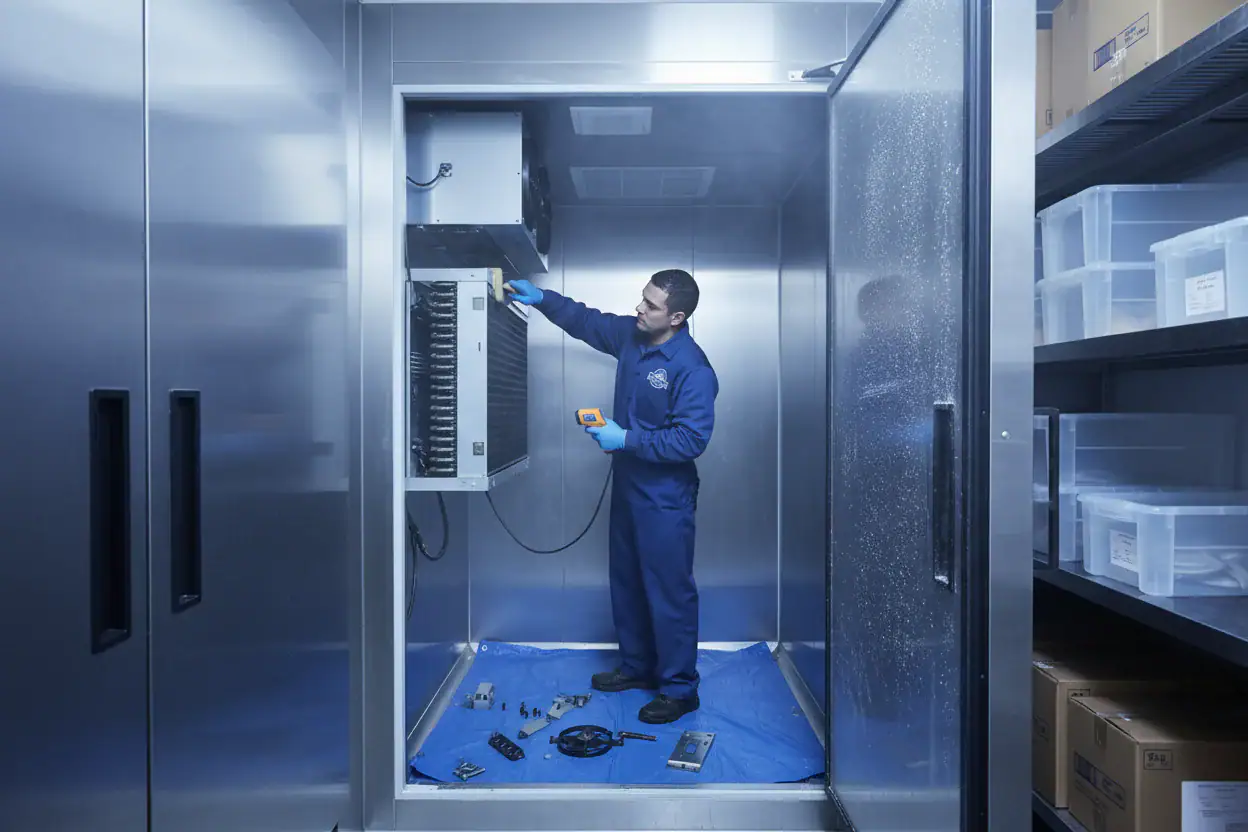
A proper commercial cooler repair starts with a real diagnosis — not a glance at the unit and a quote for a new compressor. Our technicians check refrigerant levels, inspect the condenser and evaporator coils, test door seals, review electrical connections, and look at the full picture before recommending anything.
What you should walk away from a service call with is a clear explanation of what failed, why it failed, and what was done to fix it. If a technician can’t tell you that in plain language, that’s worth paying attention to. Honest diagnostics aren’t just good service — they’re how you know whether the recommendation you’re getting is actually in your interest.
Nassau County has a dense concentration of restaurants, delis, and catering halls — particularly along corridors like Hempstead Turnpike and Sunrise Highway, and in the catering-heavy communities around Westbury and Carle Place. These are businesses that run on tight margins and can’t afford to have a cooler down for days while they wait for a technician to show up with the right part.
A quality commercial refrigeration repair visit should accomplish a few things. First, the technician arrives with a well-stocked truck — not a van with a few basic tools and a promise to order parts. Approximately 70% of our emergency calls get resolved on the first visit because our service vehicles carry extensive parts inventory. That matters enormously when you’re losing product by the hour.
Second, the diagnosis should be thorough. There’s a real pattern in this industry of technicians identifying the most obvious symptom, replacing that part, and leaving — only for the underlying problem to surface again two weeks later. A root-cause diagnosis takes longer and requires more experience, but it’s the difference between a repair that holds and one that doesn’t.
Third, you should receive a written estimate before any work begins. Upfront, transparent pricing isn’t a bonus — it’s the baseline. If a technician starts working before you’ve agreed to a price, that’s a problem.
One local factor worth knowing: Nassau County’s coastal environment — particularly along the South Shore communities near Great South Bay and the North Shore along Long Island Sound — accelerates corrosion on outdoor condenser units. Salt air is hard on equipment. If your condenser is located outside and you’re close to the water, that’s something a technician should be checking as part of any service visit, not just when there’s an obvious failure.
**How much does it cost to repair a commercial walk-in cooler?**
It depends on what’s failed. Minor repairs — replacing a thermostat, swapping a relay, adjusting a door hinge — typically run between $150 and $400. Major repairs, like replacing a compressor or rebuilding a condensing unit, can range from $1,500 to over $4,000 depending on the unit and the parts involved. Emergency service calls in Nassau County tend to fall somewhere between $300 and $1,200 or more, depending on what’s needed. We provide written estimates before any work starts, so you know exactly what you’re agreeing to.
**How long should a commercial walk-in cooler last?**
Most manufacturers rate them at around 15 years. With regular maintenance, units routinely last 15 to 20 years. Neglected units often start causing serious problems before the 10-year mark. The structural panels tend to outlast the mechanical components significantly — so even an older unit may be worth repairing if the box itself is in good condition.
**Is it worth repairing a walk-in cooler that’s over 10 years old?**
Often, yes — but it depends on the specific repair and your unit’s history. If the repair is straightforward and the unit has been well-maintained, age alone isn’t a reason to replace it. Where it gets complicated is when the compressor is failing on a unit that’s 12 or more years old and the repair cost approaches or exceeds $1,500. At that point, replacement is worth running the numbers on seriously. We’ve been helping Nassau County, NY businesses make this call honestly since the 1980s — and our answer is always based on what the math actually says, not what generates a larger invoice.
**What are the most common reasons a walk-in cooler stops cooling?**
The most frequent culprits are compressor failure, refrigerant leaks, dirty or blocked condenser coils, failing door gaskets, and thermostat issues. In Nassau County specifically, salt air corrosion on outdoor condenser units is a contributing factor for businesses near the water — it’s something we check routinely on service calls in South Shore and North Shore communities.
**How do I know if a technician is actually qualified to work on commercial refrigeration?**
EPA Section 608 certification is the federal legal requirement for any technician who handles refrigerants. It’s not optional — it’s the law. Beyond that, look for technicians who work directly for the company, not subcontractors, and who can explain their findings in plain language. All of our technicians at Chill Xpert Solutions carry EPA 608 certification and are employees, not third-party contractors.
The repair-or-replace decision doesn’t have to be a leap of faith. When you understand the variables — unit age, repair cost relative to replacement, recent service history, energy efficiency — it becomes a solvable problem, not a contractor’s judgment call you have to take on trust.
For most Nassau County businesses, repair is the right answer more often than the industry would have you believe. But when replacement is genuinely the smarter financial move, knowing that clearly — and acting on it before a catastrophic failure forces your hand — is what protects your business.
If you’re working through this decision right now and want a straight answer from someone who’s been doing this since the 1980s, Chill Xpert Solutions offers free estimates and 24/7 consulting. No pressure, no guesswork — just an honest look at your unit and a clear recommendation you can actually trust.
Article details:
Share:
Continue learning: