That thermostat or sensor controlling your walk-in cooler? When it fails, temperatures swing wildly and inventory spoils fast. Here's what you need to know.
Share:
Summary:
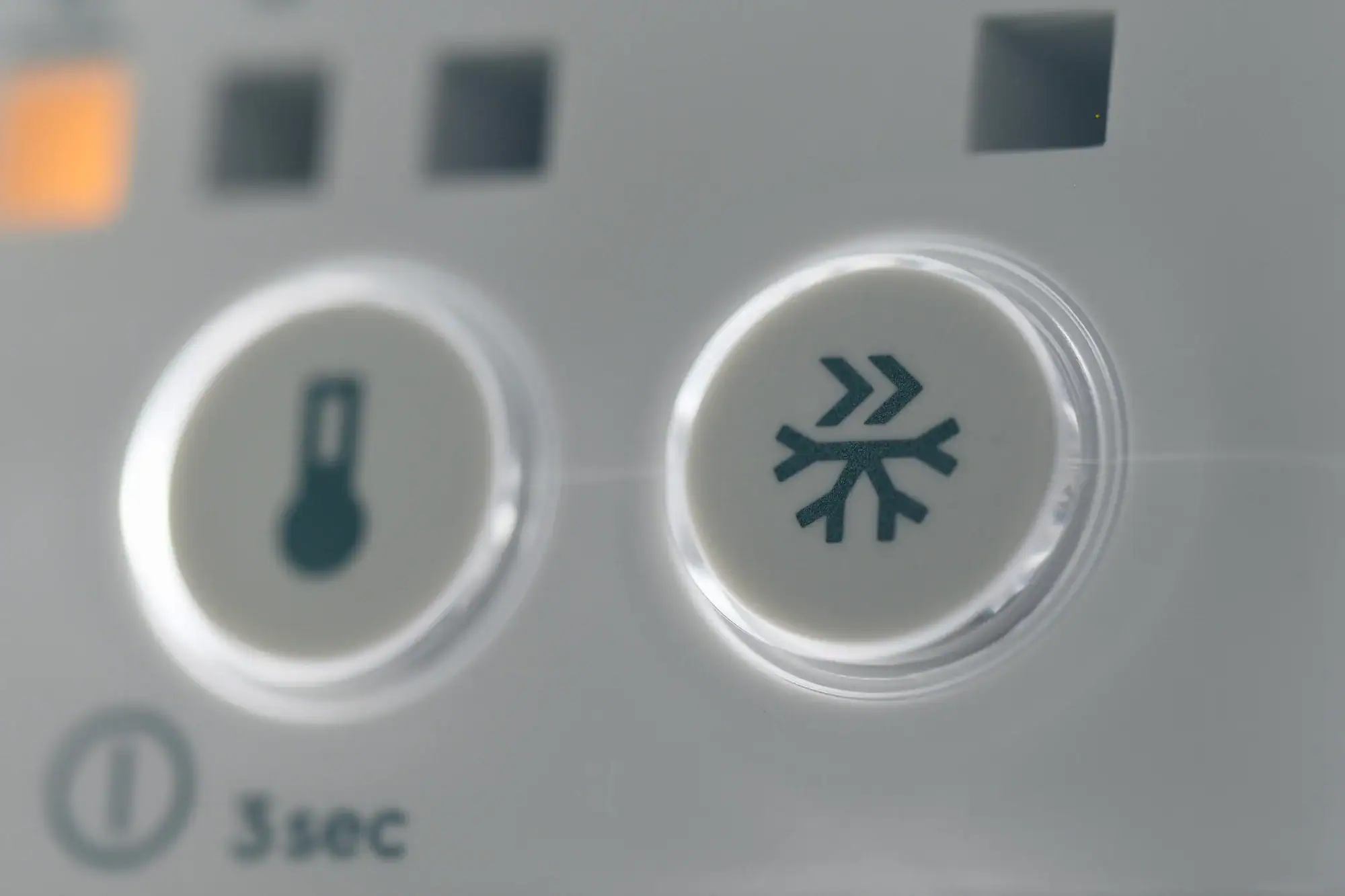
Think of your refrigeration system like a conversation between three key players. The temperature sensor continuously monitors the air temperature inside your cooler or freezer. It sends that information to the control board, which acts like the system’s brain. The control board then tells the compressor when to turn on and off to maintain your set temperature.
When everything works correctly, this happens seamlessly. Your cooler stays at 38°F. Your freezer holds at 0°F. The compressor cycles on and off at appropriate intervals, and you never think twice about it.
But when one of these components malfunctions, that conversation breaks down. A faulty sensor might tell the control board your cooler is at 45°F when it’s actually 35°F. The board responds to bad information by keeping the compressor off when it should be running. Or a failing thermostat might not respond to temperature changes at all, letting your cooler creep into the danger zone where bacteria multiply rapidly.
Temperature sensors and thermostats don’t usually fail overnight. They degrade gradually, which is why you might notice inconsistent performance before complete failure. Several factors contribute to these failures, and understanding them helps you catch problems early.
Age and wear top the list. Sensors exposed to constant temperature fluctuations and humidity eventually drift out of calibration. The electrical components inside degrade over time, especially in Long Island’s humid climate where moisture accelerates corrosion. A sensor that once provided accurate readings within a degree or two might now be off by five or ten degrees.
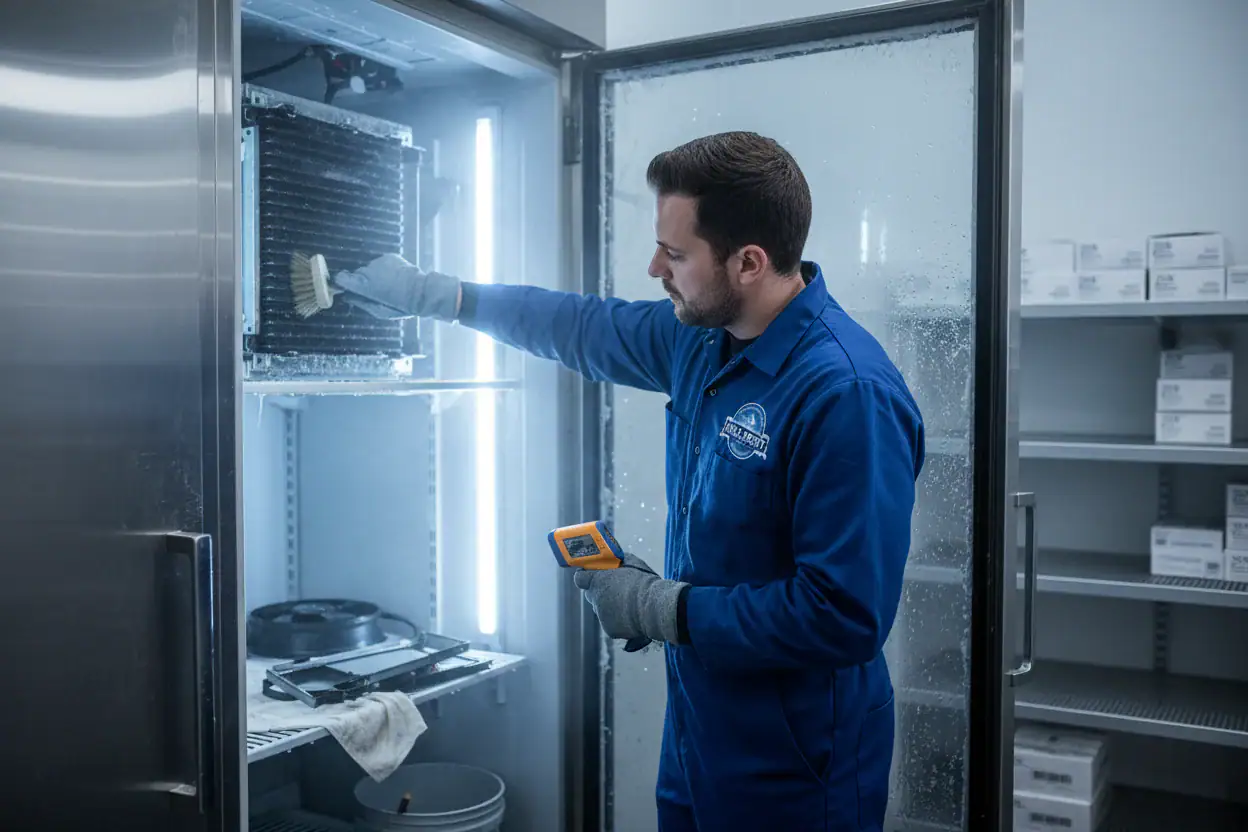
Physical damage happens more often than you’d think. Sensors located near evaporator coils can get damaged during cleaning or maintenance. Frost buildup can block sensors, preventing them from reading actual air temperature. Even something as simple as a sensor being bumped or knocked loose during restocking can throw off your entire system.
Electrical issues create their own set of problems. Loose wiring connections between the sensor and control board disrupt communication. Power surges can damage sensitive electronic components. Corroded terminals prevent proper signal transmission. These electrical faults often create intermittent problems that are maddeningly difficult to diagnose because they come and go.
Environmental stress accelerates failure in commercial settings. Walk-in coolers and freezers work hard, cycling frequently based on door openings, product loads, and ambient temperature changes. Sensors in high-traffic coolers experience more temperature swings than those in less-used units. Marine environments add salt air corrosion to the mix. All this stress compounds over time.
The control board itself can fail independent of the sensors. Capacitors wear out, causing temperature control malfunctions. Circuit board components can burn out or develop cold solder joints. When the board fails, it might misinterpret perfectly good sensor data, or it might not respond to sensor signals at all. You end up with erratic temperature control even though the sensor is working fine.
Refrigeration thermostat problems and sensor failures show up in predictable patterns once you know what to look for. Catching these symptoms early prevents the catastrophic failures that cost thousands in spoiled inventory.
Inconsistent temperatures are the most obvious red flag. Your cooler reads 36°F in the morning, 44°F by afternoon, and 32°F overnight—all without you changing any settings. Different areas of the same unit show wildly different temperatures. Products near the door spoil while items in the back freeze. This inconsistency screams sensor or thermostat malfunction.
Your system might run constantly without ever reaching the set temperature. The compressor never shuts off, your energy bill climbs, but the cooler still feels too warm. Or the opposite happens—the compressor short cycles, turning on and off every few minutes without completing proper cooling cycles. Both patterns indicate the control system isn’t accurately sensing or responding to temperature.
Food spoilage accelerates noticeably. Products that normally last a week are going bad in three days. You’re throwing out more inventory than usual. Your staff mentions items feeling warmer than they should. These aren’t just bad luck—they’re symptoms that your refrigeration temperature control issues are compromising food safety.
The temperature display might stop responding to adjustments. You turn the dial or adjust the digital setting, but nothing changes. The system ignores your input because the thermostat or control board can’t process the command. Sometimes the display itself goes dark or shows error codes, making the problem obvious.
Unusual cycling patterns emerge. Your freezer runs through defrost cycles at odd times or too frequently. The compressor kicks on at seemingly random intervals rather than in response to actual temperature needs. The evaporator fan runs when it shouldn’t, or doesn’t run when it should. These erratic behaviors point directly to control system failures.
You might notice the unit freezing when it should be cooling, or not getting cold enough to freeze. A walk-in cooler that’s supposed to maintain 38°F starts freezing produce at 28°F. A freezer that should hold 0°F can’t get below 15°F. The thermostat has lost its ability to maintain the correct temperature range, creating problems regardless of which direction it drifts.
Want live answers?
Connect with a Chill Xpert Solutions expert for fast, friendly support.
When you’re dealing with walk-in cooler temperature problems, systematic troubleshooting saves time and prevents expensive misdiagnosis. Start with the simplest possibilities before assuming you need major repairs.
First, verify your temperature settings haven’t been accidentally changed. It sounds basic, but someone adjusting controls during cleaning or restocking causes more problems than you’d expect. Check that the thermostat is set to your intended temperature and that any timer settings are correct.
Next, confirm what temperature you’re actually dealing with. Don’t rely solely on the built-in display. Place an independent thermometer inside the unit and check it after a few hours. Compare that reading to what your system displays. A significant difference—more than two or three degrees—indicates sensor or display problems.
Look for obvious physical issues. Inspect the sensor location for frost buildup, physical damage, or anything blocking it from accurately reading air temperature. Check that the sensor hasn’t been knocked loose or disconnected. Examine wiring for visible damage, corrosion, or loose connections. Many temperature control issues stem from simple physical problems that are easy to fix once identified.
Sometimes the sensors and thermostats check out fine, but your refrigeration is still not holding temperature correctly. That’s when you need to consider control board failure—a more complex issue that requires professional diagnosis.
Control boards fail in ways that mimic sensor problems, which is why proper diagnosis matters. The board might receive accurate temperature data from a working sensor but misinterpret it due to failed components. Or it might not send proper signals to the compressor and fans even though it knows the temperature is wrong. The symptoms look similar to sensor failure, but the fix is completely different.
Erratic temperature swings despite good sensors typically indicate board issues. If you’ve verified your sensors are reading accurately but the system still cycles inappropriately, the control board’s decision-making circuitry has likely failed. It’s getting the right information but making the wrong choices about when to run the compressor.
Electronic control boards are more precise than mechanical systems, but they’re also more vulnerable to electrical problems. Power surges, voltage fluctuations, and electrical interference can damage sensitive components. Capacitors fail over time, causing temperature instability. Circuit traces can crack from thermal stress. These failures often develop gradually, creating intermittent problems before complete failure.
Testing control boards requires specialized knowledge and equipment. A technician can check voltage inputs and outputs, verify the board is sending proper signals to system components, and determine if the board is correctly interpreting sensor data. They’ll often enter diagnostic mode to manually trigger components and see if the board responds appropriately.
Replacing a control board isn’t always straightforward. The new board may need programming or calibration specific to your system. Sensor compatibility matters—some boards only work with certain sensor types. Installation requires proper electrical connections and often involves updating firmware or adjusting settings. This is why control board replacement typically requires professional service rather than DIY attempts.
The cost of control board replacement seems high until you consider the alternative. A failing board that’s not caught early can damage other system components. It can cause the compressor to run incorrectly, shortening its lifespan significantly. The ongoing food spoilage from temperature fluctuations quickly exceeds the repair cost. Addressing board failures promptly actually saves money in the long run.
Food spoilage due to temperature control problems hits your bottom line harder than almost any other equipment issue. Understanding how to prevent these problems protects both your inventory and your business reputation.
The temperature danger zone—40°F to 140°F—is where bacteria multiply rapidly, doubling every 20 minutes under ideal conditions. Commercial refrigerators must stay at 40°F or below to keep food safe. Even brief excursions into the danger zone compromise food safety. When temperature sensors or thermostats malfunction, your cooler might spend hours in this danger zone without you realizing it until products start showing signs of spoilage.
More than 85% of food safety and product loss issues stem from temperature control problems in walk-in coolers and freezers. That’s not a coincidence—it’s because temperature is the single most critical factor in preventing bacterial growth and preserving food quality. When your control system fails, everything else fails with it.
Implementing temperature monitoring systems provides early warning of control system failures. Modern monitoring solutions use wireless sensors to track temperature continuously and alert you immediately when readings drift outside acceptable ranges. You catch problems in hours rather than days, often before any product is lost. These systems also create documentation for health department compliance and insurance claims.
Regular preventive maintenance catches control system problems before they cause failures. Professional technicians check sensor calibration, test control board function, inspect wiring connections, and verify proper system response to temperature changes. They catch sensors drifting out of calibration and control boards showing early signs of failure. The cost of preventive maintenance is a fraction of what you’ll lose to a single major spoilage event.
Staff training makes a real difference. Your team should know what normal system operation sounds and looks like. They should understand the importance of promptly reporting temperature fluctuations, unusual cycling, or any changes in how the unit performs. They should know not to adjust temperature settings without authorization and to avoid blocking or damaging sensors during restocking or cleaning.
Having a response plan for temperature control failures minimizes losses when problems do occur. Know who to call for emergency service. Have backup cooling options identified. Understand your insurance coverage for spoiled inventory. Keep temperature logs that document normal operation so you can prove when problems started. These preparations don’t prevent failures, but they dramatically reduce the damage when failures happen.
Long Island’s climate creates additional challenges for temperature control. Humid summers make systems work harder, increasing stress on control components. Salt air accelerates corrosion of electrical connections. Seasonal temperature swings affect how refrigeration systems cycle. Regular maintenance schedules should account for these environmental factors, with more frequent inspections during high-stress periods.
Small components like thermostats, sensors, and control boards have an outsized impact on your refrigeration system’s performance. When they fail, temperatures swing unpredictably, food spoils, and your business loses money every hour the problem continues.
Understanding how these components work and recognizing failure symptoms helps you catch problems early. Systematic troubleshooting identifies whether you’re dealing with sensor drift, thermostat malfunction, or control board failure. Preventive maintenance and temperature monitoring catch issues before they become crises.
Your refrigeration system is too critical to your business to leave temperature control to chance. When you’re facing refrigeration temperature control issues in Nassau County, Suffolk County, or anywhere on Long Island, we bring over 40 years of experience diagnosing and fixing exactly these kinds of problems. Our EPA-certified technicians understand how control systems work and can quickly identify whether your issue stems from sensors, thermostats, control boards, or other components—then fix it right the first time.
Article details:
Share:
Continue learning: