Your refrigeration system is draining profits. Learn which efficiency upgrades deliver measurable ROI—not gimmicks—for restaurants, delis, and commercial operations across Long Island.
Share:
Summary:
Refrigeration isn’t just another line item on your utility bill. For most commercial operations, it’s the single largest energy consumer you’re dealing with. Grocery stores and convenience stores can see refrigeration account for half their total energy use, while restaurants typically watch 15-20% of their electricity go straight into keeping food cold.
Long Island businesses face a double challenge. You’re dealing with PSEG rates that keep climbing, and you’re operating equipment in a climate that swings from humid summers that make compressors work overtime to winter cold that stresses seals and components. Your refrigeration system never gets a break, which means inefficiency compounds fast.
The good news is that commercial refrigeration technology has improved dramatically in the past decade. Motors that used to waste 85% of their energy as heat now run at 70-80% efficiency. Controls that used to run full-blast 24/7 now adapt to actual cooling demand. Insulation improvements and airflow optimization can cut runtime without any loss in performance. The question is knowing which upgrades make financial sense for your operation.
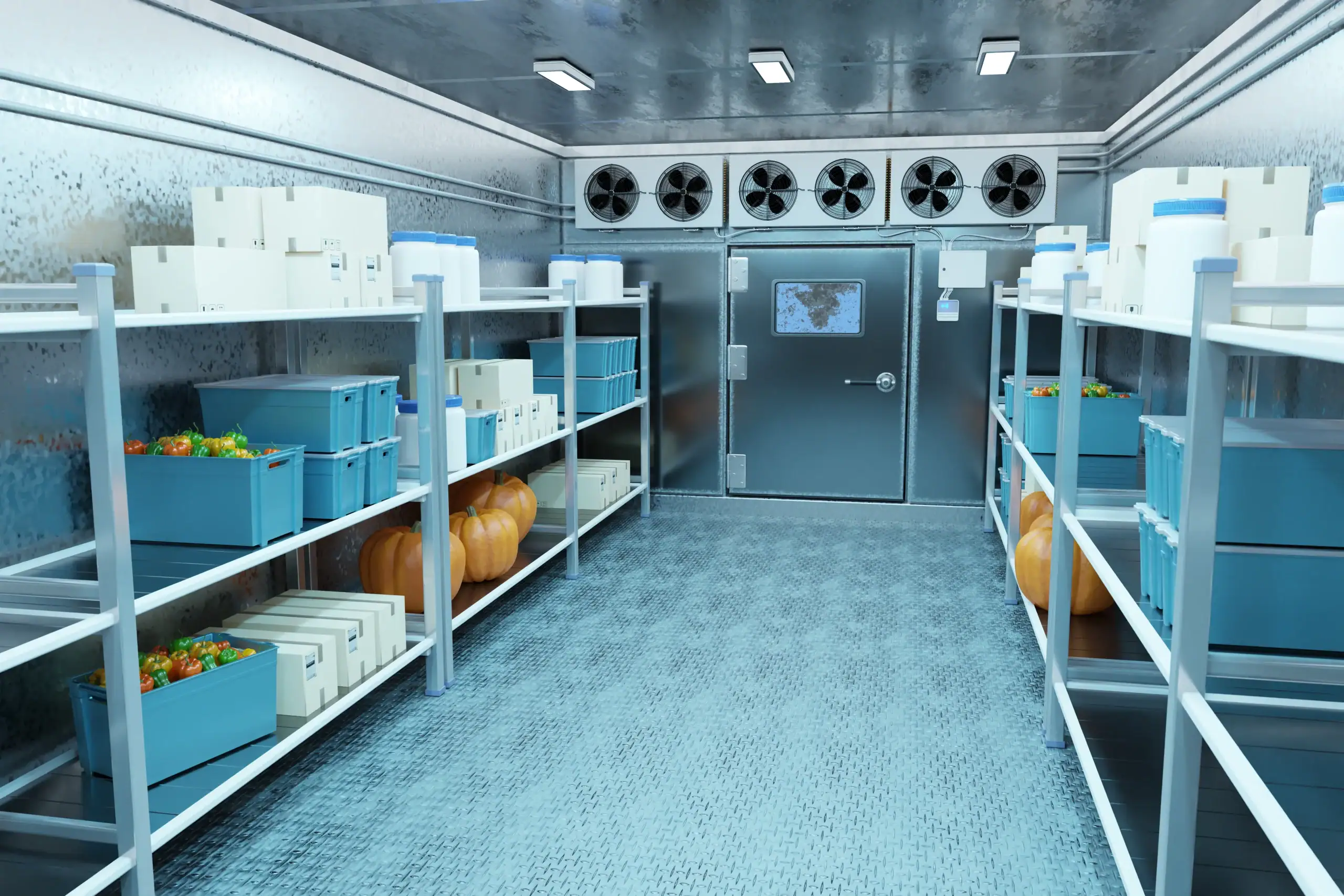
Before you spend a dollar on upgrades, you need to know where your energy is actually going. Most business owners are shocked when they see the breakdown. A typical commercial refrigeration system has three major energy consumers: the compressor, which does the heavy lifting of cooling; the evaporator fans, which circulate cold air inside your walk-in or case; and the condenser fans, which reject heat outside.
Here’s what surprises people: those evaporator fans running 24/7 inside your walk-in cooler might be drawing 99 watts each with old shaded-pole motors. Switch to ECM motors and you drop to 18 watts per fan—an 81% reduction—while maintaining the exact same airflow. Multiply that by 4-6 fans in a typical walk-in, running every hour of every day, and you’re looking at thousands of dollars in annual savings from one component upgrade.
The compressor is your biggest single draw, but it’s also the most sensitive to how well the rest of your system operates. If your evaporator fans are inefficient, they generate excess heat that makes your compressor work harder. If your defrost cycles run on a timer instead of actual need, you’re forcing your compressor to recover temperature multiple times a day unnecessarily. If your door seals are compromised or your insulation has degraded, your compressor cycles more frequently to compensate.
This is why a refrigeration energy audit makes sense before you start writing checks. A proper audit identifies your baseline consumption, breaks down where energy is going, and calculates potential savings from specific upgrades. You’re not guessing about ROI—you’re looking at actual numbers based on your equipment, your usage patterns, and your current energy rates. For most Long Island businesses, a professional audit pays for itself in the first year just by identifying the highest-impact improvements.
The audit process typically takes 2-4 hours depending on your facility size. We’ll document your current equipment, measure actual power draw, check operating temperatures and cycle times, inspect insulation and seals, and review your utility bills to establish consumption patterns. You’ll get a detailed report showing your current cost per day to operate each piece of equipment, projected savings from recommended upgrades, and payback periods for each improvement.
What you learn might surprise you. Maybe your 15-year-old reach-in refrigerator is actually performing well and doesn’t need replacement—it just needs new door gaskets and a control upgrade. Or maybe that walk-in freezer you thought was fine is actually costing you $200 extra per month because the defrost system is malfunctioning and cycling too frequently. You can’t fix what you can’t measure.
Not all efficiency upgrades are created equal, and that matters when you’re running a business on tight margins. You need improvements that pay for themselves in 2-3 years, not 8-10. Based on real-world data from commercial operations, here are the upgrades that consistently deliver the fastest returns.
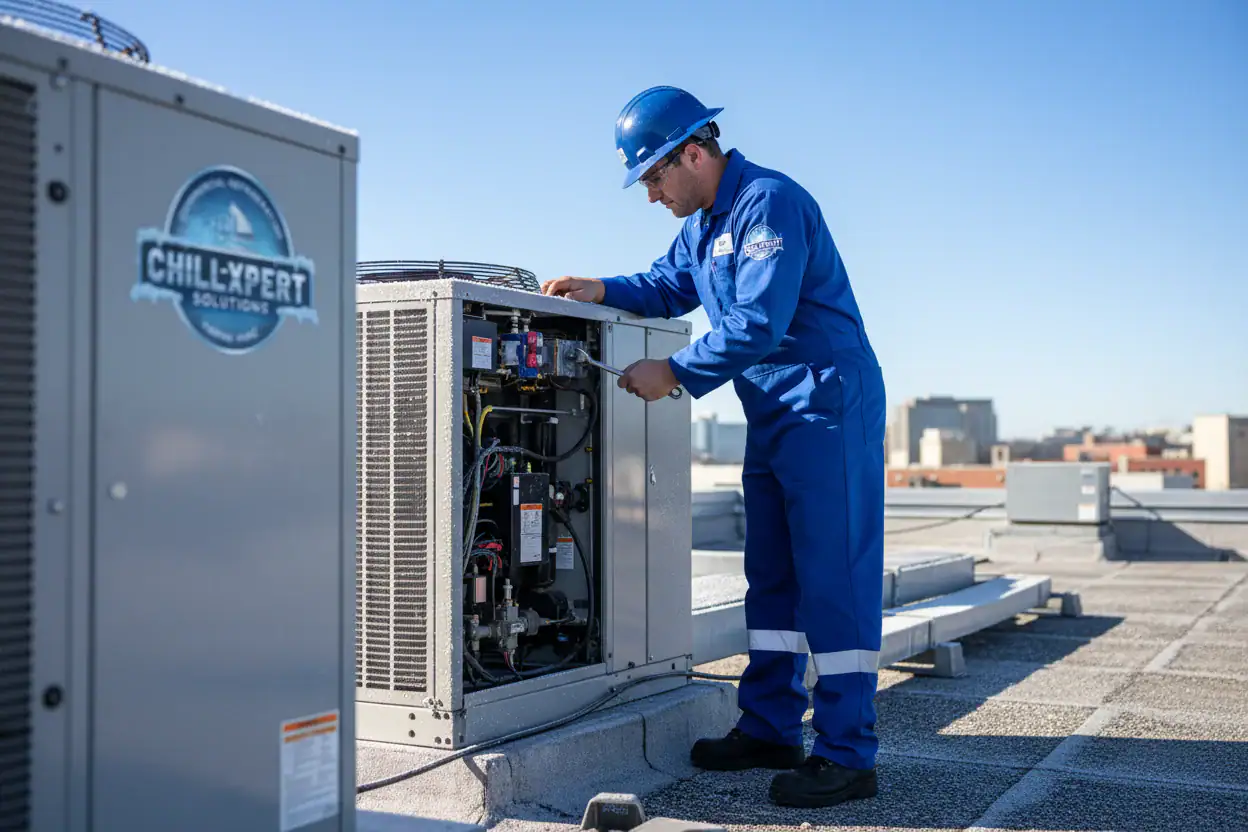
ECM motor retrofits top the list. Traditional shaded-pole motors that power most evaporator fans in older walk-ins are only about 20% efficient—the other 80% becomes waste heat that your compressor has to remove. ECM motors flip that equation, running at 70-80% efficiency while drawing a fraction of the power. A typical walk-in cooler with four evaporator fans might save $800-1,200 annually just from motor upgrades, with installation costs recovering in 18-24 months. Walk-in freezers see even faster payback because the motors run continuously.
Smart refrigeration controls rank second for ROI. Adaptive controllers monitor actual temperature, door openings, ambient conditions, and system performance to optimize compressor runtime, fan speeds, and defrost cycles. Instead of running everything at 100% all the time, these systems modulate based on real demand. The result is 20-30% energy savings in most installations, with payback periods of 2-3 years. The bonus is better temperature stability, which means less food spoilage and longer compressor life.
Demand-based defrost controls deserve special mention because they’re often overlooked. Most older systems run defrost cycles on a timer—every 6 or 8 hours regardless of whether frost has actually accumulated. Every unnecessary defrost cycle wastes energy heating the coils, then wastes more energy bringing the box back down to temperature. Intelligent defrost systems only initiate cycles when sensors detect actual frost buildup. For many operations, this cuts defrost frequency by 40-50%, saving hundreds of dollars monthly with minimal upfront cost.
Insulation improvements and door upgrades might not sound exciting, but they deliver solid returns. If your walk-in is more than 15 years old, chances are the insulation has degraded and the door seals are compromised. You’re losing cold air constantly, making your compressor work harder to maintain temperature. Upgrading insulation and installing new gaskets, door closers, and sometimes adding strip curtains for high-traffic walk-ins can reduce compressor runtime by 15-20%. Installation is straightforward and payback typically hits within 3 years.
LED lighting retrofits are the low-hanging fruit. If you’re still running incandescent or fluorescent lights in your walk-ins and cases, you’re generating unnecessary heat that your refrigeration system has to remove. LED lights use 75% less energy, produce almost no heat, last 5-10 times longer, and improve visibility. The payback period is often under 12 months, making this one of the easiest wins available.
Variable frequency drives on compressors represent a bigger investment but deliver substantial savings for larger systems. VFDs allow compressors to modulate capacity instead of cycling on and off at full power. This reduces energy consumption by 20-40% in many applications while also reducing wear on the compressor and extending its life. For businesses with multiple compressors or large refrigeration loads, VFD retrofits often pay for themselves in 3-5 years.
Airflow optimization doesn’t always require new equipment—sometimes it’s about fixing what you have. Dirty condenser coils force your system to work harder. Blocked evaporator coils reduce cooling efficiency. Improperly loaded walk-ins that block airflow create hot spots and force longer compressor runtimes. A thorough cleaning, proper coil maintenance, and staff training on correct product loading can improve efficiency by 10-15% at minimal cost.
The key is stacking these improvements strategically. Start with the quick wins that have 12-24 month paybacks—ECM motors, LED lighting, defrost controls. Use those savings to fund the next tier of upgrades like smart controls and insulation improvements. Within 3-4 years, you’ve transformed your refrigeration efficiency while keeping cash flow positive throughout the process.
Want live answers?
Connect with a Chill Xpert Solutions expert for fast, friendly support.
ROI calculations aren’t complicated, but you need accurate numbers going in. Start with your current energy costs. Pull 12 months of utility bills and identify how much you’re paying per kilowatt-hour. On Long Island, commercial rates typically run $0.15-0.20 per kWh depending on your usage tier and time of use.
Next, establish your baseline consumption. If you had an energy audit, you already have this. If not, you can estimate based on equipment specifications and runtime. A typical 8×10 walk-in cooler with older equipment might draw 3-4 kW continuously, costing $3,500-4,500 annually to operate. A similar walk-in freezer runs higher, often 5-6 kW or $6,000-7,500 per year.
Now calculate potential savings from specific upgrades. ECM motor retrofits typically reduce evaporator fan energy by 70-80%. If your walk-in cooler has four 99-watt fans running 24/7, that’s 396 watts or 3,469 kWh annually. At $0.17 per kWh, you’re spending $590 per year on those fans alone. Drop to 18-watt ECM motors and you’re down to $106 annually—a $484 savings. If the motor retrofit costs $800-1,000 installed, your payback is roughly 2 years.
Simple payback period divides your upfront investment by annual savings. If you spend $2,000 on smart controls that save $800 per year, your payback is 2.5 years. That’s useful, but it doesn’t tell the whole story.
True ROI accounts for the full lifespan of the upgrade and includes benefits beyond energy savings. ECM motors last 15-20 years and require almost no maintenance compared to traditional motors that might need replacement every 5-7 years. Smart controls reduce compressor cycling, which extends compressor life—potentially delaying a $5,000-8,000 compressor replacement by 3-5 years. Better temperature control reduces food spoilage, which for a restaurant might save hundreds or thousands of dollars annually that never shows up in your utility bill.
Factor in available incentives too. Many utility companies offer rebates for energy-efficient refrigeration upgrades. PSEG Long Island and other regional utilities periodically run programs that can cover 20-40% of upgrade costs for qualifying improvements. These incentives dramatically improve your payback period. A $3,000 control system upgrade that qualifies for a $1,200 rebate now costs you $1,800 out of pocket. If it saves $900 annually, your actual payback drops to 2 years instead of 3.3 years.
Don’t forget maintenance cost reductions. Older refrigeration equipment requires more frequent service calls, more repairs, and more downtime. Upgraded systems with modern controls provide diagnostic data that helps us identify problems before they cause failures. ECM motors have fewer moving parts and don’t require capacitor replacements like traditional motors. Better efficiency means less heat stress on components, which translates to longer intervals between repairs.
For most Long Island commercial operations, refrigeration upgrades that hit a 3-year payback or better are worth pursuing. Anything longer requires more careful analysis of your specific situation—equipment age, operating hours, energy rates, and how long you plan to stay in your current location. But the 2-3 year payback upgrades are usually no-brainers that start saving you money almost immediately.
The math gets even better when you consider rising energy costs. Your payback calculation is based on today’s rates, but electricity costs have been trending upward for years. If rates increase 3-5% annually, your actual savings grow each year while your upfront investment stays fixed. An upgrade that saves $1,000 in year one might save $1,150 in year three and $1,300 in year five as rates climb.
The fastest way to waste money on refrigeration upgrades is installing the wrong solution for your actual problem. A business owner sees high energy bills, buys new equipment, and discovers six months later that the bills haven’t changed much because the real issue was poor maintenance, compromised insulation, or operator error.
Skipping the diagnostic phase is mistake number one. You need to know what’s actually causing inefficiency before you start spending. Is your compressor short-cycling because of a faulty control, or because your evaporator coils are iced over from a bad defrost system? Is your walk-in using excessive energy because the refrigeration system is undersized, or because employees are propping the door open during prep? These problems have very different solutions and very different costs.
Focusing only on equipment replacement when retrofits would work is another common error. Someone might recommend replacing your entire walk-in cooler system when strategic upgrades to motors, controls, and insulation would deliver 80% of the benefit at 30% of the cost. New equipment isn’t always better from an ROI perspective, especially if your existing compressor and refrigeration components are in good condition.
Ignoring maintenance after upgrades defeats the purpose. You install high-efficiency motors and smart controls, then skip the quarterly maintenance because things seem to be running fine. Six months later, dirty coils and refrigerant issues have degraded your efficiency gains by 40%. The equipment is only as good as the care it receives. Budget for ongoing maintenance as part of your ROI calculation—it’s not optional.
Undersizing or oversizing upgrades creates problems. Installing a control system designed for a small reach-in on a large walk-in freezer won’t deliver the promised savings because it can’t handle the load properly. Installing industrial-grade VFDs on a small operation might technically work but the payback period stretches to 8-10 years because the energy savings don’t justify the investment. Right-sizing matters.
Not training staff on new systems is surprisingly common. You invest in demand-based defrost controls and LED lighting, but your team doesn’t understand how they work or why certain practices matter. Employees continue old habits like leaving doors open, blocking airflow, or manually overriding controls. Your efficiency gains evaporate because nobody explained the why behind the changes.
Failing to monitor results means you never know if upgrades delivered what was promised. Install a data logger or use your smart control’s monitoring features to track actual energy consumption before and after upgrades. If you’re not seeing the projected savings within 60-90 days, something’s wrong—either the installation needs adjustment, the equipment isn’t performing as specified, or there’s another issue consuming the savings you should be seeing.
The last mistake is treating refrigeration efficiency as a one-time project instead of an ongoing process. You upgrade your walk-in cooler motors and call it done, ignoring your reach-ins, display cases, and ice machines that are still wasting energy. Or you fix everything at once but never revisit efficiency as equipment ages or your operation changes. The businesses that see the best long-term results treat efficiency as a continuous improvement process, tackling high-impact upgrades first and working through lower-priority items over time.
Energy costs aren’t going down, and your refrigeration system isn’t getting more efficient on its own. The question is whether you’re going to keep paying for inefficiency or invest in upgrades that start saving money within months. The data is clear: ECM motors, smart controls, demand-based defrost systems, and proper maintenance deliver 2-3 year paybacks for most commercial operations. That’s not a gamble—it’s a solid investment.
Start with an energy audit so you know exactly where your money is going. Prioritize the quick-win upgrades that pay for themselves fastest, then use those savings to fund the next tier of improvements. Monitor your results so you know what’s working and what needs adjustment. And don’t skip maintenance—efficiency gains only stick if you take care of the equipment.
If you’re ready to stop watching profits disappear into your utility bill, we can help you identify which upgrades make sense for your operation. With over 40 years serving commercial clients across Nassau County, Suffolk County, and Long Island, we know which improvements deliver real returns and which ones are just expensive distractions.
Article details:
Share:
Continue learning: