Most commercial refrigeration systems should be serviced at least twice per year. Learn why this schedule protects your business from costly breakdowns and spoiled inventory.
Share:
Summary:
The short answer is at least twice per year for most commercial refrigeration systems. That’s the baseline recommendation from industry experts and manufacturers across the board.
Twice yearly service means your equipment gets professional attention before peak seasons hit. One visit should happen before summer when your systems work hardest against the heat. The second should occur before winter to ensure everything runs efficiently during the colder months. This semi-annual schedule has become the industry standard because it works.
For restaurants, delis, and catering operations across Long Island, this twice-yearly minimum keeps refrigeration running when you need it most. But that’s just the starting point. Some operations need more frequent service based on how hard their equipment works and what it’s protecting.
Not every business can follow the same maintenance schedule. Your service frequency should match how your equipment actually operates.
High-traffic restaurants that open and close walk in coolers dozens of times per day put more strain on their systems than a small café. If you’re running a busy kitchen in Nassau County or Suffolk County, you’re probably looking at quarterly maintenance instead of twice yearly. The same goes for grocery stores, delis, and any operation where refrigeration doors constantly open and close.
Your environment matters too. Kitchens generate heat and grease. Both force your refrigeration system to work harder. Condenser coils in a hot kitchen environment need cleaning monthly rather than quarterly because grease buildup happens faster. If your condensing unit sits outdoors, it faces weather exposure, temperature extremes, and debris that indoor units don’t deal with.
Equipment age plays a role as well. Systems over seven or eight years old typically need more frequent attention. Components wear out. Seals deteriorate. Compressors work harder to achieve the same cooling. What started as twice-yearly maintenance might shift to every three or four months as your equipment ages.
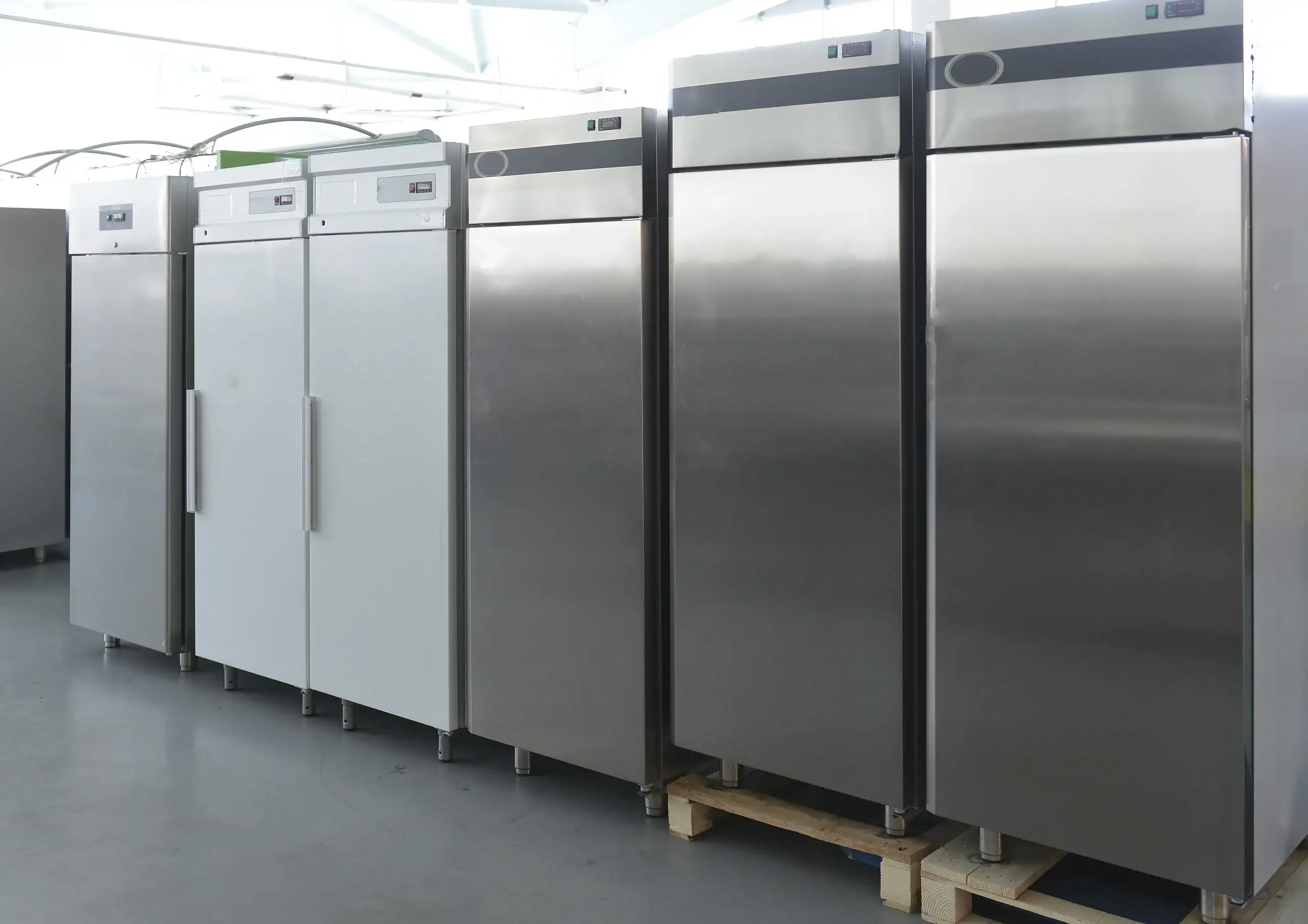
The type of refrigeration also determines your schedule. Display cases that customers constantly open need more frequent checks than back-of-house reach-in units. Walk in coolers with heavy daily use require different attention than freezers that stay closed most of the time. Ice machines need regular deep cleaning to prevent mold growth and contamination.
Usage patterns tell you a lot. If your refrigeration runs near capacity most of the time or you’re dealing with 100-plus door openings per day, you need service more often. Light use in an office break room is different from constant use in a commercial kitchen during dinner rush.
Servicing your commercial refrigeration twice per year isn’t about following rules. It’s about preventing problems that cost exponentially more than maintenance ever will.
A single refrigeration failure can cost anywhere from $3,000 to $26,000 in spoiled product, depending on your inventory. That’s just the food loss. Add emergency repair rates, lost revenue from downtime, and potential health code violations, and you’re looking at a financial disaster. Regular service catches the small issues before they become those disasters.
Dirty condenser coils are one of the most common problems technicians find during routine maintenance. When coils accumulate dust, grease, and debris, your system works harder to dissipate heat. That means higher energy bills and accelerated wear on your compressor. The compressor is the most expensive component to replace, often costing thousands of dollars. Cleaning coils during a scheduled visit costs a fraction of that and can reduce your energy consumption by 20 percent or more.
Door gaskets and seals wear out gradually. You might not notice a small crack or gap, but your refrigeration system does. Warm air seeps in. Cold air escapes. The compressor runs longer cycles trying to maintain temperature. Eventually, it burns out from overwork. A technician spots worn gaskets during routine service and replaces them before they cause compressor failure.
Refrigerant leaks don’t fix themselves. They get worse. Low refrigerant levels mean your system can’t maintain proper temperatures, putting your inventory at risk and forcing the compressor to work overtime. Professional service includes checking refrigerant levels and testing for leaks. Catching a small leak early prevents a complete system failure later.
Temperature control issues often start small. A thermostat drifts slightly out of calibration. A sensor gives faulty readings. The defrost cycle timing shifts. None of these problems announce themselves loudly, but they all compromise food safety and system efficiency. Twice-yearly service includes testing and calibrating these components before they cause bigger issues.
The financial math is straightforward. Scheduled maintenance costs a few hundred dollars. Emergency repairs during peak business hours cost thousands. Replacing a failed compressor costs even more. Losing a week’s worth of inventory because your walk in cooler died overnight? That’s the kind of loss that affects your bottom line for months.
Want live answers?
Connect with a Chill Xpert Solutions expert for fast, friendly support.
A proper commercial refrigeration service visit involves more than just a quick look around. Our technicians perform specific tasks designed to keep your equipment running efficiently and catch problems early.
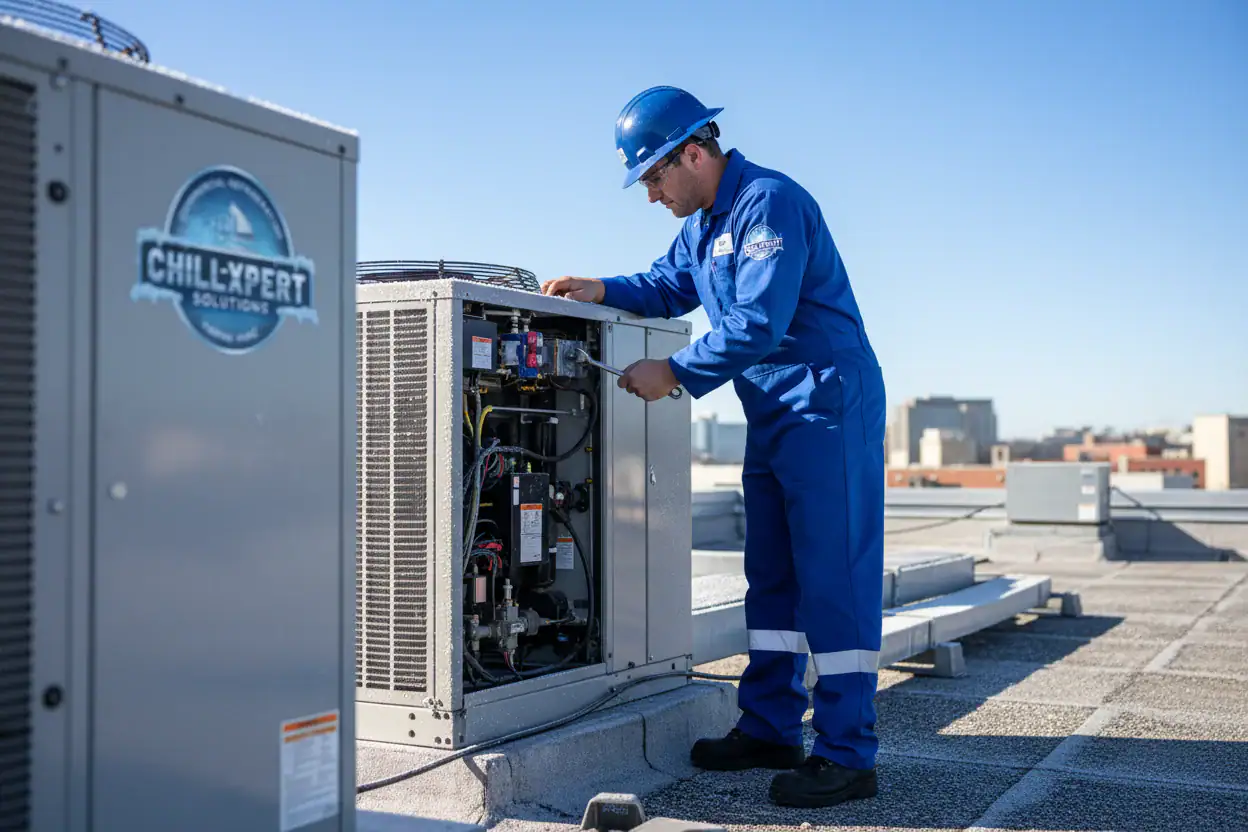
The visit typically starts with a complete system inspection. We check all major components including the compressor, condenser, evaporator, fans, motors, and wiring. We’re looking for signs of wear, damage, or anything operating outside normal parameters. This comprehensive approach identifies issues before they cause system failure.
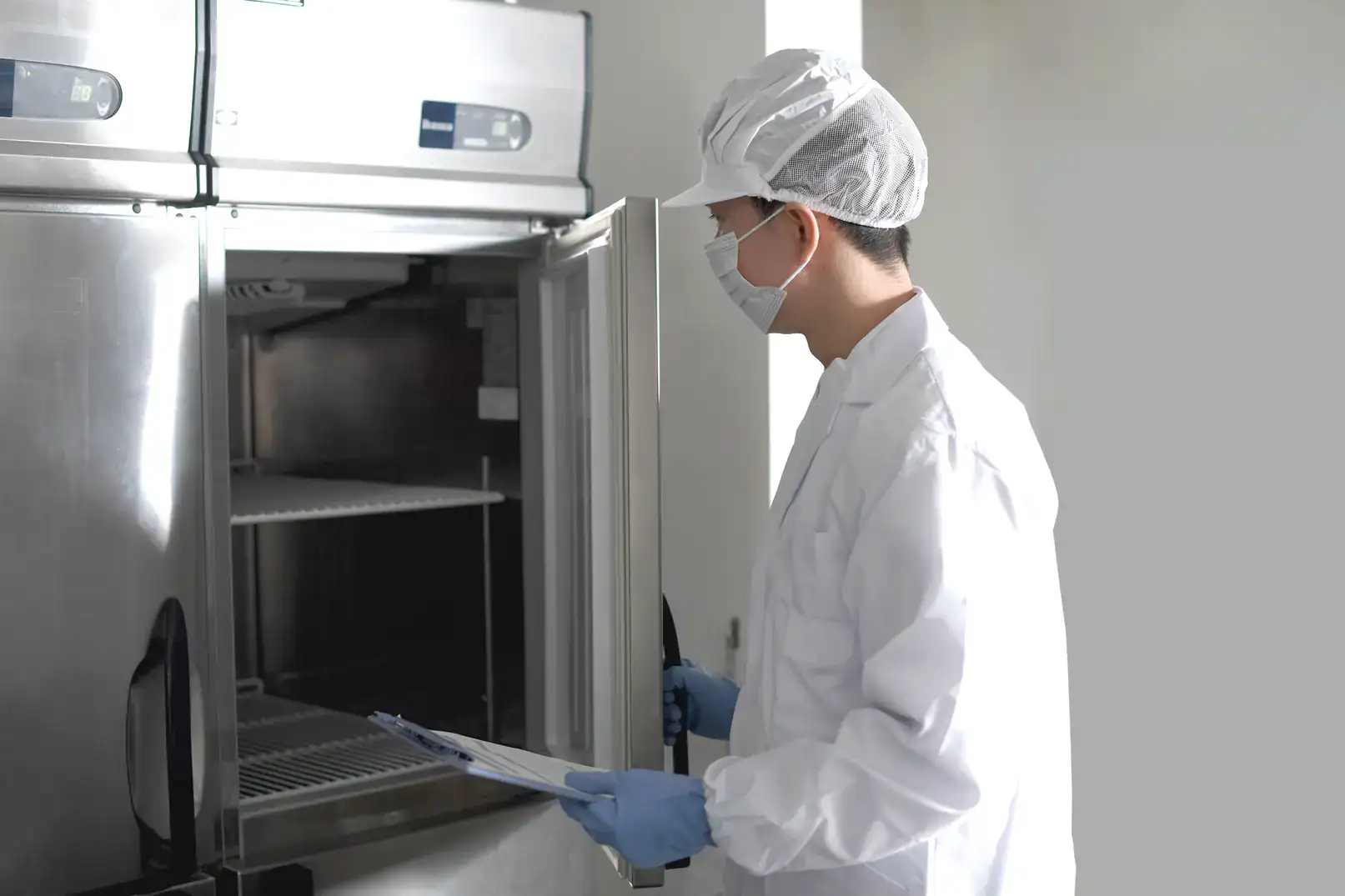
Temperature accuracy gets verified using calibrated instruments. Your thermostat might say 38 degrees, but is the actual food temperature in that range? Health inspectors measure food temperature directly, not just air temperature, so we do too. This verification ensures you’re meeting food safety standards and protecting your inventory properly.
Condenser coil cleaning is one of the most important tasks during any maintenance visit. These coils remove heat from your refrigeration system, but they can’t do their job when covered in dust, grease, and debris. We use specialized brushes and cleaning solutions to restore coils to optimal condition. This single task can dramatically improve energy efficiency and prevent compressor strain.
Evaporator coil inspection and cleaning comes next. These coils absorb heat from inside your cooler or freezer, and they need clear airflow to function properly. We check for ice buildup, clean the coils, and ensure the defrost system works correctly. Problems with evaporator coils often lead to temperature fluctuations that threaten food safety.
Door seals and gaskets get a thorough inspection. We check all four sides of every door, looking for cracks, tears, gaps, or hardening. We test the seal by closing the door on a dollar bill—if it pulls out easily, the seal isn’t tight enough. Worn gaskets get replaced immediately because they’re inexpensive parts that prevent expensive problems.
Fan motors and blades receive attention during service visits. Fans circulate cold air throughout your refrigeration system, and they need to run at optimal speed without obstruction. We clean fan blades, check motor bearings, and ensure proper airflow. A failing fan motor gives warning signs during routine maintenance, long before it stops working completely.
Drain lines often get overlooked until they cause problems. These lines carry condensation and defrost water away from your system. When they clog, water backs up, potentially freezing and causing structural damage. We use specialized equipment to clear drain lines and verify proper drainage. This prevents water leaks, ice buildup, and the mold growth that comes with standing water.
Electrical connections and controls get tested for safety and proper operation. Loose connections cause power failures. Faulty controls lead to temperature problems. We tighten connections, test safety switches, and verify that all controls respond correctly. This prevents the kind of electrical failure that shuts down your cooler at the worst possible time.
Refrigerant levels and system pressure get checked using professional gauges. Your system should maintain proper refrigerant charge without needing frequent top-offs. If levels are low, there’s a leak that needs finding and fixing. We test for leaks, repair them, and recharge the system with the correct refrigerant type. This ensures optimal cooling capacity and prevents compressor damage from running on low refrigerant.
Professional maintenance twice per year doesn’t mean you ignore your refrigeration system the rest of the time. There are simple checks you or your staff can perform to catch problems early.
Temperature monitoring should happen daily. Install a reliable thermometer inside each refrigeration unit and check it every day. Your walk in cooler should maintain between 35 and 38 degrees Fahrenheit. Freezers should stay at zero degrees or below. Any deviation from these ranges deserves immediate attention.
Listen to your equipment. Commercial refrigeration makes noise, but you’ll learn what sounds normal for your system. Unusual sounds like grinding, rattling, or buzzing often indicate problems. A compressor that runs constantly without cycling off signals an issue. Strange noises are your equipment telling you something’s wrong before it fails completely.
Watch for visible warning signs. Ice buildup where it shouldn’t be, water pooling near units, frost on evaporator coils outside of defrost cycles—these all indicate problems. Condensation on the outside of refrigeration units means warm air is getting in somewhere. Food that’s not staying cold enough is an obvious red flag that needs immediate professional attention.
Keep the area around your refrigeration equipment clean. Don’t let trash, boxes, or debris accumulate around condensing units. They need clear airflow to function properly. Blocked airflow makes your system work harder and can lead to overheating. This is especially important for outdoor condensing units where weeds, leaves, and other debris can restrict airflow.
Clean what you can safely clean yourself. Wipe down door gaskets with warm soapy water every few weeks to remove food residue and prevent buildup that compromises the seal. Keep the interior of your walk in cooler clean and organized. Don’t overload shelves or block air vents. Proper organization helps maintain even cooling and reduces strain on your system.
Document everything. Keep a log of temperature readings, unusual observations, and any issues you notice between service visits. This information helps our technicians diagnose problems faster when they do occur. It also creates a record that demonstrates compliance during health inspections.
Your commercial refrigeration system represents a significant investment in your business. It protects your inventory, ensures food safety, and keeps your operation running smoothly. Treating it like a piece of equipment that can run indefinitely without maintenance is a costly mistake.
The twice-yearly service schedule isn’t arbitrary. It’s based on decades of industry experience showing what actually prevents breakdowns and extends equipment life. High-use operations need more frequent service, but no commercial refrigeration should go longer than six months without professional attention.
The businesses that avoid emergency breakdowns, health code violations, and spoiled inventory are the ones that schedule maintenance before problems happen. They understand that a few hundred dollars spent on preventive service saves thousands in emergency repairs and lost revenue.
If it’s been more than six months since your last refrigeration service, or if you can’t remember the last time a technician looked at your system, now’s the time to schedule that visit. We bring over 40 years of commercial refrigeration experience to businesses throughout Nassau County, Suffolk County, and Long Island, NY. We understand what keeps your operation running and what causes expensive failures.
Article details:
Share:
Continue learning: