Professional HVAC installation isn't just about convenience—it's about protecting your investment from costly mistakes that show up years later as higher bills and frequent breakdowns.
Share:
Summary:
You’re looking at a major HVAC expense. Maybe your system finally died, or maybe you’re just tired of watching your energy bills climb while half your rooms stay uncomfortable. Either way, you’ve probably wondered if you could handle the installation yourself and pocket the labor costs.
Here’s the reality: HVAC installation isn’t like other home projects. The stakes are different. The consequences last longer. And in Nassau County, NY, the rules are stricter than most places.
This isn’t about scaring you away from DIY. It’s about showing you exactly what professional HVAC installation services actually deliver—and what happens when installations go wrong. Let’s start with what “professional installation” really means.
Professional HVAC installation is more than showing up with a new unit and swapping it for the old one. Real installation starts before any equipment arrives.
We begin with load calculations—the Manual J process that accounts for your home’s insulation, window placement, ceiling height, and Nassau County’s specific climate data. This determines the right system size. Not the size that was there before. Not a guess based on square footage. The actual capacity your space needs.
Then comes permitting. Nassau County, NY requires mechanical and electrical permits for any HVAC replacement or new installation. Processing times average 4 to 8 weeks for standard residential projects. We handle the applications, pay the fees, and schedule inspections. You don’t chase down building department approvals or worry about whether your paperwork is correct.
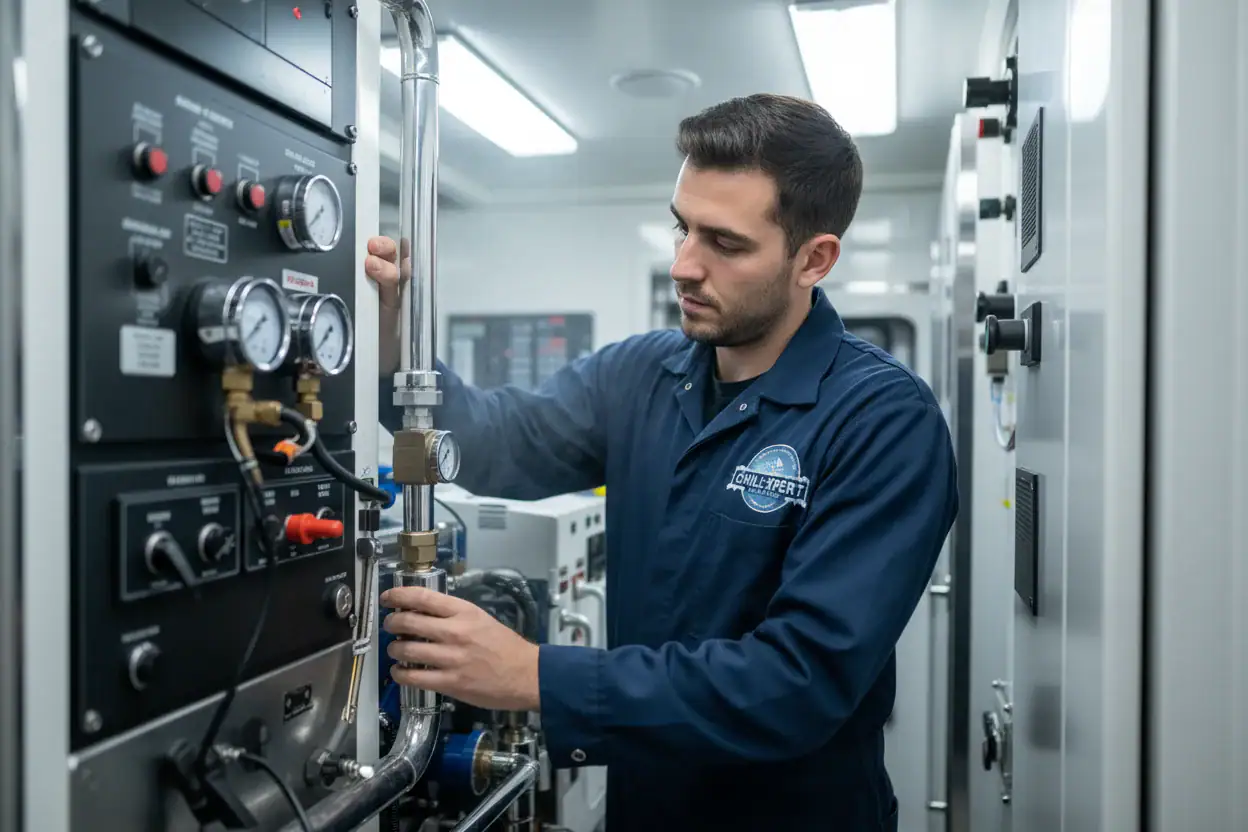
Incorrect sizing is one of the most common HVAC installation mistakes. An oversized system turns on and off too quickly, causing uneven temperatures, humidity problems, and unnecessary wear. You end up with rooms that never feel quite right and a system that burns through components faster than it should.
An undersized system runs constantly, struggles during extreme weather, and drives up energy costs. You paid for new equipment, but you’re still uncomfortable and still watching your utility bills climb.
Proper sizing requires detailed calculations that factor in your building’s square footage, insulation levels, window quality and placement, ceiling heights, and local climate patterns. It’s engineering, not guesswork. We use software and industry standards to get it right the first time.
Here’s what most homeowners don’t realize: installation quality matters more than the equipment itself. Even the most efficient HVAC system will underperform if it’s installed incorrectly. Industry studies estimate that 90% of HVAC systems are installed with at least one significant error, most often related to sizing or airflow.
That’s the gap between equipment that works and equipment that works well for 15-20 years. Professional installation closes that gap. DIY installation—unless you have HVAC training and the right tools—usually widens it.
Nassau County, NY takes building codes seriously. HVAC systems that don’t meet current standards create safety hazards, code violations, and expensive remediation work down the line.
Any replacement air conditioner installation requires mechanical and electrical permits. These ensure your ductwork, refrigerant lines, and electrical connections meet current energy and safety codes. The application process involves submitting detailed plans, paying fees, and waiting for approval before any work begins.
Processing times run 4 to 8 weeks for standard residential projects in Nassau County, NY, and that timeline assumes everything is submitted correctly. If you’re in a homeowners association or designated historic district, you’ll need additional approvals before you can even apply for county permits.
The permit fee itself—around $300 for plan review in Nassau County, NY—isn’t what drives up costs. It’s the time, the inspections, and the compliance requirements that add up. You’ll need multiple inspections throughout the installation process.
The rough-in inspection happens after framing and ductwork are complete but before anything gets covered. Inspectors verify that structural framing meets code, electrical wiring is properly sized and installed, plumbing for condensate drainage is correctly routed, and HVAC ductwork is adequately installed with proper support and sealing.
If anything fails inspection, work stops. You fix the issues, pay for a re-inspection, and wait for the inspector to come back. Working without proper permits in Nassau County, NY can result in fines, forced equipment removal, and serious complications when you sell your home. In NYC, unlicensed HVAC work can result in fines up to $10,000 and misdemeanor charges. Nassau County enforcement is equally strict.
Licensed contractors know the codes. We submit correct paperwork. We pass inspections the first time. That’s not just convenience—it’s protection from legal and financial consequences that show up when you least expect them.
Want live answers?
Connect with a Chill Xpert Solutions expert for fast, friendly support.
The decision between repairing your current system and replacing it entirely comes down to math, age, and realistic expectations about what you’re getting for your money.
The $5,000 rule is a simple guideline to help homeowners decide whether to repair or replace an HVAC system. Multiply the system’s age by the estimated repair cost—if the total exceeds $5,000, replacement is generally more cost-effective.
For example: if your system is 12 years old and needs a $500 repair, that’s $6,000 (12 x 500). Replacement makes more sense. If your system is 8 years old and needs a $400 repair, that’s $3,200. Repair is probably the better call.
This isn’t a strict rule. It’s a framework that helps you think through whether you’re throwing good money after bad or extending the life of equipment that still has value.
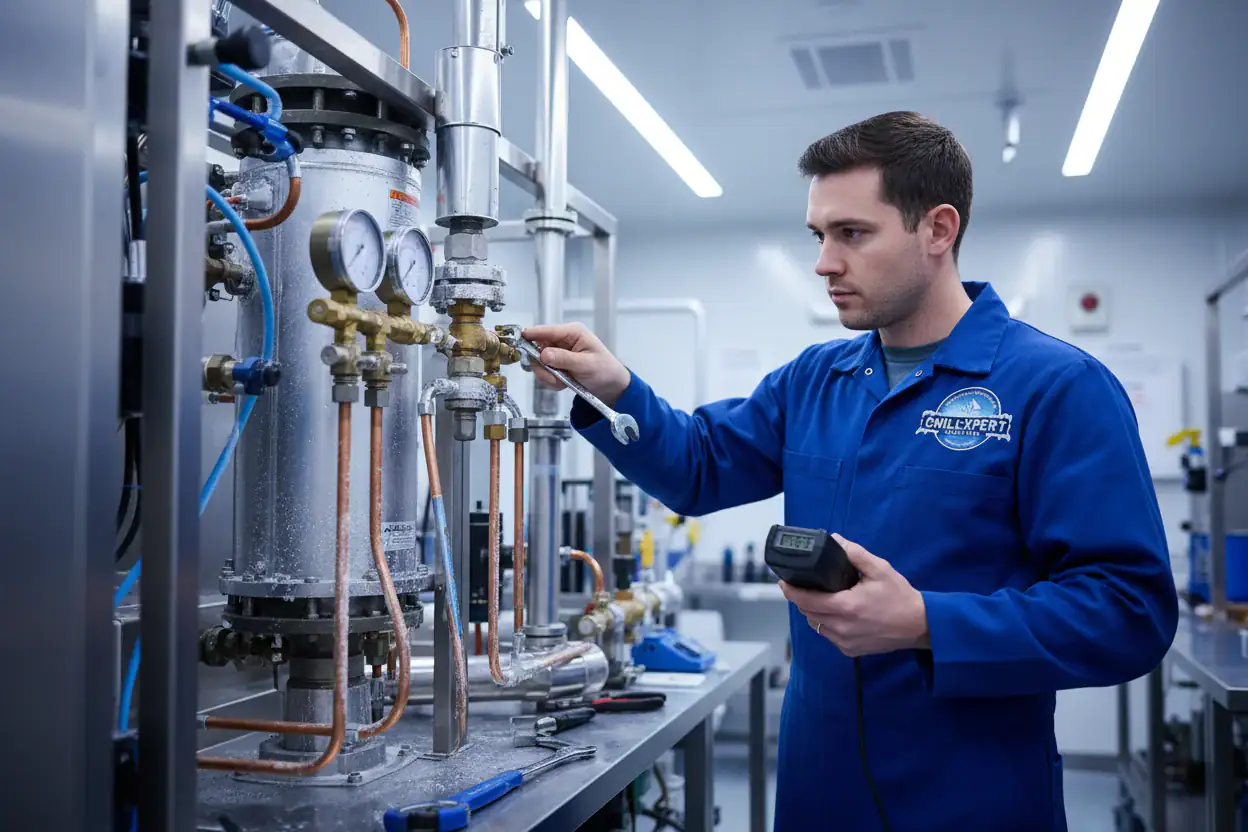
There are times when the better long-term investment is to replace your HVAC system, even if repair is technically possible.
If your system is over 15 years old, the older it gets, the less efficient it becomes, leading to frequent breakdowns and higher energy bills. Central air conditioners typically last 15 to 20 years with regular maintenance. Furnaces often push 20 years or longer. Heat pumps tend to fall in the 10 to 15 year range because they work year-round rather than seasonally.
If you’ve already repaired your HVAC system multiple times in the past few years, the cost of continuous fixes may outweigh the benefits. Three or more repairs during a three-year span likely means your system is losing efficiency and may be on its way out soon, meaning replacement is the more viable option.
Rising energy bills are another signal. An aging system has to work harder to heat and cool your home, driving up your energy costs significantly. If your bills have increased but your usage hasn’t, your system might be the culprit.
If your system uses R-22 Freon, upgrading to a new model is a smart choice. R-22 refrigerant has been phased out, making it expensive and difficult to replace. If your system relies on it and develops a leak, you’re looking at either extremely high repair costs or replacement anyway.
Uneven heating and cooling throughout your home is another indicator. If some rooms are consistently hotter or colder than others, your HVAC system may be struggling to distribute air properly. If your home never seems to reach the desired temperature even after repairs, your system may be failing.
The average cost to replace an HVAC system ranges from $11,590 to $14,100 as of 2026, based on real homeowner projects. This includes central air conditioning, furnace, and heat pump replacement plus labor costs. HVAC replacement cost depends on your home’s size, the system type, and installation requirements.
Many HVAC warranties expressly require a licensed professional to perform the installation to maintain warranty coverage. A warranty might lose validity if improper installation leads to system malfunctions or breakdowns.
Most manufacturers require registration within 60 to 90 days of installation. Missing this window could reduce your coverage from 10 years to just five years on parts. But here’s the catch: even if you register on time, DIY installation can void the warranty entirely.
Warranty paperwork usually requires that proper maintenance be performed at least once a year by certified technicians, or your warranty may become void. If you have an expensive failure within the first couple years that manufacturers consider unusual, there’s a good chance they’ll want to take a closer look at how it was installed and maintained.
A poorly installed system runs less efficiently for its entire life. A 5-15 percent efficiency loss compounded across a 15-year system lifespan can total thousands in extra utility costs. You saved maybe $2,000-$3,000 on installation labor. You’re spending an extra $200-$400 per year on energy. By year 10, you’ve lost money.
Then there’s refrigerant handling. In the US, handling refrigerant requires EPA Section 608 certification. DIY installations using pre-charged line sets are designed to avoid this requirement, but they’re limited to specific mini-split systems. Traditional central HVAC installations require refrigerant work that homeowners legally cannot perform.
Systems with undersized returns, poorly designed ductwork, or existing duct systems that were never evaluated when new equipment was installed are common problems. You can put in the best equipment on the market, but if airflow is wrong, it will never perform the way it’s designed to.
DIY HVAC installation can significantly reduce labor costs when using properly engineered, pre-charged systems. But professional installation is still the right move in complex layouts, duct redesigns, electrical upgrades, or when local codes require licensed work—which in Nassau County, NY, they do.
The choice between professional HVAC installation services and DIY isn’t really about whether you can physically install equipment. It’s about whether you can do it correctly, legally, and in a way that protects your warranty, passes inspections, and actually delivers the efficiency you paid for.
Professional installation means proper sizing, code-compliant work, valid warranties, and systems that run efficiently for their full lifespan. DIY installation means potential permit violations, voided warranties, sizing mistakes that cost thousands in wasted energy, and repairs that show up years after you thought you saved money.
If you’re in Nassau County, NY and facing an HVAC installation or replacement decision, we bring 40+ years of specialized experience, licensed technicians, and the kind of transparent communication that makes complex projects straightforward. Free estimates, same-day service availability, and a track record of installations that actually work the way they’re supposed to.
Article details:
Share:
Continue learning: