Hybrid HVAC refrigeration systems are more complex than most contractors realize. Here's what Nassau County, NY business owners need to know before calling for repairs.
Share:
Summary:
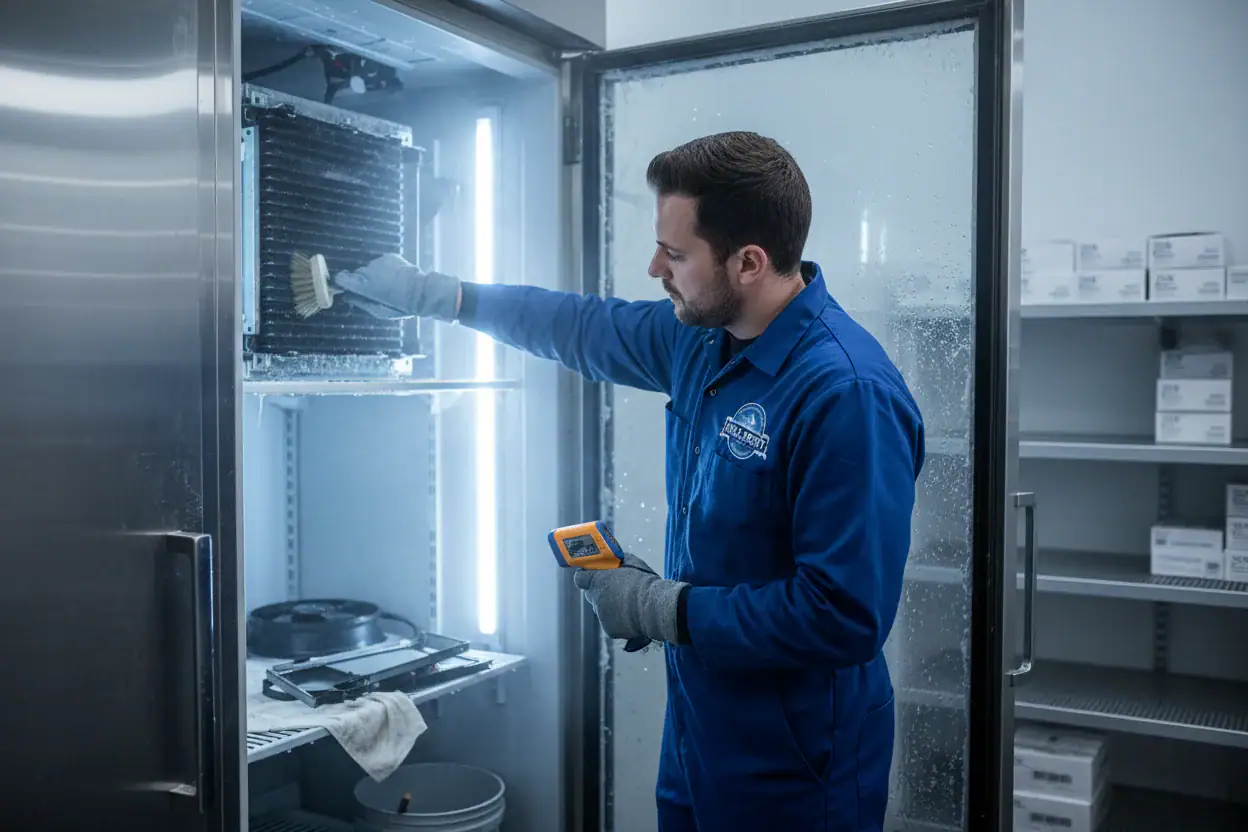
If your commercial system keeps running but something still feels off — temperatures drifting, energy bills creeping up, a repair that held for three weeks before failing again — there’s a good chance the issue isn’t the repair itself. It’s that the technician only looked at part of the system. Hybrid HVAC refrigeration systems are built differently, and they fail differently too. Understanding that distinction is the first step toward actually getting the problem fixed.
Here’s what Nassau County, NY business owners should know before making another service call.
A standard commercial HVAC or refrigeration system operates on one core mechanism. A hybrid system combines two — typically a heat pump paired with a gas furnace, or in more advanced commercial applications, a system that exchanges heat between refrigerant and water using a specialized controller. That second layer is where most repair calls go sideways.
When a technician trained on single-system equipment shows up to a hybrid unit, they may correctly diagnose and fix the refrigerant side — but leave the hydronic or heat pump side untouched. The system runs again, briefly. Then it doesn’t. And you’re back to square one, minus whatever that first call cost you.
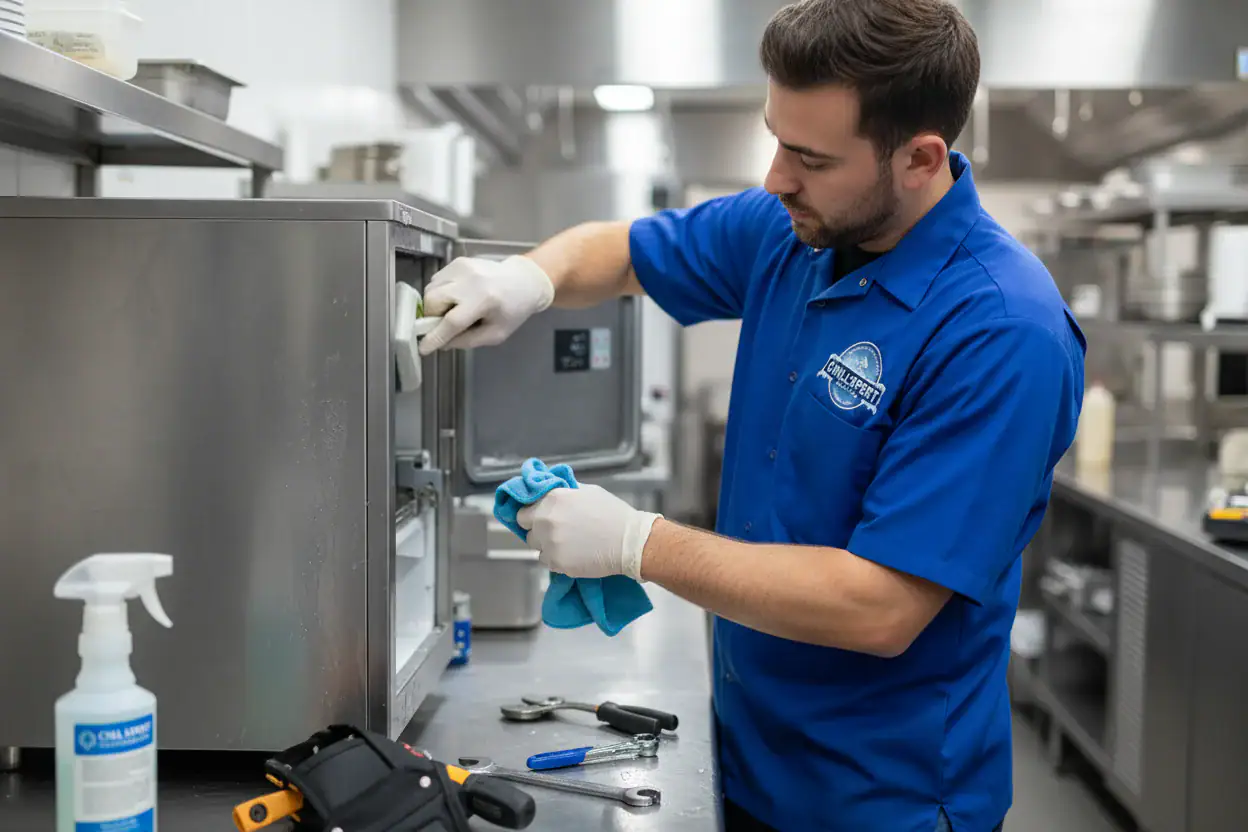
In a residential context, a hybrid system is sometimes called a dual-fuel system. It pairs a heat pump with a gas furnace — the heat pump handles mild conditions efficiently, and the furnace kicks in when temperatures drop sharply. The two components hand off to each other depending on conditions, which means a failure in the handoff logic or in either component can look like a lot of different problems.
In commercial settings, hybrid systems go further. Mitsubishi’s Hybrid VRF, for example, is described as the only two-pipe Variable Refrigerant Flow system that exchanges heat between refrigerant and water using a Hybrid Branch Circuit Controller. What that means practically is that refrigerant stays on the outdoor side, and the indoor environment is kept refrigerant-free through a water-based loop. It’s a smarter, safer design for larger commercial buildings — but it requires a technician who understands both the refrigerant side and the water side simultaneously.
When one side degrades — say, a refrigerant issue that reduces the heat exchange efficiency — the water loop compensates harder, accelerating wear on components that weren’t originally the problem. By the time you notice something is wrong, the damage has often spread. A technician who only tests refrigerant pressure and calls it good has missed the real story.
This is also why hybrid systems can run for months in a degraded state without triggering an obvious failure. A dirty component or a subtle refrigerant issue can increase your operating costs by 15 to 20 percent without any visible sign that something’s wrong. The system still runs. It just costs more to run it, and it’s quietly wearing itself out faster than it should.
Finding a technician who genuinely understands these systems — not just one who’s familiar with the brand name — matters more than most business owners realize until they’ve already had two or three failed repair attempts.
This is one of the most common questions we hear, and it’s worth answering plainly. Under Section 608 of the Clean Air Act, any technician who works on equipment that could release refrigerants into the atmosphere is required by federal law to be EPA 608 certified. There’s no gray area here — civil penalties for non-compliance can reach $44,539 per day per violation. If a contractor shows up to your commercial property without this certification, you’re not just getting subpar service. You’re potentially taking on liability.
EPA 608 certification comes in four types: Type I covers small appliances, Type II covers high-pressure systems like standard commercial HVAC, Type III covers low-pressure systems like large chillers, and Universal covers all three. For hybrid commercial systems, Universal certification is the standard you should expect — it signals the technician has been tested and qualified across the full range of system pressures and configurations they’re likely to encounter.
Beyond federal certification, Nassau County, NY has its own licensing requirements for HVAC and refrigeration contractors. Contractors must document between three and seven years of trade experience, pass a written examination, and carry both general liability and workers’ compensation insurance before receiving a county mechanical license. That’s not a formality — it’s a meaningful bar that separates legitimate operators from the ones who show up in an unmarked van and disappear after cashing your check.
When you’re evaluating a contractor for hybrid system work specifically, ask directly: have they worked on hybrid VRF or dual-fuel commercial systems before? A confident, specific answer is a good sign. Vague reassurances that they “handle all makes and models” are not. Breadth without depth is exactly the profile that leads to a misdiagnosis on a system this complex.
Want live answers?
Connect with a Chill Xpert Solutions expert for fast, friendly support.
The difference between a refrigeration specialist and a general HVAC technician isn’t always obvious from the outside. Both show up in a truck. Both carry tools. But the diagnostic approach — and the outcome — can be completely different.
A specialist working on a hybrid system doesn’t start with assumptions. They run a full diagnostic before quoting a repair, because on a system with multiple interacting components, the symptom and the cause are rarely the same thing. That diagnostic-first approach is what separates a lasting fix from a temporary patch.
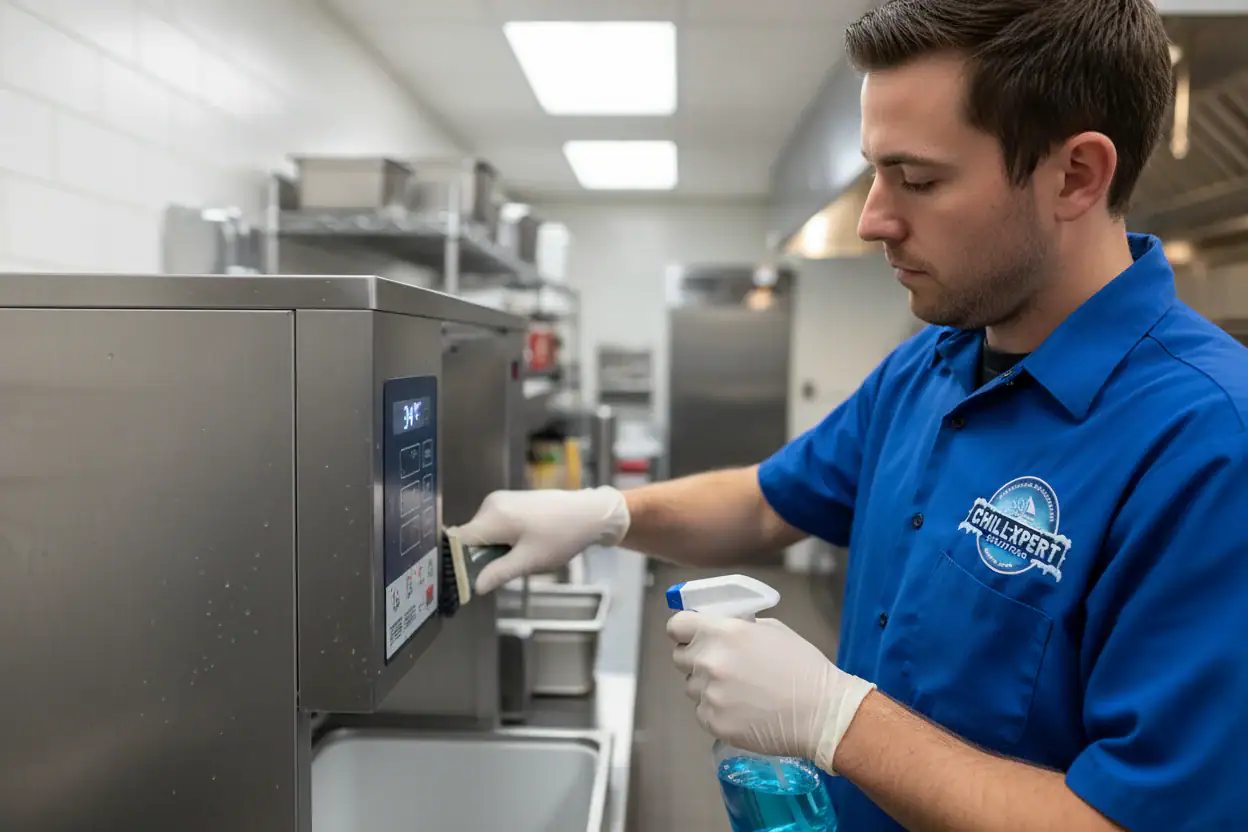
Nassau County, NY’s commercial food service market is dense. Restaurants, delis, catering halls, and retail operations are packed into every corridor from Hempstead to Oyster Bay, and most of them depend on refrigeration systems that cannot afford to go down — especially during summer heat or a busy holiday weekend. That concentration of demand is exactly why the contractor market here includes a wide range of operators, and not all of them are equipped for complex system work.
When you’re choosing a commercial refrigeration contractor, the most important question isn’t price. It’s whether they’ve actually worked on your type of system before. Ask about their experience with hybrid or VRF systems specifically. Ask whether their service vehicles carry parts for your equipment — a contractor who has to order components after the diagnostic visit is a contractor who can’t fix your system today. In a refrigeration emergency, “we’ll have to come back next week with the part” is not an acceptable answer.
Look for contractors who give you a clear estimate before any work starts. Hidden fees and surprise charges are among the most common complaints in this industry, and they’re entirely avoidable when the contractor is operating transparently. A good contractor explains what they found, what they’re going to do about it, and what it will cost — before they start.
Red flags worth watching for: no physical business address, an inability to explain what’s wrong in plain terms, pressure to replace equipment before exploring repair options, and no mention of warranty on the work performed. These aren’t edge cases. They’re patterns that show up repeatedly in this market, and they’re avoidable if you know what to look for.
One more thing worth noting for Nassau County, NY businesses specifically: salt air is a real accelerant of corrosion on commercial refrigeration equipment. If your operation is near the South Shore — Long Beach, Oceanside, Hewlett — or anywhere along the waterfront, that environmental factor should be part of the conversation with any contractor you hire. A technician who doesn’t account for it in their diagnostic is missing something that will matter later.
Most business owners don’t call a refrigeration contractor until something has already gone wrong. That’s understandable — it’s not the kind of thing you think about until the walk-in cooler is reading ten degrees warmer than it should and you’ve got a full house coming in for dinner service. So when you do call, here’s what a good experience should look like.
First, someone should answer. Not a voicemail that gets returned the next business day — an actual person who can talk through what’s happening and get a technician scheduled. For emergency calls, response time matters enormously. Every hour a commercial refrigeration system is down is inventory at risk and revenue walking out the door.
When the technician arrives, they should run a full diagnostic before recommending anything. Not a quick look and a quote for the most expensive component — a real diagnostic that traces the problem to its actual source. On a hybrid system, that means looking at both sides of the system, not just the one that’s showing the obvious symptom.
After the diagnostic, you should get a clear explanation of what’s wrong and a straightforward estimate for the repair. No pressure to replace equipment that can be repaired. No vague language about “system complexity” that’s really just cover for uncertainty. If the technician can’t explain what they found in plain terms, that’s worth paying attention to.
Parts availability is another factor that separates a good service call from a frustrating one. A contractor whose vehicles are stocked with the components that fail most often can fix your system the same day in most cases. One who has to order parts after the fact is adding days to your downtime — days that cost you money and stress you don’t need.
For Nassau County, NY businesses, the combination of a dense commercial environment, coastal conditions, and a busy calendar means refrigeration issues rarely happen at a convenient time. The right contractor is one who’s ready when you’re not.
Hybrid HVAC refrigeration systems are more capable than standard equipment — and more demanding of the technician who services them. When something goes wrong, the cost of choosing the wrong contractor isn’t just the service call. It’s the repeat visits, the spoiled inventory, the hours of downtime, and the lingering uncertainty about whether the fix actually held.
What you’re really looking for is a technician who understands the full system, carries the certifications to work on it legally, stocks the parts to fix it the same day, and gives you a straight answer about what it costs before touching anything. That combination is less common than it should be.
If you’re dealing with a hybrid system issue in Nassau County, NY — or you’re not sure what type of system you have and something doesn’t seem right — Chill Xpert Solutions is worth a call. We’ve been working on complex commercial refrigeration and HVAC systems across Long Island for over 40 years, and we’re available around the clock.
Article details:
Share:
Continue learning: