Your boat's AC system isn't like your home's. Here's why that distinction matters more than most boat owners realize—especially on Long Island.
Share:
Summary:
You noticed something was off. Maybe the cabin wasn’t cooling the way it should. Maybe the unit shut itself off in the middle of a hot afternoon on the water. So you called an HVAC company—because AC is AC, right?
Then the tech showed up, spent an hour on your boat, charged you, and left. And a week later, you’re back to square one.
This happens more often than it should. Marine air conditioning and refrigeration systems are genuinely different from anything a standard HVAC technician trains on. Not slightly different—fundamentally different. Understanding why is the first step to actually getting the problem fixed.
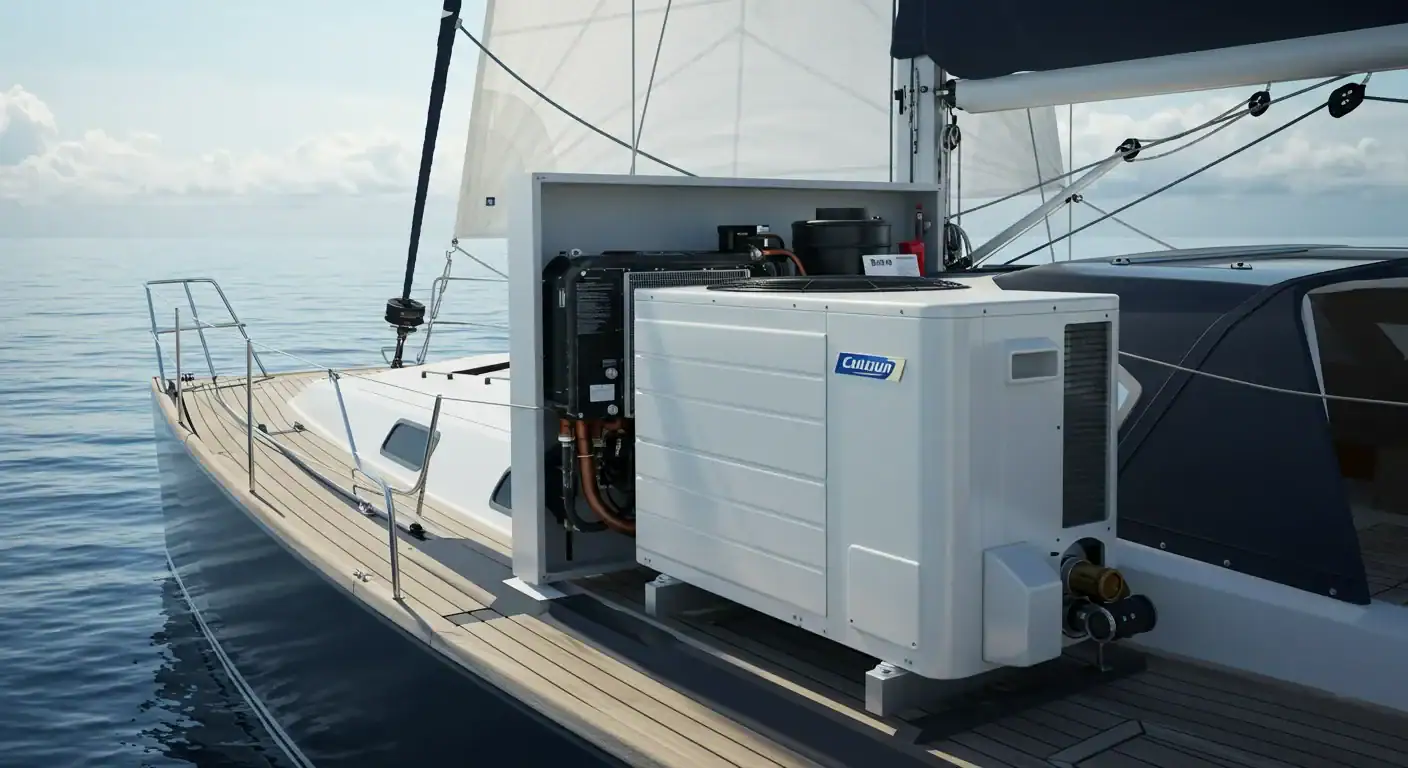
A home air conditioner rejects heat into the surrounding air. A marine AC system rejects heat into water—raw seawater pulled directly from outside the hull through a through-hull fitting. That single difference changes almost everything about how these systems are built, how they fail, and what it takes to repair them properly.
On top of that, marine systems operate on limited electrical capacity, deal with constant motion and vibration, and live inside an environment where salt air is eating at every metal connection, every fitting, and every wire—every single day. A residential HVAC tech isn’t trained for any of that. Their tools, their diagnostic process, and their replacement parts are all built around a completely different kind of machine.
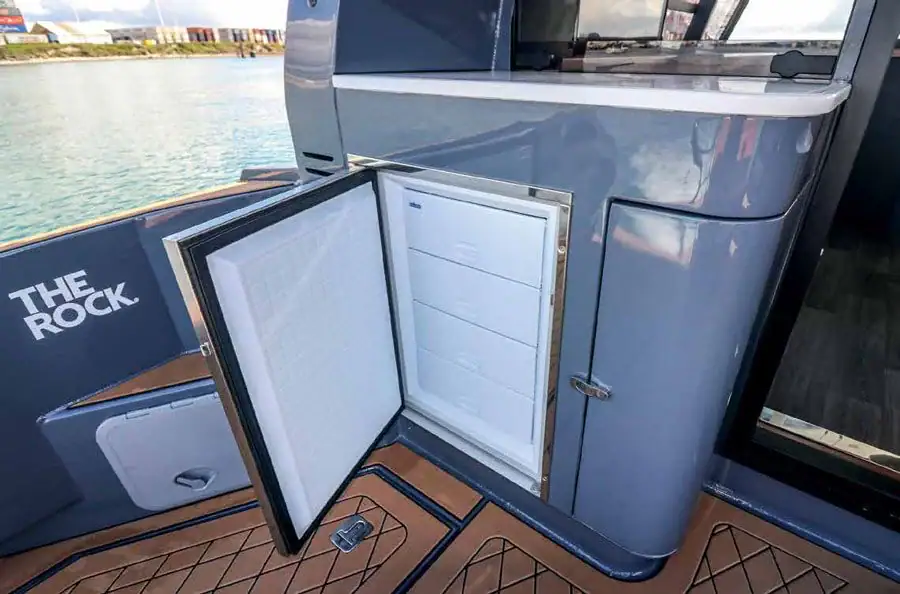
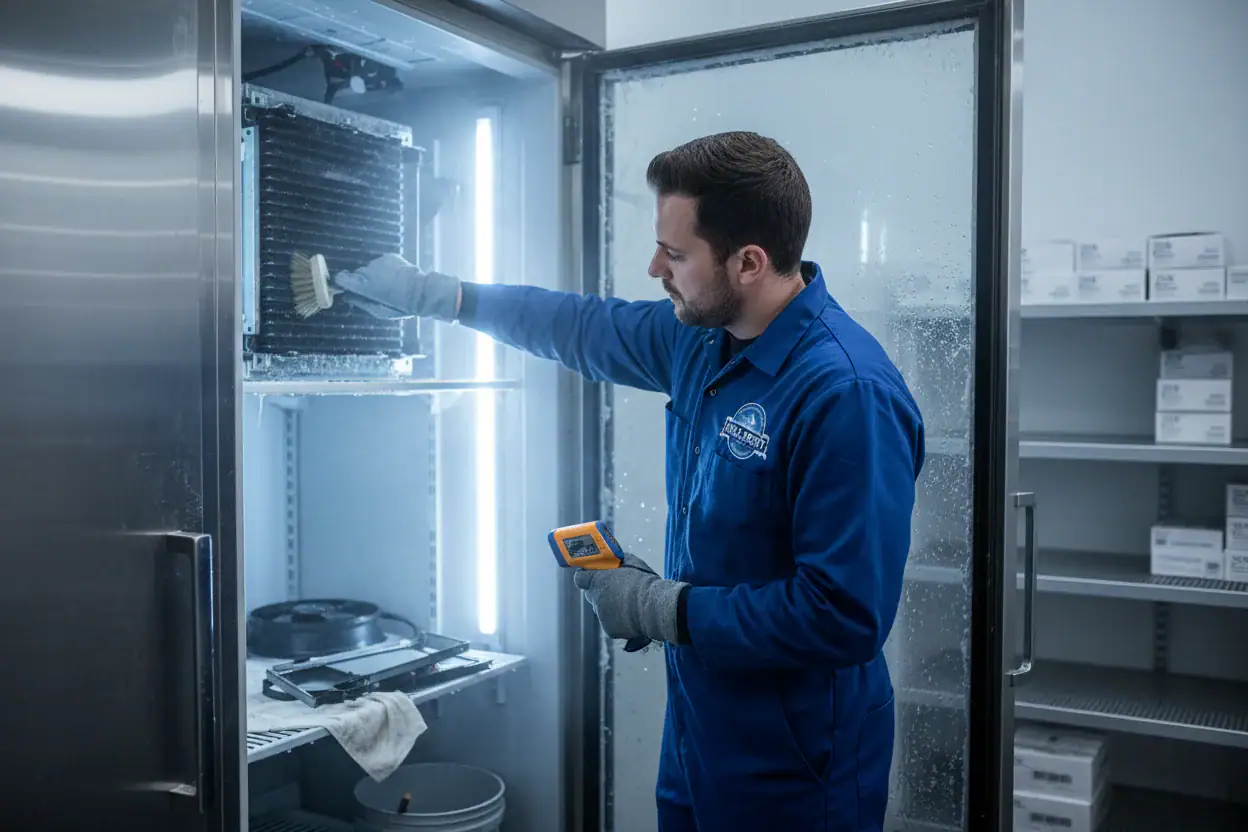
The most common call we get is some version of “it’s running but not cooling.” That usually points to one of a few things: clogged condenser coils, a failing water pump, low refrigerant, or a blocked sea strainer. These aren’t exotic problems—but diagnosing them correctly requires knowing how the system is supposed to behave in the first place.
Clogged condenser coils are especially common on Long Island’s South Shore, where the shallow, warm bays between Freeport and Massapequa create ideal conditions for marine growth. Algae, barnacles, and other biological material get pulled into the raw water circuit and accumulate on the coils faster than you’d expect. When that happens, the system’s ability to shed heat drops significantly—sometimes by 30% or more—before it shows any obvious sign of failure. The unit keeps running. It just stops doing its job.
A clogged sea strainer is a related problem and often the first thing worth checking. The strainer sits between the through-hull fitting and the pump, and its job is to catch debris before it reaches the system’s internals. If it’s blocked, water flow drops, pressure builds, and the system triggers a high-pressure fault and shuts itself off. That’s the “AC keeps shutting off” call. It’s a common one, and it’s also one of the few things a boat owner can often clear themselves before calling for service.
Beyond water flow issues, refrigerant leaks and compressor failures are the repairs that separate minor service calls from major ones. Refrigerant work requires EPA Section 608 certification—a federal requirement under the Clean Air Act. It’s not optional, and it’s not something any unlicensed person should be handling. When a compressor goes, that’s usually when the repair-versus-replace conversation starts. A well-maintained system can last up to 20 years. One that’s been serviced by the wrong people, with the wrong parts, often doesn’t make it nearly that long.
This isn’t a knock on general HVAC contractors. They’re trained for what they do, and they’re good at it. But marine systems require a completely different knowledge base, and most general techs simply haven’t built it.
The electrical side alone is a good example. Many smaller boats run 12-volt DC systems. Larger yachts run 120-volt AC systems. The wiring, the controls, and the diagnostic process are different from anything in a residential or commercial building. A tech who doesn’t work on boats regularly won’t know what normal looks like on either of those systems—which means they’re guessing at the diagnosis from the start.
Then there’s the parts problem. Marine-grade components are built to handle saltwater corrosion, vibration, and the specific pressures that raw water cooling systems operate under. When a general tech replaces a part with a residential-grade equivalent, it might work for a little while. But it wasn’t designed for the environment, and it will fail faster—sometimes much faster. That leads to repeat service calls, more money out of pocket, and a boat that still isn’t reliable.
The other issue is brand familiarity. Marine AC systems come from a specific set of manufacturers—Dometic, Cruisair, Seafrost, Frigoboat, Vitrifrigo, Norcold, and Tundra. Each has its own quirks, its own fault codes, and its own repair procedures. A tech who’s factory-trained on these systems can read an error code and know immediately what the likely cause is. Someone who’s never worked on a Seafrost unit before is starting from scratch, and that costs you time and money.
We’ve spent over 40 years working on marine systems specifically—not as a side offering, but as a core part of what we do. That kind of depth doesn’t come from a manual. It comes from decades of working on boats in Long Island Sound, in the South Shore bays, and everywhere in between, seeing the same failure modes repeat themselves and knowing exactly where to look first.
Want live answers?
Connect with a Chill Xpert Solutions expert for fast, friendly support.
Nassau County’s boating waters are beautiful. They’re also hard on equipment. Long Island Sound to the north, Reynolds Channel and the South Shore bays to the south—both are saltwater environments that accelerate corrosion, promote marine growth, and put marine AC systems under constant stress that boat owners in freshwater or warmer year-round climates simply don’t deal with.
Add in the compressed boating season—roughly May through October—and the stakes get higher. When your system goes down in July, you’re not just dealing with an inconvenience. You’re burning through the few months you actually get to use your boat. That urgency is real, and it’s part of why having a marine specialist who can respond the same day matters so much more here than it might somewhere else.
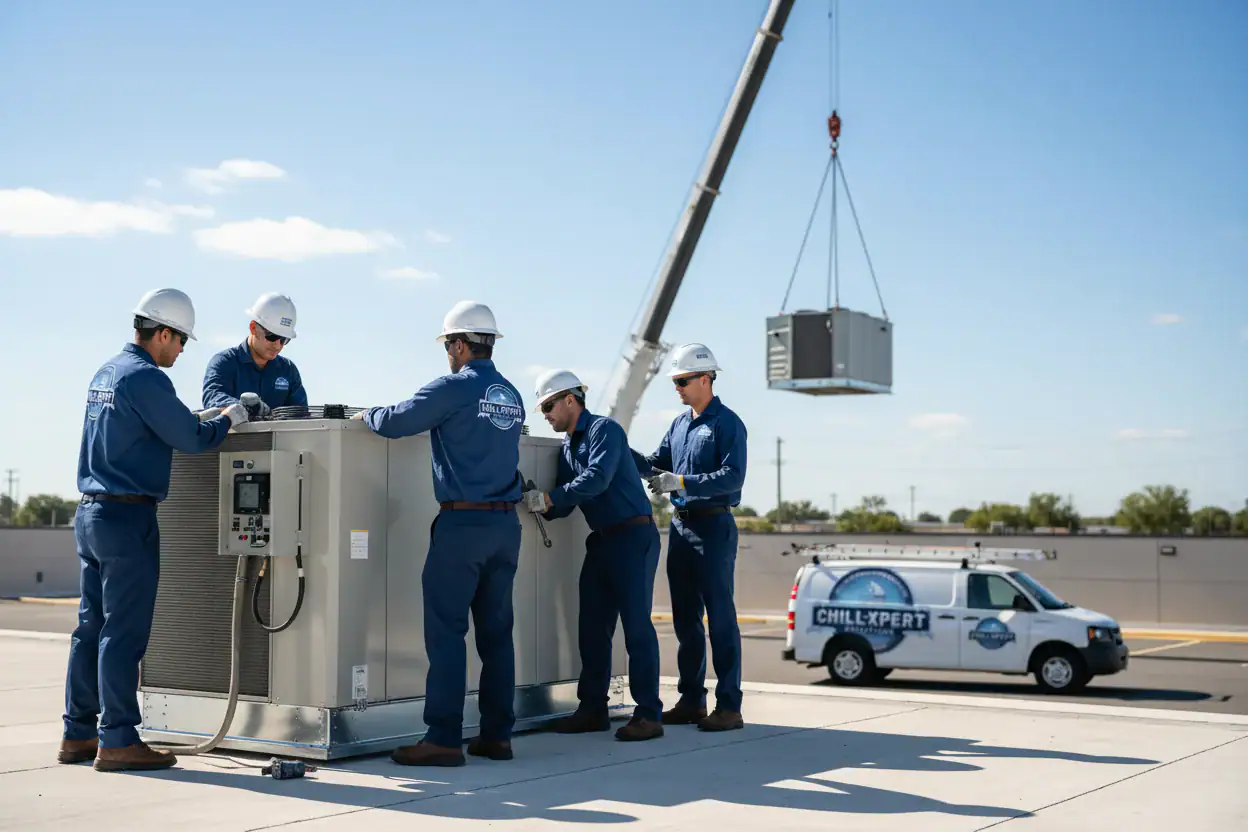
The honest answer is more often than most people do. In a saltwater environment like Nassau County’s, professional service at least twice a year is the baseline—once in the spring before the season starts, and once in the fall to properly winterize the system before it sits through a Long Island winter.
Spring commissioning matters because a system that sat all winter needs to be checked before it’s asked to run hard through a heat wave. Refrigerant levels, condenser coils, electrical connections, thermostats—all of it needs to be inspected and cleaned after months of inactivity. Skipping this step is one of the most common reasons systems fail in early summer, right when you want to be using the boat.
Winterizing is the one that really can’t be skipped. Water left sitting in a marine AC heat exchanger through a Northeast winter will freeze. When water freezes, it expands, and heat exchangers are not built to absorb that kind of pressure. The resulting damage is expensive—and entirely preventable. This is something that Florida or Gulf Coast boat owners don’t have to think about, but for anyone keeping a boat in Nassau County, NY, it’s a non-negotiable part of the fall routine.
For boats that see heavy use through the summer—weekends out of Oyster Bay, regular runs through Hempstead Harbor, extended time on the hook in the South Shore bays—quarterly service is worth considering. Marine growth is most active in the warm summer months, and sea strainers and condenser coils can clog faster than the twice-yearly schedule accounts for. A mid-season check in July or August can catch a developing problem before it becomes a mid-weekend failure.
The first thing to verify is whether the technician actually works on marine systems regularly—not occasionally, not “we can figure it out,” but as a genuine specialty. Ask them directly which marine AC brands they’re trained on. If they can’t name Dometic, Cruisair, Seafrost, or at least a few others without hesitating, that tells you something.
EPA Section 608 certification is a federal requirement for anyone handling refrigerants. Any legitimate marine HVAC technician should hold this credential. It’s not a differentiator—it’s the legal minimum. What separates a good tech from a great one is factory training on the specific brands they’re servicing, which goes well beyond the baseline certification.
Response time is worth asking about directly, especially if you’re calling in peak season. The reality in Nassau County is that qualified marine AC specialists are rare, and during July and August, the good ones get busy fast. A provider who can come the same day—or within a couple of hours—is worth a lot more than one with a two-week wait when you’re trying to make a weekend trip work.
Ask about parts availability too. A service vehicle stocked with marine-grade components for major brands means there’s a real chance the repair gets done in a single visit. One that doesn’t carry parts means a diagnosis today, an order placed tomorrow, and a return visit sometime next week. In the middle of boating season, that’s a week of your boat sitting at the dock.
Finally, look for upfront pricing before any work begins. A free estimate and a clear number before the job starts isn’t a luxury—it’s how you avoid the unpleasant surprise of an invoice that doesn’t match what you expected. Any reputable marine AC specialist should be willing to tell you what the repair will cost before they start.
Marine air conditioning repair is one of those things where the difference between the right call and the wrong one shows up fast—usually in the middle of the season, when you can least afford it. The systems are specialized, the environment is unforgiving, and the technician you choose matters more than most people realize until they’ve already learned it the hard way.
If you’re on Long Island—whether you’re keeping a boat in Oyster Bay, running out of Freeport, or docked anywhere along the South Shore—the conditions here demand someone who actually knows marine systems, not someone who’s willing to give it a shot.
Chill Xpert Solutions has been doing this work for over 40 years, specifically on Long Island waters. If your marine AC isn’t performing the way it should, reach out. We offer free estimates, same-day availability, and the kind of straight answers that make the whole process a lot less frustrating.
Article details:
Share:
Continue learning: