Choosing the wrong mini split installer can cost you twice. Here's what to look for before you commit to anyone on Long Island.
Share:
Summary:
By the time most Nassau County homeowners start searching for local mini split installers, they’ve already made the decision to go ductless. The research is done. The technology makes sense. What they haven’t figured out yet is who to trust with the actual installation — and that’s where things can go sideways fast.
A poorly installed mini split doesn’t just underperform. It can leak water into your walls, lose refrigerant within months, and leave you paying a second contractor to undo what the first one did. This guide is about helping you avoid that situation entirely.
If you want to see how we approach the work before you call anyone, our mini split installation service page sets out the sizing, the quote and what happens on install day.
Mini splits have a reputation for being simple to install. They don’t require ductwork, the indoor units mount to the wall, and the whole job can look finished in a day. That simplicity is part of the appeal — but it’s also what makes it easy for underqualified contractors to look competent until something goes wrong.
The reality is that a proper installation involves load calculations to size the system correctly for your space, careful placement of the indoor head unit to account for drainage, airflow, and long-term access, correct routing and protection of the refrigerant lines, and a vacuum and leak test before the system is ever charged. Skip any of those steps and you’re not getting a deal — you’re getting a liability.
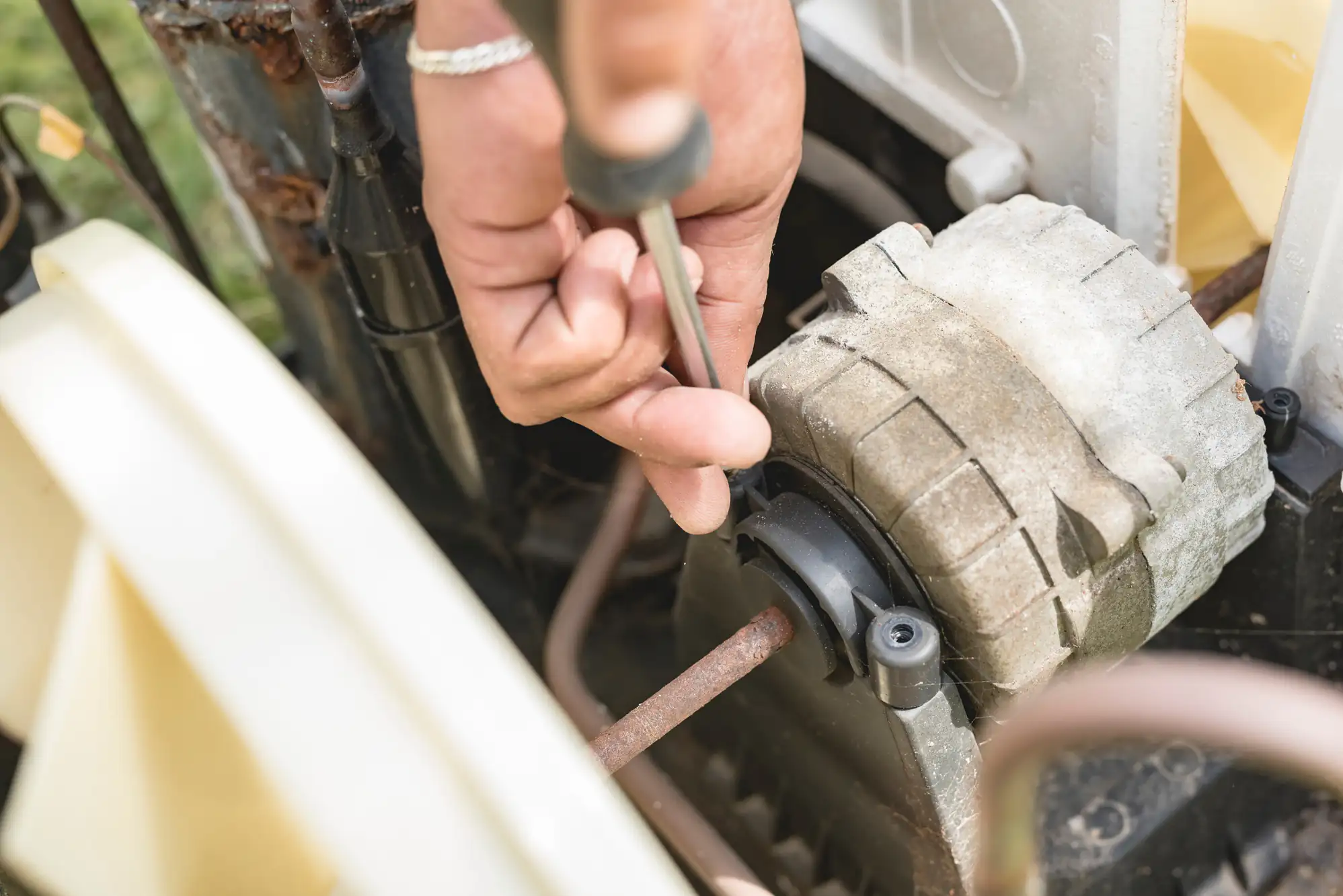
This is the detail most buyers never think to ask about, and it’s one of the most common sources of real damage after a mini split installation. The indoor air handler produces condensate — water — that has to drain somewhere. If the unit is mounted in a spot where there’s no clear drainage path, that water ends up where it shouldn’t.
One scenario that comes up more often than it should: a homeowner has a system installed, the unit is placed in a convenient-looking spot on the wall, and within a season the condensate is backing up and soaking into the ceiling or floor beneath it. The fix isn’t a service call — it’s ripping the unit out and starting over.
Proper placement also affects how the air actually moves through the room. A unit mounted too high, too low, or pointed in the wrong direction can create hot and cold spots even in a well-sized system. In Nassau County’s older housing stock — the capes, colonials, and ranches built before central air was standard — ceiling heights, wall construction, and room layouts vary enough that there’s no one-size-fits-all answer. An experienced installer reads the room, not just the spec sheet.
There’s also the question of noise. A head unit mounted on a shared bedroom wall or directly above a bed is going to be noticed at 2 a.m. in a way that a unit placed thoughtfully won’t be. These are the kinds of decisions that separate a contractor who’s done this hundreds of times from one who’s done it a handful of times and is figuring it out as they go.
None of this is meant to make installation sound intimidating — a good contractor handles all of it without you needing to manage it. But it does explain why the cheapest quote and the best outcome aren’t always the same thing.
Installation is the beginning, not the end. A mini split system that’s properly installed but never serviced is going to underperform and wear out faster than it should — and in Nassau County’s climate, that timeline accelerates.
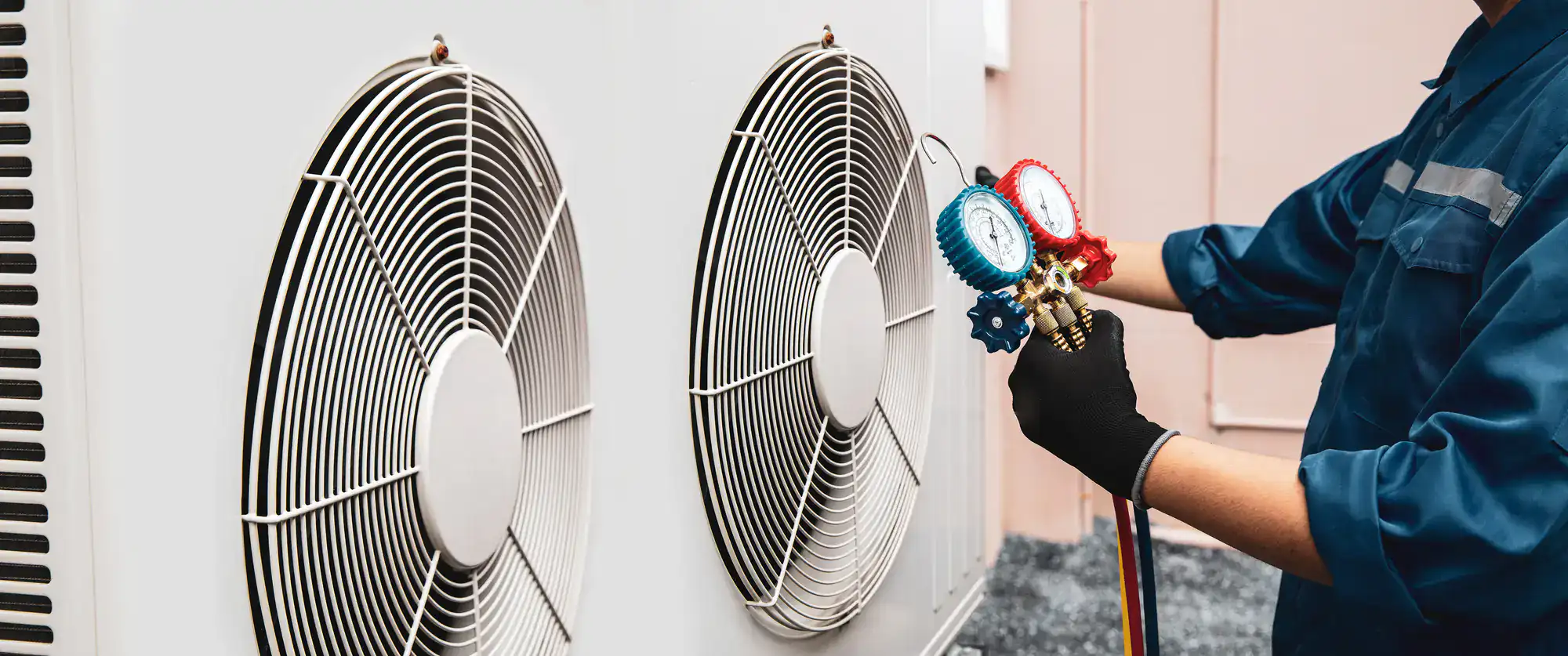
The county’s proximity to the Atlantic and Long Island Sound means outdoor condenser units are exposed to salt air year-round. Salt air doesn’t wait for a storm. It works on metal components continuously, corroding fins, coils, and electrical connections at a rate that inland markets simply don’t see. A system installed in Merrick or Massapequa is under different environmental pressure than the same system installed fifty miles inland.
Regular air con servicing — cleaning the coils, checking refrigerant levels, inspecting electrical connections, clearing the condensate drain — isn’t optional here. It’s what keeps a coastal installation running the way it should.
Beyond corrosion, Nassau County’s summers are genuinely humid. The mid-to-upper 80s with high moisture in the air puts sustained load on a mini split’s dehumidification and cooling functions. Systems that aren’t maintained run harder, cycle more, and wear faster. A well-maintained system handles that load efficiently. One that’s been neglected since installation is already working against itself.
When you’re evaluating local mini split installers, it’s worth asking whether they offer ongoing service — not just installation. A contractor who installs and disappears is a different relationship than one who’s available when you need them. We’ve built our service model around exactly that: the installation is the start of the relationship, not the end of it. Our technicians stock parts for major brands, which is why about 70% of our emergency calls get resolved on the first visit. That’s not a coincidence — it’s what happens when a company is actually prepared to service what it installs.
Want live answers?
Connect with a Chill Xpert Solutions expert for fast, friendly support.
Most contractor evaluation advice is generic. Check reviews. Get three quotes. Make sure they’re licensed. That’s all true, but it doesn’t tell you what to actually look for once you’re talking to someone.
Nassau County has its own licensing structure — New York doesn’t license HVAC contractors at the state level, so credentials are issued at the municipal level. That means a contractor licensed in one town isn’t automatically licensed to work in yours. It’s worth asking directly which Nassau County towns they’re licensed in, and verifying it rather than taking their word for it.
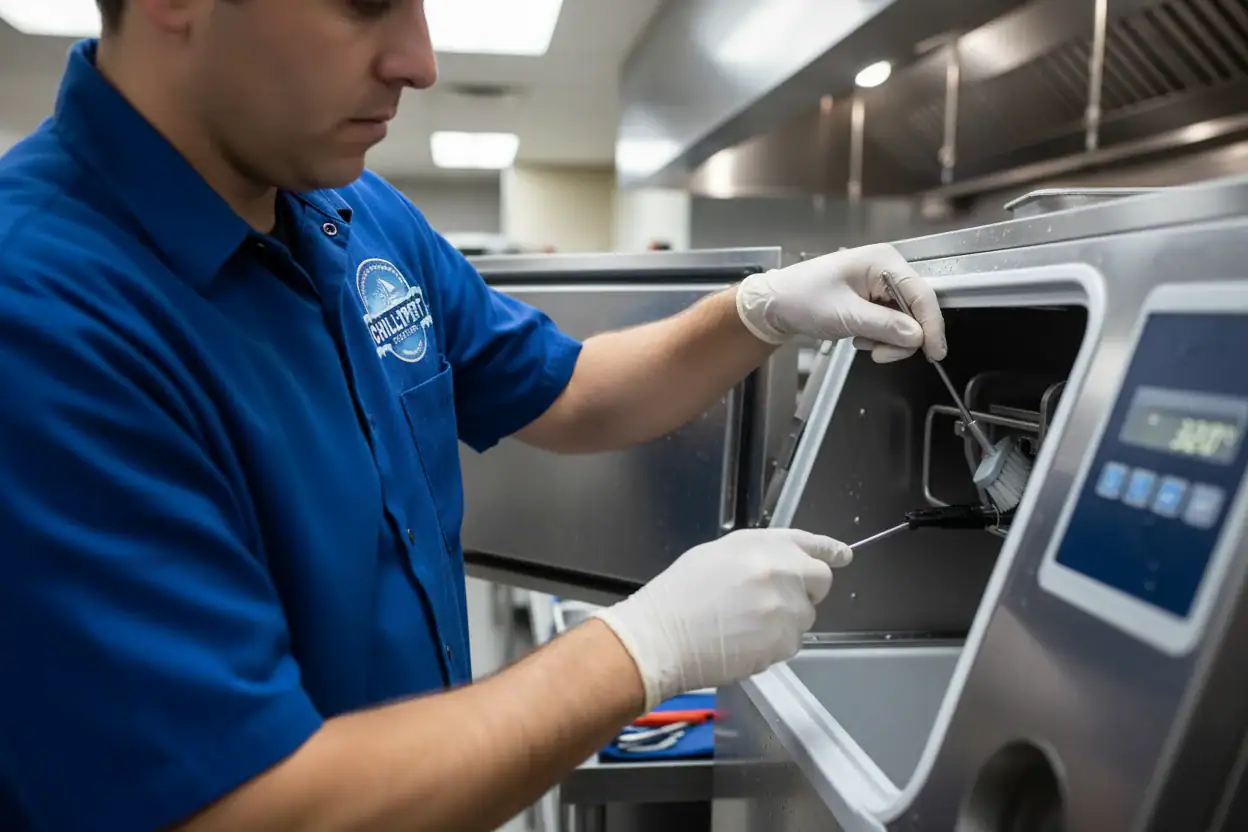
The questions that matter most aren’t the ones most buyers think to ask. Everyone asks about price. Fewer ask about who’s actually showing up at the door.
Ask whether the technicians are direct employees or subcontractors. It’s a more common distinction than most people realize, and it matters for accountability. When a company uses its own employees, there’s a direct line between the quality of the work and the company’s reputation. When they’re sending subcontractors, that line gets blurry — and you may not find out until something goes wrong.
Ask whether they pull permits. In Nassau County, permits are required for HVAC installations. A contractor who skips the permit is saving themselves time and you nothing — if you sell the house, that unpermitted work becomes your problem. Any installer who hesitates on this question is telling you something.
Ask about warranty registration. A quality installer registers the manufacturer warranty on your behalf after the job is complete. It sounds like a formality, but if you ever need to make a warranty claim, you’ll want confirmation that it was actually done. Recurring patterns in low-star reviews for mini split installers include refrigerant leaks within months of installation and warranty registration that never happened. Those aren’t unrelated.
Ask about parts inventory. A contractor who has to order every part for every job is a contractor who will make you wait when something needs fixing. Stocking parts is an investment that signals a company is serious about service, not just installation.
We ask ourselves these same questions when we evaluate our own operation — and we’re confident in the answers. Over 40 years working in Nassau and Suffolk County, with technicians who are our own employees, permits pulled as a matter of course, and parts stocked for the brands we work with. It’s not a complicated formula. It’s just doing the job right.
This one might not be obvious, but it’s worth understanding. Nassau County’s coastline — Hempstead Bay, Oyster Bay Harbor, Manhasset Bay, Reynolds Channel, and direct Atlantic access along the south shore — creates an environment that’s genuinely different from inland markets. The salt air that accelerates corrosion on outdoor condenser units in Merrick or Massapequa is the same environment that destroys inferior equipment on boats in Long Island Sound.
Contractors who work in marine HVAC — installing and servicing air conditioning systems on yachts and vessels — develop a specific understanding of how to select components, route systems, and protect equipment against corrosion, moisture, and harsh conditions. That knowledge transfers directly to residential installations in coastal Nassau County communities. It’s not a marketing angle. It’s applied expertise.
We’ve been doing marine HVAC work alongside our residential and commercial refrigeration work for over four decades. We work on self-contained marine systems, split systems, and chilled water setups for larger vessels. We understand what salt air does to metal over time, and we factor that into every outdoor installation we do in Nassau County — because the same environment that tests a yacht’s HVAC system is working on your condenser unit year-round too.
Most residential-only contractors don’t think about this because they’ve never had to. Their work is done in climate-controlled environments where corrosion isn’t a daily variable. Ours isn’t. And that difference shows up in how we approach installations in communities like Merrick, Massapequa, Rockville Centre, and anywhere else along Nassau County’s coast where the ocean air is a fact of life, not an occasional weather event.
If you’re evaluating local mini split installers and one of them has genuine marine HVAC experience, that’s not a coincidence — it’s a relevant credential for where you live.
The installer matters as much as the equipment. A well-specified system put in by the wrong contractor will underperform, cost you more in service calls, and potentially cause damage that a good installation would never have created. The questions to ask aren’t complicated — who’s coming, are they licensed locally, do they pull permits, do they stock parts, will they register your warranty — but they’re the ones that separate a good outcome from a frustrating one.
Nassau County’s coastal environment, older housing stock, and municipal licensing structure make this market specific enough that local experience genuinely counts. Over 40 years of it, in this county, with the kind of technical range that comes from working on everything from residential mini splits to marine HVAC systems on Long Island Sound, is a different thing than a general contractor who added ductless systems to their service list last year.
We offer free estimates and same-day availability — while most competitors are weeks out. Reach out to Chill Xpert Solutions and let’s figure out what actually makes sense for your home.
Article details:
Share:
Continue learning: