One equipment failure before a booked event can cost tens of thousands. Here's how Nassau County catering halls audit their refrigeration before the holiday rush.
Share:
Summary:
August feels early to be thinking about Thanksgiving and New Year’s Eve. But if you run a catering hall in Nassau County, August is exactly when this conversation needs to happen. By mid-October, refrigeration technicians across Long Island are buried in emergency calls from operators who waited too long. The window to get ahead of your season — to have someone walk your equipment, catch what’s quietly degrading, and fix it before it fails on a Saturday night in November — is right now. This guide covers what that audit looks like, why it matters more for catering halls than almost any other food service operation, and what to expect when you schedule one.
Most commercial freezer maintenance guides hand you a checklist and call it a day. That’s useful for your staff. It’s not the same as what a certified technician does when they walk through your equipment before a high-volume season.
A professional pre-holiday audit goes deeper than wiping down shelves or checking that the temperature display reads correctly. It’s a diagnostic pass on the components that determine whether your system survives the next four months — or doesn’t.
The goal isn’t to find problems after they’ve already cost you. It’s to find the ones that are quietly building toward a failure you haven’t seen yet.
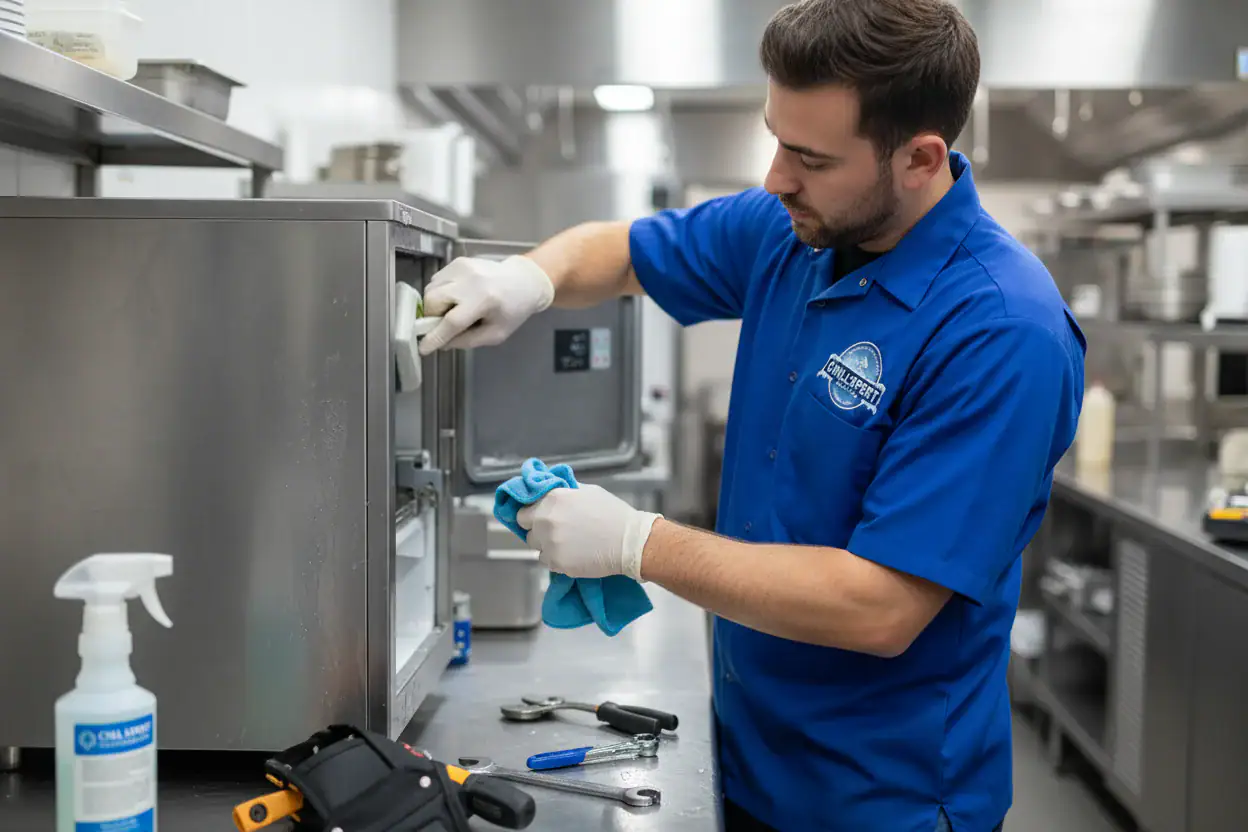
Walk-in freezers take a specific kind of abuse during the holiday season. A catering hall in Nassau County running back-to-back events in November and December is pulling product in and out constantly, door seals are under repeated stress, and the compressor is working harder than it does in any other month of the year. That’s why the audit starts there.
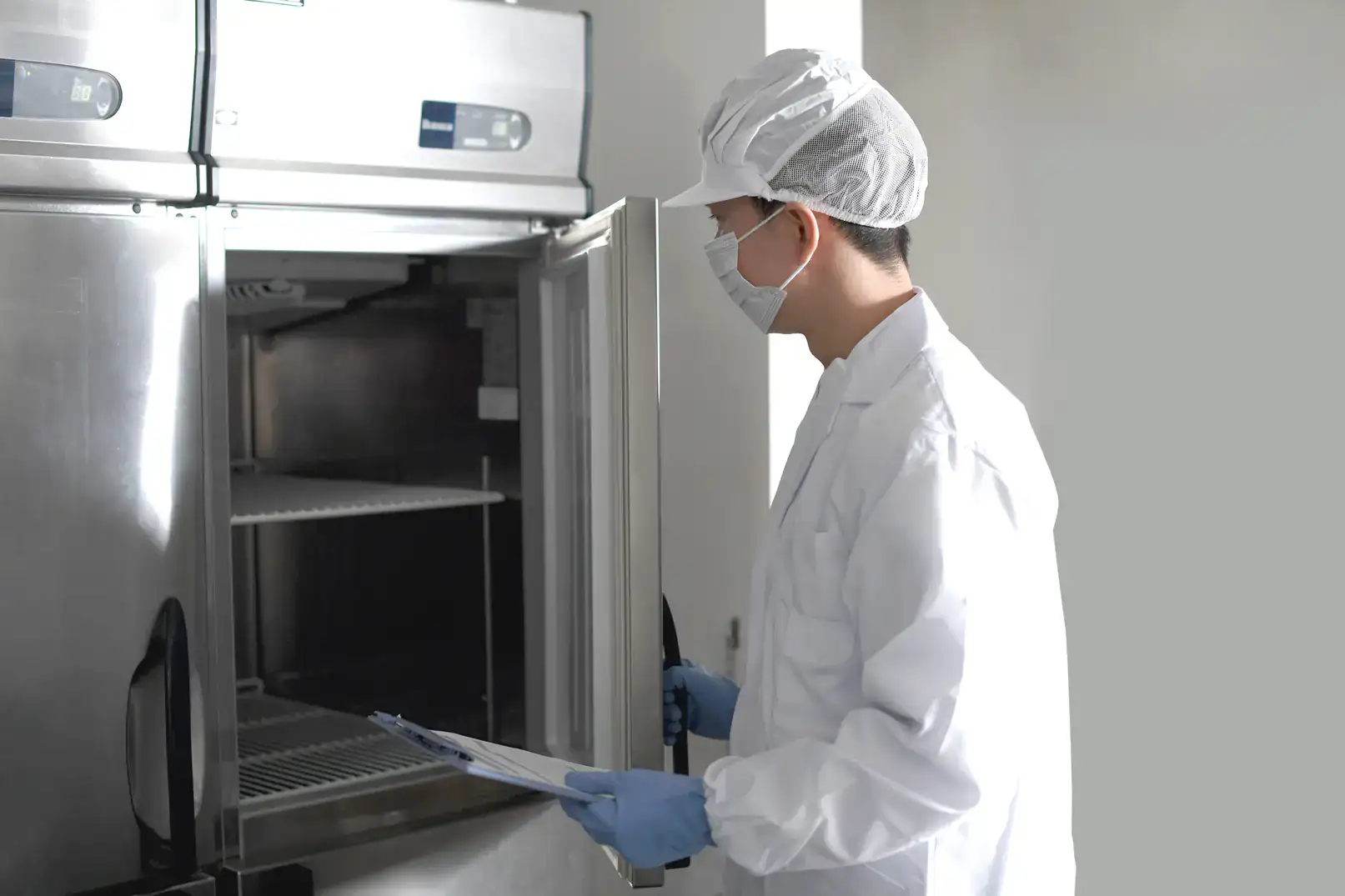
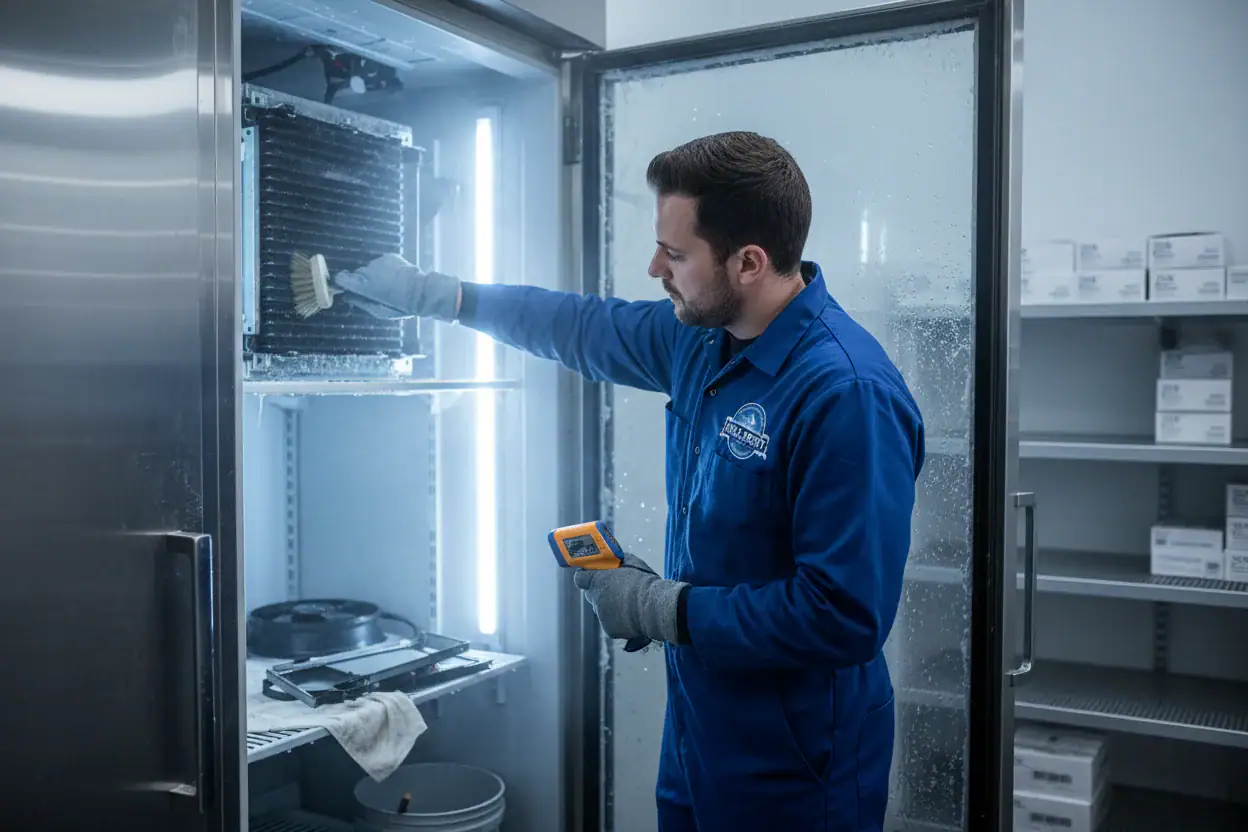
A technician will inspect the door gaskets for cracking, compression loss, or gaps that let warm air bleed in — a problem that’s invisible to the eye until your compressor starts short-cycling trying to compensate. They’ll check the evaporator coils for ice buildup, which signals a defrost cycle that isn’t completing properly. Left unaddressed, that buildup restricts airflow and forces the system to run longer and harder to maintain temperature.
Condenser coils get cleaned — and in a commercial kitchen environment, that means removing grease and debris that accumulates fast. A system running with dirty condenser coils can consume 20 to 30 percent more electricity than a properly maintained unit. At PSEG Long Island rates, that’s a real number on your utility bill every month, not just a footnote.
The refrigerant charge gets checked. Low refrigerant doesn’t announce itself — it just quietly degrades your system’s efficiency and accelerates compressor wear until the compressor fails entirely. Refrigerant handling requires EPA Section 608 certification under federal law, which is why this isn’t a task for a general handyman or an uncertified contractor. Any technician handling refrigerants in New York must carry that credential, and failure to present it during an inspection can result in fines ranging from $500 to $2,500.
Fan motors, electrical connections, temperature calibration, and drain lines round out the inspection. Drain lines in particular are easy to overlook — they accumulate mold and debris quickly, and a blocked drain in a walk-in freezer creates moisture problems that compound over time.
Sometimes the audit confirms everything is in good shape. Other times, it surfaces something that was already on its way to becoming an emergency. Knowing the warning signs — the ones that show up before a full failure — is what separates a $400 repair from a $15,000 spoilage event.
If your walk-in cooler is making sounds it didn’t make six months ago — grinding, clicking, or a compressor that cycles on and off more frequently than normal — that’s worth investigating before October. Unusual noises in a refrigeration system are rarely nothing. They’re usually a bearing, a fan motor, or a compressor component that’s under stress and heading toward failure.
Temperature inconsistency is another one. If your cooler reads 38°F at the sensor but product near the door feels warmer than it should, you may have a door seal problem, an airflow issue, or a refrigerant charge that’s dropped. Nassau County’s Department of Health inspects refrigeration temperature compliance as a primary food safety point — a unit that can’t hold consistent temperature isn’t just a maintenance problem, it’s a compliance risk.
Rising energy bills with no clear explanation are also worth flagging. Most catering hall operators don’t connect a creeping PSEG bill to their refrigeration equipment, but a system that’s working harder than it should — because of dirty coils, low refrigerant, or a struggling compressor — shows up on your utility statement before it shows up as a breakdown.
The reason walk-in cooler repair service matters most in August and September is simple: there’s still time to fix things properly. A compressor that needs replacement in September can be ordered, scheduled, and installed without disrupting a single event. The same repair in the middle of November means competing for technician availability against every other Long Island restaurant and catering operation that’s also in crisis mode.
Want live answers?
Connect with a Chill Xpert Solutions expert for fast, friendly support.
Walk-in units get most of the attention, but reach-in refrigerators and prep coolers carry their own risk during the holiday season. A catering hall running a 300-person event has product staged across multiple units — reach-ins in the prep kitchen, beverage coolers at the bar, display cases in the front of house. If any one of them underperforms on event day, the consequences ripple fast.
Commercial fridge maintenance before peak season follows the same logic as the freezer audit: find what’s degrading before it fails, fix it while there’s time, and go into October knowing your equipment is ready for what you’re about to put it through.
The standard recommendation is at least twice per year for commercial refrigeration equipment. For a catering hall operating in Nassau County with the volume of a holiday season, the pre-season visit in late summer and a post-season check in January or February is the right rhythm.
The pre-season visit is the more critical of the two. It’s the one that determines whether your equipment enters your busiest months in good condition or already compromised. The post-season visit catches anything that accumulated wear during the peak period and resets the system for the quieter spring months.
Between professional visits, your staff can handle the basics: checking that door seals close cleanly, monitoring temperature logs daily, and keeping condenser areas clear of debris and clutter. Condenser coils in a kitchen environment should be cleaned every 30 to 90 days — monthly if your kitchen runs heavy cooking operations with significant grease output. Those are tasks that don’t require a technician, but they extend the time between problems significantly.
What staff cleaning doesn’t cover is refrigerant levels, electrical connection integrity, compressor health, or evaporator coil condition. Those require a certified technician with the right equipment, and they’re the components most likely to cause a failure if they’re not checked before a high-demand period.
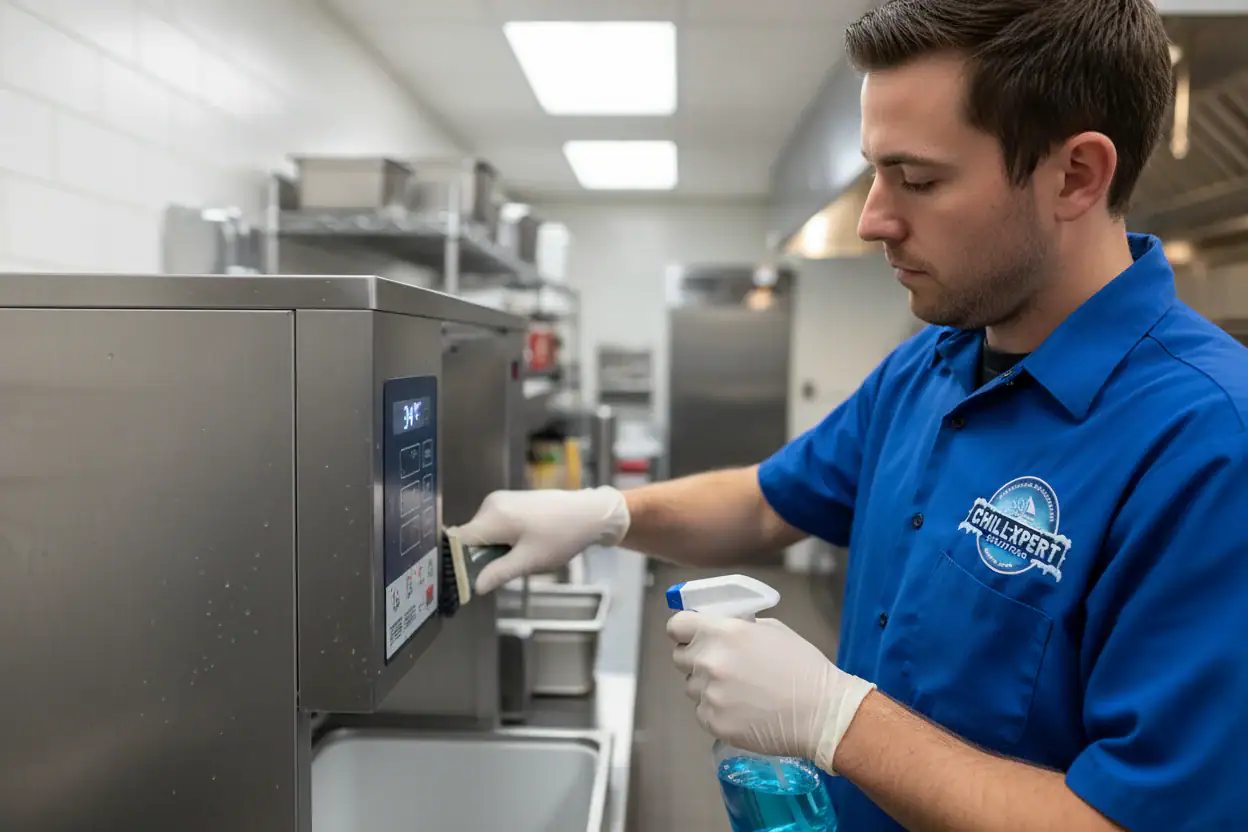
Ice machines deserve a specific mention here. They should be professionally cleaned every six months, and a catering hall running open bars and high-volume beverage service through the holidays needs that machine performing reliably. An ice machine that’s overdue for service is also a food safety concern — internal contamination isn’t visible from the outside, and it doesn’t announce itself until there’s a problem.
A restaurant that loses refrigeration on a Tuesday night can close early, comp some tables, and reopen Wednesday. It’s a bad night. A catering hall that loses a walk-in cooler three days before a contracted 250-person wedding in Garden City or a corporate gala in New Hyde Park is facing something categorically different.
The events are prepaid. The vendors are contracted. The guests have travel plans. There’s no “closing early” — there’s either delivering on the event or explaining why you can’t. The financial exposure from spoiled inventory alone can reach $15,000 to $50,000 for high-volume kitchens. Add vendor penalties, potential refund demands, and the kind of social media moment that follows a high-profile event failure in a county that hosts some of the most talked-about affairs on Long Island, and the stakes become very clear.
Nassau County’s Gold Coast catering culture operates at a level where reputation is everything. Venues that host weddings, bar and bat mitzvahs, and corporate holiday parties for clients drawn from across the county and from New York City don’t get second chances when something goes wrong in a visible way. The operators who have been doing this for decades understand that the equipment behind the scenes is what makes the front-of-house experience possible.
That’s the real argument for a pre-holiday refrigeration audit — not that maintenance is a good idea in general, but that for a catering hall in Nassau County, the consequences of skipping it are specific, expensive, and in some cases irreversible. Properly maintained refrigeration systems routinely last 15 or more years. Systems that don’t get consistent attention often fail before 10 — and they tend to fail at the worst possible time, because that’s when they’re under the most stress.
We’ve been working with catering halls, restaurants, delis, and food service operations across Nassau County since the early 1980s. We know what Long Island’s coastal humidity and salt air do to refrigeration equipment over time. We know what a compressor that’s three months from failure sounds like. And we know that the operators who call us in August are the ones who aren’t calling us in a panic on a Friday night in November.
The best time to audit your refrigeration equipment before the holiday season was last month. The second best time is right now, while technicians are still available, parts can be ordered without urgency pricing, and any repairs can be scheduled around your calendar instead of a crisis.
A pre-holiday audit isn’t a guarantee that nothing will ever go wrong. It’s the closest thing to one that exists. It’s the difference between going into October knowing your equipment is ready and going into October hoping it holds.
If you run a catering hall or food service operation in Nassau County and you haven’t had your refrigeration systems professionally inspected this year, Chill Xpert Solutions is ready to schedule that visit. We offer free estimates, upfront pricing with no surprises, and the kind of clear, direct explanation of what we find and what it means that lets you make an informed decision — not just a bill that appears after the fact.
Article details:
Share:
Continue learning: