Refrigerant leak repair costs more than most people expect — and in Nassau County, there are specific reasons why. Here's what you're actually looking at.
Share:
Summary:
You noticed the walk-in isn’t holding temperature. Or your AC is running constantly but not keeping up. A tech told you it’s a refrigerant leak — and now you’re trying to figure out if the quote you got is reasonable, whether the repair is even worth it, or why refrigerant costs so much more than it did a couple of years ago.
Those are fair questions, and they don’t have simple universal answers. What you pay depends on your system, your refrigerant type, where the leak is, and — if you’re operating in Nassau County — a few local factors that most contractors won’t bother explaining. Let’s get into it.
The first thing worth understanding is what you’re actually paying for. A refrigerant leak repair isn’t a quick top-off. Even a straightforward repair requires a technician to recover all the refrigerant from the system, find and fix the source of the leak, pull a vacuum on the lines to remove moisture and air, and then properly recharge the system. That’s several hours of labor minimum — before parts even enter the picture.
Minor leaks, where the source is accessible and the fix is simple, typically run between $200 and $500. Moderate repairs — where the leak requires more extensive detection work or involves a fitting, valve, or line section — tend to fall in the $500 to $1,000 range. If the evaporator coil is leaking, you’re looking at a potential replacement that can push costs to $1,500 or more, and in commercial applications, costs can exceed $3,000 depending on system size and complexity.
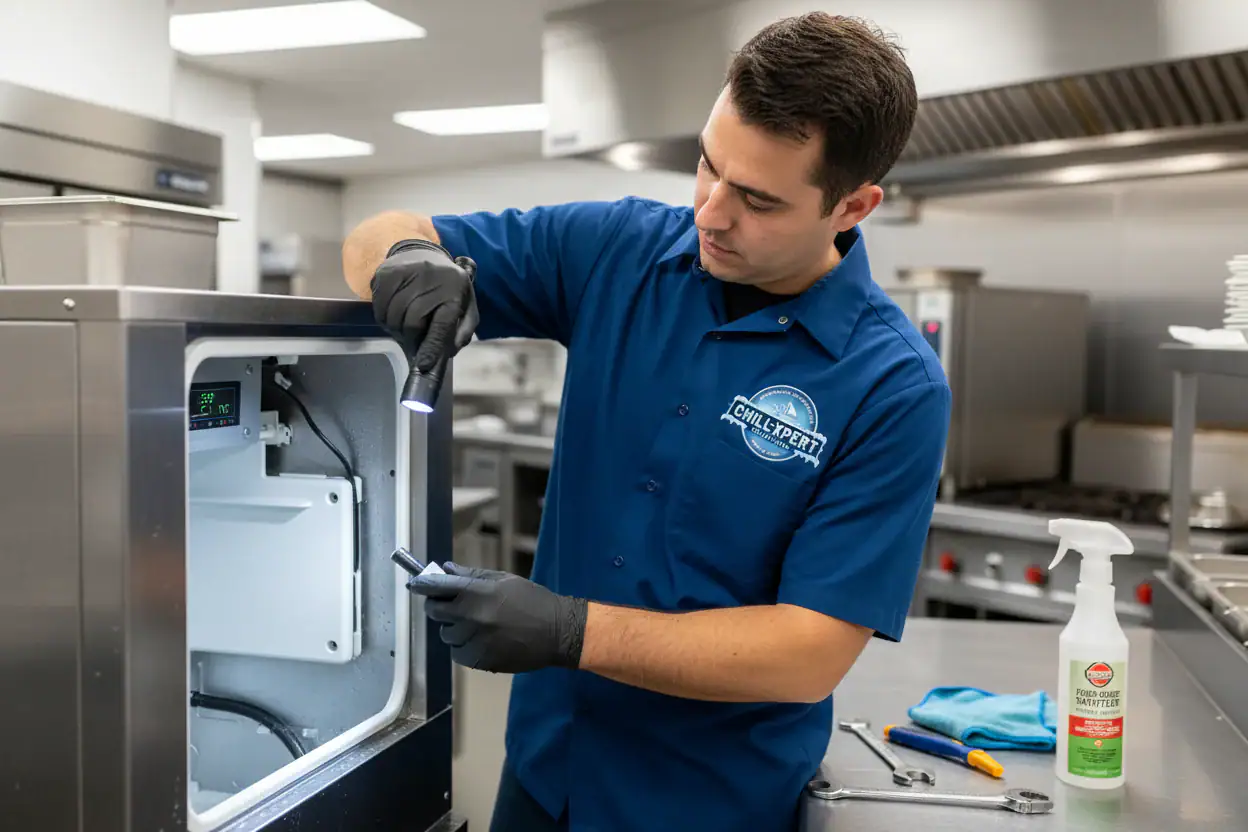
Nassau County sits between the Atlantic Ocean to the south and Long Island Sound to the north. That dual-coast geography isn’t just a selling point for waterfront restaurants and marina businesses — it’s a real factor in how quickly refrigerant lines, coils, and fittings corrode. Salt air accelerates the kind of pinhole corrosion that causes refrigerant leaks, which means commercial operators along the south shore in Long Beach, Freeport, and Oceanside, or on the north shore in Oyster Bay and Port Washington, are dealing with leak frequency that inland markets simply don’t see at the same rate.
That affects cost in two ways. First, the leak itself may be harder to find if corrosion has created multiple small failure points rather than one obvious source. Second, the repair may involve replacing corroded sections of line or coil rather than just sealing a single joint — which adds both parts and labor to the bill.
There’s also a refrigerant cost story that’s been unfolding over the past two years and is directly affecting what Nassau County operators pay right now. R-410A, the refrigerant used in most commercial HVAC systems installed over the last two decades, can no longer be used in newly manufactured equipment as of January 2025 under federal AIM Act regulations. New systems must use next-generation refrigerants like R-454B. The transition has created real supply chain pressure: R-410A wholesale prices have risen from roughly $6–$10 per pound to $12–$18 per pound as of spring 2026. R-454B has seen even sharper increases, with cylinder prices jumping more than 300% from 2021 levels.
If your system uses R-410A and you’re getting a repair quote today, part of what you’re seeing in that number is the refrigerant market tightening. It’s not a contractor markup — it’s the cost of the material itself going up. A technician who explains this to you is being straight with you. One who doesn’t mention it at all is worth a second look.
The good news: R-410A is still legal for servicing existing equipment. You don’t need to replace your system simply because new units are moving to different refrigerants. But the cost calculus has shifted, and it’s worth factoring into any repair-versus-replace decision you’re weighing.
One of the most common ways commercial operators end up paying more than they should is by hiring someone who adds refrigerant without finding the leak. It feels like a fix — the system cools again, the tech leaves, you move on. Then three months later you’re in the same situation, paying again for the same refrigerant that’s now leaked out a second time.
Refrigerant operates in a closed loop. If levels are low, there is a leak somewhere in that loop. Adding refrigerant without locating and repairing the source is the equivalent of refilling a bucket with a hole in it. The refrigerant will escape again, the system will run increasingly inefficient in the meantime, and the compressor — which depends on refrigerant returning to it for lubrication and cooling — will be under strain the entire time. Compressor failure is a far more expensive problem than a refrigerant leak. Replacement can run well into four figures on a commercial system.
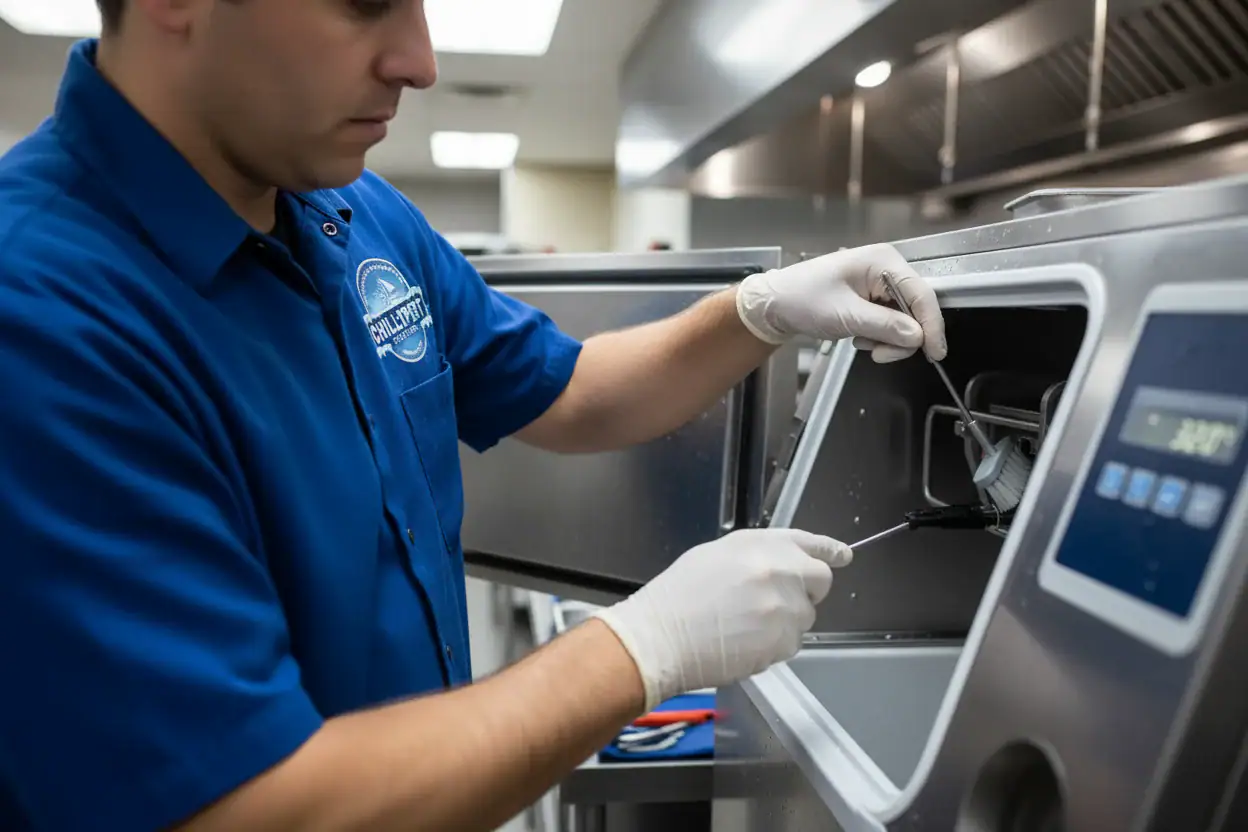
A legitimate repair starts with detection. Technicians use a combination of electronic leak detectors, UV dye injection, nitrogen pressure testing, and in some cases ultrasonic detection to find exactly where refrigerant is escaping. Once the source is identified and repaired, the system is evacuated and properly recharged. That process takes time and costs more upfront than a simple top-off — but it’s the only repair that actually holds.
For restaurants, delis, and catering halls across Nassau County operating walk-in coolers and freezers around the clock, the cost of a failed patch isn’t just the next service call. It’s the food spoilage risk, the health code exposure, and the possibility of a compressor failure on a Friday night before a packed weekend. The math on doing it right the first time is straightforward.
Want live answers?
Connect with a Chill Xpert Solutions expert for fast, friendly support.
At some point in the conversation, a technician may suggest that replacing the system makes more financial sense than repairing it. Sometimes that’s true. Sometimes it’s not. Knowing how to evaluate that recommendation is worth your time.
A useful rule of thumb: multiply the estimated repair cost by the age of the system in years. If that number exceeds $5,000, replacement is often the smarter long-term investment. If the repair cost is more than 50% of what a new unit would cost, the calculus similarly tends to favor replacement. These aren’t hard rules, but they give you a framework for the conversation rather than just taking the recommendation at face value.
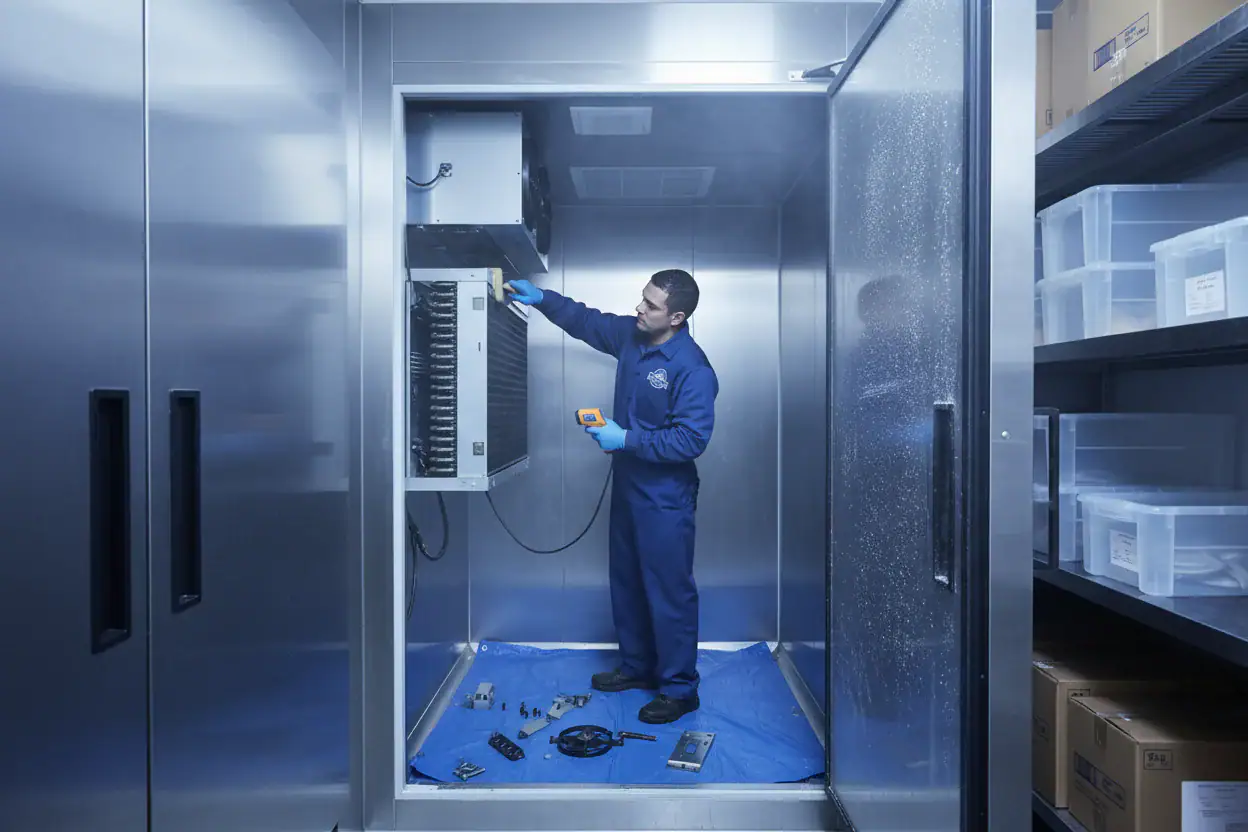
Age and refrigerant type are the two most important variables in this decision. A system under ten years old running R-410A that develops a repairable leak is almost always worth fixing. The system has useful life ahead of it, the refrigerant is still available for servicing, and the repair cost is unlikely to approach the cost of replacement.
The calculus changes with older systems, particularly those still running R-22 — the refrigerant that went through its own phase-out between 2010 and 2020. R-22 is now extremely expensive to source, and any system still relying on it is operating on borrowed time. A refrigerant leak in an R-22 system is usually a strong signal to plan for replacement rather than invest in another repair cycle.
For commercial operators in Nassau County, the coastal environment adds another layer to this decision. A system that has been exposed to salt air for fifteen or more years may have corrosion throughout the refrigerant circuit, not just at the point of the current leak. Repairing one leak on a heavily corroded system can mean another appears within a season. A thorough inspection — not just a leak repair — is the right move before committing to a major repair on an aging commercial unit.
It’s also worth noting that the transition to R-454B and other next-generation refrigerants doesn’t mean your existing R-410A system is suddenly obsolete. You can continue servicing it. But if you’re already weighing a significant repair on a system that’s approaching the end of its useful life, the current refrigerant cost environment makes the replacement option more financially competitive than it was three or four years ago. A technician who walks you through that comparison honestly — rather than just quoting the repair — is the kind of partner worth keeping.
This question matters more than most operators realize. Under federal law — specifically EPA Section 608 of the Clean Air Act — any technician who services, repairs, or maintains equipment that could release regulated refrigerants must be EPA Section 608 certified. This isn’t an optional industry credential. It’s a legal requirement. Fines for non-compliance can reach $45,000 per day per violation.
There are different certification levels depending on the type of equipment: Type II covers the high-pressure commercial systems most common in restaurants, delis, and retail refrigeration. Universal certification covers all equipment types. When you hire a contractor for refrigerant leak repair, asking whether their technicians hold the appropriate EPA Section 608 certification is a reasonable and entirely fair question. A legitimate operation will answer it without hesitation.
Beyond federal certification, New York State requires commercial refrigeration technicians to be fully licensed and insured to legally perform this work. That combination — EPA certification, state licensing, and insurance — is the baseline for any contractor you should consider for a commercial refrigerant leak repair.
Our technicians are fully licensed, insured, and EPA certified to handle the refrigerant systems our clients depend on — from restaurant walk-in coolers in Hempstead to marine refrigeration on vessels docked in Oyster Bay. We also carry genuine parts on our service vans, which means most repairs are completed in a single visit rather than stretched across multiple days waiting on an order. When you’re running a food service operation and every hour of downtime has a real cost attached to it, that matters.
We also serve a corner of the market that most Nassau County contractors simply don’t touch: marine refrigerant systems on boats, yachts, and waterfront properties. Saltwater environments introduce corrosion and space constraints that general HVAC contractors aren’t equipped to handle. If you’re operating a vessel or a marina facility with refrigeration needs, we’re one of the very few providers in this region with documented expertise in that environment.
The short version: refrigerant leak repair costs between $200 and $1,500 for most commercial systems, with complex cases running higher. Nassau County operators tend to pay toward the upper end of those ranges, driven by coastal corrosion, commercial system complexity, and refrigerant costs that have risen sharply over the past two years. A fair quote reflects all of that — and comes with a clear explanation of what was found, what needs to be done, and what it will cost before any work begins.
What you want to avoid is a repair that doesn’t actually address the source of the leak, or a contractor who can’t answer basic questions about their certifications. The difference between a real fix and a temporary patch isn’t always obvious in the moment — but it shows up clearly in whether you’re calling for the same problem six months later.
If you’re dealing with a refrigerant leak on a commercial system in Nassau County and want a straight answer on what it will take to fix it properly, reach out to Chill Xpert Solutions. We offer free estimates, respond in under two hours across Nassau and Suffolk County, and have been doing this work on Long Island for more than four decades.
Article details:
Share:
Continue learning: