Replacing your HVAC system in Nassau County involves more than picking equipment. Understanding real costs, proper sizing, and local permit requirements helps you avoid expensive mistakes and get 15+ years of reliable performance.
Share:
Summary:
Your HVAC system doesn’t give much warning before it quits. One day it’s running, the next you’re waking up to a cold house or sweating through a heat wave. When that happens, you’re facing a decision that affects your comfort and budget for the next 15 years.
The question isn’t just what replacement costs. It’s whether you’re getting a system that’s properly sized for your home, installed by someone who understands Nassau County’s permit requirements, and priced transparently without surprise charges showing up later. You need real numbers, honest guidance on when replacement actually makes sense versus when repair is smarter, and clarity on what drives costs up or down in your specific situation.
HVAC replacement cost in Nassau County runs between $7,500 and $15,500 for most homes, with the typical 2,000-2,500 square foot home landing around $11,500 to $14,000. That range exists because not all replacements are created equal.
Your final cost depends on system type, size, efficiency rating, existing ductwork condition, and whether you’re doing a straightforward swap or addressing underlying problems that caused your old system to fail prematurely. Labor accounts for roughly 40-60% of your total cost, and Nassau County HVAC professionals charge between $100 and $250 per hour depending on experience and project complexity.
Equipment makes up the other major cost driver. A basic 2.5-ton system with standard efficiency sits at the lower end. A 4-ton high-efficiency heat pump with variable-speed technology pushes you toward the upper range. The difference isn’t just the sticker price—it’s what you pay every month in energy bills for the next 15 years.
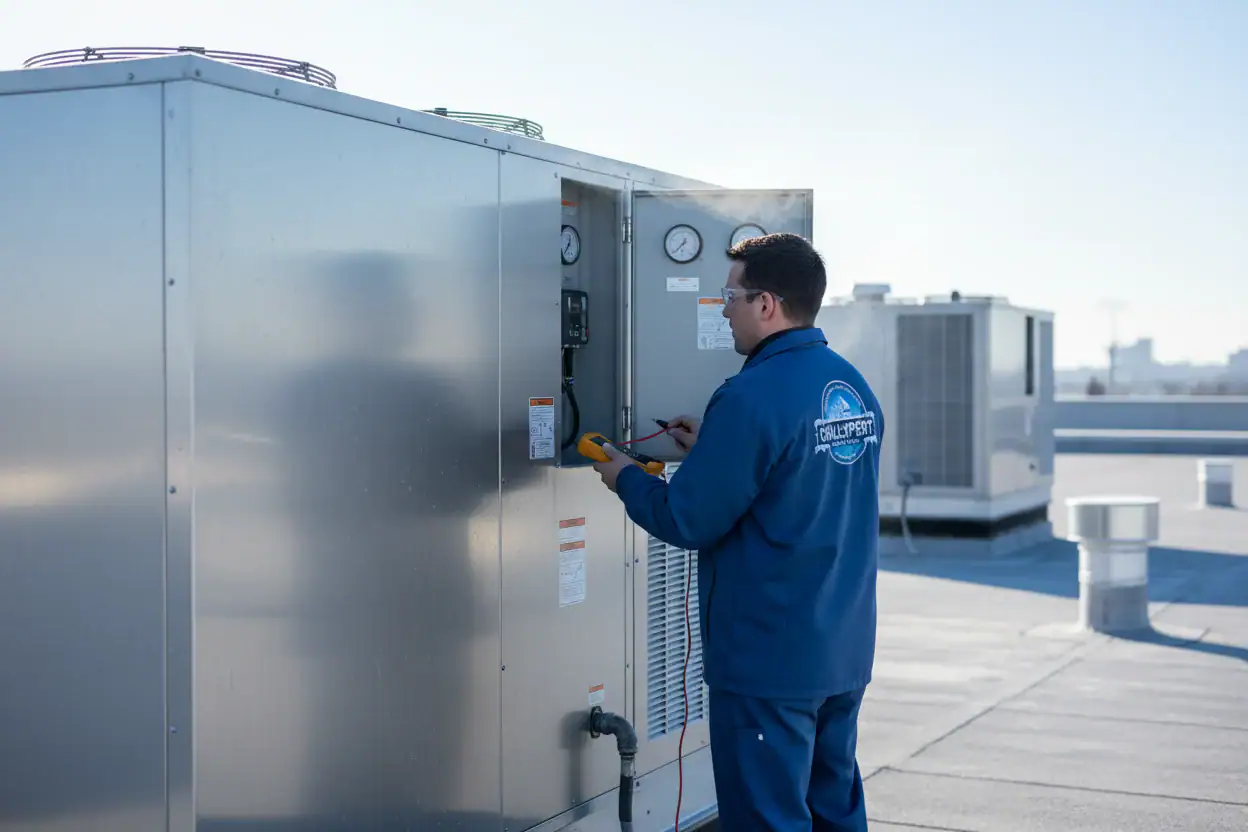
Central air conditioning replacement costs between $6,500 and $12,000 including installation. That covers the outdoor condenser, indoor evaporator coil, refrigerant, electrical connections, and labor. If you’re replacing just the condenser in Nassau County, you’re looking at $1,300 to $6,100 depending on size and efficiency, with most homeowners paying around $2,900 for a standard residential system.
Furnace replacement runs $3,800 to $12,000 for gas systems, $1,900 to $5,600 for electric. Heat pumps cost more upfront because they replace both your AC and furnace, but they deliver heating and cooling in one unit. Expect $8,000 to $18,000 for a complete heat pump system depending on capacity and efficiency rating.
System size directly determines what you’ll pay. HVAC systems are measured in tons—how much heat the unit can remove in a given time, not physical weight. Residential systems range from 1.5 to 5 tons. A 1.5-ton system might cost $5,000 to $8,000 installed. A 2.5-ton unit runs $7,000 to $11,000. A 4-ton system pushes you into the $10,000 to $14,000 range. A 5-ton system for larger homes over 2,400 square feet can hit $12,000 to $18,000 when you factor in the heavier equipment, additional refrigerant, and more involved installation.
Here’s what most contractors won’t tell you upfront: bigger isn’t better. An oversized system costs more to buy, costs more to run, and actually performs worse than a properly sized one. Oversized units short-cycle—they cool the air quickly but shut off before running long enough to remove humidity. You end up with a cold, clammy house and a system that wears out faster because it’s constantly starting and stopping.
The only way to know what size you actually need is a proper Manual J load calculation. That’s an engineering analysis that accounts for your home’s square footage, insulation quality, window placement and type, ceiling height, climate zone, and even which direction your house faces. Not a guess based on square footage. Not a generic rule of thumb. Actual calculations that prevent the two most expensive mistakes: oversized systems that short-cycle and waste energy, and undersized systems that run constantly without ever reaching the temperature you set.
Many contractors still use outdated rules like “400-600 square feet per ton” or “one ton per 600 square feet.” These simplified methods ignore crucial factors that can change your actual heat load by 30% or more. A well-insulated home needs significantly less capacity than a poorly insulated one. South-facing windows add 50% more cooling load than north-facing ones. Ten-foot ceilings require 25% more capacity than eight-foot ceilings.
Permits in Nassau County add $250 to $400 to your replacement bill, and the process takes longer than most homeowners expect. Any HVAC replacement requires mechanical and electrical permits to ensure your ductwork, refrigerant lines, and electrical connections meet current energy and safety codes.
The permit fee itself runs around $300 for plan review in Nassau County. That’s not what drives up costs. It’s the time, the inspections, and the compliance requirements that add up. Processing times run 4 to 8 weeks for standard residential projects, and that timeline assumes everything is submitted correctly the first time.
If you’re in a homeowners association or designated historic district, you’ll need additional approvals before you can even apply for county permits. Those approvals can add weeks to your timeline. This is where choosing a contractor who knows Nassau County building codes matters. Contractors who get it right the first time keep your project moving. Contractors who don’t know local requirements cause expensive delays.
You’ll need multiple inspections throughout the installation process. The rough-in inspection happens after ductwork is complete but before anything gets covered. Inspectors verify that structural framing meets code, electrical wiring is properly sized and installed, plumbing for condensate drainage is correctly routed, and HVAC ductwork is adequately installed with proper support and sealing. If anything fails inspection, work stops. You fix the issues, pay for a re-inspection, and wait for the inspector to come back.
The final inspection comes after all work is complete. This is why the total timeline from decision to operational system often runs 6 to 10 weeks in Nassau County when you factor in permits, scheduling, installation, and inspections. If you’re replacing a system during peak summer demand, expect premium pricing and longer wait times.
Ductwork adds another variable. If your existing ducts are in good condition, you’re looking at a straightforward replacement. If your ducts are leaking, undersized, or deteriorating, you’ll need ductwork repair or replacement. In Nassau County, coastal humidity and salt air accelerate duct deterioration. Flexible ducts in unconditioned crawl spaces might last 10-12 years in other climates but only 8-10 years on Long Island. Ductwork replacement for a 2,000 square foot home adds $2,100 to $4,000 to your project.
If you’re replacing a system and your ducts are old or leaky, bundling the projects saves on labor costs. The contractor is already working on your HVAC system, and combining the jobs often results in a package discount. You also avoid the disruption of having crews in your home twice. A high-efficiency system paired with leaky ducts is like putting premium tires on a car with a leaking gas tank. You won’t get the performance or savings you’re paying for until you fix the underlying problem.
Want live answers?
Connect with a Chill Xpert Solutions expert for fast, friendly support.
The biggest question homeowners face is whether to invest in one more repair or replace the whole system. This decision impacts your comfort and budget for years to come. There’s a surprisingly simple formula widely used across the HVAC industry for evaluating the best use of your money.
Multiply your system’s age by the cost of the repair. If the total exceeds $5,000, replacement is the smarter financial choice. A $600 repair on a 10-year-old system equals $6,000, which favors replacement. A $400 repair on an 8-year-old system equals $3,200, which suggests repair still makes sense if the system is otherwise reliable.
This rule works because it balances repair cost against remaining system life. A newer system has years of service left, making repairs worthwhile. An older system approaching the end of its 15-20 year lifespan will likely need more repairs soon, making replacement the better long-term investment.
Age is your first consideration. Most HVAC systems last 15-20 years with proper maintenance. If your system is over 15 years old and needs major repairs, replacement often makes more financial sense even if the $5,000 rule suggests repair might work.
Frequent repairs tell you something important. If you’re calling for service multiple times per season, those costs add up quickly. More importantly, frequent breakdowns mean you’re more likely to be without heat or cooling when you need it most. A single moderate repair isn’t a reason to replace a system. But a pattern of significant repairs is a strong replacement signal.
Rising energy bills indicate declining efficiency. A poorly maintained or aging system can lose 10-20% of its efficiency, which translates directly to higher gas or electric bills. Over a heating and cooling season, that efficiency loss can cost more than regular maintenance would have prevented. If your utility bills have increased significantly without changes in usage, your system is working harder to produce the same comfort.
Your system uses R-22 refrigerant. R-22 has been phased out due to environmental concerns, making it expensive and difficult to replace. If your system relies on R-22 and needs major work, upgrading to a new model using modern refrigerant is the smart choice. You avoid the escalating cost of R-22 and get a more efficient system.
Uneven heating and cooling throughout your home signals problems. If some rooms are consistently hotter or colder than others even after repairs, your HVAC system may be struggling to distribute air properly. This could indicate ductwork issues, but it often means your system is undersized or failing. Proper evaluation tells you which issue you’re dealing with.
Comfort problems that repairs don’t fix. If your home never seems to reach the desired temperature, even after repairs, your system may be genuinely failing. You’re paying for repairs that provide temporary relief but don’t solve the underlying problem. At that point, replacement stops being an expense and starts being an investment in actual comfort.
The efficiency gap between older systems and modern equipment is larger than most homeowners realize. If your current system was installed before 2010, it likely runs at 60-75% efficiency. Today’s high-efficiency models run at significantly higher performance levels, and that difference shows up in your monthly utility bills.
Upgrading from an old SEER 10 system to a modern SEER2 16 system cuts cooling energy use by 20-35%. That’s not a small difference. For a typical Nassau County home running air conditioning from May through September, that translates to $300 to $600 in annual savings depending on your usage and local electricity rates.
Moving from SEER2 14 to SEER2 17 trims cooling costs by roughly 18%. SEER2 20 systems can be 30% more efficient than SEER2 14 baselines in cooling-dominant climates. The higher the SEER2 rating, the less electricity your system uses to deliver the same cooling. You’ll pay more upfront for higher efficiency, but you’ll save money every month for the life of the system.
Variable-speed technology makes a bigger difference in real-world performance than efficiency ratings alone. Unlike old single-speed systems that blast on at 100% and then shut off, variable-speed units adjust their output to match your actual cooling needs. Running at 60% capacity on a mild day uses far less electricity than cycling on and off at full power. You get steadier temperatures, better humidity control, and lower energy bills all at once.
Here’s the thing most people miss about energy savings: energy prices don’t stay flat. They creep up 2-4% every year. So the $500 you save this year becomes $520 next year, $540 the year after. Your savings compound while your equipment cost stays fixed. That’s how you turn an HVAC replacement into an actual investment instead of just another expense.
The math changes based on your home size, your current system, and how hard your HVAC works during Nassau County’s summer heat and winter cold. But the principle stays the same—higher efficiency means lower operating costs, month after month, year after year. When you factor in available rebates and tax credits for high-efficiency systems, your payback period can drop by a year or more.
HVAC replacement is one of the most important investments you’ll make in your home. The right system, properly sized and correctly installed, delivers 15-20 years of reliable comfort. The wrong system—oversized, undersized, or installed by contractors who don’t understand Nassau County requirements—becomes an expensive problem you’re stuck with for years.
Focus on proper sizing through Manual J load calculations, not generic rules of thumb. Get transparent pricing that includes permits, inspections, and any ductwork modifications your home needs. Work with contractors who understand local building codes and can navigate Nassau County’s permit process without delays.
Use the $5,000 rule to evaluate repair versus replacement decisions objectively. Consider energy efficiency improvements that lower your monthly operating costs. And choose a company with proven expertise, transparent communication, and a track record of quality installations.
At Chill Xpert Solutions, we bring over 40 years of HVAC experience to every Nassau County project, with the technical expertise to handle complex installations and the local knowledge to navigate permits efficiently. We offer free estimates, transparent pricing, and 24/7 consulting support so you’re never left wondering what comes next.
Article details:
Share:
Continue learning: