That slightly warm freezer or frost buildup on the coils is not something to put off. Here is what your equipment is trying to tell you, along with when to act.
Share:
Summary:
Most walk-in freezer failures do not happen without warning. They announce themselves through a little more frost than usual on the coils, a compressor that seems to run longer than it used to, or a temperature that drifts up slightly on a hot afternoon. The problem is that when you run a restaurant, deli, or catering operation across Long Island, it is easy to chalk those things up to normal wear and move on. Until you cannot. This post focuses on recognizing those early signals for what they are and understanding the true stakes of waiting too long to act.
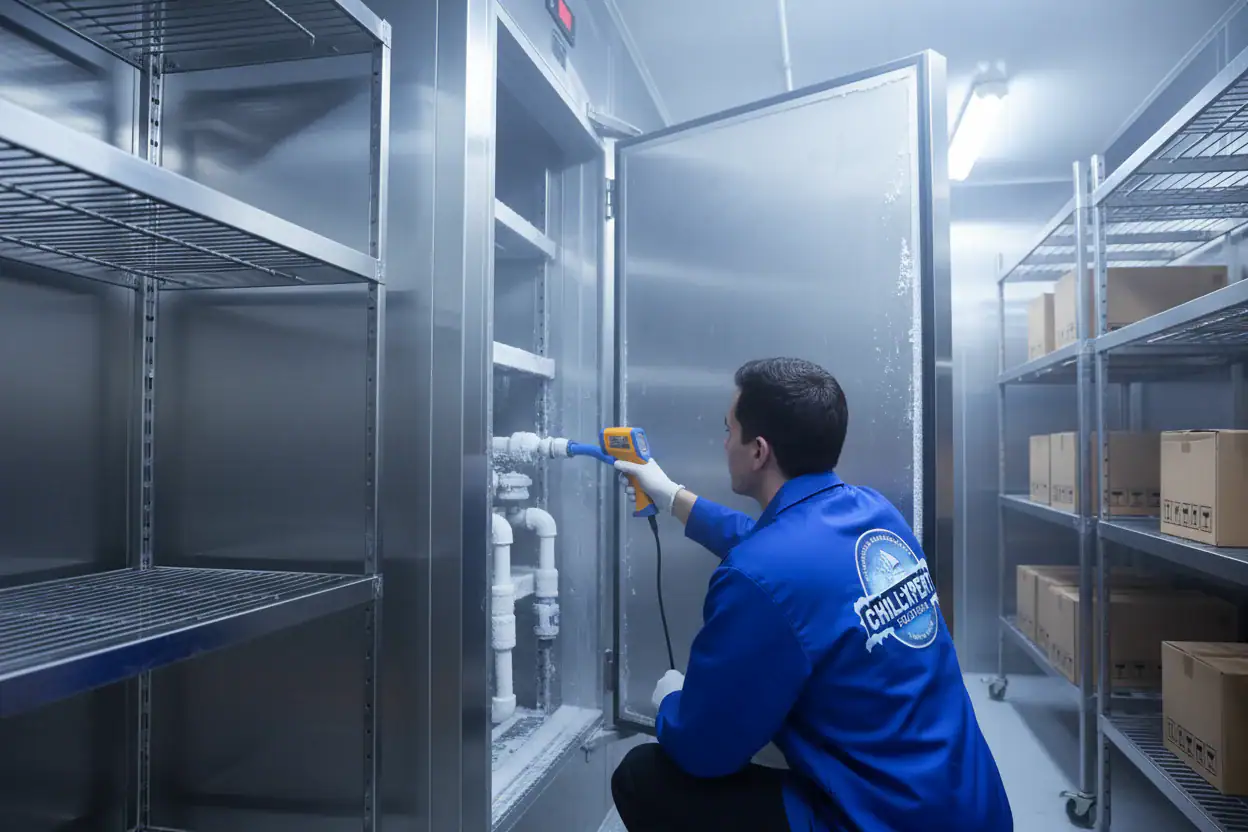
Your walk-in freezer communicates through symptoms. Temperature fluctuations, unusual sounds, frost in unexpected places, and doors that fail to seal correctly are not random quirks. They are mechanical signals, and each one points to a specific issue happening inside the system. The challenge is that most of them feel minor until they turn critical.
For food service operators across Nassau County and Suffolk County, spanning delis along Sunrise Highway, catering halls in Smithtown, and waterfront restaurants in Bay Shore, a freezer off by a few degrees is never just an inconvenience. It is a compliance issue, a food safety hazard, and a financial risk all at once. Understanding what these warning signs mean is the first step toward avoiding a surprise breakdown.
Temperature drift is the most common complaint we hear, and it stems from multiple potential causes. Sometimes it involves a refrigerant leak where the system loses the charge needed for proper cooling, forcing the compressor to work harder and longer. Other times it points to a dirty condenser coil unable to release heat efficiently, a failing evaporator fan motor restricting airflow, or a worn door gasket letting warm air seep in every time the door closes.
The tricky part is that all of these issues produce the same surface-level symptom: a freezer that runs but fails to hold proper temperature. A walk-in freezer must stay between 0 degrees Fahrenheit and minus 10 degrees Fahrenheit. Once it creeps above that range, you are on a clock.
The FDA Food Code requires perishable food to be held at safe temperatures, and compromised product kept for more than four hours generally must be discarded. On a busy Friday night in Patchogue or a holiday weekend in the Hamptons, that represents a very real financial risk.
A gradually rising electricity bill often serves as the first sign something is wrong, appearing long before temperature changes become noticeable. When a system works harder, running longer cycles and struggling against refrigerant deficits or fouled coils, it draws more power. If your energy costs climb without changes on your end, your freezer is already sending a warning.
Waiting is the wrong response. A refrigerant leak caught early is a straightforward repair, whereas ignoring the same leak for another month can lead to compressor burnout, which changes the conversation entirely regarding cost and downtime.
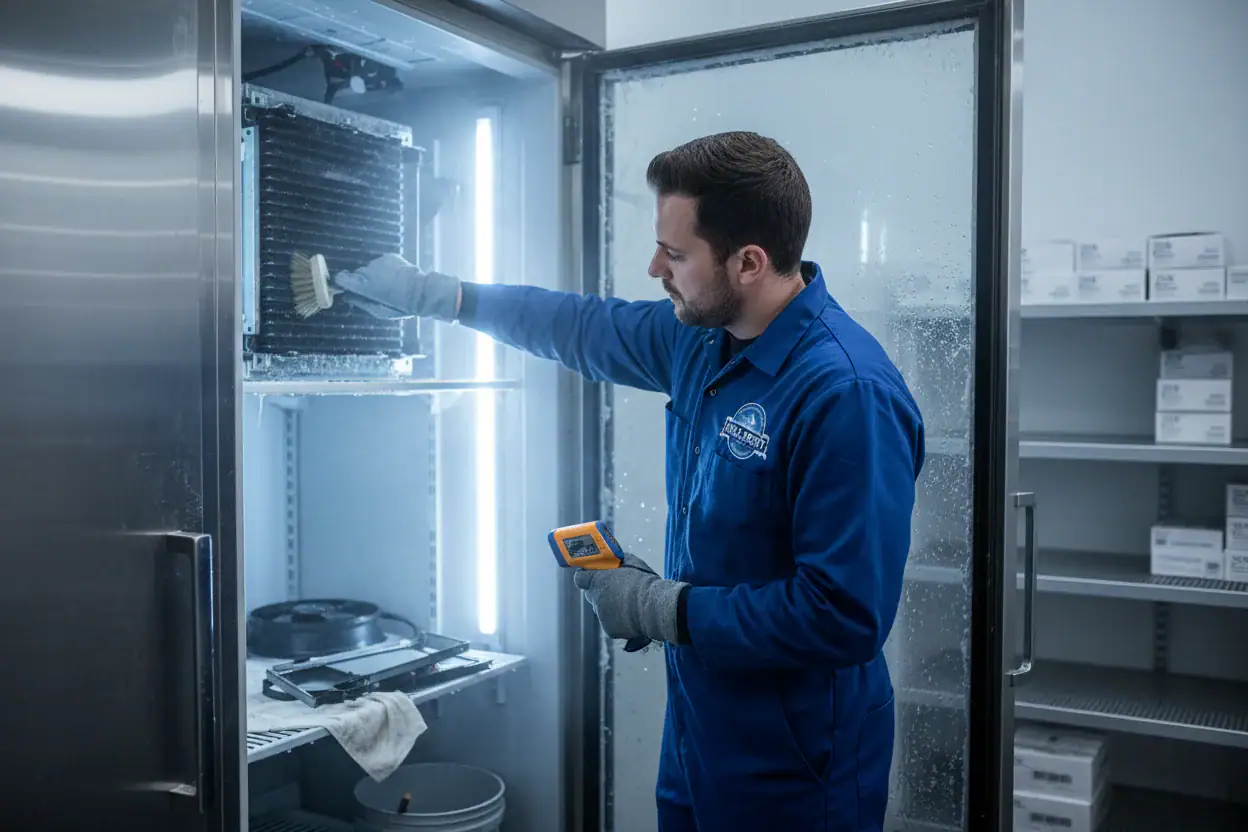
Excessive frost or ice buildup on evaporator coils is one of the most commonly misread symptoms in commercial refrigeration. Many operators assume more ice means the freezer is working harder in a positive way, but that is incorrect. Heavy frost buildup typically indicates a malfunctioning defrost system or an airflow restriction inside the unit. When coils ice over, they fail to transfer heat efficiently, causing the system to lose its cooling capacity. Left uncorrected, this accelerates wear and leads to failure.
Unusual sounds deserve immediate attention as well. A rattling compressor, a fan motor humming differently, or a refrigeration system sounding louder during startup represent mechanical changes that will not fix themselves.
In Long Island’s coastal communities, where salt air accelerates corrosion on condenser coils and electrical components, these changes progress faster than in inland environments. A waterfront restaurant in Islip or a marina-adjacent catering operation on the South Shore faces conditions placing heavier stress on refrigeration equipment than inland businesses experience.
Water pooling inside or around the unit points to a blocked or frozen drain line, which indicates deferred maintenance and potential secondary issues. A door that fails to seal cleanly lets warm, humid air inside on every cycle. During summer months when Long Island temperatures push past 90 degrees Fahrenheit, a compromised door gasket forces the compressor to work significantly harder just to maintain baseline temperature, leading directly to premature compressor failure.
Recognizing these issues as symptoms rather than quirks to live with makes the difference between a manageable repair and a midnight emergency call.
Want live answers?
Connect with a Chill Xpert Solutions expert for fast, friendly support.
A common mistake Long Island business owners make when a walk-in freezer acts up involves calling a general HVAC company or residential appliance repair service. While understandable given their broad advertising, commercial refrigeration is a distinct discipline. Walk-in freezers operate at temperatures residential and light-commercial HVAC technicians lack training and equipment to handle, and any repair involving refrigerant legally requires EPA Section 608 certification. Technicians without that certification cannot legally touch the refrigerant circuit of your walk-in freezer.
Calling the wrong company results in wasted service calls, misdiagnoses, improperly swapped parts, and recurring system failures that often strike at the worst possible time.
The baseline legal requirement is EPA Section 608 certification, covering the handling, recovery, and management of refrigerants used in commercial systems. Without it, technicians cannot legally service the refrigerant circuit of your equipment. Additionally, New York State requires specific licensing for commercial refrigeration and HVAC work, reflecting rigorous training and tested competency.
Beyond certifications, experience with commercial kitchen systems matters immensely. Medium-temperature walk-in coolers and low-temperature walk-in freezers involve different operating pressures, refrigerant requirements, and diagnostic approaches. Residential or light-commercial technicians often lack the recovery equipment and diagnostic tools required for low-temperature commercial systems.
Chill Xpert Solutions has operated across Nassau County, Suffolk County, and the broader Long Island market for over 40 years. Our technicians hold EPA Section 608 certification, maintain full New York State licensing, and carry parts inventories stocked for brands common in Long Island commercial kitchens. This stocking strategy allows us to resolve roughly 70 percent of emergency calls on the first visit without waiting days for shipments while your inventory sits at risk.
We never use subcontractors. Every technician visiting your business is a direct Chill Xpert Solutions employee representing our 40-plus years of reputation and accountability.
This question creates significant anxiety for business owners, but the answer depends on equipment age, the nature of the failure, and repair costs relative to remaining useful life.
Properly maintained walk-in freezers last 15 to 20 years, whereas neglected units suffering from deferred maintenance and repeated quick fixes fail much sooner. For an 8-to-10-year-old system facing a compressor replacement, repair versus replacement economics are quite close. For a 5-year-old system with a failed door gasket or refrigerant leak, repair is almost always the correct choice.
Our goal is providing an honest assessment before work begins, detailing repair procedures, costs, and our evaluation of remaining equipment life without hidden fees or pressure to replace repairable units. This transparent approach defines our reputation across Suffolk County and Nassau County, from Huntington Village restaurants to institutional clients at Long Island MacArthur Airport in Islip.
Regulatory changes also deserve consideration. The EPA’s AIM Act establishes new refrigerant leak repair requirements for commercial refrigeration systems. Equipment relying on older HFC refrigerants with a history of leaks requires careful evaluation when weighing further repair investments. We guide clients through these regulatory shifts to ensure decisions account for both current needs and future compliance.
The most common pattern involves business owners noticing minor issues, opting to monitor them, and calling us weeks later after full escalation. Sometimes repairs succeed, but often a salvageable compressor is lost or inventory spoils over a peak-season Saturday night.
Real warning signs carry serious meaning. Prolonged running times, temperature drift on hot afternoons, coil frost buildup, and unsealed doors demand prompt attention before minor issues turn expensive.
If you observe these signs or suspect poor performance from your walk-in freezer, reach out to Chill Xpert Solutions. We offer 24/7 availability, free estimates, and straightforward explanations regarding diagnostics and repair requirements.
Article details:
Share:
Continue learning: