Not sure how your boat's AC actually works — or why it stopped? Here's a plain-English breakdown from people who've been fixing marine systems since the 1980s.
Share:
Summary:
You turned on the AC, the fan kicked on, and the cabin is still hot. Or maybe it’s cooling — sort of — but below deck feels like a sauna anyway. Either way, something’s off, and you’re not sure if it’s a quick fix or a major problem.
Marine air conditioning is one of those systems that most boat owners never think about until it stops working. And when it does stop working, it’s usually July, usually a Friday, and you’ve got a full weekend on the water planned. We’ve been handling these systems across Nassau County, NY and Long Island since the 1980s, so we know exactly how that call goes.
Here’s what you should actually know about how your boat’s AC works — and why it’s nothing like the system cooling your house.
The short answer surprises most people: your boat’s AC doesn’t produce cold air. It removes heat from the cabin and dumps it somewhere else. In a home system, that heat goes into the outdoor air. On a boat, it goes into the water outside the hull. That’s the fundamental difference, and it’s why everything about marine AC — how it’s installed, how it’s serviced, and how it fails — is different from anything a residential HVAC technician has ever dealt with.
The system pulls warm air from the cabin, runs it across a cold evaporator coil, and returns cooler, drier air back into the space. Meanwhile, raw seawater is continuously pumped through the system to carry away the heat that was just removed from your cabin. When everything is working, you don’t notice any of it. When something in that chain breaks down, the whole thing stops cooling — even if the fan is still running.
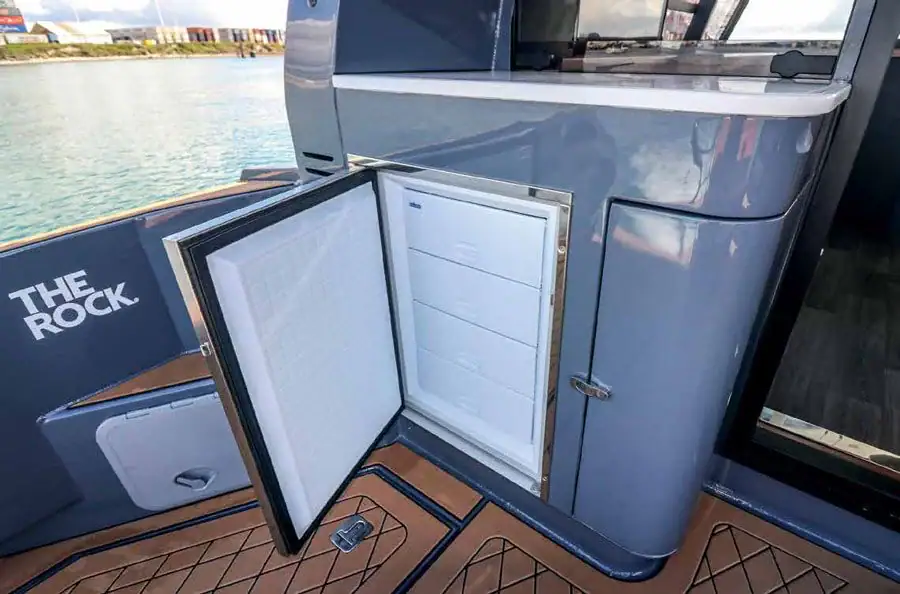
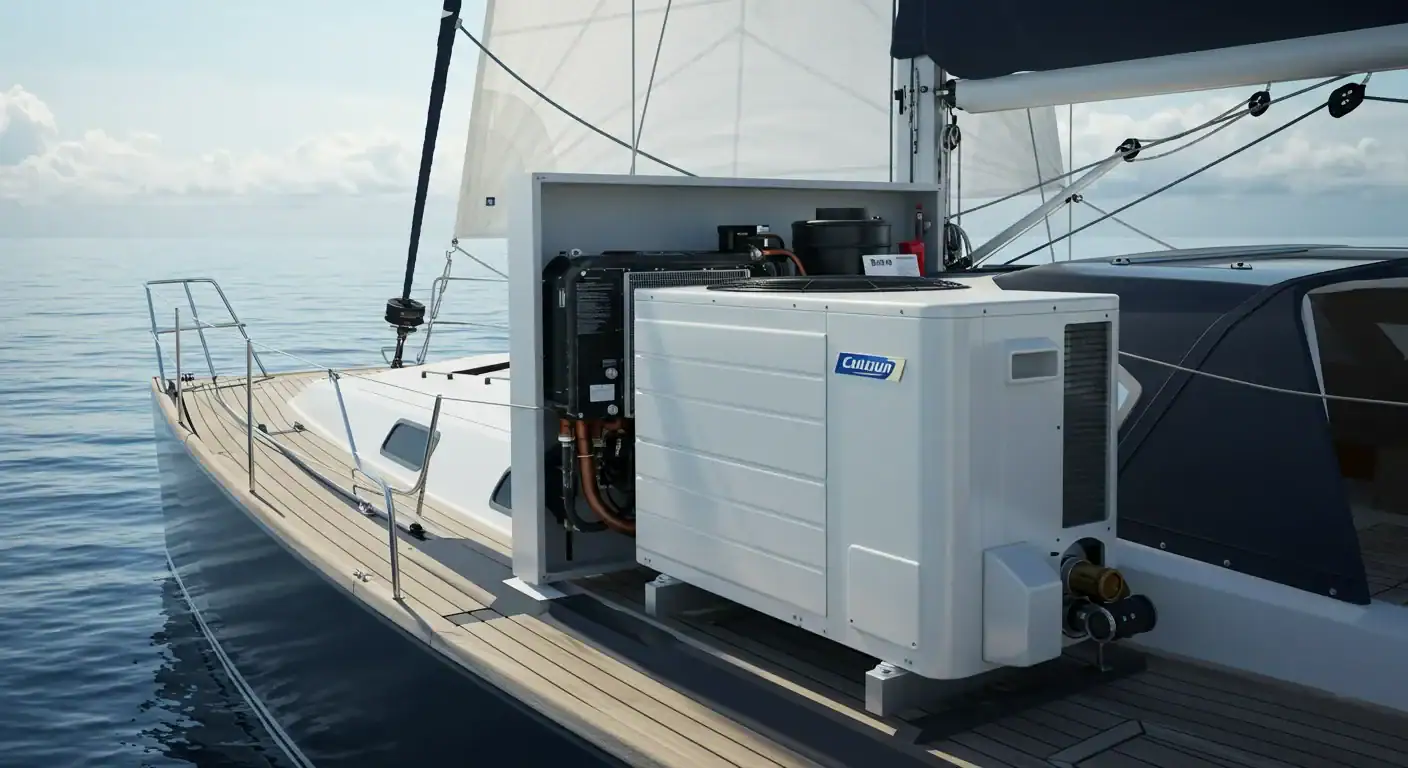
A marine AC system has three core components working together: the evaporator, the compressor, and the condenser. The evaporator sits inside the cabin and handles the actual air cooling. The compressor circulates refrigerant through the system. The condenser transfers heat out of the refrigerant and into the raw water circuit, which then carries that heat overboard through the hull.
On top of those three, there’s the raw water side of the system — a seawater strainer, a water pump, through-hull fittings, and hoses that bring in outside water, run it through the condenser, and discharge it back out. This is the part most people don’t know exists, and it’s also where the majority of failures start. About 60% of marine AC failures trace back to water flow problems: a clogged strainer, a failing pump, or a blocked through-hull fitting.
The electrical side matters too. Most marine AC systems run on 115V or 230V AC shore power, and they draw anywhere from 4 to 13 amps depending on size. Unlike a home system, your boat’s electrical setup has hard limits — shore power capacity, generator load, and battery bank all factor into how the system performs. A technician who doesn’t understand marine electrical systems will miss this entirely, and that’s where a lot of botched repairs start.
Self-contained units are the most common type on powerboats and mid-size cruisers. Everything — the evaporator, compressor, and condenser — is housed in one unit. Split systems separate those components for larger vessels. And reverse-cycle systems, sometimes called marine heat pumps, can both cool and heat the cabin, which matters for North Shore boaters on Long Island Sound who use their boats into the fall.
The mechanics are similar on paper, but the operating environment couldn’t be more different. A home AC unit sits in a climate-controlled mechanical room or on a concrete pad outside. A marine system lives in a bilge, under a berth, or behind a panel — exposed to salt air, constant vibration, humidity, and the movement of the boat itself. Every connection, every fitting, every electrical junction is under stress that residential equipment was never designed to handle.
Salt air alone accelerates corrosion on electrical components and refrigerant connections faster than most people realize. In Nassau County, NY, boats docked along the South Shore — in Hempstead Bay, Great South Bay, or off the Reynolds Channel near Island Park — deal with salt exposure year-round, not just during the summer season. Even a boat sitting in a slip through winter is being slowly worked on by that environment.
The vibration issue is one that general HVAC technicians consistently underestimate. Refrigerant lines on a boat flex and shift with every wake, every wave, every time the engine runs. Connections that would last decades in a fixed installation can work loose in a single season on the water. This is why marine-specific components — sealed connections, vibration-resistant mounts, corrosion-resistant materials — aren’t optional upgrades. They’re the baseline for anything that’s going to last.
There’s also the water temperature factor, which is specific to where you boat. Systems on boats docked in the shallower, warmer waters of Nassau County’s South Shore bays have to work harder than those in cooler, deeper water. Warm intake water reduces the condenser’s ability to shed heat efficiently, which puts more strain on the compressor. It’s a detail that matters when you’re sizing a system or diagnosing why a properly maintained unit still can’t keep up on a 90-degree August afternoon.
Want live answers?
Connect with a Chill Xpert Solutions expert for fast, friendly support.
Most marine AC failures fall into three categories. The first is water flow problems — clogged strainers, failed raw water pumps, or blocked through-hull fittings. The second is refrigerant leaks, which happen when connections loosen over time from vibration and boat movement. The third is dirty condenser coils fouled with salt deposits and marine growth, which can reduce system efficiency by 30% or more on their own.
What makes diagnosis tricky is that a running fan doesn’t mean a working system. The fan can blow air all day while the compressor isn’t engaging, the refrigerant isn’t circulating, or the water flow has dropped to the point where the system is protecting itself by shutting down the cooling cycle. If your cabin isn’t getting cold despite the unit running, that’s not a mystery — it’s a symptom, and it points to a specific cause.
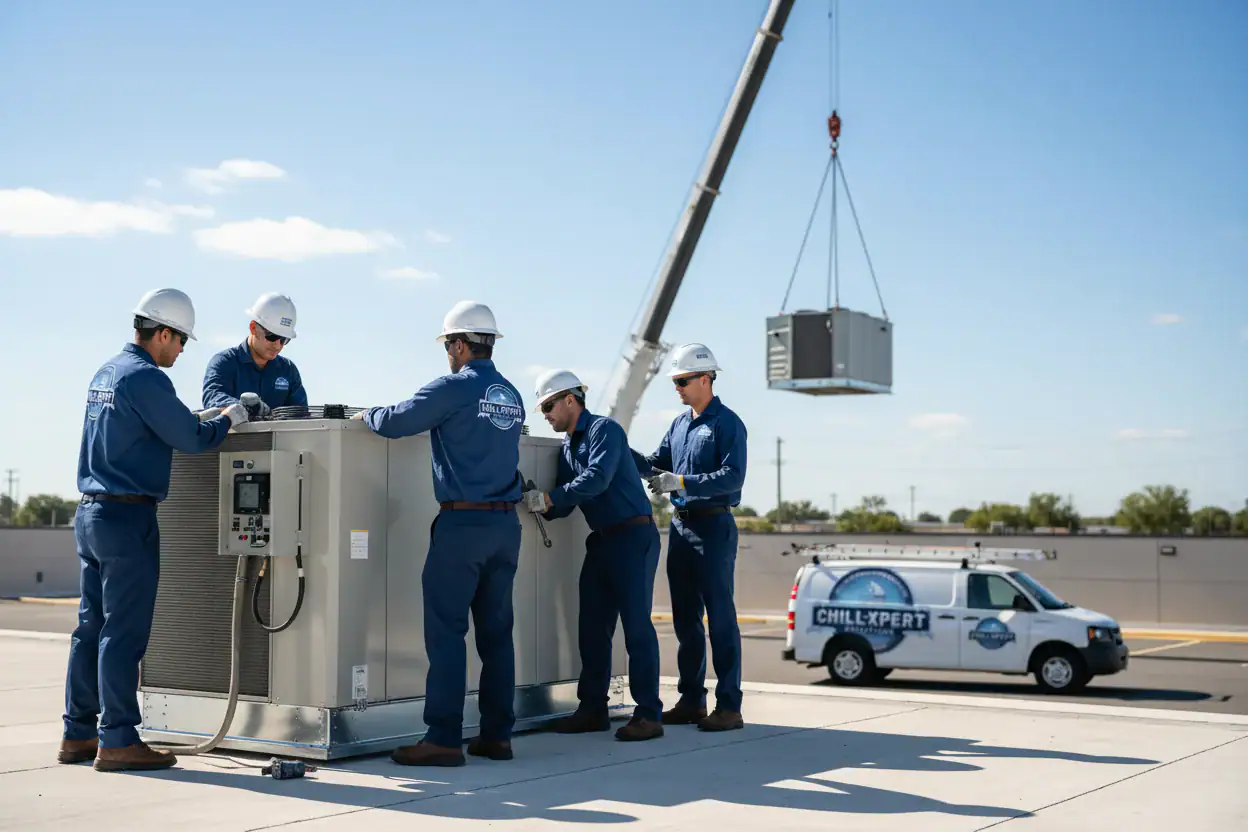
The most common complaint we hear is some version of “it’s running but not cooling.” Nine times out of ten, that comes down to one of three things: restricted water flow, low refrigerant from a slow leak, or a compressor that’s on its way out.
Restricted water flow is the easiest to check and the most frequently overlooked. The raw water strainer — the basket filter that keeps debris from entering the system — needs to be cleaned regularly, especially in Nassau County’s South Shore bays where seagrass, sand, and marine growth can clog it fast. A partially blocked strainer reduces water flow just enough to make the system inefficient without triggering an obvious alarm. The boat owner notices the cabin is warmer than usual and assumes the system needs a refrigerant recharge. Often it just needs a clean strainer and a functioning pump.
Refrigerant issues are more complicated. A common misconception is that marine AC systems “run out” of refrigerant the way a car runs out of gas. They don’t. Refrigerant circulates in a closed loop — if the level is low, there’s a leak somewhere. Recharging without finding and fixing the source is a temporary fix at best. It’ll cool for a few weeks, maybe a season, and then you’re back in the same spot. The right call is finding the leak, which requires pressure testing and a technician who knows where marine systems typically fail — at fittings, at the compressor connections, and at any point where refrigerant lines flex under vibration.
Compressor failure is the most expensive outcome, and it’s usually the result of one of the above problems going unaddressed too long. A compressor that’s been running against restricted water flow or low refrigerant for months is working under stress it wasn’t designed for. By the time it fails completely, what could have been a maintenance call has turned into a major repair. This is why we recommend professional service at least twice a year — once before the season starts and once mid-summer during peak use.
This is the question we get asked more than almost any other, usually by someone who already tried it and is now dealing with the consequences. The honest answer is: technically, a general HVAC technician can attempt it. Whether they should is a different question.
Marine AC systems require knowledge that simply isn’t part of standard HVAC training. Understanding 12V and 24V DC marine electrical systems, raw water cooling circuits, through-hull fittings, and the specific failure modes that come from vibration and saltwater exposure — none of that is covered in a residential or commercial HVAC certification. A technician who’s spent their career servicing homes and office buildings has never had to think about whether a refrigerant line connection can withstand constant flexing, or whether the parts they’re installing are rated for salt air exposure.
The result, in practice, is misdiagnosis. A general HVAC tech who doesn’t understand the raw water circuit will often jump straight to refrigerant as the culprit, because that’s what they know. They recharge the system, it cools for a few weeks, and then the underlying problem — a clogged strainer, a failing pump, a loose fitting — reasserts itself. The boat owner has paid for a service call that didn’t solve anything.
There’s also the parts issue. Marine-grade components are engineered differently from residential equivalents. Using standard HVAC parts on a boat in Nassau County’s salt air environment is a reliable way to create a recurring problem. The materials corrode faster, the connections work loose sooner, and the warranty on the system often becomes void the moment non-marine parts are installed.
We service only marine systems — not because we can’t do residential work, but because marine systems require a completely different skill set and we’ve spent over 40 years developing it. That specialization is the reason yacht clubs like Britannia Yacht Club trust us with their fleets, and it’s the reason about 70% of our emergency calls get resolved on the first visit. When you stock the right parts and know exactly where marine systems fail, you don’t have to guess.
If your boat’s AC isn’t cooling the way it should, the worst thing you can do is wait. A small refrigerant leak becomes a compressor problem. A clogged strainer becomes a failed pump. What’s a straightforward fix in June turns into an emergency call in August — and in peak season, availability is tight.
We respond to emergency calls across Nassau County, NY in under two hours, and we carry genuine parts for Marine Air, Cruisair, and Dometic on our trucks so most repairs don’t require a second visit. Our estimates are free, our pricing is upfront, and when you call our emergency line you reach a real technician — not an answering service.
If you’re dealing with a marine AC issue right now, or you want to get your system checked before it becomes a problem, reach out to Chill Xpert Solutions. We’ve been doing this work on Long Island since the 1980s, and we’re not going anywhere.
Article details:
Share:
Continue learning: