System down at midnight? Before calling for emergency service, understand what qualifies as a true HVAC crisis versus what can wait until morning.
Share:
Summary:
Your AC just stopped working. It’s 11 PM on a Saturday in July, and your building is already starting to feel warm. Or maybe it’s 2 AM in January and the heat won’t kick on. The question hits immediately: do you call for emergency service right now, or can this wait until Monday morning?
That decision matters more than you might think. Call too early and you’re paying double or triple the normal rate for something that could have waited. Wait too long and you’re dealing with frozen pipes, spoiled inventory, or unsafe conditions for employees and customers. This guide gives you the actual criteria to make that call with confidence, plus what to expect when you do need 24hr AC repair in Nassau County, NY.
Not every system failure needs immediate attention. A true HVAC emergency involves safety risks, potential property damage, or conditions that create health hazards if left unaddressed.
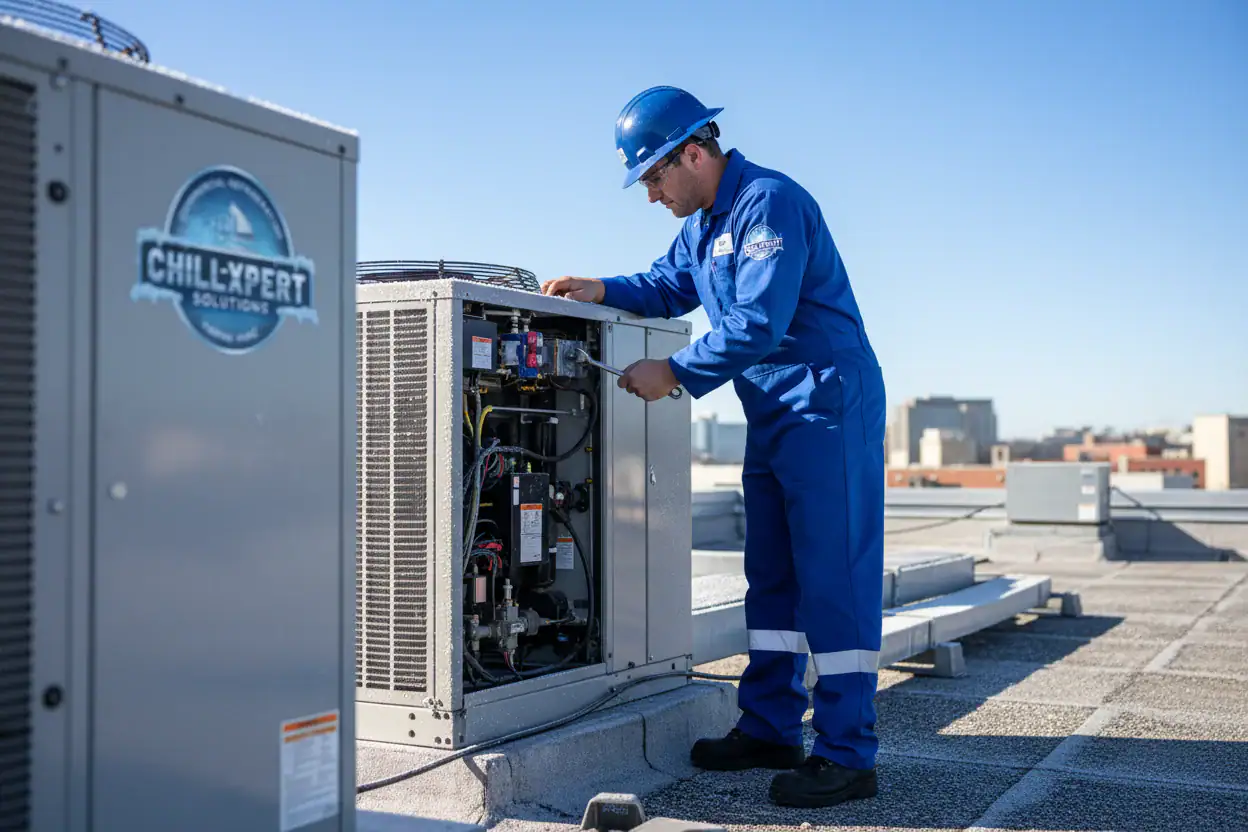
Complete system failure during extreme weather tops the list. When outdoor temperatures hit 90°F or higher and your AC goes out entirely, indoor conditions can become unsafe within hours, especially for anyone with health conditions, elderly individuals, or in commercial settings with customers and staff. On the flip side, no heat when it’s below 40°F outside puts your property at risk for frozen pipes and creates dangerously cold indoor conditions.
Gas leaks, burning smells, or visible smoke require immediate action. If you smell rotten eggs near your heating equipment, see smoke coming from vents, or notice sparking around electrical components, shut the system down and call for help right away. These situations present fire hazards and potential carbon monoxide exposure that go beyond comfort—they’re genuine safety threats.
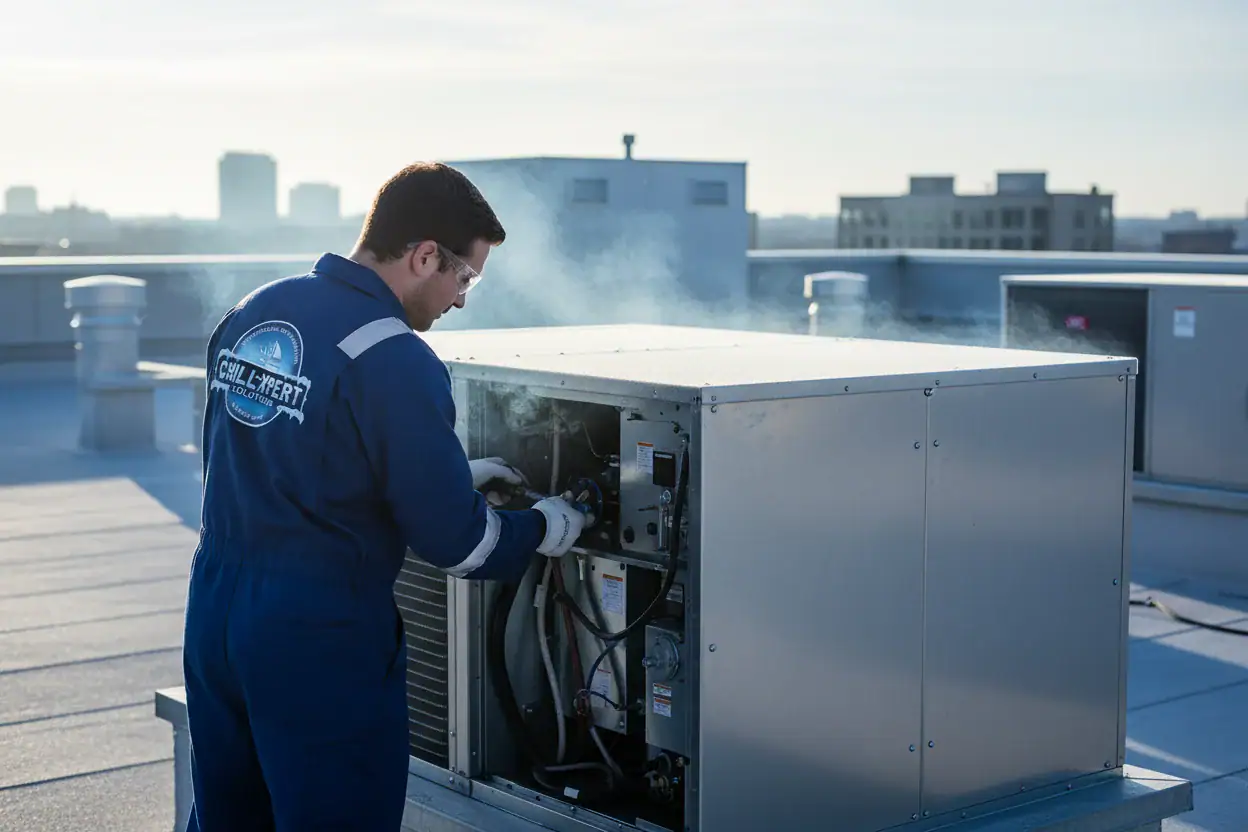
Certain warning signs tell you to pick up the phone now, not wait until morning. Refrigerant leaks create both equipment damage and health concerns. If you hear hissing sounds near your AC unit or notice ice buildup on the lines, that refrigerant is escaping. Low refrigerant levels force the compressor to work harder, which can lead to complete failure. The refrigerant itself poses exposure risks.
Water leaks that appear suddenly or worsen quickly need immediate attention. A small amount of condensation is normal, but if water is pooling around your indoor unit, dripping through ceilings, or spreading across floors, you’re looking at potential structural damage and mold growth. The longer water sits, the more expensive the cleanup becomes.
Electrical issues fall into the emergency category. If your HVAC system keeps tripping circuit breakers, you smell burning plastic, or you see any kind of sparking, that’s a fire hazard. Don’t try to reset the breaker multiple times hoping it’ll hold. Shut everything down and get a licensed technician involved.
Frozen coils combined with system shutdown indicate serious airflow or mechanical problems. In Nassau County’s humid climate, your AC has to work harder than systems in drier regions. When coils freeze over and the system stops responding entirely, that’s not something you troubleshoot yourself at 3 AM.
For commercial operations, any failure that threatens food safety or business continuity becomes an emergency by default. Walk-in cooler breakdowns, freezer malfunctions, or complete HVAC failure in spaces where you’re serving customers or storing temperature-sensitive inventory can’t wait. Every hour of downtime translates directly to lost revenue and potentially spoiled product.
Plenty of HVAC problems feel urgent without actually being emergencies. Understanding which issues can wait saves you from paying 2-3 times the normal rate for service that could have been scheduled during regular hours.
Uneven temperatures between rooms rarely constitute an emergency. If your system is still running but certain areas aren’t cooling or heating properly, that’s usually a ductwork, airflow, or thermostat issue. Uncomfortable, yes. Dangerous or damaging, no. Schedule service during normal hours and use fans or space heaters as temporary solutions if needed.
Strange noises without other symptoms can typically wait. Rattling, buzzing, or minor squealing often signal loose parts or worn components. As long as you’re not smelling burning, seeing smoke, or experiencing complete system failure, these sounds indicate maintenance needs rather than emergencies. Document what you’re hearing and call during business hours.
Rising energy bills or reduced efficiency don’t require middle-of-the-night service. If your system is working but running longer cycles or not performing as well as it used to, that points to maintenance issues like dirty coils, clogged filters, or aging components. These problems should be addressed, but they can wait for a scheduled appointment.
Minor water dripping that’s been consistent for a while probably isn’t an emergency. If your AC has always produced some condensation and the amount hasn’t changed dramatically, it’s likely a clogged drain line. You can often clear these yourself with a wet-dry vacuum or schedule service when rates are normal.
Thermostat malfunctions when the system still operates fall into the can-wait category. If your AC or heat runs but won’t respond to thermostat adjustments, try replacing the batteries and checking your breaker. If that doesn’t solve it, schedule service during regular hours. The system itself is functional—you just can’t control it precisely.
Want live answers?
Connect with a Chill Xpert Solutions expert for fast, friendly support.
Emergency HVAC service comes with premium pricing, and understanding those costs upfront helps you make informed decisions when you’re under pressure. After-hours rates typically run 1.5 to 3 times normal pricing.
During regular business hours, standard HVAC service calls in Nassau County range from $75 to $150 per hour. When you call for emergency service—nights, weekends, holidays—that jumps to $135 to $210 per hour on the low end, with some situations pushing $400 to $600 per hour depending on timing and complexity.
Most companies add an after-hours fee on top of the base service call. Expect an additional $100 to $300 just for getting a technician to your property outside normal hours. Some contractors charge flat emergency fees, while others use hourly upcharges. Either way, you’re paying for the convenience of immediate availability and the overtime compensation required to get technicians on-site when most people are off the clock.
Same-day service and emergency service aren’t the same thing, and the pricing reflects that distinction. Same-day service means you call during business hours and get scheduled that day, often within a few hours. You’re still paying standard rates—maybe a small urgency premium, but nothing like middle-of-the-night emergency pricing.
Emergency service means you’re calling outside normal hours and need someone immediately. That’s when you hit the 2-3x multiplier on labor rates. The timing matters as much as the urgency. A Saturday morning call might cost less than a 2 AM Sunday call, even for the same problem.
Parts costs remain relatively consistent whether it’s emergency or regular service, but availability changes. During business hours, technicians can source parts from multiple suppliers. After hours, they’re limited to what they carry in their trucks or what 24-hour distributors stock—and those after-hours parts often come with their own premium pricing.
The complexity of the repair also affects total cost. A simple capacitor replacement might run $150-$300 during regular hours. The same repair at midnight could cost $300-$600 when you factor in emergency labor rates and after-hours fees. More complex repairs involving compressors, motors, or control boards can easily hit $1,200 or more during emergency calls.
Smart contractors stock their vehicles with common parts for exactly this reason. When a technician shows up with the parts already on hand, you avoid the additional delay and cost of sourcing components after hours. That’s one reason to ask about parts availability when you’re evaluating emergency service providers.
Weather and demand also drive pricing. When everyone’s AC fails during the hottest week of summer, emergency rates may climb even higher due to overwhelming demand. The same applies to heating emergencies during cold snaps. Peak season breakdowns create bidding wars for available technicians.
Nassau County property owners face unique considerations when it comes to HVAC work, and pricing transparency becomes even more critical during emergencies. Improper repairs by unlicensed contractors can void your homeowners insurance coverage. When you’re calling for emergency service at 11 PM, you need to know the company you’re hiring carries proper licensing and insurance—and that their pricing won’t include surprise charges you discover later.
Reputable emergency HVAC providers give you cost estimates before starting work, even in urgent situations. They explain what the after-hours fee covers, what the hourly labor rate includes, and what parts will cost. If a contractor can’t or won’t provide upfront pricing during an emergency call, that’s a red flag.
Insurance coverage adds another layer to the cost equation. Homeowners insurance typically doesn’t cover HVAC repairs from normal wear and tear or lack of maintenance, but it may cover damage from covered perils like lightning strikes, fallen trees, or fire. If your emergency stems from a storm or sudden event, document everything before repairs begin. Photos, videos, and written estimates help if you need to file a claim.
DIY repairs during emergencies often create bigger problems. When you’re facing a 2 AM system failure, the temptation to troubleshoot yourself is strong. But improper work can void manufacturer warranties, create safety hazards, and potentially invalidate your insurance coverage. Licensed technicians carry insurance specifically to protect you if something goes wrong during the repair.
The cost difference between emergency and regular service is real, but so is the cost of waiting when you shouldn’t. A $600 emergency repair at midnight might feel expensive until you compare it to thousands in water damage from frozen pipes, spoiled inventory from a failed walk-in cooler, or liability if customers or employees suffer heat-related illness in your facility.
Location affects response time and pricing. Nassau County’s density means shorter travel distances for local providers, but it also means higher demand during peak seasons. Companies that commit to specific response times—like under 2 hours—often charge slightly more than those offering vague “as soon as possible” promises. You’re paying for that guaranteed availability.
The decision to call for 24hr AC repair comes down to three questions: Is anyone’s safety at risk? Is property damage occurring or imminent? Can the situation be safely managed until regular business hours? If you answer yes to either of the first two questions, you’re looking at a genuine emergency.
For everything else, temporary measures often buy you time to schedule service at normal rates. Close blinds to slow heat buildup. Use fans to circulate air. Deploy space heaters in critical areas. Check your thermostat batteries and circuit breakers. These simple steps solve surprising numbers of “emergencies” or at least stabilize the situation until morning.
When you do need emergency service, choose providers who offer transparent pricing, proper licensing, and realistic response times. In Nassau County’s challenging climate—where humid summers and cold winters push HVAC systems hard—having a reliable emergency contact before you need one makes the midnight phone call much less stressful. We provide 24/7 consulting and emergency service across Nassau and Suffolk County with upfront pricing and under 2-hour response times, so you know exactly what to expect when urgent situations arise.
Article details:
Share:
Continue learning: