Marine AC repair and standard HVAC aren't even close to the same thing. Here's what actually separates them — and why it matters for Nassau County boat owners.
Share:
Summary:
You call an HVAC company. They send someone out. The tech takes one look at the system, pokes around for twenty minutes, recharges the refrigerant, and collects a check. Two weeks later, the boat’s AC is blowing warm air again.
This happens constantly on Long Island. Not because the technician was incompetent — but because marine AC systems and residential HVAC systems have almost nothing in common beyond the name. The cooling medium is different. The components are different. The failure modes are different. And the consequences of getting it wrong during a Nassau County summer are very real.
Here’s what’s actually going on inside your boat’s system, and why the person working on it needs to know things your home HVAC tech never learned.
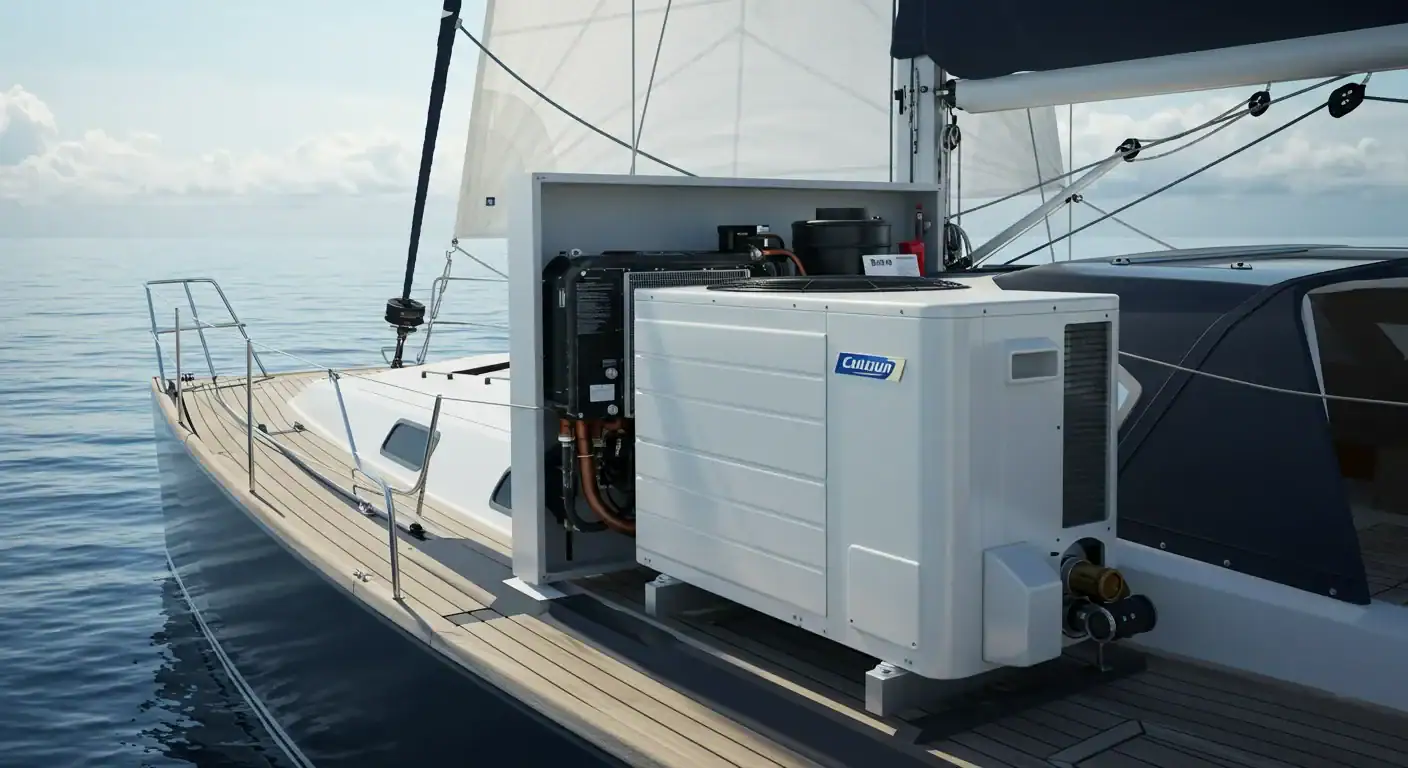
The biggest difference between marine AC and the system at your house comes down to one thing: what cools the condenser. Your home’s central air conditioner uses outdoor air — that’s what the big fan unit outside is doing. Your boat’s system uses raw seawater pulled directly from the water beneath the hull.
Water holds heat far more efficiently than air. That’s why a marine AC unit can be compact enough to fit under a bunk or inside a locker while still cooling an entire cabin. The seawater is pumped in through a through-hull fitting, passes through the condenser to absorb heat, and gets discharged back overboard. It’s a completely different mechanical loop — and every component in that loop is specific to marine applications.
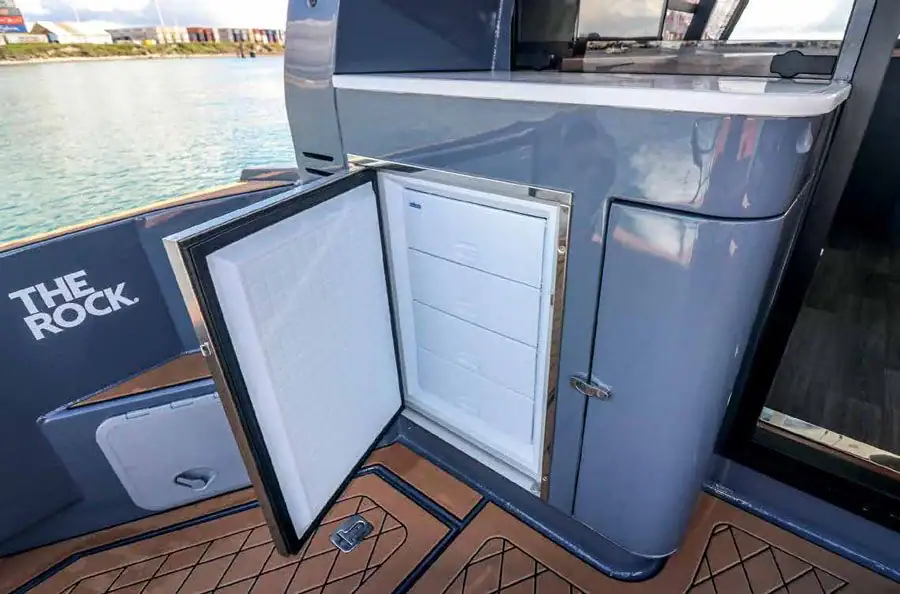
When a general HVAC technician opens up a residential system, they’re working with equipment they’ve trained on for years — air handlers, refrigerant lines, expansion valves, condenser coils cooled by a fan. None of that translates to a boat.
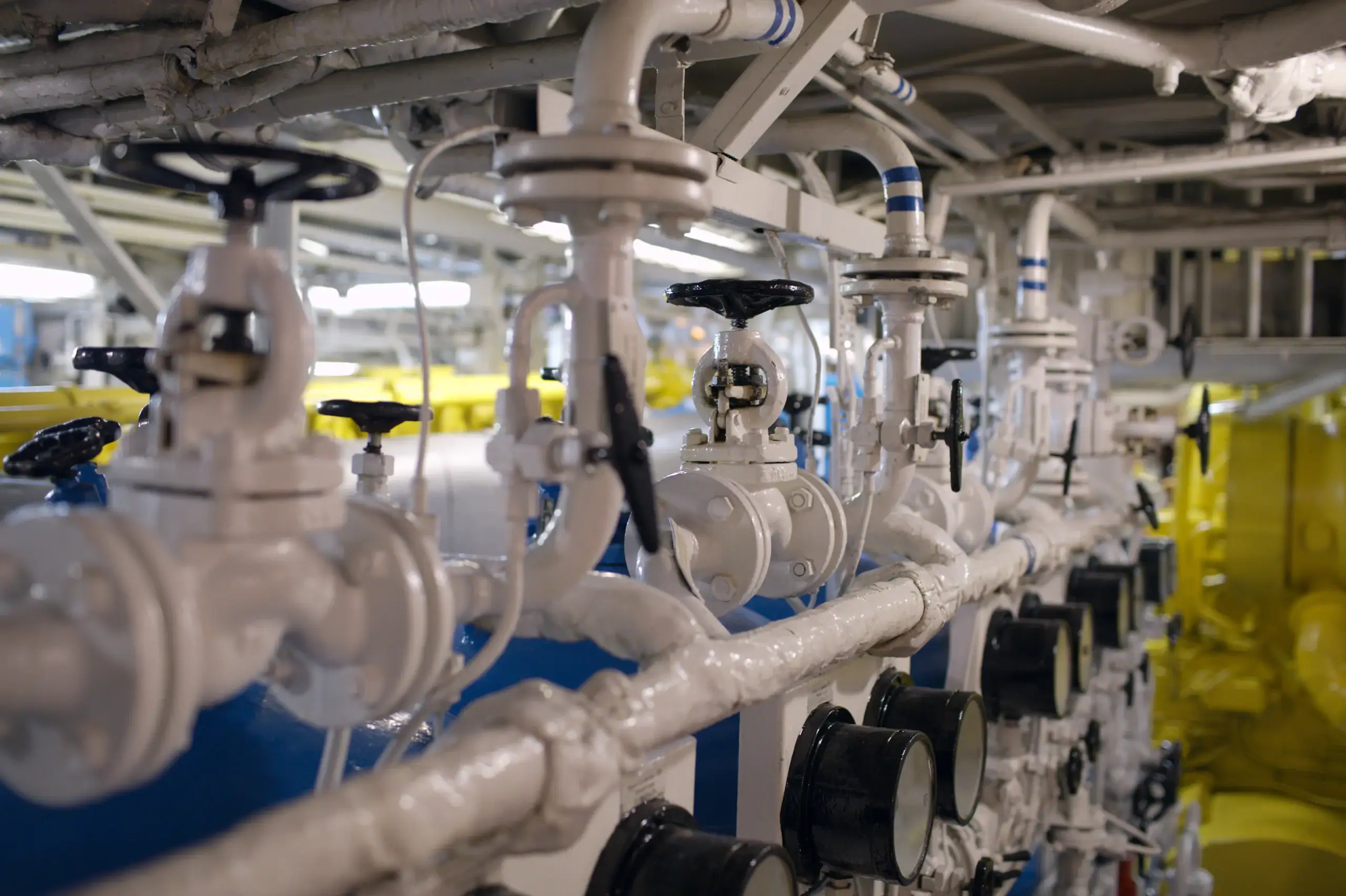
A marine AC system includes through-hull fittings, seacocks, seawater strainers, raw water pumps, and overboard discharge lines. These components don’t exist in any residential or commercial land-based HVAC system. A residential HVAC repair technician who has never worked on a boat won’t know how to diagnose them, service them, or recognize when one of them is causing the system to fault out.
Here’s a common example. The most frequent complaint we hear from boat owners is a high-pressure fault — the system shuts down and won’t restart. A general HVAC tech often assumes the refrigerant is low and recharges the system. But in most cases, a high-pressure fault on a marine system is caused by a clogged seawater strainer or a failed water pump. The refrigerant level is fine. The system is shutting down because it’s not getting enough seawater flow to cool the condenser. Recharging the refrigerant does nothing. The fault comes back within days.
That’s not a small misdiagnosis. That’s a fundamental misunderstanding of how the system works — and it’s entirely predictable when you send someone without marine-specific training.
Beyond diagnostics, there’s the parts problem. Saltwater destroys standard HVAC components. Condenser coils, pump housings, fittings — everything in a marine system needs to be made from corrosion-resistant materials. Bronze, titanium, stainless steel, coated aluminum. A tech who installs residential-grade components on a boat isn’t cutting corners on purpose; they may simply not know that marine-grade parts exist or why they’re required. But the result is a system that corrodes and fails far ahead of schedule.
Marine AC systems also operate under power constraints that don’t exist on land. Your home draws unlimited power from the grid. Your boat runs on finite battery capacity and shore power connections, often at 230V or split-phase 120/240V. Startup amperage draw matters — which is why modern marine systems use soft-start or variable-speed compressors to protect the electrical panel. A tech unfamiliar with marine electrical systems can overload a boat’s panel without realizing it.
Nassau County boat owners deal with conditions that accelerate wear on marine AC systems faster than almost any inland market. Whether you’re running out of Manhasset Bay on the North Shore, crossing Reynolds Channel on the South Shore, or heading out through Fire Island Inlet, your system is being exposed to salt air and seawater every time you’re on the water.
Salt air alone is aggressive. It attacks condenser coils, copper refrigerant lines, and electrical connections constantly. But the seawater coming through the system brings another problem: biofouling. Marine organisms colonize the condenser coils and strainer as seawater passes through. Left unchecked, biofouling can reduce system efficiency by 30% or more — and it happens up to 25% faster in saltwater environments than in land-based cooling systems. This is a maintenance task with no residential equivalent. It requires flushing with pressurized water or a mild acid solution on a regular schedule.
Long Island Sound water temperatures range from around 35°F in winter to 75°F in summer. Great South Bay runs slightly warmer due to its shallower depth. Warmer water reduces the condenser’s ability to shed heat efficiently, which means systems work harder during peak summer months — exactly when Nassau County boats are in heaviest use. July and August regularly bring 90°F temperatures and high humidity, creating conditions that push marine AC systems to their limits.
The boating season here is also compressed. Memorial Day to Labor Day is roughly fourteen to sixteen weeks. A system that fails in early July with a multi-week service backlog at the only other marine AC provider on Long Island isn’t a minor inconvenience — the season is effectively over. That’s not a hypothetical. It’s a scenario that plays out every summer for boat owners who didn’t know where to turn or waited too long to call.
Boats stored through winter need proper winterization — flushing seawater from lines and draining the pump — or they’ll have problems the moment you try to commission them in spring. Spring commissioning is its own service event, and it’s the best time to catch anything that developed during storage before the season is in full swing. Long Island marine systems should be serviced at least twice per season given the salt air exposure and the intensity of summer use.
Want live answers?
Connect with a Chill Xpert Solutions expert for fast, friendly support.
Knowing that marine AC is different is one thing. Knowing what to look for in a technician is another. The short version: the person working on your boat’s system needs marine-specific training, the right certifications, and genuine parts on the truck.
EPA Section 608 certification is a federal requirement for any technician handling refrigerants. It’s a baseline, not a differentiator. What matters beyond that is ABYC certification — the American Boat and Yacht Council’s credential for marine AC and refrigeration technicians. ABYC-certified technicians are trained specifically in marine system architecture, installation standards, and troubleshooting. It’s the marine equivalent of NATE certification for residential HVAC, and it’s the clearest signal that a tech actually knows what they’re working on.
Factory authorization matters too. Major marine AC brands — Dometic, Cruisair, Marine Air, MarinAire, Webasto — authorize specific technicians and shops to service their equipment. Factory-authorized techs have access to genuine parts, understand model-specific quirks, and can perform repairs that keep your warranty intact.
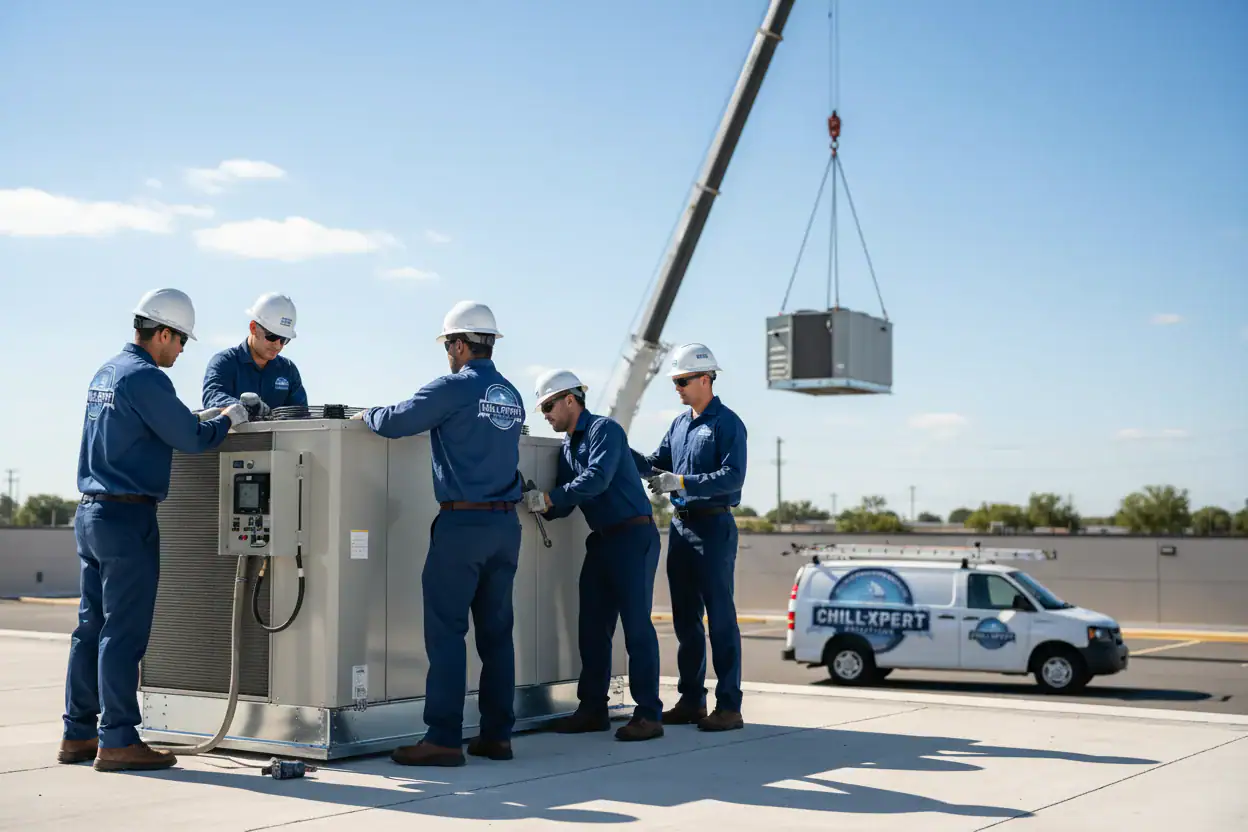
There’s no shortage of HVAC companies serving Nassau County. You can find local HVAC repair providers in virtually every town from Hewlett to Williston Park to Island Park. Most of them do excellent work — on residential and commercial land-based systems. The problem isn’t their skill level. It’s that marine AC systems fall entirely outside the scope of what they’ve been trained and equipped to handle.
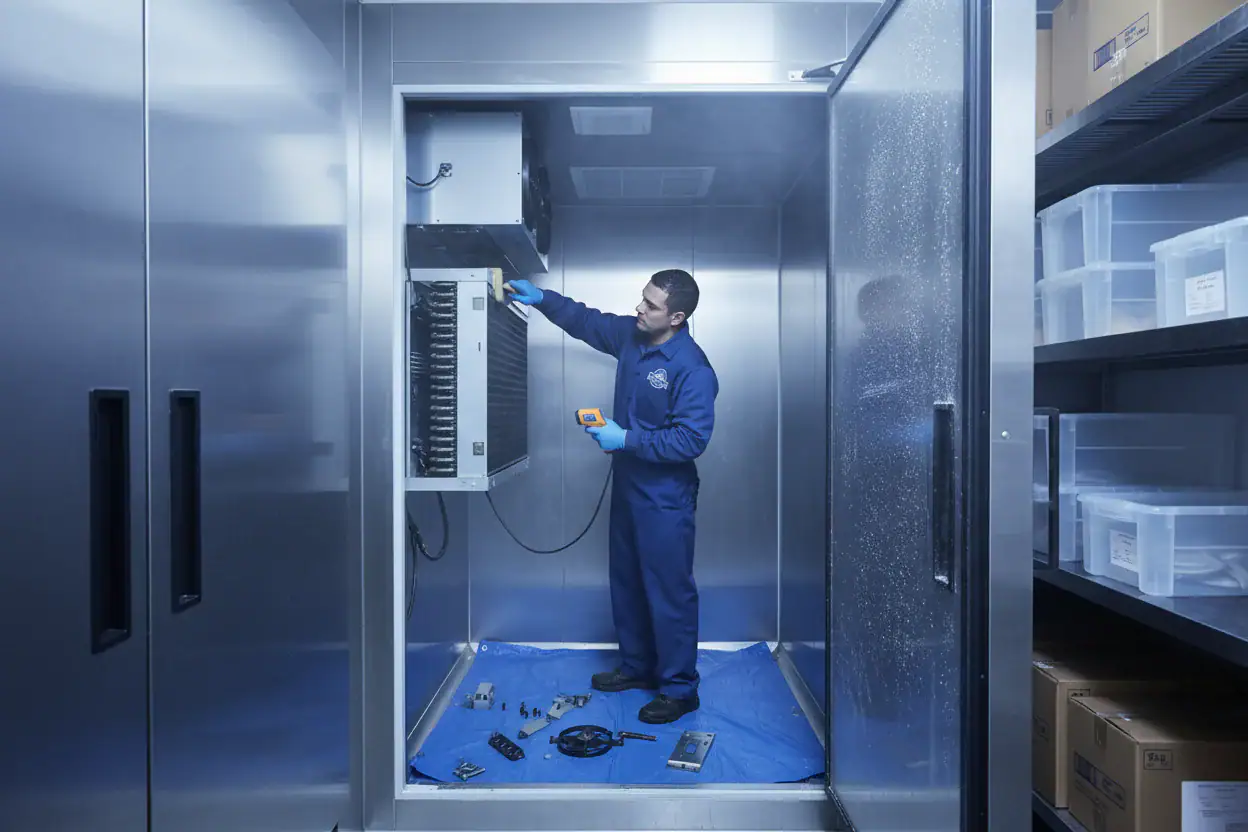
Think about what a marine aircon repair actually involves. The technician needs to assess three separate circuits: the seawater cooling loop, the refrigerant circuit, and the air distribution system. Each one has failure modes specific to the marine environment. A strainer clogged with marine growth. A raw water pump impeller worn down by continuous use. A refrigerant line with a micro-leak caused by vibration over thousands of hours underway. A through-hull fitting that’s corroding from the outside while the system appears to run normally inside.
That last point deserves emphasis. Through-hull fittings are not just an AC component — they’re hull penetrations. A faulty through-hull fitting is a sinking risk. Responsible marine AC repair includes inspecting through-hull fittings whenever the boat is out of the water. A general HVAC tech performing aircon servicing on a boat may not know this inspection is part of the job, let alone how to perform it.
The air distribution side has its own marine-specific requirements. Boats have tight, irregular spaces — under bunks, inside lockers, in bilge areas. Ductwork has to be sized and routed differently than in a building. Ventilation has to be adequate or the evaporator will freeze over, which is a common problem on boats where a previous installer didn’t account for the confined space. Dehumidification is also a primary function in the marine environment, not an afterthought — ambient humidity on the water is dramatically higher than in most residential settings, and a system that doesn’t handle moisture effectively creates mold and accelerated corrosion throughout the vessel.
Boats used year-round — liveaboards, commercial vessels, and the growing number of Nassau County owners who run through the fall — also need reverse-cycle heating capability from the same system. Diagnosing a system that handles both cooling and heating in a marine environment adds another layer of complexity that general heating and cooling service providers aren’t equipped for.
In a compressed boating season, the quality of the repair matters — but so does when it happens. A technically perfect repair that takes three weeks to schedule is nearly worthless to a boat owner whose July is already half over.
This is where the gap between marine specialists and generalists becomes most visible. General HVAC companies that occasionally work on boats don’t stock marine-specific parts. When a raw water pump fails or a condenser needs replacing, they have to order the part. Lead times for marine components can stretch well beyond what any boat owner wants to hear in the middle of summer.
We keep our service trucks stocked with genuine parts for the major marine AC brands specifically because of this. Around 70% of the emergency calls we respond to get resolved on the first visit. That’s not a figure we invented — it’s a direct result of carrying the inventory needed to handle the most common failures without a waiting period. When your system goes down on a Friday afternoon before a weekend you’ve had planned for months, the difference between a stocked truck and a parts order is the difference between getting on the water Saturday morning and calling it a loss.
We also answer the phone at any hour. Not a voicemail, not a callback form — a real person. Marine AC failures don’t schedule themselves around business hours, and the 24-hour heating service we provide isn’t just for emergencies. If you’re not sure whether what you’re hearing from the system is normal or a sign of something developing, you can call and get a real answer without waiting until Tuesday.
The Nassau County and Long Island boating community is tight-knit. Yacht clubs from Sea Cliff to Keystone Yacht Club in Woodmere to the marinas along Manhasset Bay share information. When a service provider does good work — or doesn’t — word travels. Britannia Yacht Club trusts us with their members’ vessels, and that kind of institutional confidence reflects our forty-plus years of showing up, knowing what we’re doing, and getting it right.
Marine AC systems and residential HVAC systems share a name and a refrigerant circuit. Beyond that, they’re different machines, in different environments, with different failure modes — and they need different expertise to service correctly.
If your boat’s system is blowing warm air, faulting out, struggling to keep up during peak summer heat, or hasn’t been properly commissioned since coming out of winter storage, the answer isn’t the closest HVAC company on Long Island. It’s a technician who works on marine systems every day, carries the right parts, knows what a seawater strainer looks like when it’s failing, and understands what’s at stake when your boating season is fourteen weeks long.
If that’s the situation you’re in — or you’d rather not find yourself there mid-July — Chill Xpert Solutions is the call to make. We offer free estimates, upfront pricing, and the kind of direct answers that make the decision straightforward.
Article details:
Share:
Continue learning: